


























On Tuesday, April 28, 2026, the U.S. Senate unanimously approved the federal bill S.4161, the Maverick Act, which provides for three Grumman F-14D Tomcat fighter-interceptors withdrawn from service with the U.S. Navy to be transferred to the U.S. Space & Rocket Center (USSRC) in Huntsville, Alabama, with one of them potentially being recertified as airworthy.
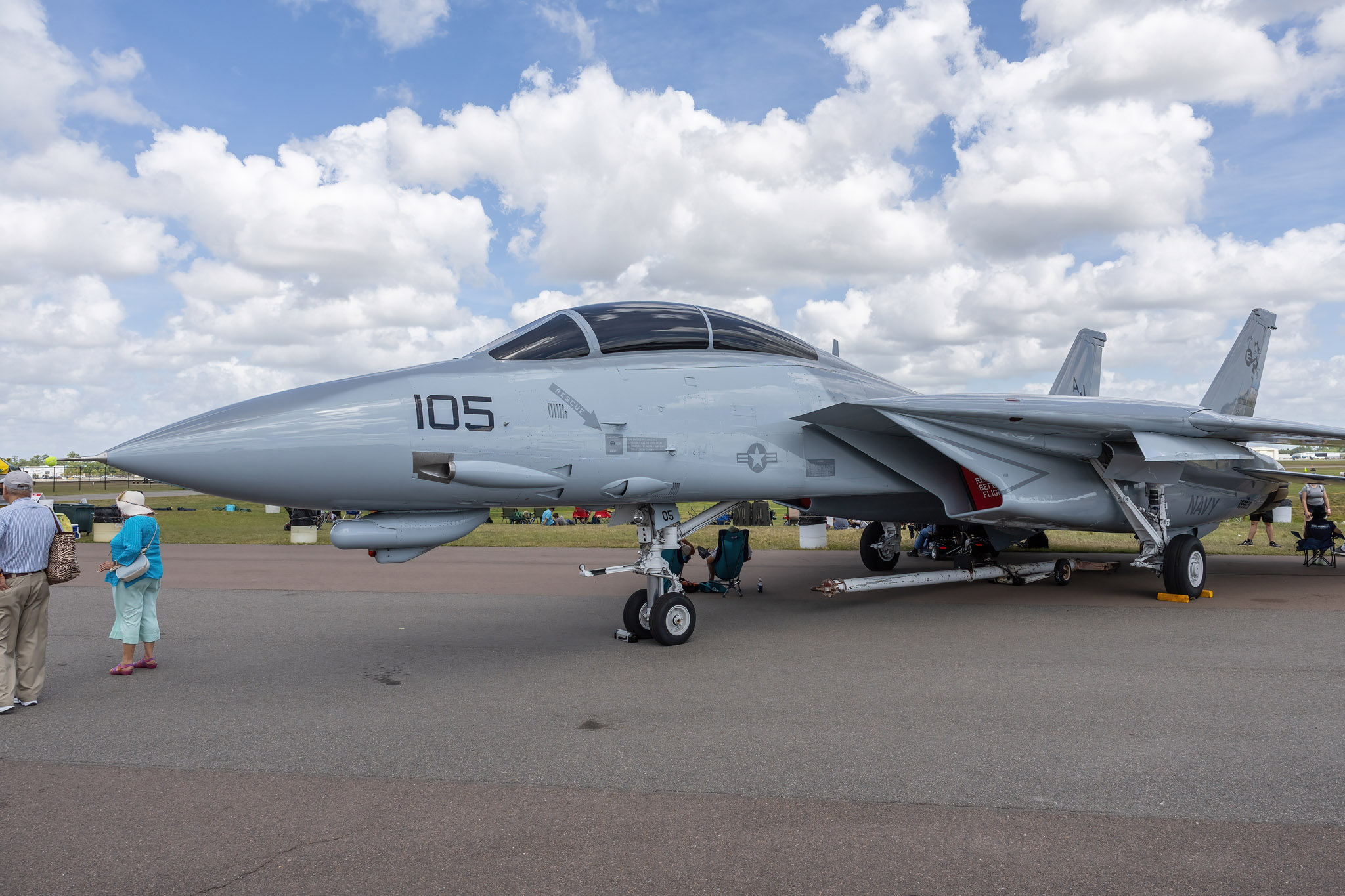 F-14D(R) Tomcat serial number 159619, which made its last flight in February 2006, displayed on static exhibition during the SUN ’n FUN Aerospace Expo air show, held on April 1–6, 2025, in Lakeland, Florida / Photos: Michał Adamowski, MILMAG
F-14D(R) Tomcat o numerze seryjnym 159619, który ostatni lot wykonał w lutym 2006, prezentowany na wystawie statycznej podczas pokazów lotniczych SUN ‘n FUN Aerospace Expo, które odbyły się w dniach 1-6 kwietnia 2025 w Lakeland na Florydzie / Zdjęcia: Michał Adamowski, MILMAG
The Maverick Act bill was introduced on March 23 this year by Senators Tim Sheehy, a Republican from Montana, and Mark Kelly, a Democrat from Arizona. According to information from May 4 this year, it is currently awaiting consideration in the House of Representatives. If passed and signed by President Donald Trump, it will authorize the Secretary of the U.S. Navy, currently Acting Secretary Hung Cao, to donate three preserved aircraft with serial numbers 164341, 164602, and 159437 to the USSRC Commission free of charge.
The bill emphasizes that none of the aircraft in question has any capability to be used as a platform for launching or dropping munitions, or any other combat capability for which it was designed.
It further states that, although the Secretary of the U.S. Navy is not required to repair or alter the condition of the aircraft before transferring ownership, all operating and maintenance manuals, as well as surplus spare parts from military stocks, must be provided so that one of the F-14D aircraft can be made airworthy or used for static display.
In addition, the USSRC Commission will be authorized to enter into agreements with eligible non-profit organizations for the restoration and operation of these aircraft for public display, air shows, and commemorative events in order to preserve the legacy of naval aviation. Similar authorization was granted to the Collings Foundation in the case of the F-4S Phantom II aircraft known as Big Bunny, serial number 158358, received from the U.S. Navy, which has been undergoing preparatory work for static display since 2023.
The USSRC is a museum dedicated to space exploration, established by the Alabama state government in 1970, and is sometimes referred to as the largest spaceflight museum on Earth.
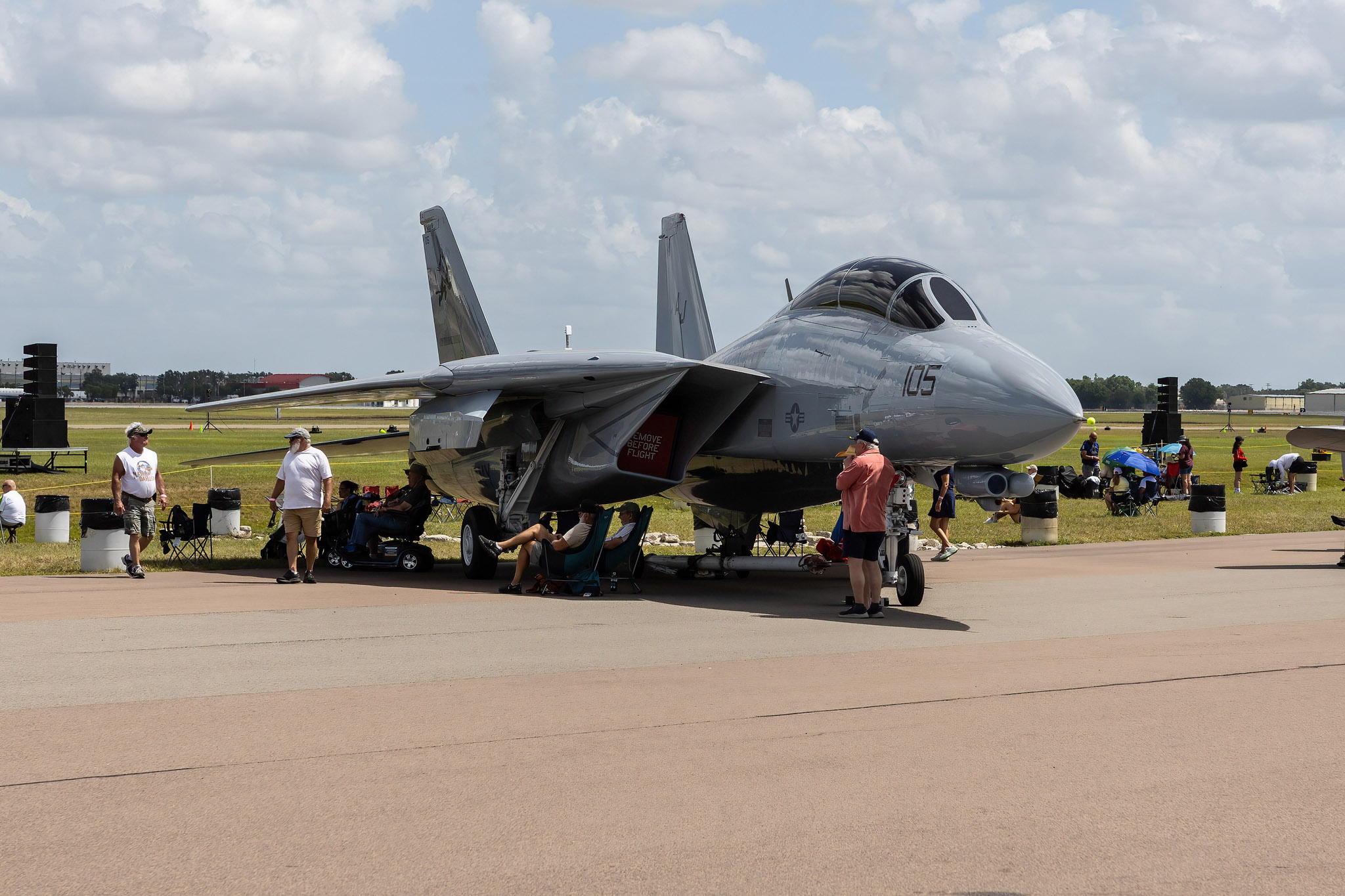
Grumman F-14 Tomcat fighter-interceptors entered service with the U.S. Navy on September 22, 1974, undergoing modernization from the A variant through the B and ultimately to the D. The only export user was Iran, which received 79 of the 80 ordered F-14AGR Tomcats, later designated F-14A/AM. The last airworthy examples were likely destroyed by Israel on March 7 this year. A total of 712 aircraft were built, and the last operational flights in U.S. Navy service were carried out by two F-14Ds from VF-31 Tomcatters and VF-213 Black Lions, based at NAS Oceana, Virginia, on March 10, 2006.
At present, eight F-14s are preserved in storage at the facility controlled by the 309th Aerospace Maintenance and Regeneration Group (AMARG) in Tucson, Arizona, including three F-14As, two F-14Bs, and three F-14Ds. It is the latter aircraft that are covered by the Maverick Act bill.
It is worth adding that a total of 68 aircraft are held in museums across the United States, with their transfer conducted under strict government control to ensure that no spare parts could reach embargoed Iran.
Over the past 20 years, many components have degraded, while numerous assemblies have been removed from the aircraft themselves. For this reason, the F-14Ds that would be transferred to the USSRC will require thorough inspections of their airframes and onboard systems. They will then have to undergo work to bring them into compliance with the requirements of the Federal Aviation Administration (FAA). This process is expected to be costly and time-consuming, given how much time has passed since their retirement and the absence of supply chains. It is worth noting that F-14s were expensive to operate per flight hour during their service, so any future participation in air shows is likely to be limited.
