


















On Monday, March 2, 2026, during a visit to the Île Longue strategic submarine base in Brittany, French President Emmanuel Macron said that France is holding talks with eight countries on an advanced nuclear deterrence program. He named the United Kingdom, Germany, Poland, the Kingdom of the Netherlands, Belgium, Greece, Sweden, and Denmark as partners.
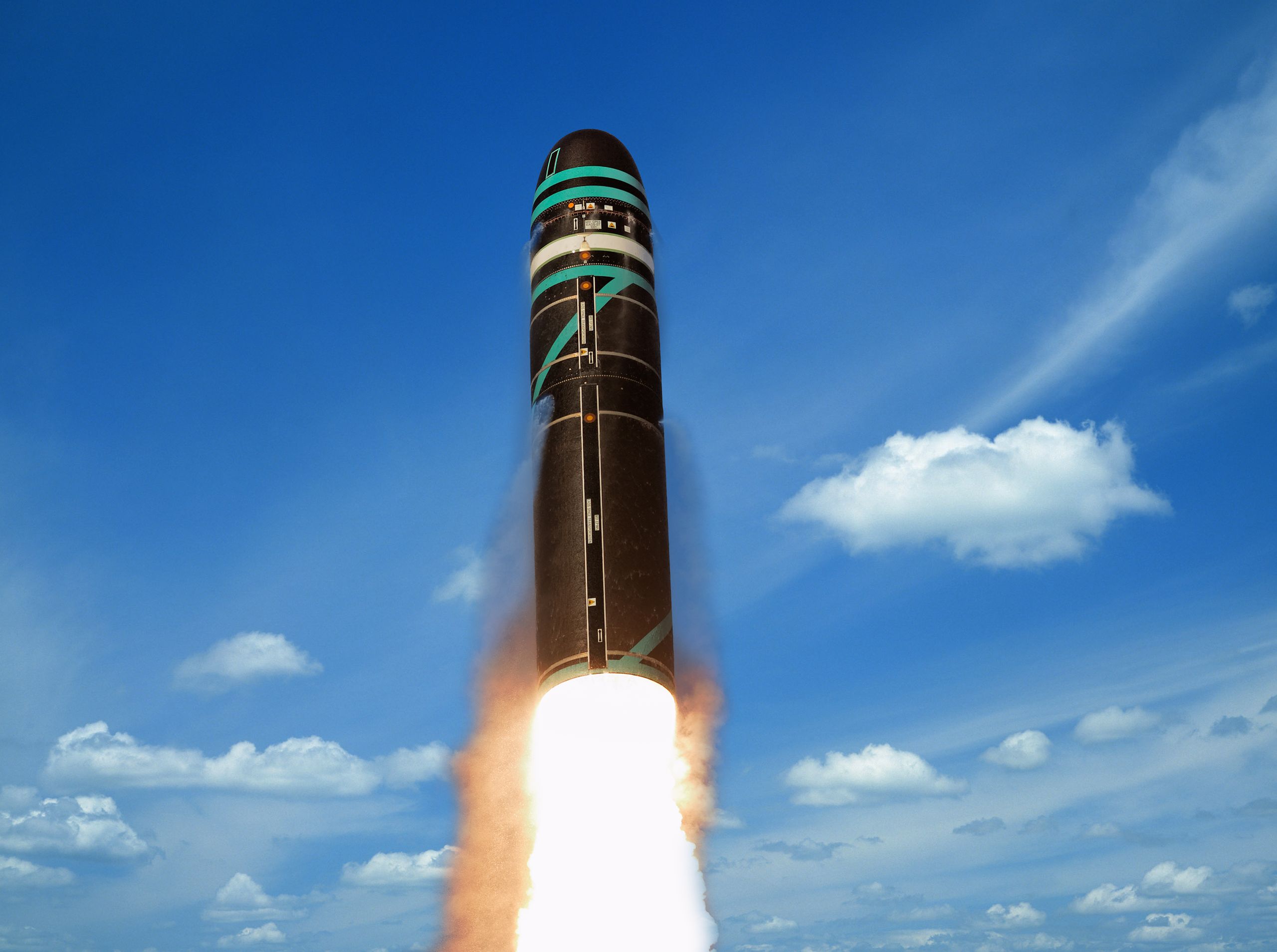 Image: ArianeGroup
“I have ordered an increase in the number of nuclear warheads in our arsenal. We will no longer disclose the size of our nuclear arsenal, unlike in the past. I will never hesitate to make the decisions necessary to protect our vital interests. If we were to use our arsenal, no country would be able to avoid it,” Emmanuel Macron said during a 45-minute speech.
He noted that the advanced deterrence France is proposing is a separate effort that would perfectly complement NATO Nuclear Sharing, both strategically and technically.
The most recent data from the Stockholm International Peace Research Institute (SIPRI) put France’s nuclear arsenal at around 290 warheads.
Macron added that France could carry out a symbolic deployment of strategic nuclear-deterrence capabilities among European allies, starting with joint exercises, naming eight European countries. At the same time, he emphasized that the decision on any potential use of nuclear weapons would remain in Paris.
Macron has been urging Europe since 2023 to hold a debate on the role French nuclear weapons could play in the defense of the continent. It is worth recalling that on February 24, 2025, the British daily The Telegraph reported that the Élysée Palace was considering deploying Dassault Rafale multirole fighters with nuclear weapons in Germany. In March last year, Macron also announced investments to expand France’s nuclear deterrence capabilities.
Following the French president’s declaration, Prime Minister Donald Tusk confirmed Poland’s willingness to take part in the initiative:
“Poland is holding talks with France and a group of its closest European allies on an advanced nuclear deterrence program. We are rearming with friends so that enemies do not dare to attack us,” the Polish prime minister wrote on social media.
Recently, on February 16 of this year, President Karol Nawrocki stressed that Poland should consider developing its own nuclear weapons in the face of the growing threat from Russia. His predecessor, Andrzej Duda, in turn, spoke about a desire to join NATO Nuclear Sharing.
France’s Nuclear Capability
France’s nuclear deterrent forces (Force de dissuasion, also known as the Force de frappe) consist of a maritime and an air component.
Within the maritime strategic forces FOST (Force océanique stratégique), the French Navy (Marine Nationale) fields the ESNA unit (Escadrille des Sous-Marins Nucléaires d’Attaque), currently equipped with four Le Triomphant-class nuclear-powered strategic submarines: Le Triomphant (S616), Téméraire (S617), Le Vigilant (S618), and Le Terrible (S619). Each is armed with 16 sea-launched ballistic missiles of the M51 family, with a range of 10,000–11,000 km depending on the variant, carrying 6–10 next-generation TNO (Tête nucléaire océanique) nuclear warheads with a yield of 150 kT each in a MIRV (Multiple Independently Targetable Reentry Vehicle) configuration. In the future, all these boats are to be replaced by next-generation submarines under the SNLE 3G (Sous-Marin Nucléaire Lanceur d’Engins de 3rd Génération) program – the first is already under construction.
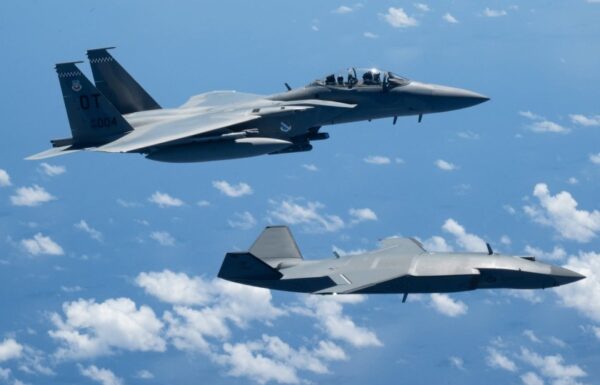
This is complemented by the air component within the Strategic Air Forces (Forces Aériennes Stratégiques) of the Air and Space Force (Armée de l’Air et de l’Espace) and the naval aviation nuclear force (Force Aéronavale Nucléaire). Dassault Rafale B multirole fighters from the air force and carrier-based Rafale M aircraft from the navy are adapted to carry ASMP (Air-Sol Moyenne Portée) supersonic cruise missiles with a TN81 nuclear warhead with a yield of 150–300 kT and a range of up to 300 km, and in the near future also the upgraded ASMP-A (Amélioré), with an increased range of up to 600 km, a cruise speed on the order of Mach 3, and a next-generation TNA (Tête nucléaire aéroportée) nuclear warhead with a yield of 300 kT.
These aircraft are based at the following air bases: 113 Saint-Dizier–Robinson (Grand Est region, Haute-Marne department), 125 Istres–Le Tubé (Provence–Alpes–Côte d’Azur region, Bouches-du-Rhône department), and 702 Avord “Capitaine Georges Madon” (Centre-Val de Loire region, Cher department). They are supported by a fleet of Airbus A330-200 MRTT Phénix transport and tanker aircraft. According to official data, the inventory of these cruise missiles stood at 54 rounds.
Direction la base de l’Île Longue pour y rencontrer les femmes et les hommes qui assurent au quotidien la permanence et l’excellence opérationnelle de notre dissuasion nucléaire. pic.twitter.com/V89unCbV2B
— Emmanuel Macron (@EmmanuelMacron) March 2, 2026
Discours sur la dissuasion nucléaire de la France. https://t.co/q4ujAPTxon
— Emmanuel Macron (@EmmanuelMacron) March 2, 2026
Polska prowadzi rozmowy z Francją i grupą najbliższych europejskich sojuszników w sprawie zaawansowanego programu odstraszania nuklearnego. Zbroimy się z przyjaciółmi, aby wrogowie nie ośmielili się nas zaatakować.
— Donald Tusk (@donaldtusk) March 2, 2026