



















Opponents of SAFE claim it is a loan to rescue German industry, which is obvious nonsense. Germany will earn pocket change from Poland’s SAFE. At the same time, they forget that SAFE itself is a huge opportunity for Poland’s defense industry, which for years was underfunded and pushed into the background because equipment offered by foreign contractors comes in prettier packaging. And it does not matter that it directly competes with domestic products. That is why it is good to see that something has finally started moving. For now, in small steps, but still.
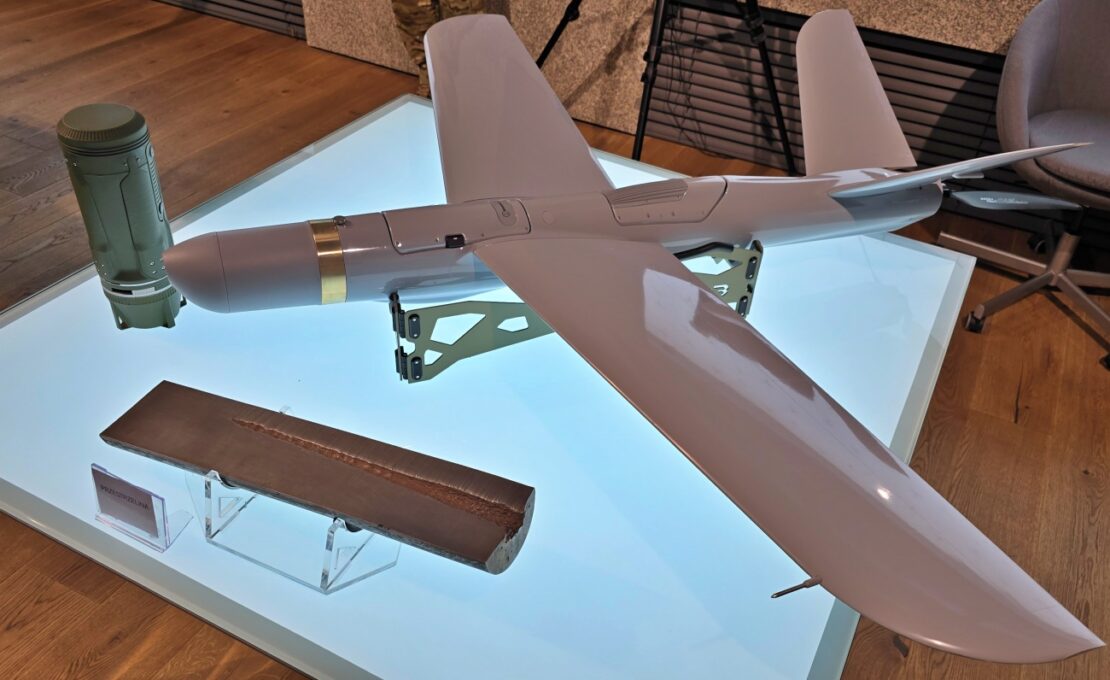 Romania plans to purchase Polish Warmate loitering munitions, among other systems / Photo: Jakub Link-Lenczowski, MILMAG
For WB Electronics of the WB Group, the EU SAFE program includes Romania’s planned purchase of Warmate unmanned systems and elements of the Gladius system. The value of this program is approximately 146–147 million EUR. Available information indicates that the entire package is to be implemented through joint European procurement, which is one of the foundations of SAFE and, at the same time, one of its main tools for encouraging the consolidation of procurement within the EU.
The package primarily includes Warmate loitering munitions, elements of the Gladius reconnaissance-strike system, and potential integration with command and communications systems developed by WB. This last element is significant beyond the mere purchase of equipment, as it enters the domain of battlefield architecture, meaning the integration of data, reconnaissance, and effectors.
As of today, however, there is no publicly confirmed information about any further SAFE contracts signed by WB in other SAFE-participating countries. Unofficially, however, there is known to be interest in the Ożarów-based company’s products. The most natural direction for further expansion remains Central and Eastern Europe, where, following the experience of the war in Ukraine, countries in the region are simultaneously rebuilding and modernizing their reconnaissance, precision-strike, and counter-drone capabilities. In this context, Lithuania, Latvia, Estonia, Slovakia, and Czechia are most often mentioned as potential participants in future joint procurement projects, but at this stage there is no information about any signed SAFE contracts with these countries.
At the same time, preparations by the WB Group itself for deeper involvement in a local-production model are visible. One example is the establishment of WB Romania in Bucharest, which is intended to serve as an industrial, service, and integration base. Such structures are important in the context of SAFE, as some countries participating in the program expect not only deliveries, but also an industrial presence and the transfer of know-how on their territory.
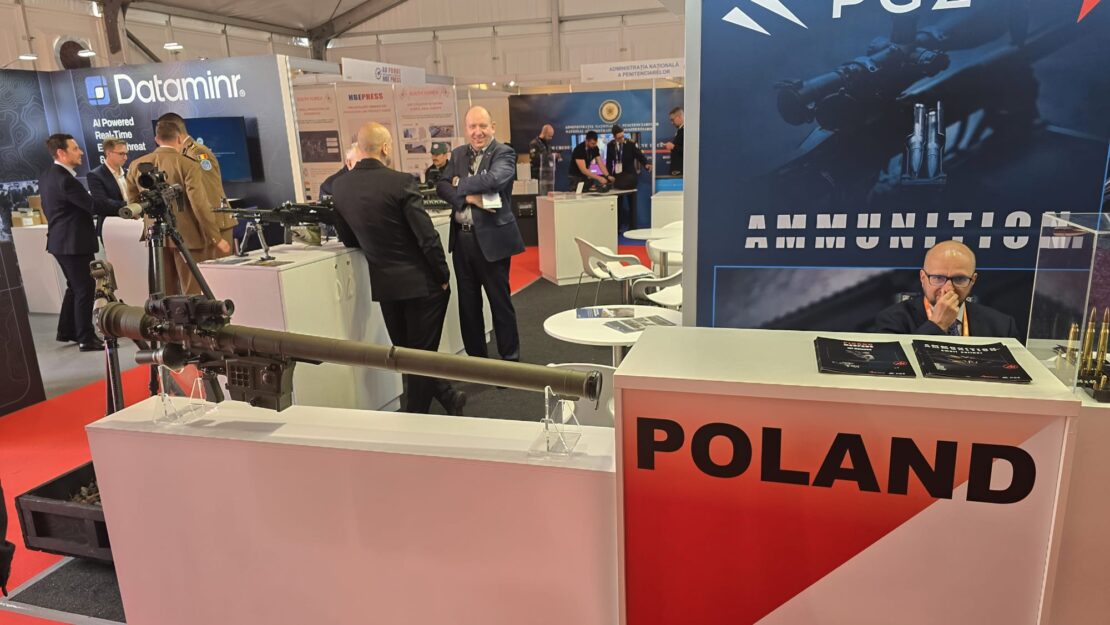 Piorun MANPADS / Photo: Jakub Link-Lenczowski, MILMAG
Growth Opportunity
The SAFE program will benefit not only the WB Group, although it receives the most attention due to the high media profile of unmanned systems. Another major beneficiary could be Mesko. SAFE strongly favors the production of artillery ammunition and short-range air defense missiles. Piorun already has export credentials following its successes in Ukraine, while many NATO countries are urgently rebuilding their MANPADS stockpiles. Potential customers include Romania, the Baltic states, Slovakia, and the Nordic countries. An even larger market concerns 155 mm ammunition, as Europe still faces a huge production deficit.
 Universal Modular Tracked Platform with the Slovak TURRA-30V9 turret / Photo: Polska Grupa Zbrojeniowa
Huta Stalowa Wola also has very significant export potential. The Krab is already recognizable after the war in Ukraine, but the Borsuk may prove to be the key product. A wave of replacements for post-Soviet IFVs is underway across Europe, and many armies are looking for a less expensive alternative to the Lynx or ASCOD 2. SAFE could help finance such purchases. Romania, Slovakia, and Bulgaria are natural candidates.
In the radar and air defense segment, PIT-Radwar is a potential exporter. The SAFE program strongly supports European counter-drone and reconnaissance systems, and after the experience of the Russo-Ukrainian War, virtually every country in the region is increasing purchases of short-range radars, passive systems, and air defense integration.
The situation regarding Rosomak S.A. is also interesting. The Rosomak itself has limited export potential as an older-generation design, but specialized variants, such as command, recovery, reconnaissance vehicles, or armored personnel carriers for territorial defense forces, could find buyers in countries that want to rapidly increase the size of their armed forces.
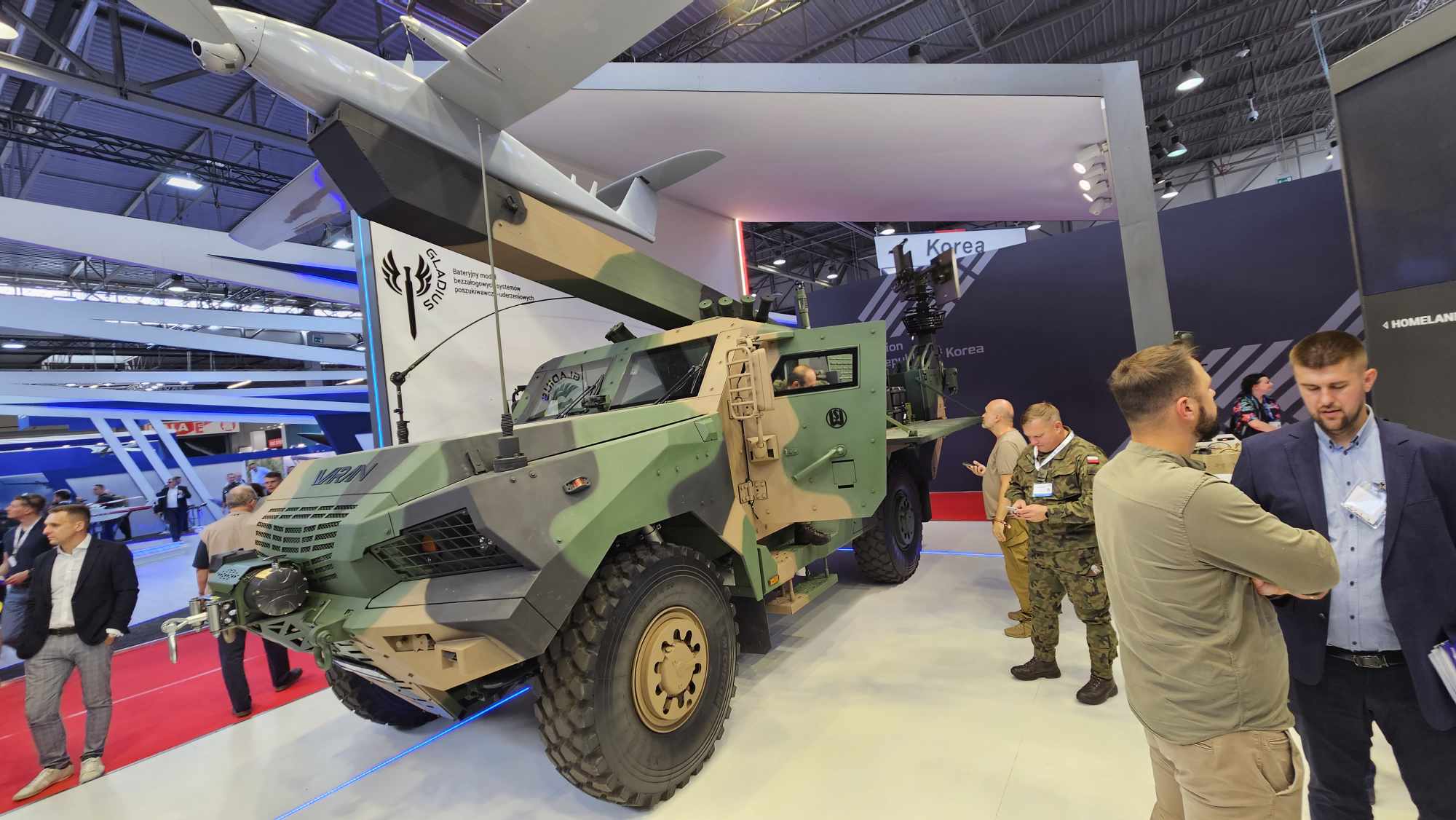 Gladius UAV / Photo: Jakub Link-Lenczowski, MILMAG
In practice, SAFE is most favorable to Polish companies in three segments: drones, ammunition, and air defense systems. Europe today needs large quantities of equipment that can be produced quickly, not only very expensive platforms. This is an area in which the Polish industry is price-competitive with France or Germany, so it may be a natural choice for NATO’s eastern-flank armies.
The most important point, however, is something else. SAFE favors joint production projects. That is why many Polish companies will try to do what WB is doing in Romania: establish local subsidiaries, assembly facilities, and technology-transfer arrangements. For Eastern European countries, this is often a political condition attached to major purchases. As a result, Polish exports may increasingly mean not only the sale of finished equipment, but also the development of parts of production abroad and, most importantly in the long term, the consolidation of Poland’s position in the region.
See also: