

























On Wednesday, March 18, 2026, Gdańsk University of Technology, AGH University of Science and Technology in Kraków, and PGZ Stocznia Wojenna (PGZ Naval Shipyard, part of the Polish Armaments Group – PGZ) signed a letter of intent on cooperation in the development and production of autonomous underwater drones capable of operating in swarms. These dual-use solutions are intended for military applications as well as for monitoring and protecting underwater critical infrastructure.
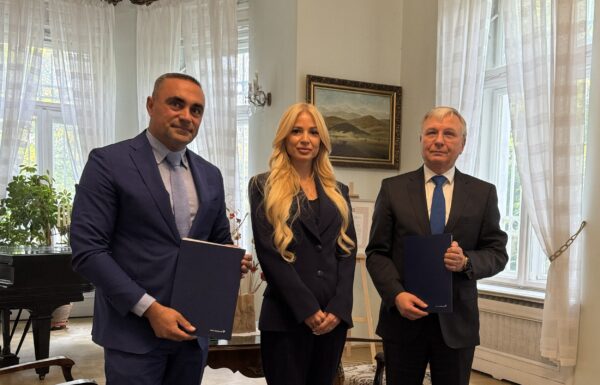
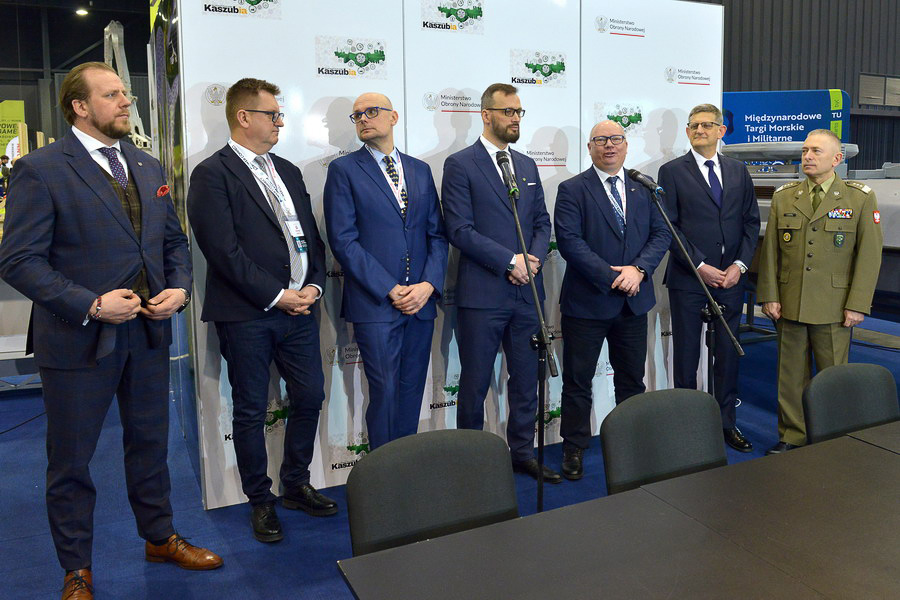
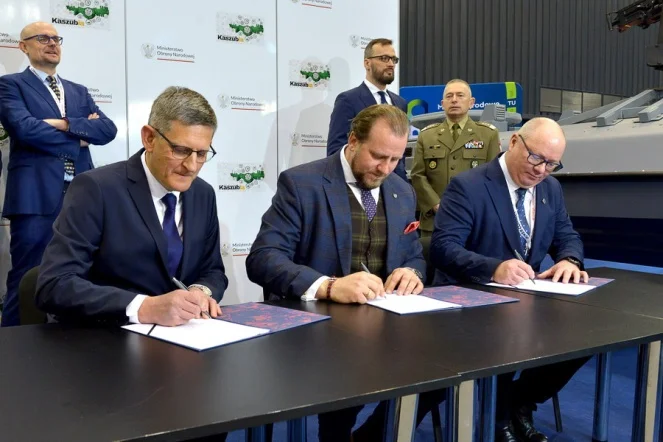 From left: Prof. Wojciech Chmiel, Marcin Ryngwelski, Prof. Krzysztof Wilde. On the right: Maciej Samsonowicz and Lt. Gen. Krzysztof Król / Photos: Krzysztof Krzempek, Gdańsk University of Technology
The signing ceremony of the letter of intent took place at the AMBEREXPO Exhibition and Congress Centre in Gdańsk during the PowerConnect Energy Fair and Conference, one of Poland’s key events dedicated to energy transition, modern technologies, and cooperation between academia and industry. The event was attended by Maciej Samsonowicz, advisor to the Minister of National Defence, and Lt. Gen. Krzysztof Król from the General Staff of the Polish Armed Forces. Gdańsk University of Technology was represented by its rector, Prof. Krzysztof Wilde; AGH University of Science and Technology by the rector’s plenipotentiary, Prof. Wojciech Chmiel; and PGZ Stocznia Wojenna by its President of the Management Board, Marcin Ryngwelski.
“I am very pleased that cooperation between universities within the Green Industrial Districts of Kaszubia and Galicia is today reflected in the signing of this letter of intent,” said Maciej Samsonowicz. “For us, as the Ministry of National Defence, it is very important not only to pursue procurement and business activities, but also to develop research and development initiatives in Poland.”
“We clearly see that the threats around us are not solely related to the number of soldiers or the size of a potential adversary’s army. Technologies are playing an increasingly important role,” emphasized Lt. Gen. Krzysztof Król.
For military missions, object detection, and protection of maritime infrastructure
As part of the cooperation, the universities and the shipyard are to prepare and implement a joint research and development project focused on the development of advanced autonomous underwater drones capable of operating in swarms.
“Polish universities have a great deal to offer in the field of designing, developing, and manufacturing autonomous vehicles – particularly for the lower hemisphere, meaning underwater and surface vehicles. Our ambition is for most of the technological know-how to originate here and for supply chains to be as localized as possible, ideally within Poland,” said Prof. Krzysztof Wilde, Rector of Gdańsk University of Technology. “At Gdańsk University of Technology, we have been working on underwater vehicles for over 40 years. We specialize, among other things, in detecting and neutralizing threats, but not only that. When it comes to security, especially in the maritime and underwater domain, there is still much to be done. This initiative is intended to lead to the development of a new offering in the field of underwater drones and their cooperative operation in groups.”
“What we have to offer can effectively compete with solutions provided by partners with much greater experience, particularly in the military domain. […] Systems capable of operating autonomously in the aquatic environment and cooperating in swarms are a challenge worth undertaking. This could become an important specialization for Poland,” added Prof. Wojciech Chmiel of AGH University of Science and Technology.
“In our current projects, we work very closely with universities, including Gdańsk University of Technology, for which we are grateful. We already have shared experience, as exemplified by the Głuptak vehicle used on Kormoran II-class mine countermeasure vessels […] That is why I was very pleased that PGZ Stocznia Wojenna was invited to participate in this initiative,” said Marcin Ryngwelski, President of PGZ Stocznia Wojenna. “There is a clear shortage of engineers today. That is why it is important that young talent develops through such projects—people for whom modern equipment and technologies are second nature. As a business, we need such specialists,” he added.
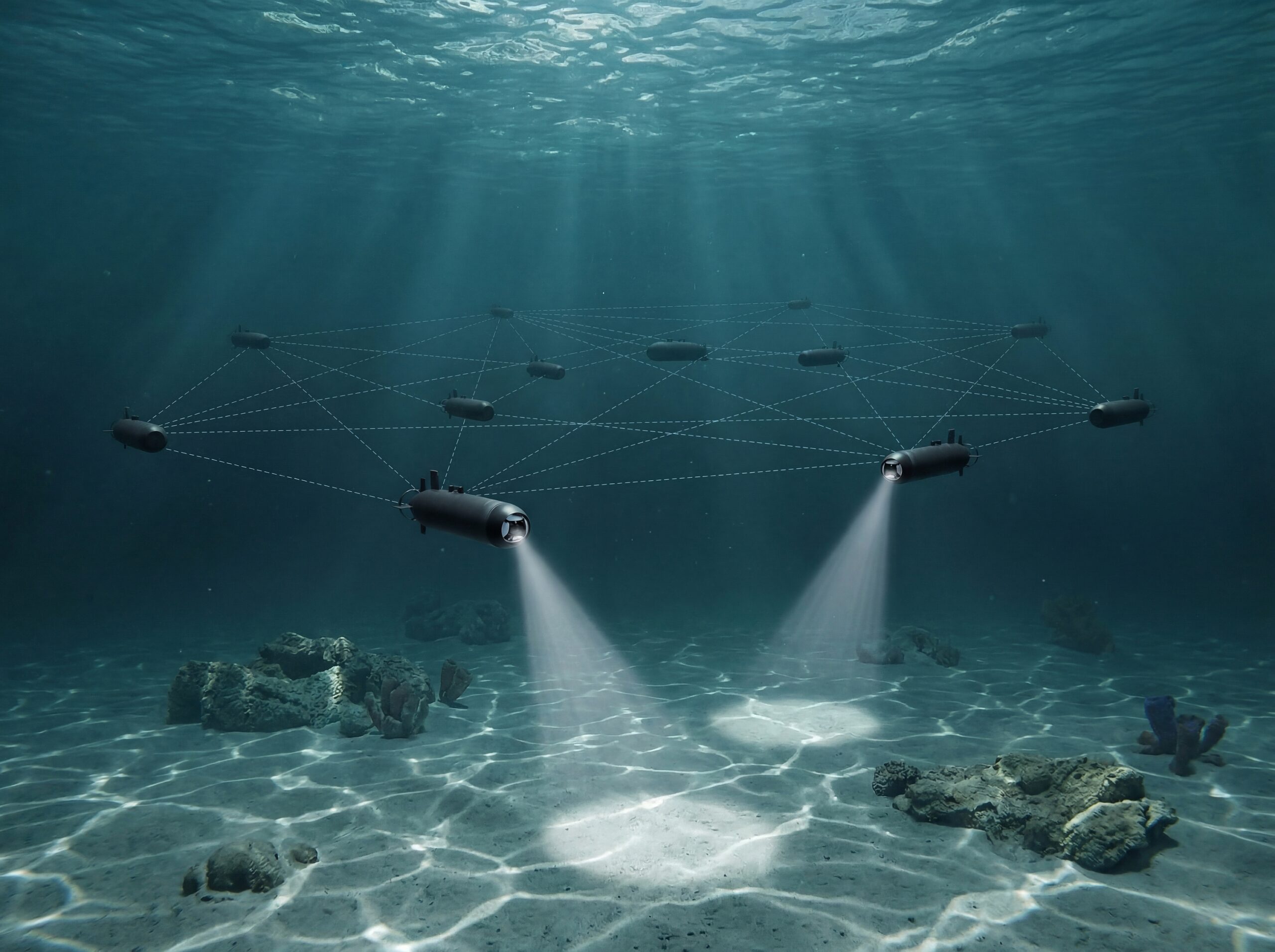 Image: PGZ Stocznia Wojenna
As part of the project, Gdańsk University of Technology declares, among other things, the development of sensor and detection systems, underwater navigation systems based on GPS-denied positioning methods, underwater communication systems, and the integration of onboard systems.
AGH University of Science and Technology will be responsible for developing artificial intelligence algorithms for sensor data analysis and object detection, advancing systems that integrate data from cameras, hydrophones, and other sensors, as well as developing algorithms for autonomy and swarm cooperation of drones.
PGZ Stocznia Wojenna, in turn, will prepare production infrastructure and conduct testing and technology demonstrations in maritime conditions.
The developed solutions will be dual-use in nature and will find applications, among others, in military missions, seabed object detection, and the monitoring and protection of underwater critical infrastructure.
PGZ Stocznia Wojenna podpisała dziś w Gdańsku porozumienie z @PolitechnikaGdansk i @AGH_Uczelnia o wspólnym opracowaniu autonomicznych dronów podwodnych do ochrony, detekcji i neutralizowania zagrożeń. Wydarzenie odbyło się podczas Targów Energetycznych #PowerConnect2026.
To… pic.twitter.com/k14hbm1VpH
— PGZ Stocznia Wojenna ⚓ (@StoczniaWojenna) March 18, 2026
See also:
