


















On Friday, February 6, 2026, the German company KNDS Deutschland (part of the Franco-German joint venture KNDS) announced that it is expanding its existing cooperation in the field of counter-drone defense for military land systems and operational solutions with the German start-up TYTAN Technologies.
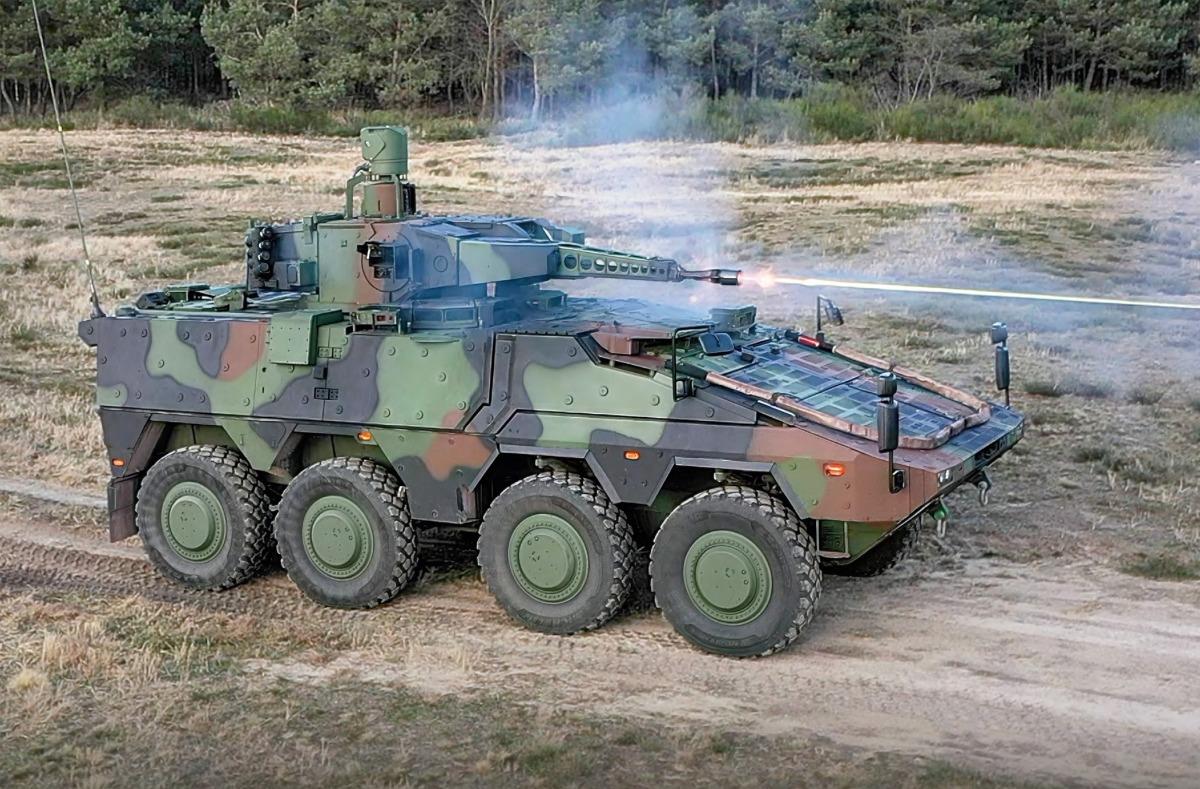 Prototype of the Schakal wheeled infantry fighting vehicle during live-fire testing / Photo: OCCAR
Yesterday, in the presence of Federal Minister for Economic Affairs and Energy Katherina Reiche, TYTAN Technologies CEO and co-founder Balázs Nagy, and KNDS Deutschland Vice President for Digitalization Mathias Nöhl, a Memorandum of Understanding (MoU) was signed to continue the integration process of the kinetic Interceptor-S interception system with the cargo compartment of the Boxer 8×8 vehicle equipped with the unmanned RCT30 turret system. In German and Dutch armed forces service, this configuration will bear the name Schakal. On October 17, 2025, a contract was signed for 222 vehicles worth 4.5 billion EUR.
The fully integrated system was presented during the Bundeswehr Experimentalserie Land event in Munster/Bergen in the fall of 2025. The interceptor drone launcher has been installed in the rear section of the vehicle (its hull), within the mission module.
KNDS Deutschland and TYTAN Technologies have now committed to cooperating in order to implement these solutions in the series-production vehicles planned for delivery, with the aim of protecting crews from unmanned aerial threats.
The cooperation will also include the joint development of a new European standard for mobile launch systems for interceptor drones, as well as further advancement of counter-UAS (C-UAS) technologies for the protection of military bases and frontline air defense.
Balázs Nagy:
“Two companies with a clear track record of battle-proven systems are joining forces to set the standard in C-UAS systems. We strongly believe in the synergy of innovation at scal in partnership with a strong industrial parter.”
KNDS and TYTAN have been working together successfully since 2025.
“As a leading European provider of land systems, we are convinced that agile and innovative companies like TYTAN and KNDS are an ideal fit to drive the integration of new, innovative solutions and offer soldiers the best possible systems,” Mathias Nöhl adds.
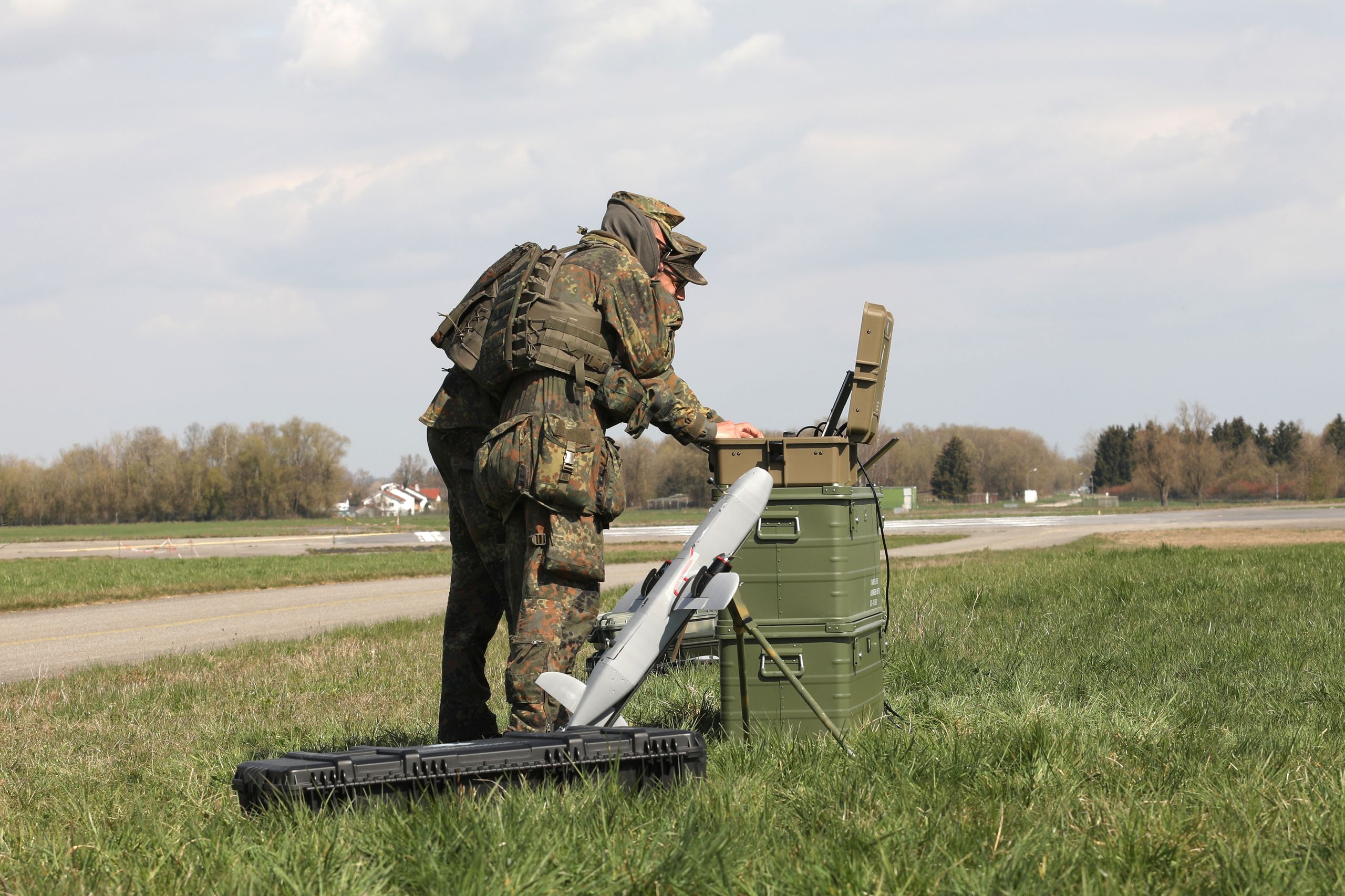 Interceptor interceptor drone during testing by soldiers of the German Armed Forces / Photo: TYTAN Technologies
Katherina Reiche, Federal Minister for Economic Affairs and Energy, emphasizes in this context:
“Drones are enablers. As dual use systems, they protect critical infrastructure while at the same time contributing to the defence against hostile aerial threats in Ukraine. This technology is not developed at a desk alone. Its evolution is shaped by real operations, by experience from the field, including Ukraine, and by the willingness to take responsibility and accept risk. Only this creates real capability.”
It is worth noting that earlier, on October 7, 2025, the Federal Office of Bundeswehr Equipment, Information Technology and In-Service Support under the German Federal Ministry of Defense (the BAAINBw) signed a contract worth several hundred million euros with TYTAN Technologies for the development of interceptor drones to protect military infrastructure from threats posed by other unmanned aerial systems.
According to the company’s website, the Interceptor drone developed by TYTAN Technologies is manufactured using additive technologies (3D printing). It has a maximum takeoff weight of 5 kg, including a 1 kg payload, a range of over 15 km, and a cruising speed exceeding 250 km/h. The company has already conducted in-flight demonstrations of the system.
The Interceptor is offered in a portable version, in which it is launched by a soldier from a foldable launcher, as well as in a mobile version, where it can be housed in a launch container mounted on a wheeled or tracked platform. The control system is fully autonomous, with the operator only making decisions regarding the drone’s launch and the interception of a hostile object.