























On Thursday, April 9, 2026, the U.S. Army Contracting Command (ACC) at Redstone Arsenal, Alabama, acting on behalf of the U.S. Department of Defense, awarded a contract worth 4,761,000,000 USD to Lockheed Martin for the production of PAC-3 MSE (Patriot Advanced Capability-3 Missile Segment Enhancement) interceptor missiles for the MIM-104 Patriot air and missile defense system.
 Image: Lockheed Martin
In addition to producing further batches of PAC-3 MSE missiles, the contract covers all ancillary services, equipment, hardware, technical planning, management, and production activities.
The work will be carried out at Lockheed Martin facilities in Huntsville, Alabama; Clearwater, Florida; East Aurora, New York; Rocket Center, West Virginia; Vergennes, Vermont; Hollister, California; Wichita, Kansas; Lake Mary, Florida; Pinellas Park, Florida; Camden, Arkansas; Chelmsford, Massachusetts; Grand Prairie, Texas; Lufkin, Texas; Ocala, Florida; and Archbald, Pennsylvania, with an expected completion date of June 30, 2030.
The funding comes from U.S. Army fiscal year 2026 NDAA defense budget funds in the amount of 264,960,000 USD. At the time of contract award, fiscal year 2026 Foreign Military Sales (FMS) funds in the amount of 4,496,040,000 USD were also obligated, accounting for nearly 95% of the total contract value.
“We are answering the nation’s call with urgency and partnering with the DoW to accelerate PAC-3 MSE production faster than ever before,” said Tim Cahill, president, Lockheed Martin Missiles and Fire Control. “Our investments in our facilities, workforce and supply chain ensure we can deliver at scale and with speed. With the right tools, proven processes and skilled employees in place, we are positioned to deliver a record number of munitions in support of the warfighter and our allies.”
Analysis
The contract is directly linked to the framework agreement concluded on January 6 this year with the U.S. Department of Defense to more than triple production of complete PAC-3 MSE interceptors from roughly 600 to approximately 2,000 per year. On April 1 this year, Boeing also signed a seven-year framework agreement to triple production of seekers for those missiles.

Although the Department of Defense announcement does not specify who the recipient of the PAC-3 MSE missiles will be under the FMS program, on January 30 this year the U.S. Department of State approved the potential sale of a batch of 730 missiles of this type to the Kingdom of Saudi Arabia.
It is also worth bearing in mind that, apart from Saudi Arabia, which is said to have fired more than 1,600 out of 2,800 PAC-2 and PAC-3 (CRI and MSE) missiles, Kuwait reportedly recorded very heavy expenditure of Patriot-system missiles in recent weeks during the war with Iran, between 110 and 150 out of around 200 missiles, while Qatar and the United Arab Emirates also saw major usage, with both countries estimated at about 2,400 missiles. These figures are, of course, only estimates.
The PAC-3 MSE missiles, which are a development of the CRI (Cost Reduction Initiative) variant, were designed to enhance the MIM-104 Patriot system’s capability to intercept ballistic missiles. Under the program, they received more powerful rocket motors. Their performance, including interception range and altitude, was also improved. PAC-3 MSE missiles can also be used to destroy maneuvering targets such as cruise missiles as well as manned and unmanned aircraft. They do not have a conventional explosive warhead. Instead, they destroy targets using kinetic energy in a hit-to-kill mode.
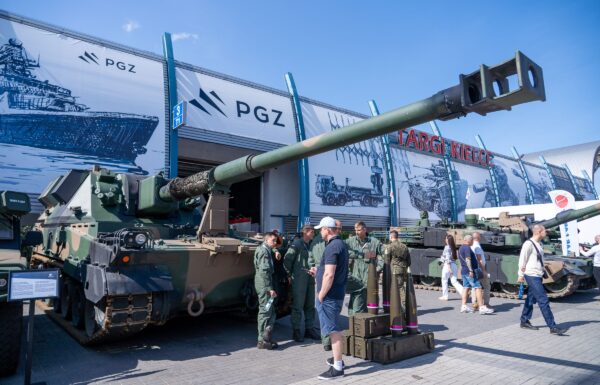
It is worth emphasizing that this further major order for PAC-3 MSE missile production will be significant from Poland’s perspective, not only as a user of the system but also as a supplier, since companies of the Polish Armaments Group (PGZ) are included in the program’s supply chains: Wojskowe Zakłady Elektroniczne, Wojskowe Zakłady Lotnicze No. 1, and Wojskowe Zakłady Uzbrojenia.
Following a landmark framework agreement in January, @LockheedMartin has received a U.S. Government contract to accelerate PAC‑3® MSE production. Expanding delivery of this combat-proven interceptor will reinforce defensive capabilities for U.S. and allied forces.
— Lockheed Martin News (@LMNews) April 10, 2026
See also: