




























On Tuesday, January 6, 2026, the American company Lockheed Martin announced that it had signed a seven-year framework agreement with the U.S. Department of Defense to accelerate and expand production of PAC-3 MSE (Patriot Advanced Capability-3 Missile Segment Enhancement) interceptor missiles from the current level of approximately 600 to 2,000 units per year, in support of U.S. forces as well as allied and partner nations.
 Photo and image: Lockheed Martin
This agreement is a direct result of the Department of Defense’s Acquisition Transformation Strategy, one of the most significant reforms in decades. The framework introduces a new model designed to provide long-term demand certainty, enabling industry investment, increasing production tempo, and improving operational efficiency. It includes a collaborative funding approach intended to maintain initial cash neutrality, allowing industry to invest with confidence in achieving the required production levels. The agreement reflects years of cooperation aimed at modernizing acquisition processes and delivering critical capabilities at the speed and scale required by today’s security environment.
The seven-year agreement will allow annual production of PAC-3 MSE missiles to increase to approximately 2,000 units. Lockheed Martin is well positioned to fulfill the agreement, having increased PAC-3 MSE production by more than 60% over the past two years. In 2025, the company delivered 620 PAC-3 MSE missiles, exceeding the previous year’s output by more than 20%.
Lockheed Martin will support the necessary investments to expand production, and both the Department of Defense and the company will be able to realize cost savings enabled by long-term demand certainty for PAC-3 MSE missiles.
In the wake of recent real-world combat operations, demand for PAC-3 MSE continues to grow. This agreement will more than triple production capacity to meet the needs of U.S. armed forces, their allies, and partner nations. As a result, the PAC-3 program will support thousands of additional U.S. jobs across the supply chain. Beyond increasing output, the agreement strengthens resilience and mitigates fragility within the U.S. defense industrial base by enabling long-term supplier investments, predictable demand signals, and sustained production.
In 2025 alone, more than 24,000 missiles and related products were delivered to users in the United States and allied countries.
“We appreciate the Department of War’s leadership in advancing acquisition reform,” said Lockheed Martin Chairman, President and CEO Jim Taiclet. “This first-of-its-kind approach builds on years of advocacy and collaboration to bring commercial practices to major acquisition programs. We will create unprecedented capacity for PAC-3 MSE production, delivering at the speed our nation and allies demand while providing value for taxpayers and our shareholders.”
Lockheed Martin will continue to work with the U.S. government to secure the first implementing contract, which is expected in fiscal year 2026, subject to the appropriation of funds by Congress.

On October 14, 2025, Lockheed Martin signed a memorandum of understanding (MoU) with Germany’s Diehl Defence regarding the latter’s inclusion in the global supply chain for the PAC-3 MSE program.
Earlier, on September 3, 2025, the United States Army placed a record order with Lockheed Martin under the IAMD program, signing a framework agreement with a maximum value of 9.8 billion USD for the delivery of 1,970 PAC-3 MSE missiles for MIM-104 Patriot air and missile defense systems. Meanwhile, also on October 14 last year, Boeing received a multi-year order from Lockheed Martin for the production of more than 3,000 guidance sections for PAC-3 family missiles, valued at approximately 2.7 billion USD.
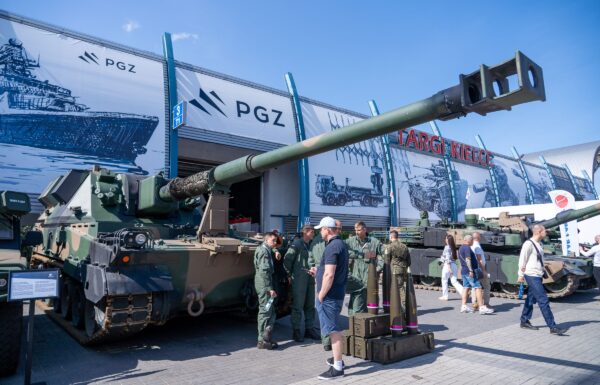
It is worth emphasizing that increasing annual production to 2,000 PAC-3 MSE missiles will be significant from Poland’s perspective—not only as a user of the system, but also as a supplier—since companies belonging to the Polish Armaments Group (PGZ) are integrated into the PAC-3 MSE program’s supply chains, including Wojskowe Zakłady Elektroniczne, Wojskowe Zakłady Lotnicze No. 1, and Wojskowe Zakłady Uzbrojenia.
The PAC-3 MSE missiles, which are an evolution of the CRI (Cost Reduction Initiative), were developed to enhance the MIM-104 Patriot system’s capability to intercept ballistic missile threats. As part of the program, they received more powerful rocket motors, and their performance—such as range and intercept altitude—was improved. PAC-3 MSE missiles can be used to engage maneuvering targets, including cruise missiles as well as manned and unmanned aircraft. They do not carry a conventional explosive warhead; instead, they destroy targets using kinetic energy through a hit-to-kill mechanism.
A new era of rapid defense delivery! We’ve reached a framework deal with the U.S. government to fast‑track annual PAC-3® MSE production from approximately 600 to 2,000 over seven years. Our tooling, test equipment and 13,000+ supplier network boosts supply‑chain resilience. pic.twitter.com/CNEvsGz5Lc
— Lockheed Martin (@LockheedMartin) January 6, 2026