





















On Friday, January 30, 2026, the U.S. Defense Security Cooperation Agency (DSCA) published the U.S. Department of State’s approval of a potential sale to the Kingdom of Saudi Arabia of a batch of 730 PAC-3 MSE (Patriot Advanced Capability-3 Missile Segment Enhancement) interceptor missiles for the MIM-104 Patriot air and missile defense system, in a package valued at up to 9 billion USD.
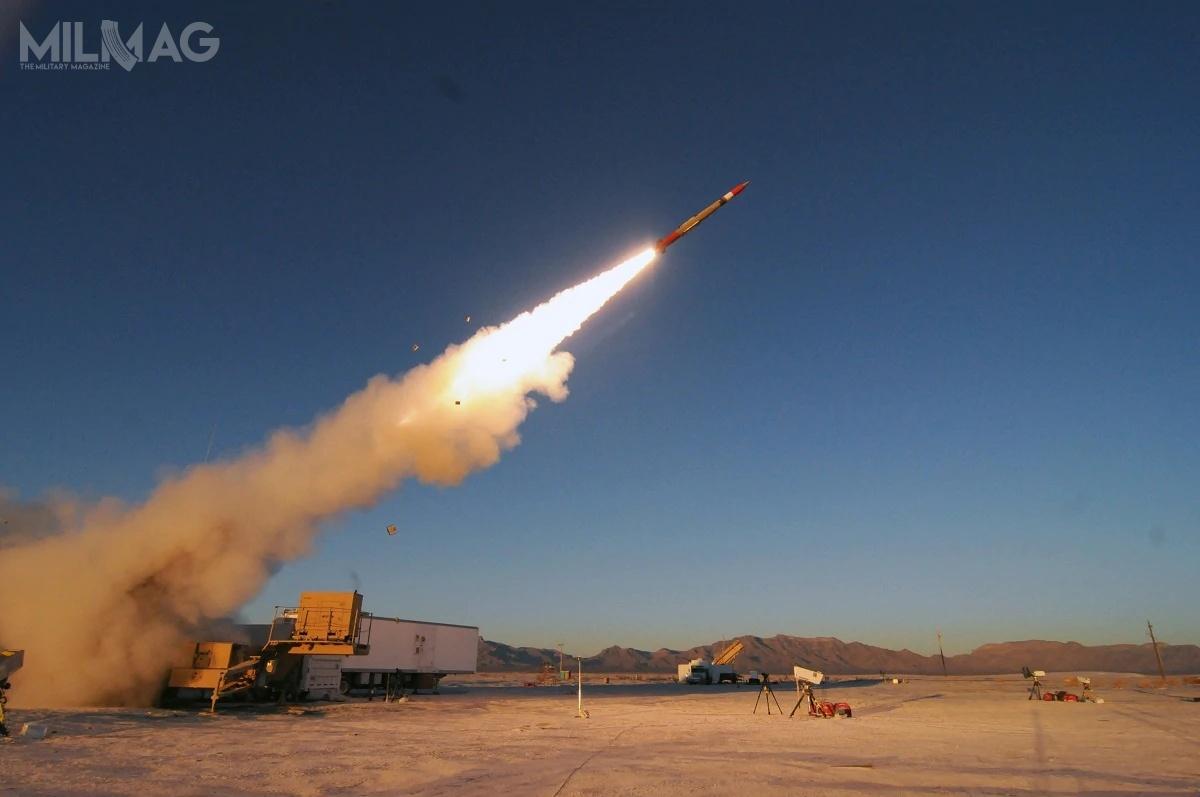 Photo: US Army
In addition, the package also includes the following items other than those defined as MDE: launcher conversion kits to enable M902 launchers to use PAC-3 MSE missiles (M903), automated logistics system kits, missile telemetry kits, missile launch and rail kits, a missile simulator and training missiles, missile and ground support equipment spare parts, consumables for missile launch containers, the PAC-3 system field surveillance program, integration and test support and equipment, ammunition support and ancillary equipment, spare parts, consumables, accessories, and repair and return support, classified software deliveries and support, classified and unclassified publications and technical documentation, personnel training and training equipment, studies and surveys, contractor logistics support (Lockheed Martin), U.S. government and contractor engineering, technical, and logistics support services, and other related program logistics and support elements.
Saudi Arabia introduced Patriot systems, then armed with PAC-2 GEM-T missiles, into service in 1991. A modernization program planned for 2018–2027 provides for upgrading these systems to use PAC-3 MSE missiles at a cost of USD 6.65 billion. The first contract for these missiles for Saudi Arabia was signed on December 21, 2018. Between 2015 and 2025, the Royal Saudi Air Force intercepted more than 150 ballistic missiles and drones, mainly from Yemen launched by the Houthis, making its Patriot system one of the most combat-experienced in the world.
Approval for the export sale of a significant number of PAC-3 MSE missiles came just over three weeks after, on January 6 this year, Lockheed Martin signed a seven-year framework agreement with the U.S. Department of Defense to accelerate and increase production of these missiles from the current level of around 600 to 2,000 units per year. They will be produced at the new Munitions Acceleration Center facility in Camden, Arkansas, alongside missiles for THAAD systems; the symbolic start of construction took place on January 29 this year.
It should be recalled that on October 14, 2025, Lockheed Martin signed a memorandum of understanding (MoU) with Germany’s Diehl Defence regarding its inclusion in the global supply chain for the PAC-3 MSE program.
Earlier, on September 3, 2025, the U.S. Army placed a record order with Lockheed Martin under the IAMD program, a framework contract with a maximum value of 9.8 billion USD for the delivery of 1,970 PAC-3 MSE missiles. Meanwhile, also on October 14 last year, Boeing received a multiyear order from Lockheed Martin for the production of more than 3,000 guidance sections for PAC-3 family missiles, worth approximately 2.7 billion USD.
Importantly, increasing annual production to 2,000 PAC-3 MSE missiles, together with significant export orders, is highly relevant for Poland, not only as a system user but also as a supplier, since companies of the Polish Armaments Group (PGZ) are involved in the program’s supply chains: Wojskowe Zakłady Elektroniczne, Wojskowe Zakłady Lotnicze No. 1, and Wojskowe Zakłady Uzbrojenia.
The PAC-3 MSE missiles, which are an evolution of the CRI (Cost Reduction Initiative), were developed to enhance the MIM-104 Patriot system’s capability to intercept ballistic missiles. As part of the project, they received more powerful rocket motors. Their performance characteristics, such as range and intercept altitude, were also improved. PAC-3 MSE missiles can be used to destroy maneuvering targets, including cruise missiles as well as manned and unmanned aircraft. They do not carry a conventional explosive warhead; instead, targets are destroyed using kinetic energy (hit-to-kill).
See also: