

















A highly maneuverable helicopter
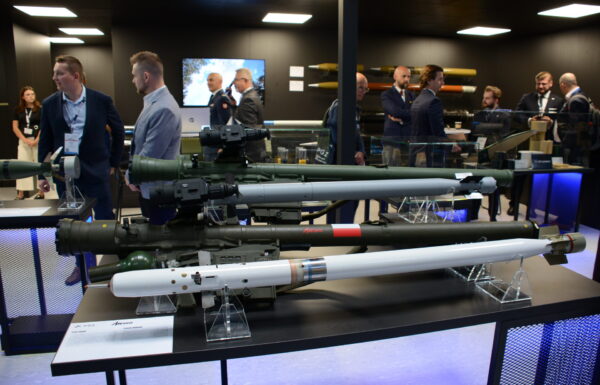
The practical component of the training system offered by Leonardo PZL-Świdnik is based on the AW109 TrekkerM helicopter. It is a proven design offering very good performance and the highest payload capacity in its class. Its substantial power reserve not only provides excellent handling characteristics, but also a high level of safety. The spacious cabin can be easily reconfigured. The armament of this light helicopter is well suited to its role and includes 70 mm guided and unguided rockets, as well as pods containing 12.7 mm heavy machine guns and 7.62 mm machine guns.

The AW109 Trekker can be armed with 70 mm guided and unguided rockets, as well as pods carrying 12.7 mm heavy machine guns and 7.62 mm machine guns
The helicopter’s design provides excellent training capabilities, allowing pilots to gain practical flying experience in all conditions and situations while offering lower operating costs.
The helicopter is designed for operation by one or two pilots under both VFR and IFR conditions. The cockpit’s modular Genesys Aerosystems display system provides considerable flexibility, enhances pilot situational awareness and reduces workload in flight. Safety is further enhanced by the Synthetic Vision System (SVS), Highway In The Sky (HITS) flight-path visualization, a moving map and an integrated Helicopter Terrain Awareness and Warning System (HTAWS).
Simulators with new capabilities
Practical training is supported by various types of modern simulators. The training system offered by Leonardo PZL-Świdnik is optimized for the military’s operational requirements and conducted in a simulated environment reproducing typical mission conditions. Training recreates various mission types, including reconnaissance tasks using modern sensors, search-and-rescue missions and evacuation operations in combat conditions, including Combat Search and Rescue and battlefield medical evacuation (CSAR, MEDEVAC/CASEVAC). Combat missions against armored targets and the transport of heavy external loads under different conditions can also be practiced. The system also supports multi-crew training, formation flying and cooperation with other military units.

Presentation of the AW109 TrekkerM helicopter at the “School of Eaglets” in Dęblin
One example of a modern training solution is the ETD e-Motion (Enhanced Training Device) simulator. It incorporates capabilities associated with a full-flight simulator with six degrees of freedom, providing a very high level of simulation fidelity, including vibration and motion cues within a realistic, defined visual environment. The simulator is equipped with an accurately reproduced cockpit corresponding to the helicopter subsequently used for practical flight training and realistically replicates the helicopter’s handling characteristics.
In addition, the simulators supplied can be mobile. Installed in containerized modules, they can be operated without the need to construct specialized infrastructure and can be rapidly deployed to virtually any location.

AW109 TrekkerM training and combat helicopter
One of the latest mobile simulators is the VxR virtual-reality simulator. The system has the potential to change the way pilots and ground personnel are trained. It incorporates both virtual reality (VR) and artificial intelligence (AI) into the training process. By applying AI algorithms to the analysis of available helicopter fleet operational data, Leonardo, through PZL-Świdnik, can offer significantly improved services while keeping costs lower.
Support from a domestic supplier
It is important to emphasize that the AW109 TrekkerM helicopter and the simulator systems are produced by the same group. This provides easier access to flight-test data, which can be used in simulator software to accurately reproduce the helicopter’s behavior under different flight conditions. In the event of future upgrades, this also allows a seamless flow of information so that simulator software can be adapted to reflect the actual behavior of the helicopter after modifications have been introduced.
Equally important is the fact that the system supplier is a Polish company capable of providing a level of in-service support that is difficult to match. A good example is the technical support that PZL-Świdnik provides to the 25th Air Cavalry Brigade in operating its AW149 helicopters. This goes beyond the standard level of support typically provided by equipment manufacturers.

AW109 TrekkerM fuselage assembly line at PZL-Świdnik / Photos: PZL-Świdnik / Leonardo
Because the Świdnik plant holds the design rights to the AW149, it not only supplies spare parts and provides maintenance support, but also ensures the systematic modernization of the AW149 fleet. As experience with the AW149 grows, personnel from the 25th Air Cavalry Brigade provide observations and recommendations regarding the direction of upgrades to helicopters delivered to the 7th Aviation Squadron. The manufacturer implements appropriate modifications on an ongoing basis, meaning that modernization is a continuous process. A comparison between the configuration of the first helicopters delivered in October 2023 and those delivered to the 25th Air Cavalry Brigade in November 2025 clearly shows significant changes in equipment introduced in response to requirements identified by brigade personnel.
A similar model of cooperation could be established between the training system supplier, PZL-Świdnik, and its user. Experience gained by personnel training in Poland through the operation of both helicopters and simulators could lead to modifications improving both the simulation systems and the helicopters themselves, increasing their effectiveness in the training process. This level of in-service support can only be provided by a manufacturer located in the same country and, moreover, one with decades of experience cooperating with the “School of Eaglets.”
