
















On Monday, May 18, 2026, the Directorate General of Armaments (Direction générale de l’armement, DGA) at France’s Ministry for the Armed Forces and Veterans announced that, on April 14, it had signed a contract of undisclosed value with Sweden’s Saab Defence and Security for the delivery of a second batch of Giraffe 1X three-dimensional radar stations on Scania V3P 4×4 chassis as the Varda system.
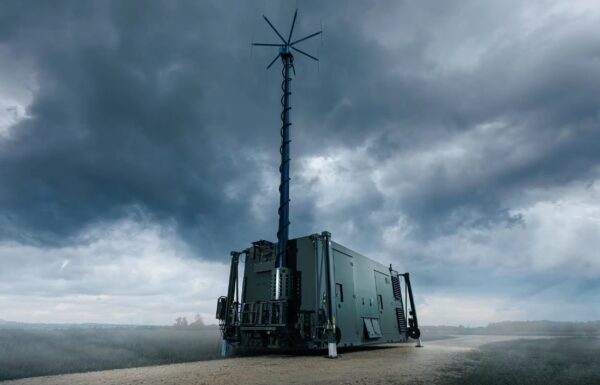
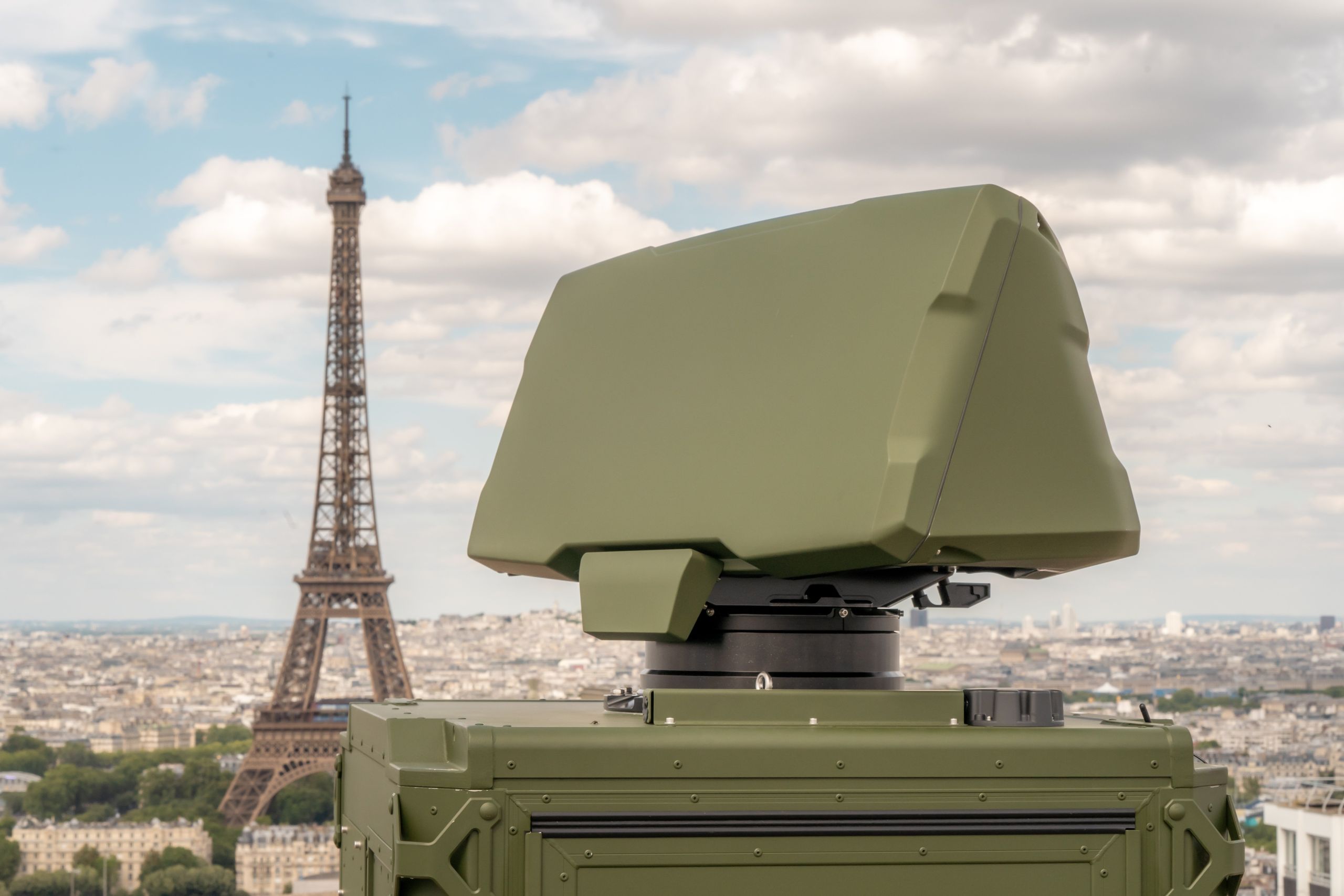 Photo: Saab Defence and Security
The agreement covers 17 Giraffe 1X radars, one of which will be used for testing and evaluation, while the remaining units will be integrated with 16 Scania V3P 6×6 tactical vehicle chassis developed by Scania France and its SPAD (Scania Public and Defense) division in Angers, France. The contract also includes spare parts, training and support. Saab and Scania France have combined their resources, forming a joint consortium for the duration of the contract. Radar deliveries will take place in 2026–2027.
„We are proud to work together with Scania France on this important contract, with the aim of modernizing the short and very short-range air defence capabilities for the French Armed Forces„, says Carl-Johan Bergholm, head of Saab’s business area Surveillance.
The first batch of radars was in fact ordered on December 29, 2025, followed by another eight systems in April. They will replace part of the low-altitude air detection and surveillance capability for mobile French Army (Armée de Terre) air defense units, which is currently based on NC1 30 and NC1 40 radar platforms introduced into service in 1995 under the MARTHA system (French: Maillage des Radars Tactiques pour la lutte contre les hélicoptères et les aéronefs à voilure fixe, meaning Tactical Radar Network for Countering Helicopters and Fixed-Wing Aircraft).
These orders were placed by the DGA under the so-called Reactive Acquisition Force (Force d’Acquisition Réactive, FAR). In the absence of an immediately available French solution, the DGA decided to purchase ready-made systems from two Swedish manufacturers, requiring only minor modifications. The first eight systems will be delivered during 2026, and the next eight in the first half of 2027.
The Varda system, which will replace MARTHA, is intended to create an accompanying air defense “bubble” to protect land forces deployed on operations. It will be a bridging solution ahead of the introduction of the target system ordered from domestic industry on January 28, 2025, in the form of two new versions of the VBMR-L Serval (Véhicule Blindé Multi-Rôles) wheeled multirole armored vehicle, designated as:
- DSA (défense aérienne), with the MBDA Atlas-RC turret system for Mistral 3 short-range air defense missiles, in a quantity of 30 vehicles;
- LAD (lutte antidrone), with the KNDS France ARX-30 NEROD turret armed with a 30-mm 30M781 automatic cannon, as well as autonomous detection systems: a radar and a radio-frequency detector for countering unmanned aircraft, in a quantity of 24 vehicles.
The DGA selected the solution proposed by Swedish manufacturers Saab and Scania: proven, available equipment that best meets operational requirements. This FAR acquisition demonstrates the DGA’s ability to respond rapidly to urgent force requirements by acquiring off-the-shelf systems, or systems requiring only minor modifications, from European partners. This mechanism, established in 2023, makes it possible to shorten the equipment acquisition timeline, from the expression of a requirement to its entry into service with the armed forces.
The Giraffe 1X three-dimensional radar provides high-quality target data for air defense, including the detection of unmanned aircraft, as well as the ability to simultaneously detect and warn of rocket, artillery and mortar attacks, or C-RAM.
The radar’s active electronically scanned array, or AESA, antenna, using gallium nitride (GaN) technology, has a triangular cross-section, is 0.5 m high and 1.0 m wide, and weighs 100 kg. The antenna itself weighs 60 kg, while the unit also includes an identification friend-or-foe system and a rotating device. Together with the remaining system elements, including the computer processing unit, power supply unit and operator laptop, the total weight of the set is less than 300 kg. Most of the electronic components are housed internally, and the entire system is air-cooled. Thanks to its enhanced ELSS (Enhanced Low, Slow and Small) capabilities, it can more effectively identify small targets at long ranges. The electronically shaped and steered antenna beam enables very rapid search in elevation from 0 to 70 degrees.
The radar is a land-based variant of the naval Sea Giraffe 1X, operating in the I/J band, from X to Ku, or 8–12.5 GHz, with an instrumented range of up to 100 km. It is the smallest radar of this type produced by Saab and one of the smallest radars on the market.
Ultimately, it is to be integrated with the VBMR-L Serval vehicle.
As a reminder, two Giraffe 1X radars were deployed in Paris and Marseille during the Paris 2024 Olympic and Paralympic Games by the French Air and Space Force (Armée de l’Air et de l’Espace) to supplement counter-drone detection capabilities.
The Scania chassis on which the Giraffe 1X radar will be mounted will be adapted to the French Army’s concept of use. In particular, the rear platform will accommodate not only the radar, but also a power package meeting the radar’s electrical autonomy requirements. The interior of the cab will also be adapted, with additional seats and screens, to accommodate the driver, vehicle commander and three operators at the same time. Radar integration with the chassis will also be carried out in France by Scania.
This purchase falls within the framework of close cooperation between France and Sweden. The DGA worked in coordination with its Swedish counterparts to ensure the equipment’s compatibility with existing systems and its rapid integration into the armed forces. This international cooperation strengthens ties between the two countries and contributes to the interoperability of their military systems.
In its basic variant, the Giraffe 1X made its public debut on September 10, 2019, during the DSEI (Defence and Security Equipment International) defense and security exhibition in London. At the time, it was integrated with the British Army’s Supacat Jackal light reconnaissance vehicle. On May 2, 2023, Saab announced an order for 11 sets of the basic variant from the United Kingdom.
From June 17 to 21, 2024, during the Eurosatory exhibition in Paris, an even more compact version of the radar, called the Compact Radar Module, was presented. This is the subject of the latest contract. Radars of this type have also become part of the MSHORAD air defense system with RBS 70 NG (Robotsystem 70 New Generation) launchers, ordered by Lithuania and the Czech Republic. Sweden has also recently ordered radars, both Giraffe 1X under contracts signed on November 25, 2025, and December 23, 2025, and Sea Giraffe 1X, as have Ukraine and the Baltic states.
[Communiqué] La DGA commande 16 véhicules équipés d’un radar en bande X à Saab et Scania pour moderniser les capacités de détection et de surveillance aérienne de l’armée de Terre 🔗 https://t.co/bpXzyAma9c pic.twitter.com/caonzsri8J
— Ministère des Armées et des Anciens combattants (@Armees_Gouv) May 18, 2026
Saab and Scania France have signed a contract with the French Defense Procurement Agency (DGA) for 16 tactical vehicles equipped with Giraffe 1X radars for the French Armed Forces.
Deliveries will take place in 2026–2027. https://t.co/PMsfHOeJ0c
— Saab (@Saab) May 18, 2026