




























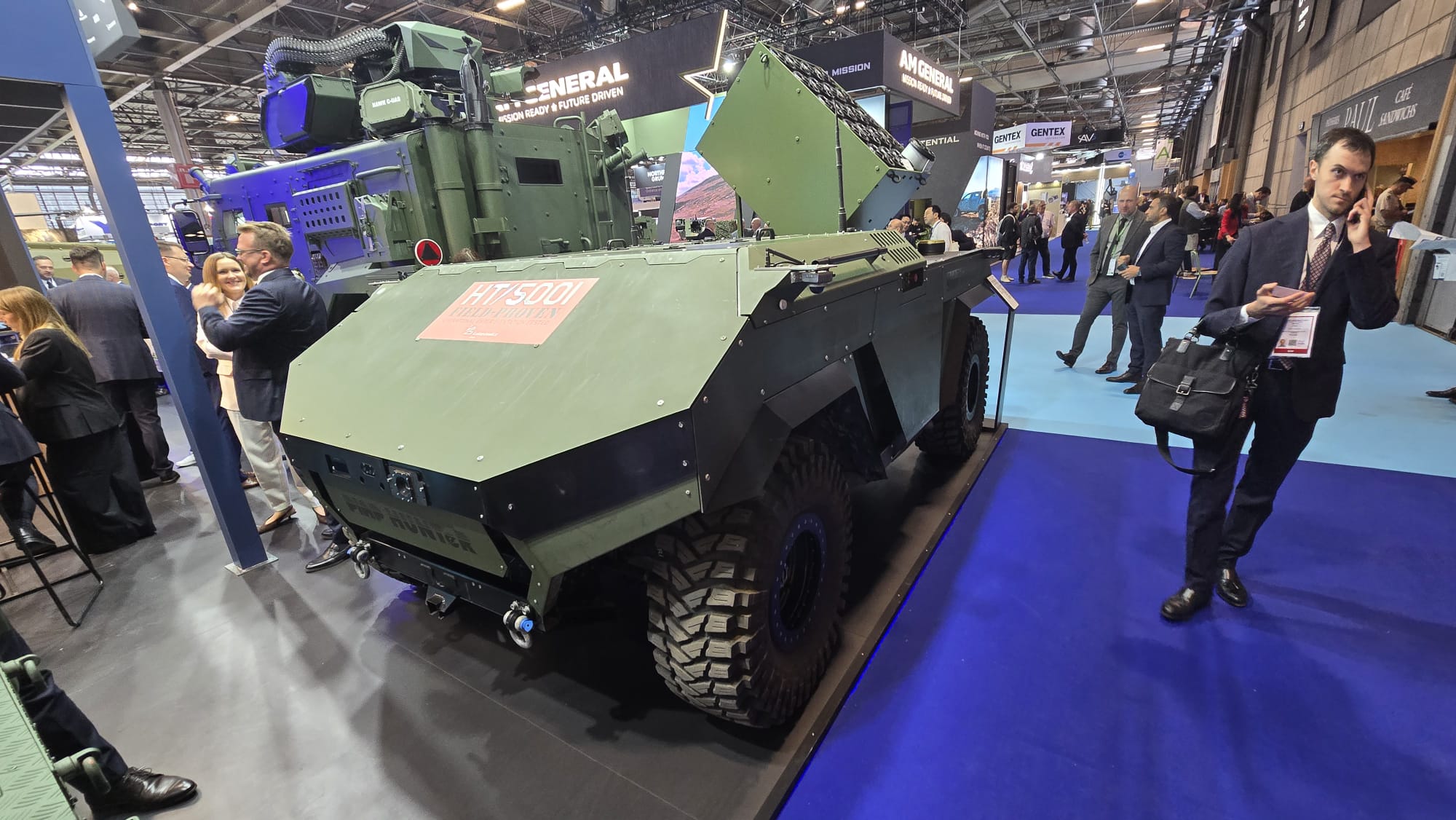
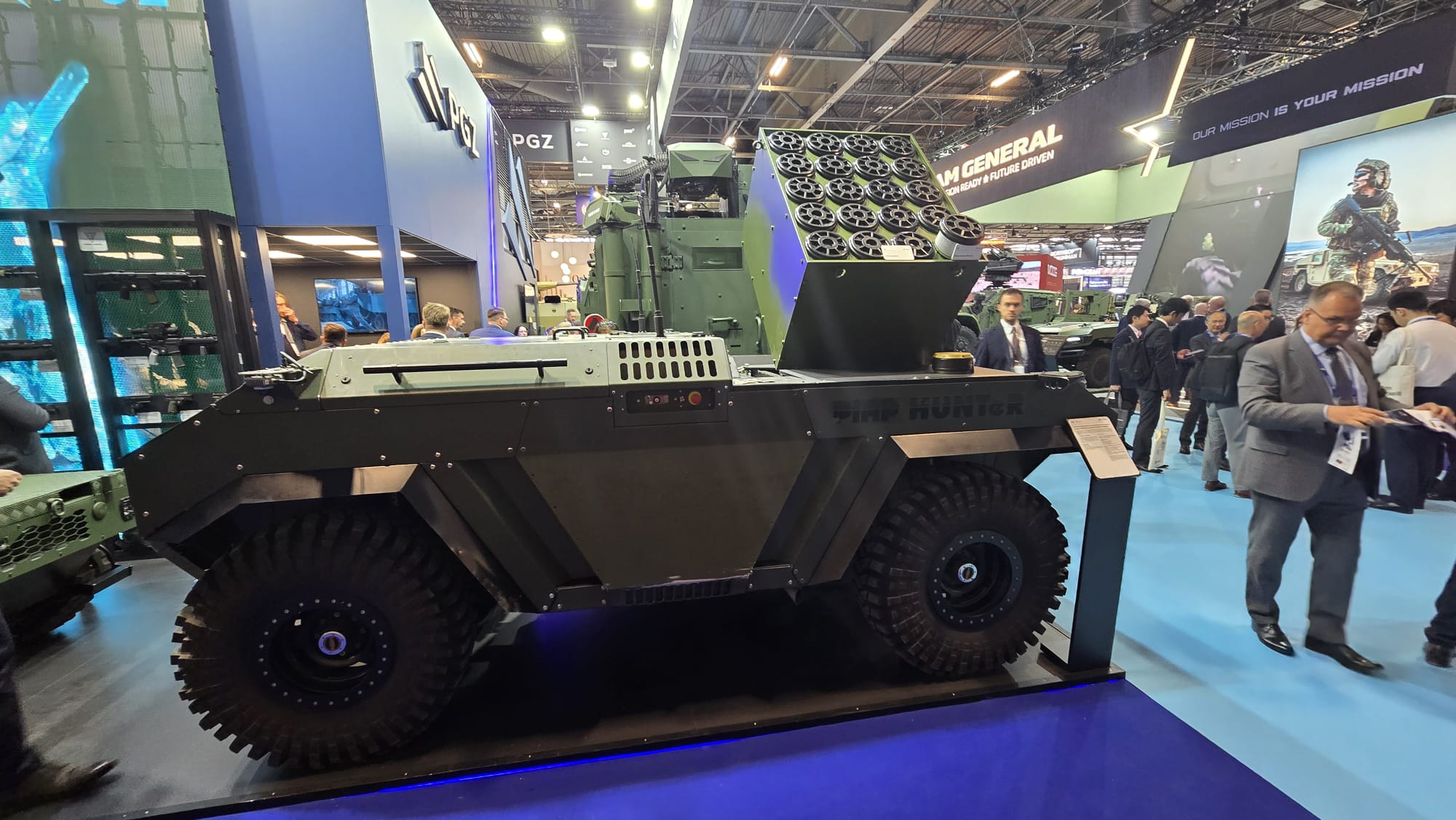
During the 29th edition of Eurosatory 2026, the international defense industry trade fair organized by Coges Events and held on June 15–19 this year at Paris-Nord Villepinte near Paris, Bydgoskie Zakłady Elektromechaniczne (BZE) Belma, part of the Polish Armaments Group (PGZ), is presenting the unmanned scatterable mine-laying system on the PIAP HUNTeR chassis, developed in cooperation with Łukasiewicz Research Network – Industrial Research Institute for Automation and Measurements PIAP.
 Photos: Jakub Link-Lenczowski, MILMAG
Previously, the scatterable mine-laying module for MN-123 mines had been integrated with the TAERO optionally manned/unmanned vehicle chassis, in cooperation with the Białystok-based company STEKOP and the Military Institute of Armored and Automotive Technology (WITPiS) in Sulejówek. At that time, it received the designation Bluszcz.
Now, the solution has been integrated with a fully unmanned platform developed in Poland, which had previously been displayed with the ZMU-05 Remote Weapon Module developed by Arex, part of WB Group, as well as with a remote-controlled weapon station fitted with a 12.7-mm WLKM multi-barrel machine gun developed by Zakłady Mechaniczne Tarnów.
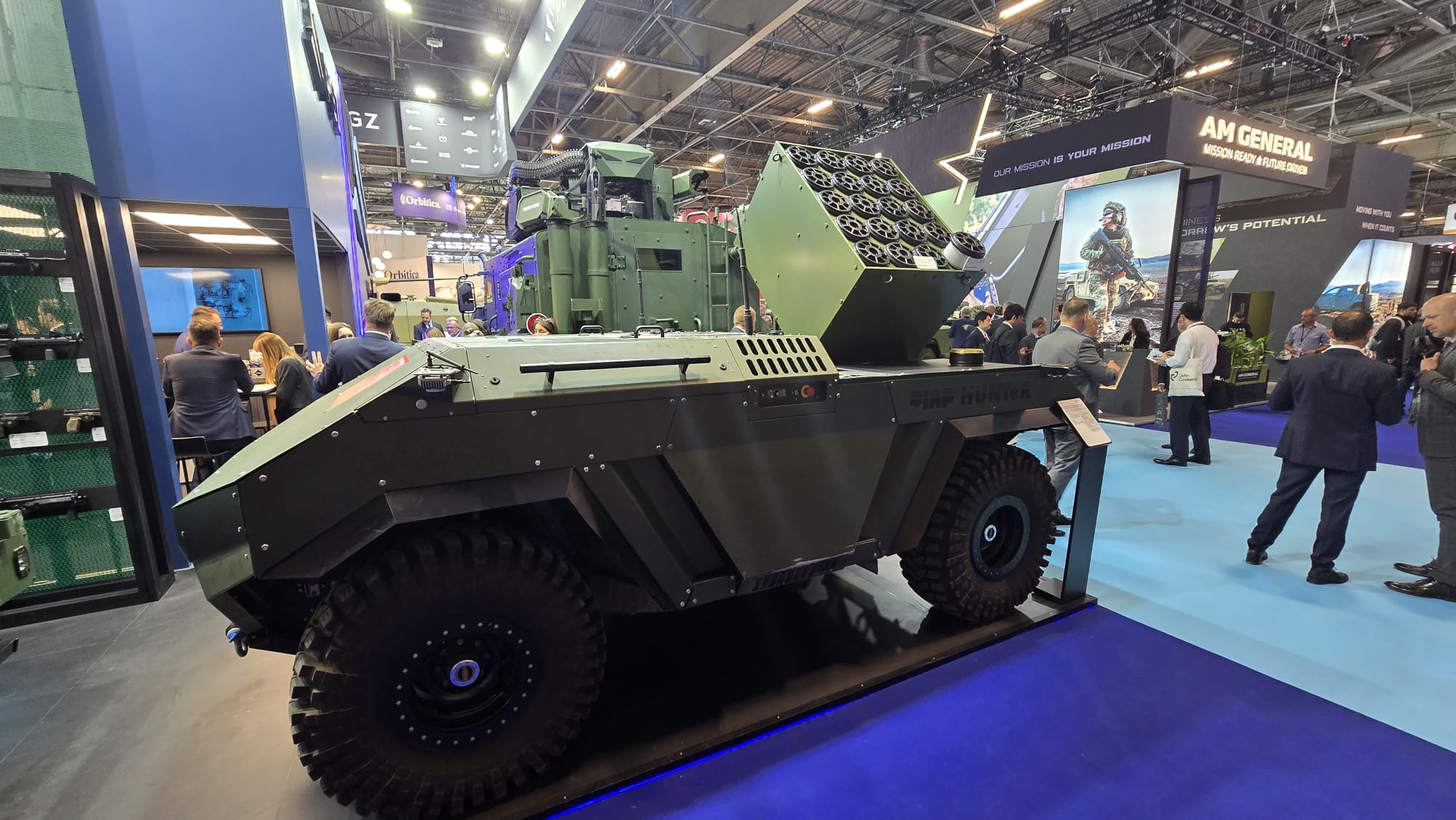
PIAP HUNTeR is an advanced heavy unmanned ground vehicle (UGV) designed to support combat, reconnaissance and patrol operations. The platform, weighing around 4 tons and measuring nearly 4.7 m in length, combines high mobility with a large payload capacity and the ability to integrate various mission systems.
Its hybrid drive system, comprising a generator and electric motors, enables long-duration operation and silent movement in electric mode, which is particularly important during reconnaissance missions. The vehicle reaches speeds of up to around 50 km/h and is adapted to operate in difficult terrain thanks to its 4×4 drive, large wheels and advanced suspension system.
PIAP HUNTeR can be equipped with remote-controlled weapon stations, observation systems, including day, thermal imaging and stereoscopic cameras, LiDARs, and threat countermeasure systems, including those designed to counter unmanned aerial vehicles. In 2025, the European Defence Agency (EDA) conducted multi-week tests of a logistics version of the vehicle. As a result, the vehicle serves as a multipurpose platform supporting both combat operations and situational awareness building (Autonomous and Unmanned Systems by Łukasiewicz – PIAP at the OPEX 2025 Training Ground in Italy).
Belma system on PiAP HUNTeR
Belma unmanned scatterable mine-laying system is a modern solution designed for the rapid and precise creation of minefields. An innovative element of the system is the use of an autonomous chassis that enables the route to be programmed.
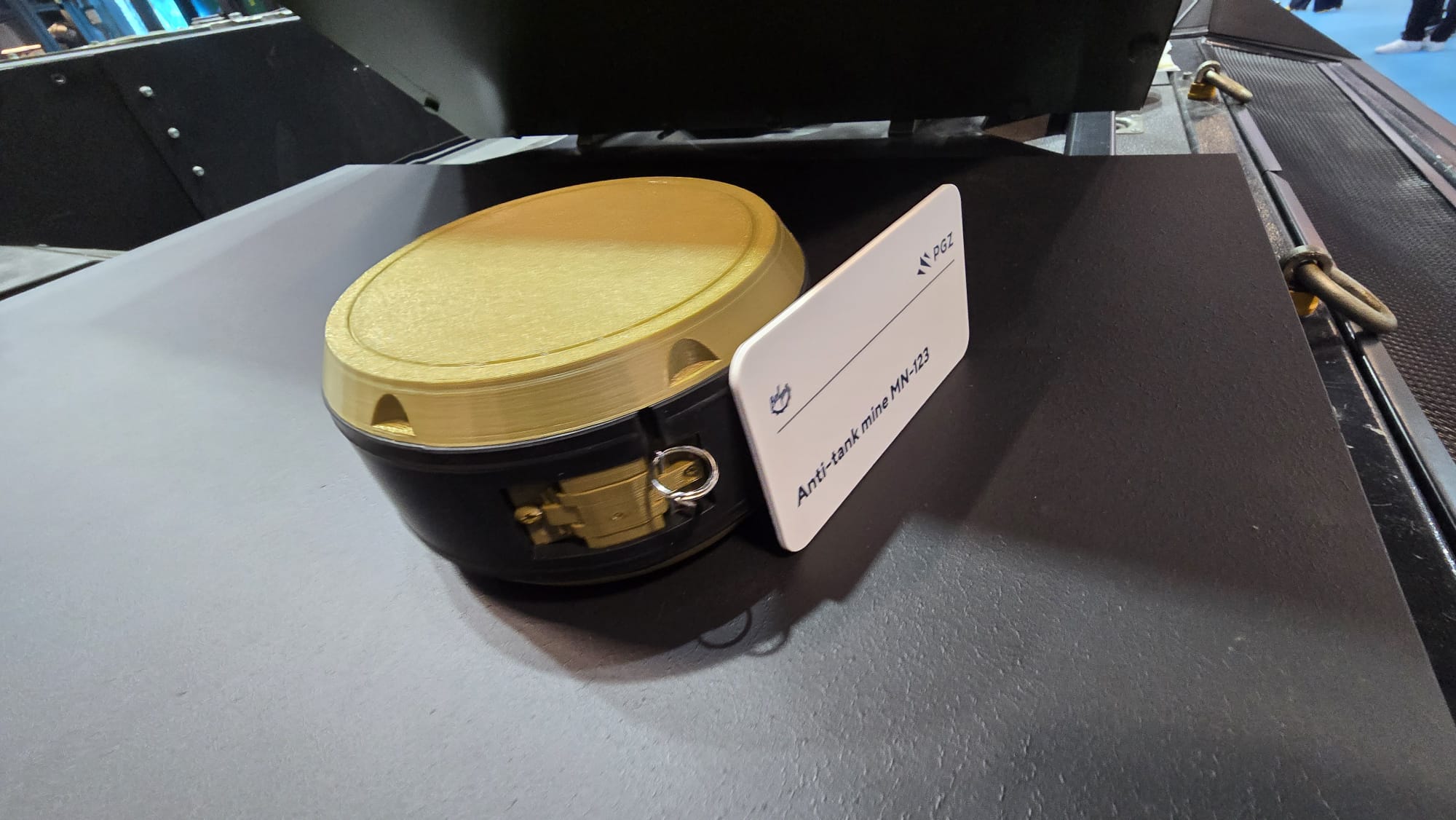
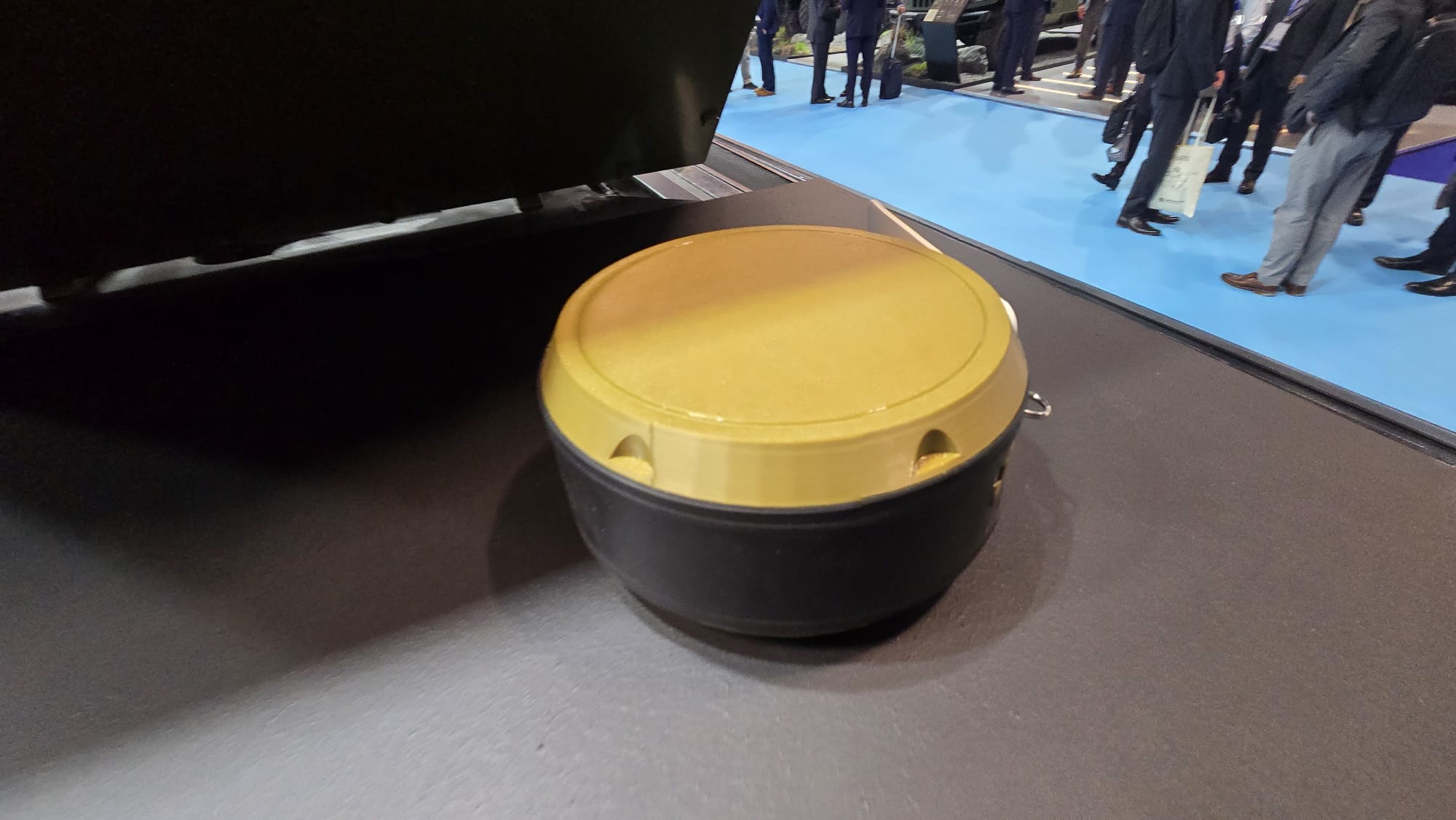
The main element of the system is a package of launch tubes integrated with the chassis, containing 20 replaceable cassettes, each loaded with five MN-123 anti-tank mines. The system lays mines in a strip ranging from 30 to 90 meters. Both the range and density of mine laying are programmable. The scatterable mines, with a diameter of 180 mm and a height of 90 mm, weigh 3.7 kg. They can be fitted with EFP shaped charges and are capable of penetrating 60 mm of armor. Detonation can be initiated by a magnetic, delayed or instantaneous fuze. Before launch, the mine can be programmed to detonate at a desired moment, after a specified time following fuze activation or after a specific number of vehicles has passed over it. In accordance with international convention requirements, MN-123 mines are neutralized after a specified period. Neutralization is carried out either by detonation or by blocking the possibility of detonating the explosive charge.