




















On Thursday, February 19, 2026, the European group Airbus SE published its full-year fiscal 2025 financial results. The figures show that 793 commercial aircraft were delivered, revenues reached 73.4 billion EUR, adjusted operating profit (EBIT) totaled 7.1 billion EUR (including 6.1 billion EUR reported), earnings per share came in at 6.61 EUR with a proposed dividend of 3.20 EUR, and free cash flow before customer financing amounted to 4.6 billion EUR. The company thus met its 2025 guidance.
 Image: Airbus SE
“2025 was a landmark year, characterised by very strong demand for our products and services across all businesses, a record financial performance, and strategic milestones. We successfully navigated a complex and dynamic operating environment to deliver on our updated guidance,” said Guillaume Faury, Airbus Chief Executive Officer. “Global demand for commercial aircraft underpins our ongoing production ramp-up, which we are managing while facing significant Pratt & Whitney engine shortages. The broad and competitive portfolios of Defence and Space as well as Helicopters allow us to capture the momentum in defence. We are also making progress to establish a new global industrial space player, together with our partners. These 2025 results and the confidence in our future financial performance support the proposed higher dividend payment.”
Gross commercial aircraft orders totaled 1,000 units (2024: 878 aircraft), while net orders reached 889 aircraft after cancellations (2024: 826 aircraft). The order backlog reached a record year-end level of 8,754 commercial aircraft at the end of 2025.
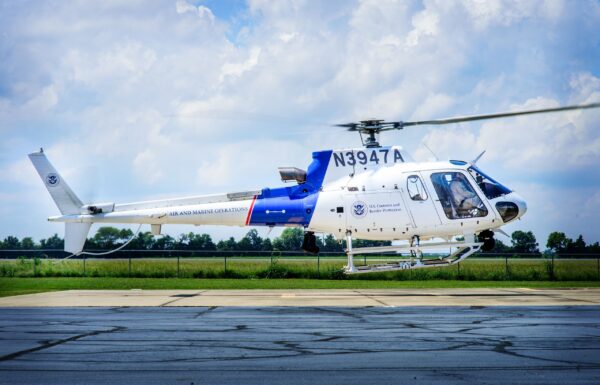
Airbus Helicopters recorded net orders for 536 units (2024: 450 units), with a book-to-bill ratio above 1 both in terms of units and value, reflecting strong momentum, particularly in military markets (Airbus Helicopters summarized its 2025 performance).
Order intake at Airbus Defence and Space increased to a record 17.7 billion EUR (2024: 16.7 billion EUR), corresponding to a book-to-bill ratio of approximately 1.3.
The Group’s consolidated order intake rose to 123.3 billion EUR (2024: 103.5 billion EUR). The consolidated order backlog at the end of 2025 stood at 619 billion EUR (end-2024: 629 billion EUR), including a company-wide book-to-bill ratio above 1 and the impact of a weaker U.S. dollar.
Consolidated revenues increased 6% year over year to 73.4 billion EUR (2024: 69.2 billion EUR). A total of 793 commercial aircraft were delivered (2024: 766), including 93 A220s, 607 A320 Family aircraft, 36 A330s, and 57 A350s. Revenues from Airbus’s commercial aircraft activities increased 4% to 52.6 billion EUR, mainly reflecting higher delivery volumes and services growth, partially offset by the depreciation of the U.S. dollar.
Revenues at Airbus Helicopters rose 13% to 9.0 billion EUR, reflecting solid program performance and services growth. Helicopter deliveries increased to 392 units (2024: 361 units). Revenues at Airbus Defence and Space rose 11% year over year to 13.4 billion EUR, driven by higher volumes across all business lines.
Consolidated adjusted earnings before interest and taxes (EBIT) – an alternative performance measure and key indicator of underlying business margin, excluding material charges or gains resulting from changes in program-related provisions, restructuring, or foreign exchange impacts, as well as capital gains/losses from disposals and acquisitions – totaled 7,128 million EUR (2024: 5,354 million EUR). The 2024 figure included 1.3 billion EUR in charges following an in-depth technical review of space programs.
Adjusted EBIT from Airbus’s commercial aircraft activities increased to 5,470 million EUR (2024: 5,093 million EUR), driven by higher deliveries at a more favorable hedge rate and lower R&D expenses, partially offset by the impact of tariffs.
The A220 production ramp-up is ongoing and continues to be supported by the integration of fuselage work packages from Spirit AeroSystems and supply-demand balancing. As the company introduces tactical adjustments to this ramp-up plan, it now targets a monthly production rate of 13 aircraft for the A220 program in 2028.
For the A320 Family, the lack of commitment from Pratt & Whitney to deliver the required number of engines ordered by Airbus is negatively impacting this year’s outlook and ramp-up plan. As a result, the company now expects to reach a production rate of 70 to 75 aircraft per month by the end of 2027, stabilizing at 75 in subsequent years. The company continues to target a rate of 5 for the A330 program in 2029 and 12 for the A350 program in 2028.
Adjusted EBIT at Airbus Helicopters increased to 925 million EUR (2024: 818 million EUR), reflecting higher deliveries and services growth.
Adjusted EBIT at Airbus Defence and Space increased to 798 million EUR (2024: -566 million EUR), reflecting higher volumes and improved profitability as the division sees results from its transformation plan.
Regarding the A400M military transport aircraft, in the fourth quarter of 2025 an amendment to the contract was signed with Organisation conjointe de coopération en matière d’armement (OCCAR) to accelerate seven deliveries to France and Spain and enhance production visibility under the program. Given the uncertainty regarding aircraft order levels, Airbus continues to assess the potential impact on the program’s production activities. Risks related to the qualification of technical capabilities and associated costs remain stable.
Consolidated self-financed research and development expenses totaled 3,153 million EUR (2024: 3,250 million EUR).
Consolidated reported EBIT amounted to 6,082 million EUR (2024: 5,304 million EUR), including net adjustments of -1,046 million EUR.
These adjustments included:
- -624 million EUR related to U.S. dollar working capital mismatch and balance sheet revaluation, of which -47 million EUR in Q4. This mainly reflects phasing effects resulting from the difference between transaction and delivery dates;
- -188 million EUR related to the acquisition and integration of certain Spirit AeroSystems work packages, of which -100 million EUR in Q4;
- -105 million EUR related to the Airbus Defence and Space workforce adaptation plan, recorded in Q1;
- -73 million EUR related to the A400M program, recorded in Q4;
- -56 million EUR of other costs, including compliance and M&A expenses, of which -45 million EUR in Q4.
The financial result was 268 million EUR (2024: 121 million EUR), mainly reflecting revaluation of certain equity investments and financial instruments, partially offset by U.S. dollar impacts. Consolidated net income totaled 5,221 million EUR (2024: 4,232 million EUR), and consolidated reported earnings per share amounted to 6.61 EUR (2024: 5.36 EUR).
Consolidated free cash flow before customer financing totaled 4,574 million EUR (2024: 4,463 million EUR), reflecting strong performance across all businesses. Consolidated free cash flow totaled 4,753 million EUR (2024: 4,461 million EUR). Gross cash at the end of 2025 stood at 27.2 billion EUR (end-2024: 26.9 billion EUR), and the consolidated net cash position amounted to 12.2 billion EUR (end-2024: 11.8 billion EUR).
The Board of Directors will propose a 2025 dividend of 3.20 EUR per share at the Annual General Meeting to be held on April 14, 2026. The proposed payment date is April 23, 2026.
Outlook
The 2026 guidance is based on the assumption of no additional disruptions to global trade, the world economy, air traffic, the supply chain, internal operations, or the company’s ability to deliver products and services.
The company’s 2026 guidance is before mergers and acquisitions and includes the impact of currently applicable tariffs.
On this basis, the company targets for 2026:
- approximately 870 commercial aircraft deliveries;
- adjusted EBIT of approximately 7.5 billion EUR;
- free cash flow before customer financing of approximately 4.5 billion EUR.
Airbus reports Full-Year (FY) 2025 results#AirbusResultshttps://t.co/hPGK4pofOO pic.twitter.com/fwRSWemNi7
— Airbus Newsroom (@AirbusPRESS) February 19, 2026