

































On Tuesday, 17 February 2026, the BR IFIC Space (BR International Frequency Information Circular) bulletin of the Radiocommunication Bureau of the International Telecommunication Union (ITU) published a registry entry for the future UASAT-NANO satellite constellation being developed by the Ukrainian company STETMAN. The registration request was submitted in December 2025.
 Photo and image: STETMAN
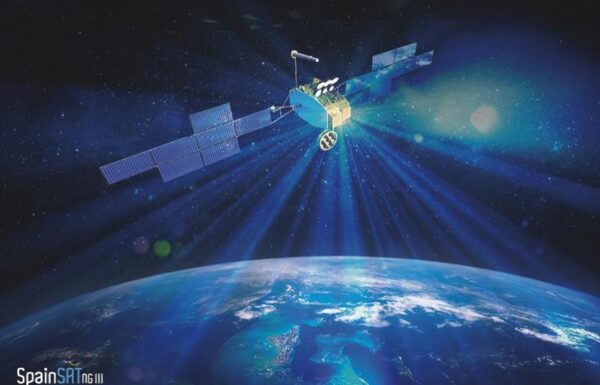
According to the Ukrainian outlet DOU, citing the company’s founder Dmytro Stetsenko, UASAT-NANO will be a low Earth orbit (LEO) satellite communications network at an altitude of about 550 km above the Earth’s surface. Initially it will consist of 120 satellites, with the prospect of expanding to 245. The first of them is scheduled to be launched as early as October this year aboard a Falcon 9 launch vehicle operated by the American company SpaceX – the company has reserved space in the payload capsule for a planned mission in the Transporter series. However, it will be a test satellite intended to verify the technical design and the management model of the future constellation.
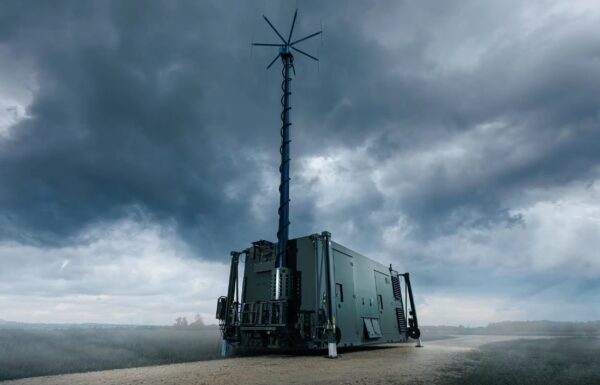
Full deployment of the constellation is expected to begin in 2027. Further expansion is planned depending on capabilities and user requirements. At the same time, in the same year the company expects to deliver 30,000–50,000 satellite communication terminals (pictured above) to the Armed Forces of Ukraine.
Initially, the satellites will be manufactured by the Danish company GomSpace. Production will later be gradually transferred to Ukraine. Meanwhile, a license for the production of satellite terminals has been obtained from the Swedish company Requtech.

Dmytro Stetsenko emphasized that the UASAT-NANO network is not being developed as a commercial operator or a competitor to global services such as Starlink, but rather as an encrypted telecommunications infrastructure for the government, intelligence services, and the military. Initially, the focus will be on meeting Ukraine’s needs, although partner countries may be able to use the system in the future.
The company will be able to provide connectivity for no more than 100,000 terminals per country. According to Stetsenko, particular attention in the system’s design was paid to resilience against electronic warfare (EW). The team has already begun building the ground infrastructure, including gateway stations and the network core. As part of the project, the company plans to conduct training and hire additional staff, with around 50 IT specialists in particular being sought. According to Stetsenko, the project’s core will be built on a 5G communications architecture.

In parallel with the deployment of its own satellite constellation, the company plans to establish a separate 4G/5G mobile network operator for the military. On 29 January this year, the Ukrainian government submitted a package of amendments concerning the allocation of radio frequencies to the National Commission for the State Regulation of Electronic Communications, Radio Frequency Spectrum and Postal Services (NCEC).
This would either be an isolated network with its own core and dedicated frequencies, or a mobile virtual network operator model based on existing civilian infrastructure. Experts believe such a network could provide communications within a radius of up to 30 km from the frontline and would serve as a backup in the event of problems with satellite internet. However, it would not be able to fully replace satellites, as 4G/5G networks require ground infrastructure and remain vulnerable to strikes.
Information about the registration of the UASAT-NANO satellite communications network and plans for a military mobile operator emerged recently following a scandal involving the use of Starlink terminals by Russians on their drones. SpaceX ultimately blocked Russian access, and currently only verified terminals operate in Ukraine.