














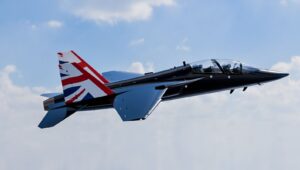
Photos and image: BAE Systems
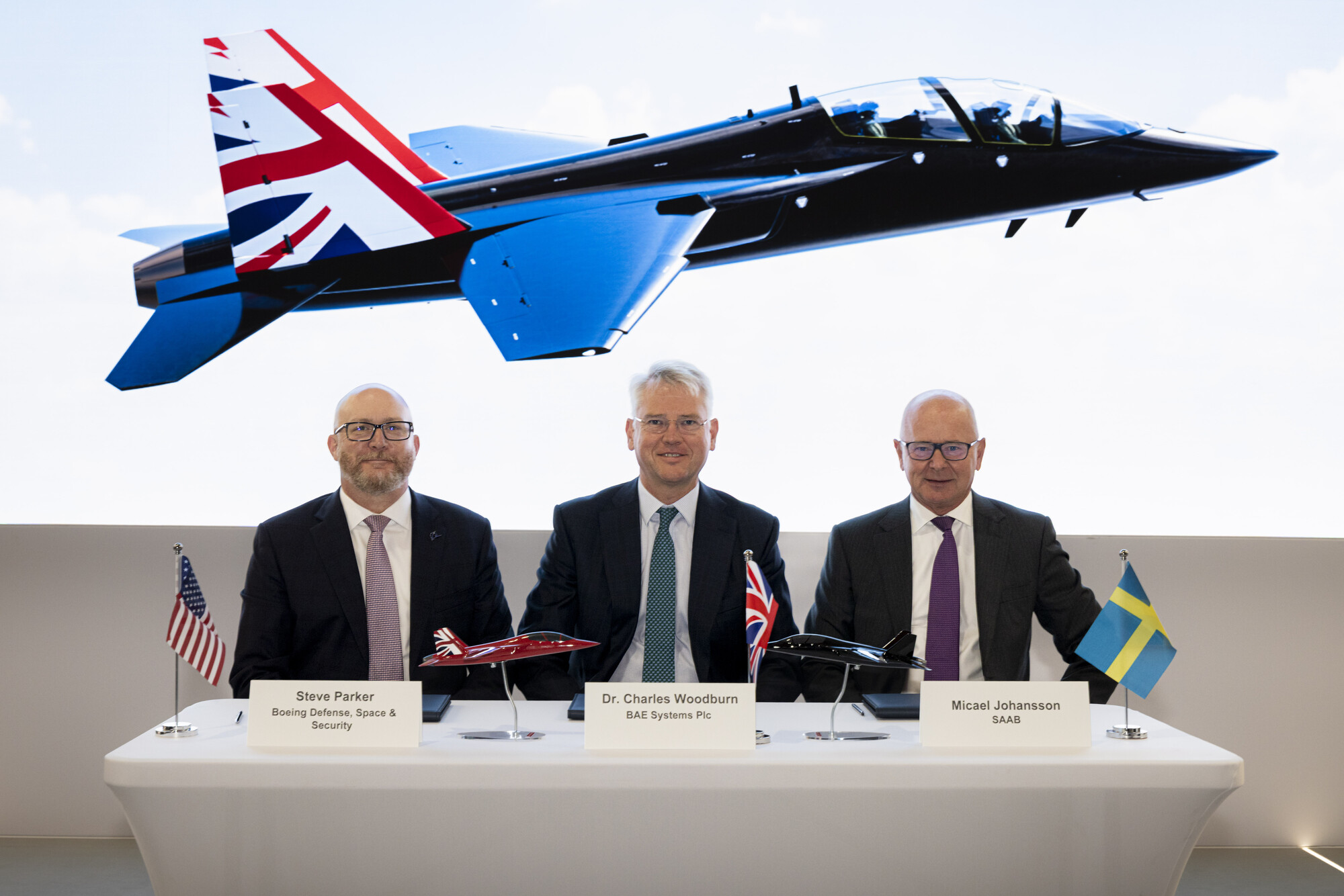
The agreement marks an important milestone in the partnership between the three companies and includes a commitment to establish a new final assembly and integration facility in the United Kingdom.
The partners are prepared to offer a solution that would create hundreds of high-value jobs and position the UK supply chain to play a role throughout the lifecycle of the RAF T-7 program. It would also provide the United Kingdom with sovereign control over its training requirements and help meet its next-generation combat training needs.
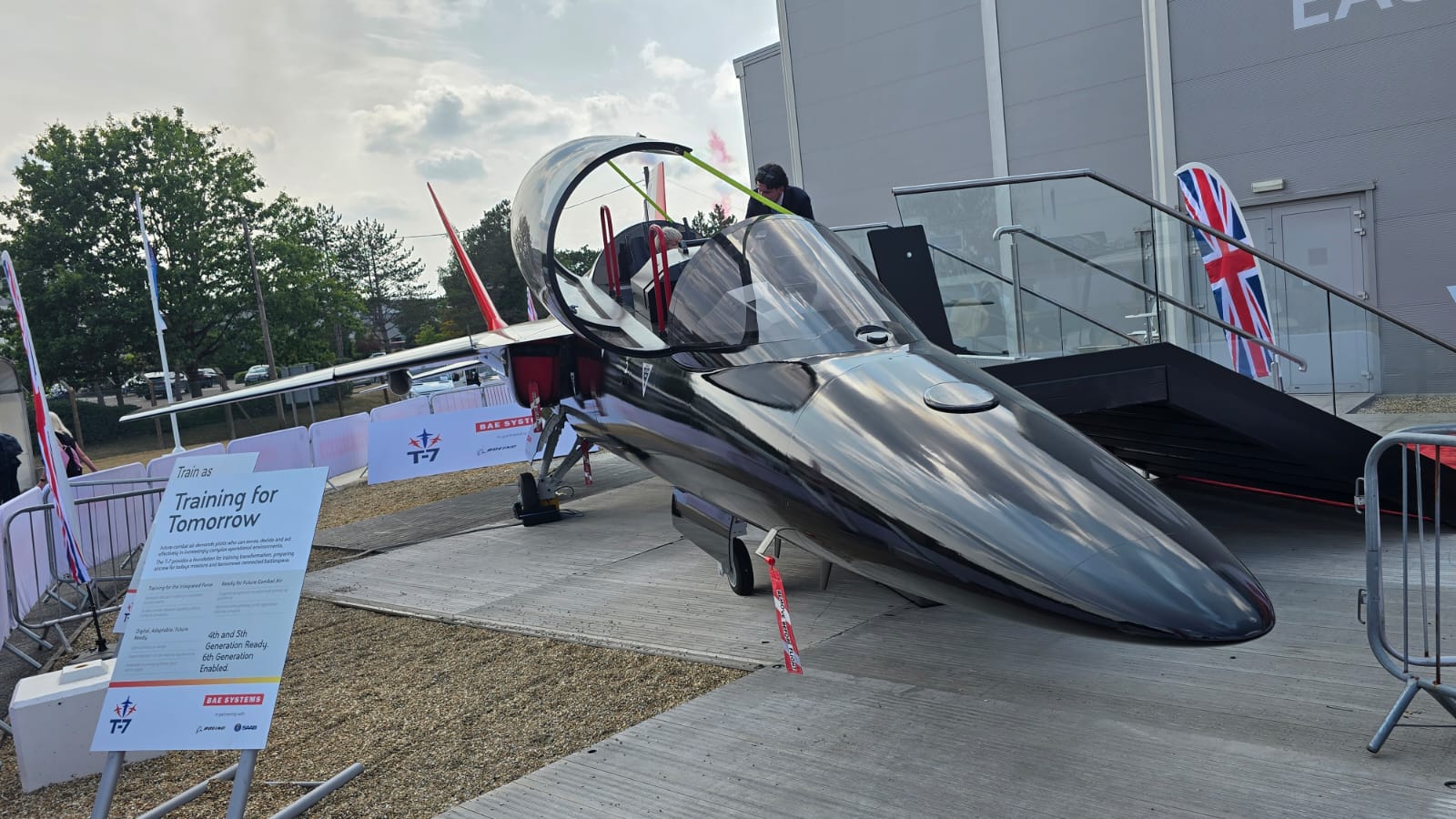 Photos: Jakub Link-Lenczowski, MILMAG
“By bringing together this international team of leading defence companies, we are in an excellent position to support the UK’s future training requirements. Our offer represents a modern, integrated training solution which aligns with the ambition of the Defence Investment Plan, while strengthening the UK’s sovereign industrial capability,” – Charles Woodburn, Chief Executive Officer, BAE Systems.
“This collaboration with Saab and BAE Systems is an important step in advancing the United Kingdom’s future fast-jet training capability. With the T-7 as its foundation, our modern training system can help deliver sovereign pilot training solutions while supporting high-value jobs and industrial capability across the UK,” – Steve Parker, President and Chief Executive Officer of Boeing Defense, Space & Security.
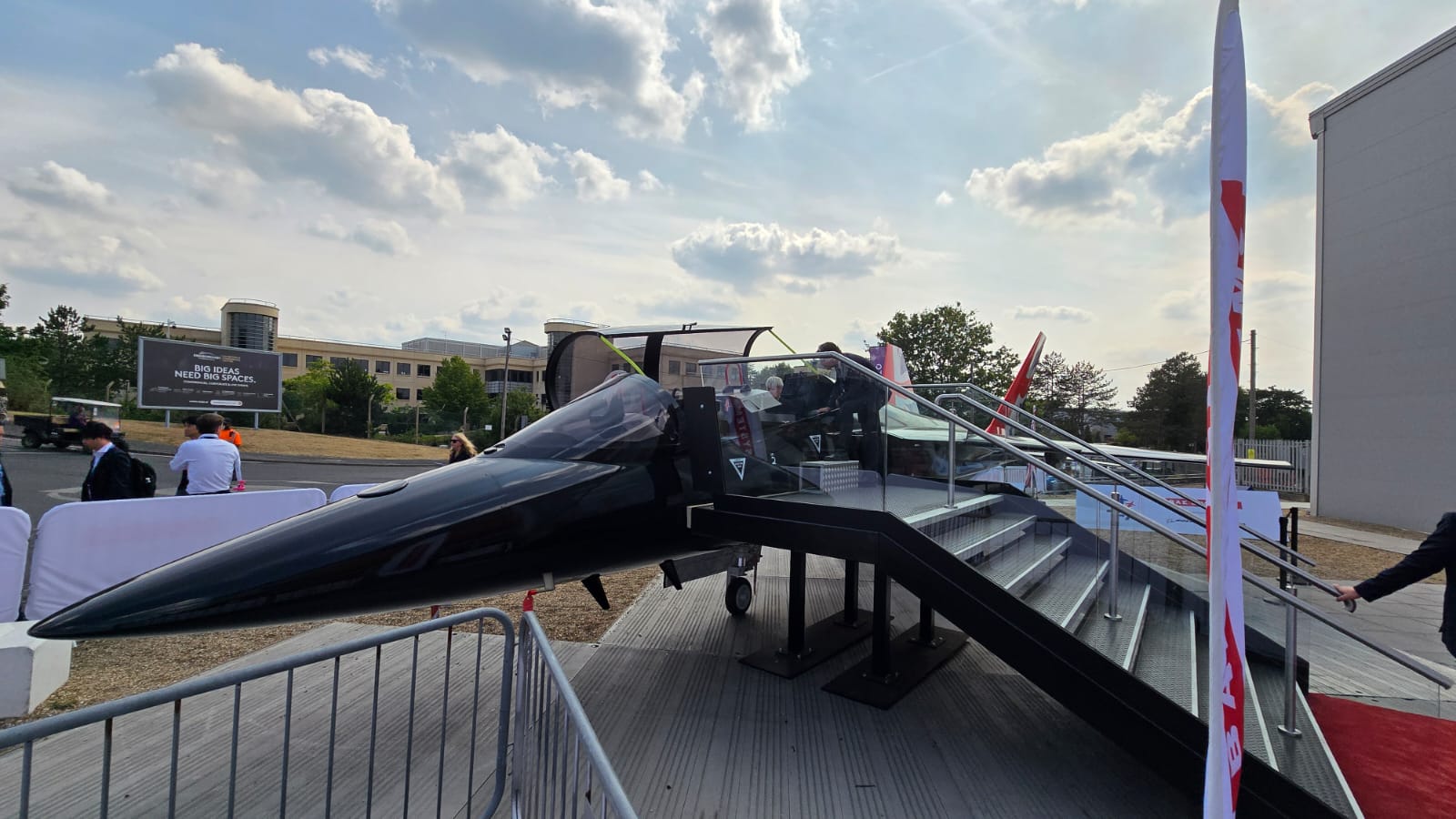
“We are delighted to continue our co-operation with BAE Systems. The collaboration between Saab, Boeing and BAE Systems promises to strengthen the T-7’s position for the UK as the future-proof solution for the RAF.” – Micael Johansson, President and Chief Executive Officer of Saab.
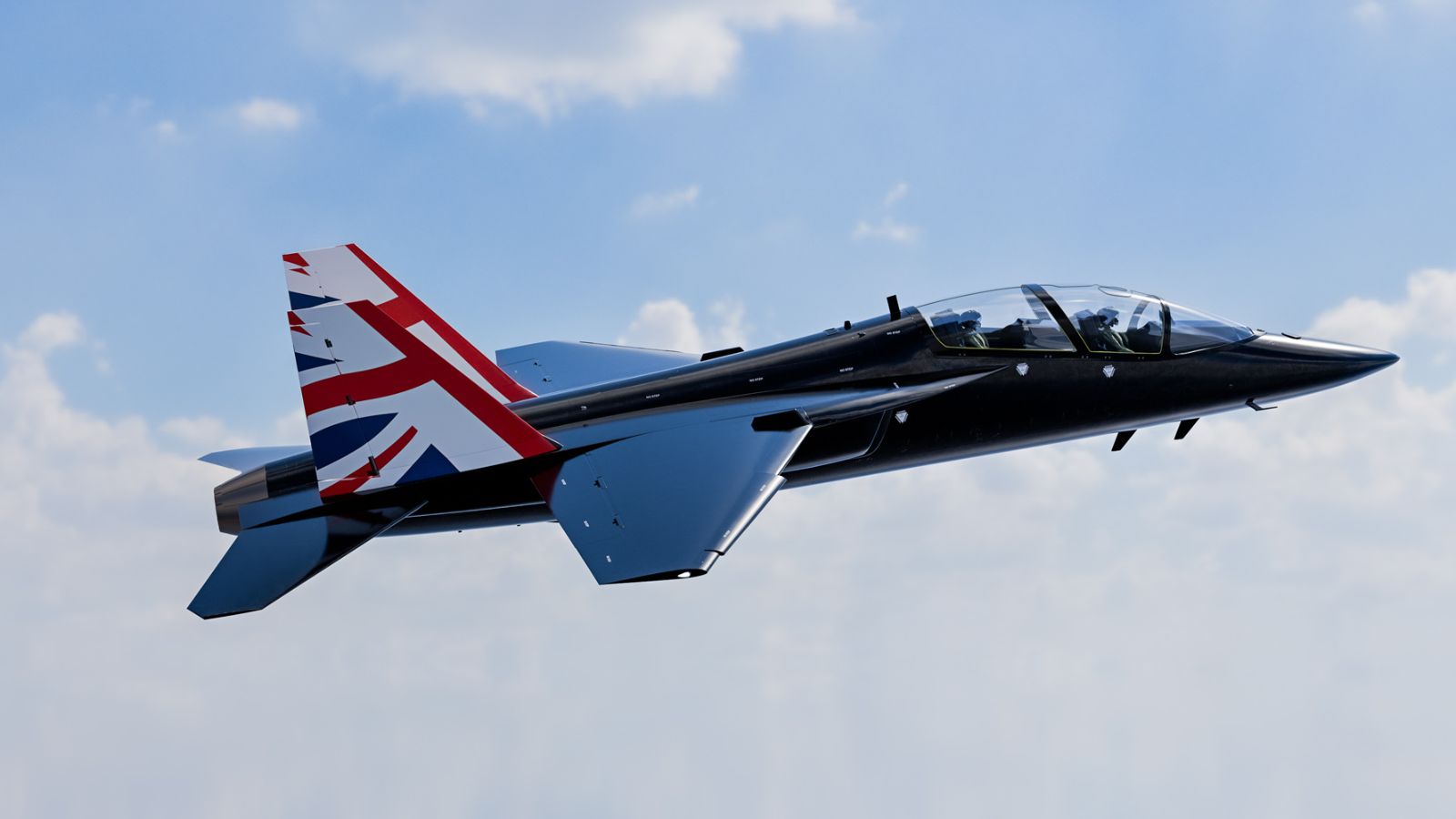
Five pre-production aircraft and one production-representative T-7A Red Hawk are currently undergoing flight testing with the U.S. Air Force. On April 23 this year, the U.S. Department of Defense granted Milestone C approval for the start of Low-Rate Initial Production, signaling the USAF’s confidence in the aircraft’s design and maturity.
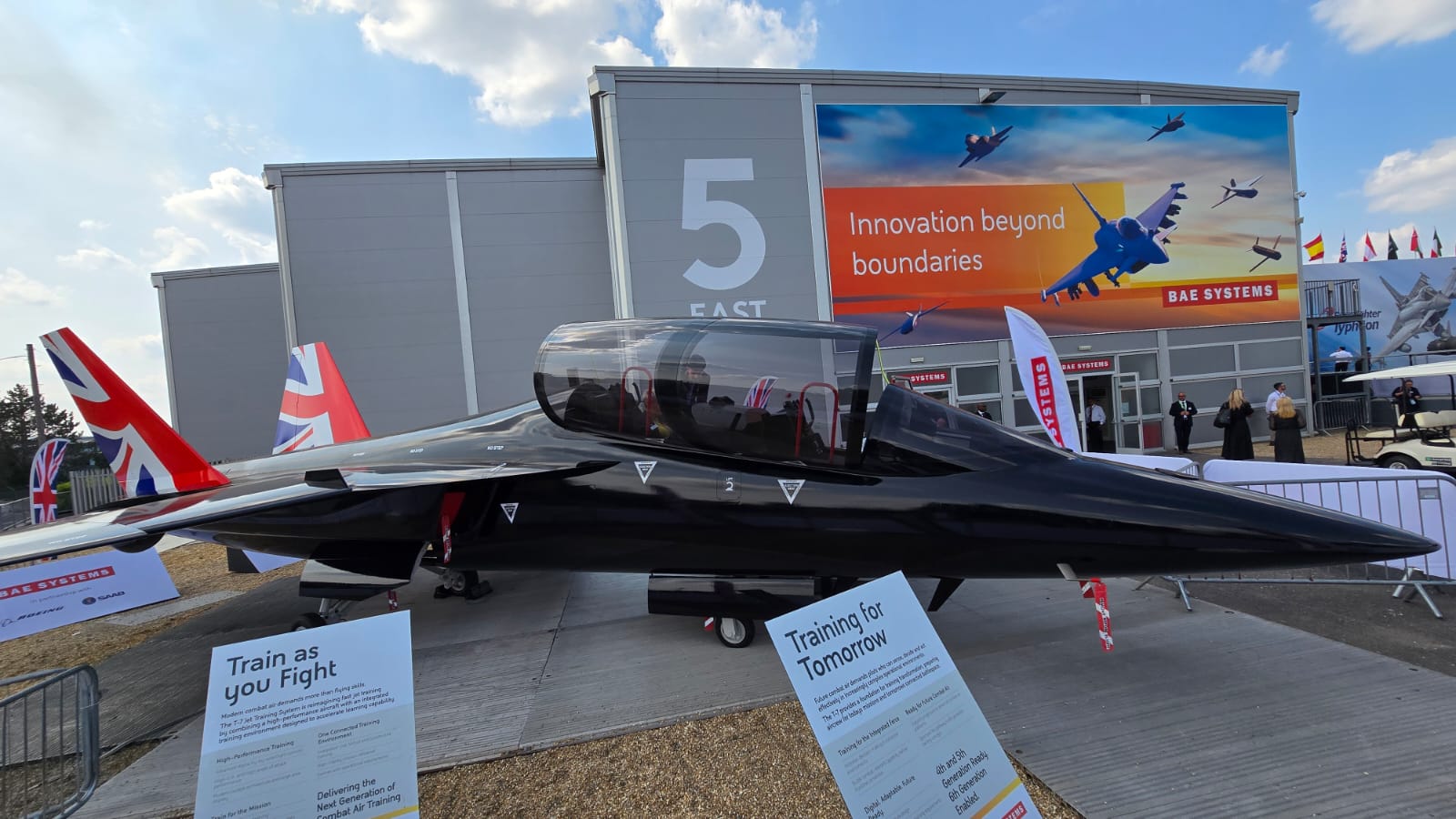
The T-7A training system combines live flying with advanced simulation to prepare RAF pilots for the Eurofighter Typhoon and F-35 Lightning II multirole aircraft. Its flexible design will allow both the aircraft and simulators to evolve in line with future platform and mission requirements, supporting RAF preparations for future combat air capabilities, including the sixth-generation Global Combat Air Programme.
On November 18, 2025, BAE Systems, Boeing, and Saab signed a Letter of Intent to cooperate. Since then, the partners have been working to identify a location for the UK final assembly facility and to establish a British supply chain built on proven existing industrial capabilities.
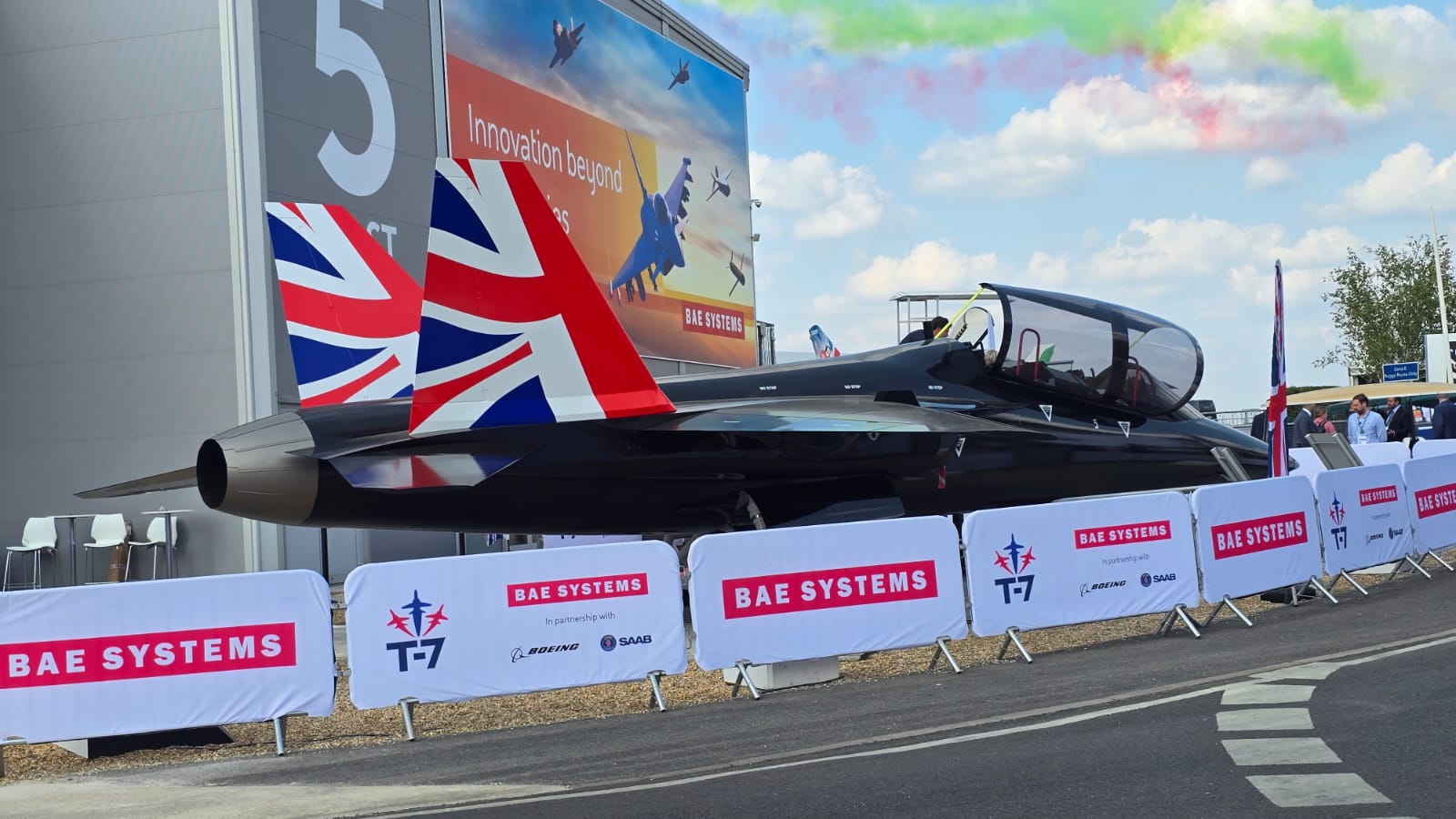
The T-7A is 14.15 m long, has a wingspan of 10 m, and is 4 m high. It is powered by a single GE Aviation F404-GE-402 turbofan engine producing 79 kN of thrust with afterburner, enabling a maximum speed of 1,300 km/h, a range of 1,839 km, a climb rate of 170 m/s, and a service ceiling of 15,000 m.
The Red Hawk, in the T-7B variant, is also being offered to the U.S. Navy under the Undergraduate Jet Training System and Tactical Surrogate Aircraft programs, as well as for export to Australia, Serbia, Japan, Sweden, and Brazil. Around 30 countries have reportedly expressed preliminary interest, while Boeing estimates potential worldwide demand at 2,700 aircraft. A combat-capable trainer variant is also planned.
We’ve signed a Teaming Agreement with @BoeingDefense and @Saab to advance our partnership and offer the UK’s future Jet Training System, built around the T-7 jet trainer.
Designed to support a UK sovereign footprint in the program, our offer gives the @RoyalAirForce the… pic.twitter.com/EwbcT9uGCH
— BAE Systems (@BAESystemsplc) July 21, 2026