























On Friday, May 15, 2026, at the Polish Army Museum, Deputy Prime Minister and Minister of National Defence Władysław Kosiniak-Kamysz and Secretary of State at the Ministry of National Defence Cezary Tomczyk took part in the ceremonial handover of the MikroSAR radar satellite reconnaissance system to the Polish Armed Forces. The system was delivered by ICEYE Polska, the leader of a consortium that also includes Wojskowe Zakłady Łączności No. 1, part of Polish Armaments Group (PGZ).
 Photos: Ministry of National Defense
“Our geospatial imaging capabilities, our ability to influence what is happening, to respond to the most important events, and to be prepared for the most difficult situations ‒ all of this is happening today, here and now. And this is a great day for the capabilities of the Armed Forces of the Republic of Poland. Monochromatic imaging, regardless of the time of day ‒ whether day or night ‒ regardless of weather conditions or cloud cover. The ability to image very precisely, to locate a target, or to warn of a threat. This is what space-based imaging is for. This is what the presence of the Polish Armed Forces in space is for. Today, this is truly becoming a reality,” Deputy Prime Minister Władysław Kosiniak-Kamysz said during the ceremony at the Warsaw Citadel.
“I remember last year, when we signed the contract with Mr. President. It was one of the breakthrough decisions made by our government ‒ by the Ministry of National Defence ‒ in signing the contract with ICEYE. Why ICEYE? Because you are simply the best. You are an outstanding company. You are a Polish company, which in itself means a great deal to us. At one time, Mr. President Modrzewski wanted to do great things right after graduation, or even while still studying. Your story is impressive, and your career path is very interesting. It was not possible to begin here in Poland at that time. Perhaps it was not yet possible to spread one’s wings so widely. He chose Finland, but he never forgot about Poland. Now, I think, Poland is much better prepared and much more open to such initiatives. The best proof of this is what we have managed to do together with Minister Cezary Tomczyk. He has made a major contribution to what happened today,” the head of the Ministry of National Defence emphasized during the ceremony.
As part of the ceremony, a symbolic handover of a model of the MikroSAR system satellite took place. ICEYE CEO Rafał Modrzewski handed the model to Col. Leszek Paszkowski, head of the Geospatial Intelligence and Satellite Services Agency (ARGUS). As of today, this unit is officially responsible for the operational use of outer space for the needs of the Polish Armed Forces.

“Today, we have the opportunity to build the strongest army in Europe, well organized across all domains: the Land Forces, the Air Force, the Navy, the Territorial Defense Forces, and the Special Forces. But for us, what is truly becoming a priority is new technology: drones, counter-drone systems, artificial intelligence, space, and long-range precision strike. These are, in fact, our most important tasks today. (…) Today, Poland is becoming one of those countries ‒ we counted it just a moment ago ‒ probably eight in Europe. Poland was a leader in the process of cooperation with ICEYE, Polish Armaments Group, and Wojskowe Zakłady Łączności No. 1. This is a consortium, meaning private and state-owned industry, because in our actions we can put an equal sign between them,” added the head of the Ministry of National Defense.
“At the end of April, we proudly handed over to the Polish Armed Forces a tool that strengthens their reconnaissance potential and opens up a new, space-based dimension of operations. This success shows what can be achieved when the customer and the supplier act in full trust and with the right determination. Just one year from contract signing to achieving operational readiness is a pace that sets a new global standard. I believe that what we have managed to achieve together in Poland is an example for all of Europe: proof that ambitious programs in the space domain can be carried out on one’s own terms, according to one’s own standards, and at the right pace,” said Rafał Modrzewski, CEO and co-founder of ICEYE.
The MikroSAR program is one of the most efficiently implemented procurements in the history of the Polish military. The contract, signed on May 14, 2025 and worth approximately 860 million PLN gross, ultimately covers three radar satellites, with an option for another three, as well as the ISR Mobile Satellite Reconnaissance Platform (MPRS ISR). Only one year passed from the purchase to ARGUS achieving operational readiness, during which four radar satellites were launched into orbit. MikroSAR gives Poland independence in geospatial data, which is essential for modern command and weapon systems.

“What Prime Minister Kosiniak-Kamysz spoke about is crucial, because satellite imaging from the military’s point of view means preparation for potential targeting and building situational awareness ‒ understanding what a potential threat looks like. This is so that, day by day and hour by hour, we can have fresh information about what our security environment looks like. This cooperation with ICEYE, this cooperation with Polish Armaments Group, is, I think, exemplary. (…) Today, we are at the Polish Army Museum. And I have this hope ‒ and I think this will be the case ‒ that in 100 years, photographs from today’s ceremony, showing the moment when Poland entered a completely new domain, the space domain, will be part of the history of this place,” said Cezary Tomczyk, Secretary of State at the Ministry of National Defense, who attended the ceremony.
The Geospatial Intelligence and Satellite Services Agency (ARGUS) is a unit of the Ministry of National Defense responsible for commanding subordinate units in the area of geospatial support and satellite support for operations of the Polish Armed Forces. ARGUS provides key data for the needs of the military and guidance systems for modern weapons.
As Col. Leszek Paszkowski, head of the Geospatial Intelligence and Satellite Services Agency, emphasized, “the entry of the MikroSAR system into operational use is an important moment in building the sovereign satellite reconnaissance capabilities of the Polish Armed Forces. It is not only another stage in the development of Poland’s space capabilities, but above all a real strengthening of the reconnaissance and command-support system. For ARGUS, this means responsibility for translating the potential of Polish radar satellites into concrete operational value: faster access to reliable data, fuller situational awareness, and more effective support for the decision-making process. An indigenous source of radar imagery, available regardless of the time of day and weather conditions, gives the Polish Armed Forces new capabilities for planning, responding, and operating in a dynamically changing security environment.”

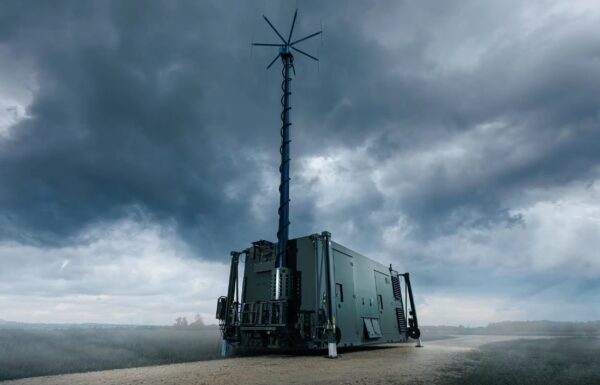
“The success of the MikroSAR project shows how effectively and in an exemplary manner the military, private industry, and state-owned industry can cooperate. We are combining our competencies and potential to strengthen the country’s defense capabilities and strategic resilience. Wojskowe Zakłady Łączności No. 1, a Polish Armaments Group company, is participating in this innovative project for the development of the capabilities of the Polish Armed Forces. It is a particular source of satisfaction for us that the solution developed by WZŁ 1 integrates various systems: communications and data transmission, security, power supply, and the antenna system,” said Arkadiusz Bąk, First Vice President of PGZ.
“The participation of WZŁ-1 S.A. in the MikroSAR program confirms our competencies in building advanced communications systems and integrating key solutions for the Polish Armed Forces. This project is also an example of effective cooperation within the Polish defense industry on an undertaking of strategic importance for national security. The ground segment we developed will provide secure, stable, and continuous access to reconnaissance data, enabling its rapid and effective use. We are proud that, as WZŁ-1 S.A., we are playing an important role in building modern Earth-observation capabilities from space,” said Sławomir Obszyński, President of the Management Board of Wojskowe Zakłady Łączności No. 1.
As mentioned, four of the six POLSARIS satellites, or Polish SAR Intelligence System satellites, have already been placed in orbit under the MikroSAR program. Together with the fourth satellite, launched on May 3, the first Polish Eycore-1 SAR satellite was also launched. The first was launched on November 28, 2025, as part of the Transporter-15 mission, and on December 8 ICEYE presented the first images of Poland taken by its instruments. The next two were launched on March 30 this year as part of the Transporter-16 mission. The Geospatial Intelligence and Satellite Services Agency (ARGUS) expects the final two satellites to be placed in orbit in 2027.
Meanwhile, on April 20 this year, during a visit to Poland by a French government delegation, European company Airbus Defence and Space, part of Airbus SE, the joint venture Thales Alenia Space, owned by France’s Thales at 67% and Italy’s Leonardo at 33%, and Radmor of the WB Group announced the signing of an industrial cooperation agreement to develop a geostationary telecommunications satellite for the Ministry of National Defense.
The purchase of a geostationary satellite with the participation of Polish industry was announced by the ministry on February 27 this year during the presentation of a list of tasks and projects to be implemented by the government under the EU SAFE (Security Action for Europe) instrument, currently being carried out under the Polska Zbrojna program.
These satellite capabilities should also be supplemented by three nanosatellites of the PIAST constellation under the SZAFIR program, launched last year together with POLSARIS-1; four Creotech Hypersat optical satellites under the MikroGlob Satellite Earth Observation System, with the first launch scheduled for the turn of August and September this year; and two large Airbus S950 VHR observation satellites under the POLEOS program, expected in the first quarter of 2027.