
















On Wednesday, March 4, 2026, Warsaw hosted the official opening and announcement of operational readiness of the Satellite Operations Center (COS) of the Agency for Geospatial Intelligence and Satellite Services (ARGUS). COS ARGUS will be responsible, among other tasks, for planning, coordinating, and continuously supporting the Polish Armed Forces with data from low Earth orbit.
 Photos: ARGUS
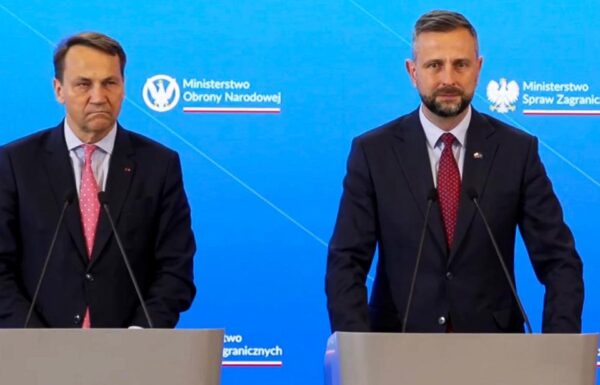
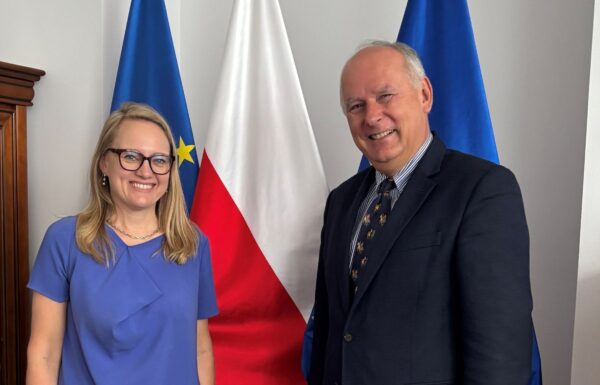
The event was attended, among others, by Deputy Minister of National Defense Cezary Tomczyk; the head of ARGUS, Col. Leszek Paszkowski; the commander of COS and deputy head of ARGUS, Col. Grzegorz Matyja; as well as the guest of honor, the commander of United States Space Forces – Europe and Africa (USSPACEFOR-EURAF), Brig. Gen. Jacob Middleton Jr.
As ARGUS emphasizes, COS builds space situational awareness and protects satellite assets, and cooperation with allies translates into tangible operational effects.
Col. Leszek Paszkowski stated: “The capabilities we have built enable advanced detection and tracking of objects (…) using sensors deployed worldwide. Our operators are already standing continuous operational watch, working with allies with an emphasis on uninterrupted support from the space domain.”
The security of national satellite systems is one of COS’s main tasks. Col. Grzegorz Matyja made it clear that the Center is intended not only to support the Polish Armed Forces, but also to protect the capabilities on which the continuity of support from space depends.
Col. Matyja stressed that COS will operate in close coordination with the Satellite Support Center, which is responsible for controlling satellites in orbit and managing their sensors. This cooperation is what creates a complete operational capability chain. COS ARGUS will operate across five areas:
- support to operations and activities of the armed forces,
- international cooperation and coordination with allies,
- building operational-domain awareness in outer space,
- coordinating, among other things, data and services from the space domain,
- ensuring the security of national satellite systems as they conduct space operations.
Deputy Minister Tomczyk added that experience drawn, among other places, from Ukraine and the Middle East clearly shows that satellite-enabled support to the armed forces is fundamental to planning modern operations. “The fifth domain, the space domain, is already the present day of modern military operations,” Tomczyk said. He noted that COS ARGUS is a capability that turns orbital data into real support for operations and decision-making.
The deputy minister also recalled that in late 2025 the first Polish military satellite was launched into space. He announced that nine more Polish military satellites are to reach orbit this year under the MikroSAR and MikroGlob programs. “They will give our soldiers full visibility of the world in places that are of enormous importance to us,” he said.
On November 28, 2025, a SpaceX Falcon 9 Block 5 launch vehicle lifted off from Vandenberg Space Force Base in California as part of the Transporter-15 mission. Onboard was the first of three ICEYE radar satellites for the MikroSAR Satellite Earth Observation System, recently named POLSARIS, as well as three nanosatellites of the PIAST constellation under the SZAFIR program. Earlier, on December 20, 2024, the Ministry of National Defense signed a contract worth 556.7 million PLN gross with Creotech Instruments for the delivery of a Satellite Earth Observation System under the MikroGlob program. The contract covers four microsatellites based on the HyperSat platform.
Further space capabilities for the Polish Armed Forces include two Airbus S950 VHR observation satellites under the POLEOS program (the first is scheduled for launch in 2027). In addition, the purchase of a geostationary satellite with Polish industry participation is planned under the SAFE (Security Action for Europe) instrument, Deputy Minister Tomczyk said talks on the matter are already underway, adding that “this is not our last word.”
Brig. Gen. Jacob Middleton Jr. emphasized, in turn, that COS is a sign of the development of Poland’s space domain and strengthens the security of the entire NATO Alliance.


