

























On Friday, September 11, 2026, the final day of the 34th International Defence Industry Exhibition MSPO 2026 at Targi Kielce, Prof. Jerzy Małachowski presented the Director’s Award of the National Centre for Research and Development to a consortium comprising PIT-Radwar, part of the Polish Armaments Group, the Military University of Technology (WAT), and Warsaw University of Technology. The award recognized the development of the Sajna multifunction radar, an innovative solution strengthening Poland’s technological and defense capabilities.
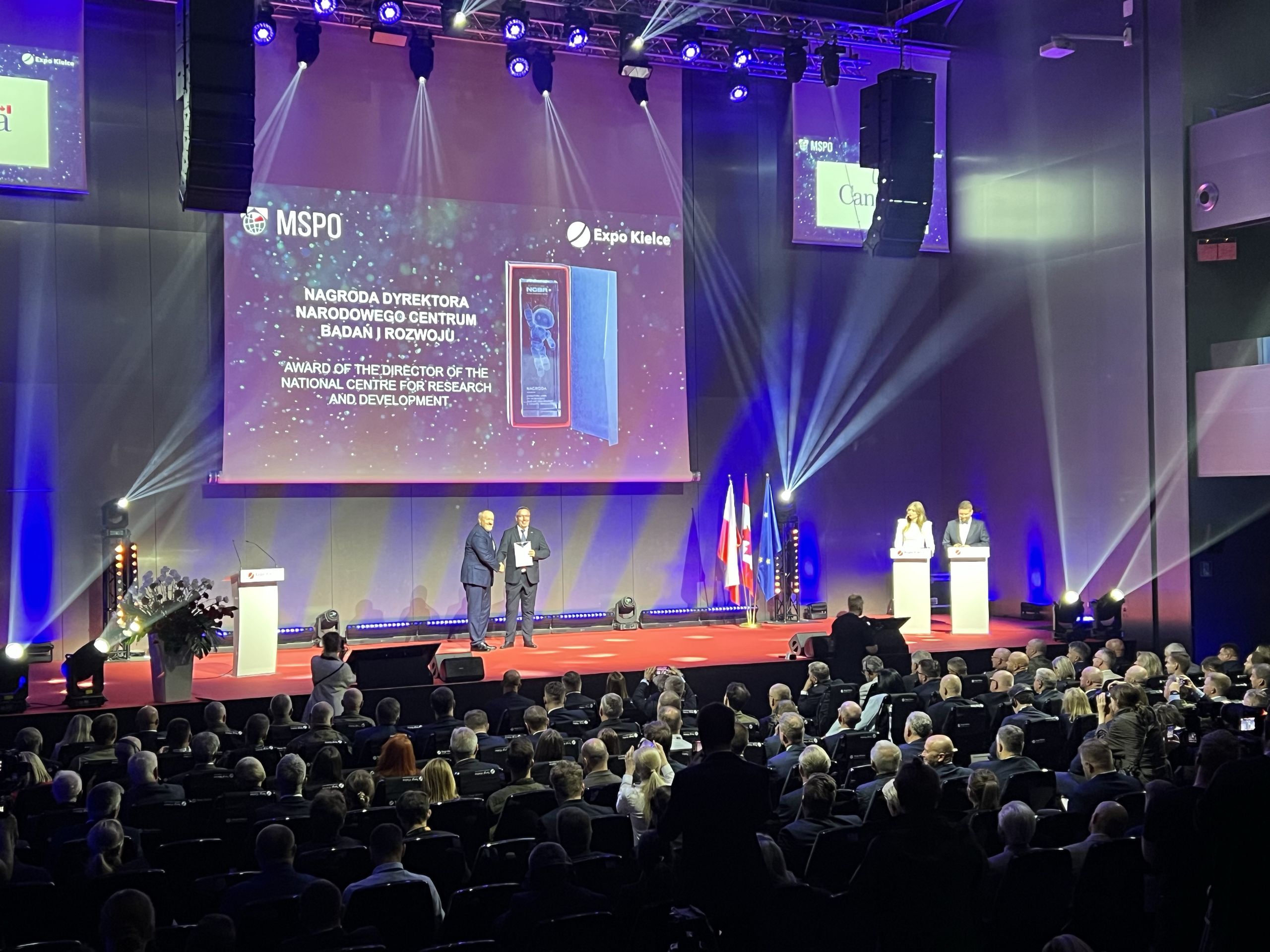 Photo: NCBR
The project, titled Development of a prototype multifunction fire-control radar with two-axis phased-array beam scanning for the Narew short-range air defense missile system (ZROP-KZ), was recognized for its high level of innovation, strategic importance to national security, and strong implementation potential.
„The implementation of the project has contributed to strengthening domestic research and development capabilities, increasing the potential of the Polish defense industry, and laying the groundwork for the deployment of advanced radar technologies developed in Poland. Cooperation between industry and leading research institutions has enabled knowledge transfer and the development of highly qualified specialists. Moreover, the solutions developed increase the participation of domestic industry in strategic technical modernization programs of the Polish Armed Forces. By reducing dependence on foreign technology suppliers, we are increasing the competitiveness of Polish companies in the market for advanced defense systems,” said Prof. Jerzy Małachowski, Director of the National Centre for Research and Development.
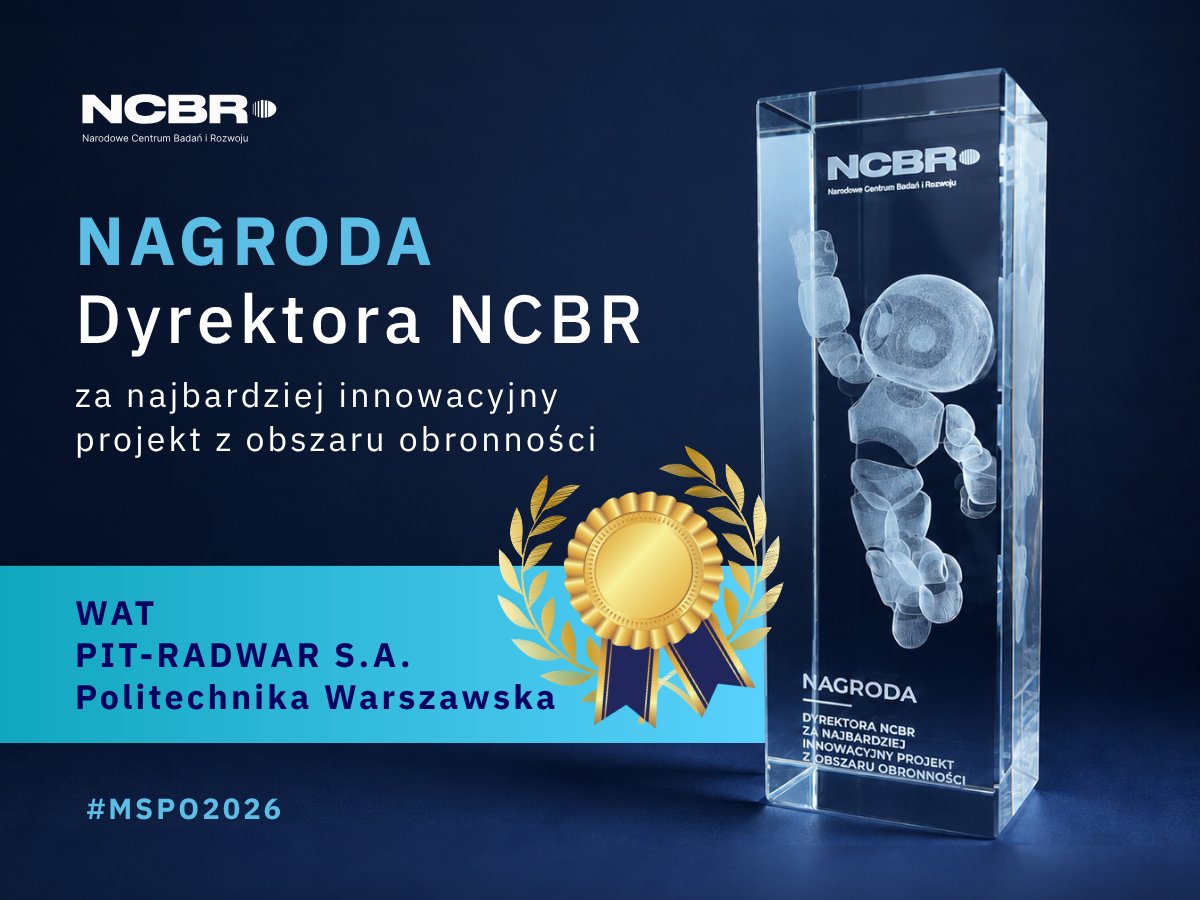
As Prof. Małachowski emphasized, commercialization is of major importance because it allows research results to be translated into desired capabilities and tangible benefits for the state. For this reason, from among the many valuable projects developed with NCBR support, he decided to present the NCBR Director’s Award to the consortium of PIT-Radwar, the project leader, the Military University of Technology, and Warsaw University of Technology.
Detecting airborne threats
The project resulted in the development of a modern multifunction radar for the Narew short-range air defense system. It was carried out by a consortium combining industrial experience with the scientific expertise of Polish universities, enabling the development of a valuable final solution.
The Sajna radar uses modern technical solutions, including an active electronically scanned array, allowing it to detect and track various types of targets such as aircraft, helicopters, drones, missiles, and artillery projectiles. The use of a liquid-cooled antenna reduces the system’s thermal signature, increasing its survivability on the battlefield. The radar is also equipped with an identification friend or foe system, remote-control capability, and additional functions intended to improve its effectiveness and operational safety in combat conditions.
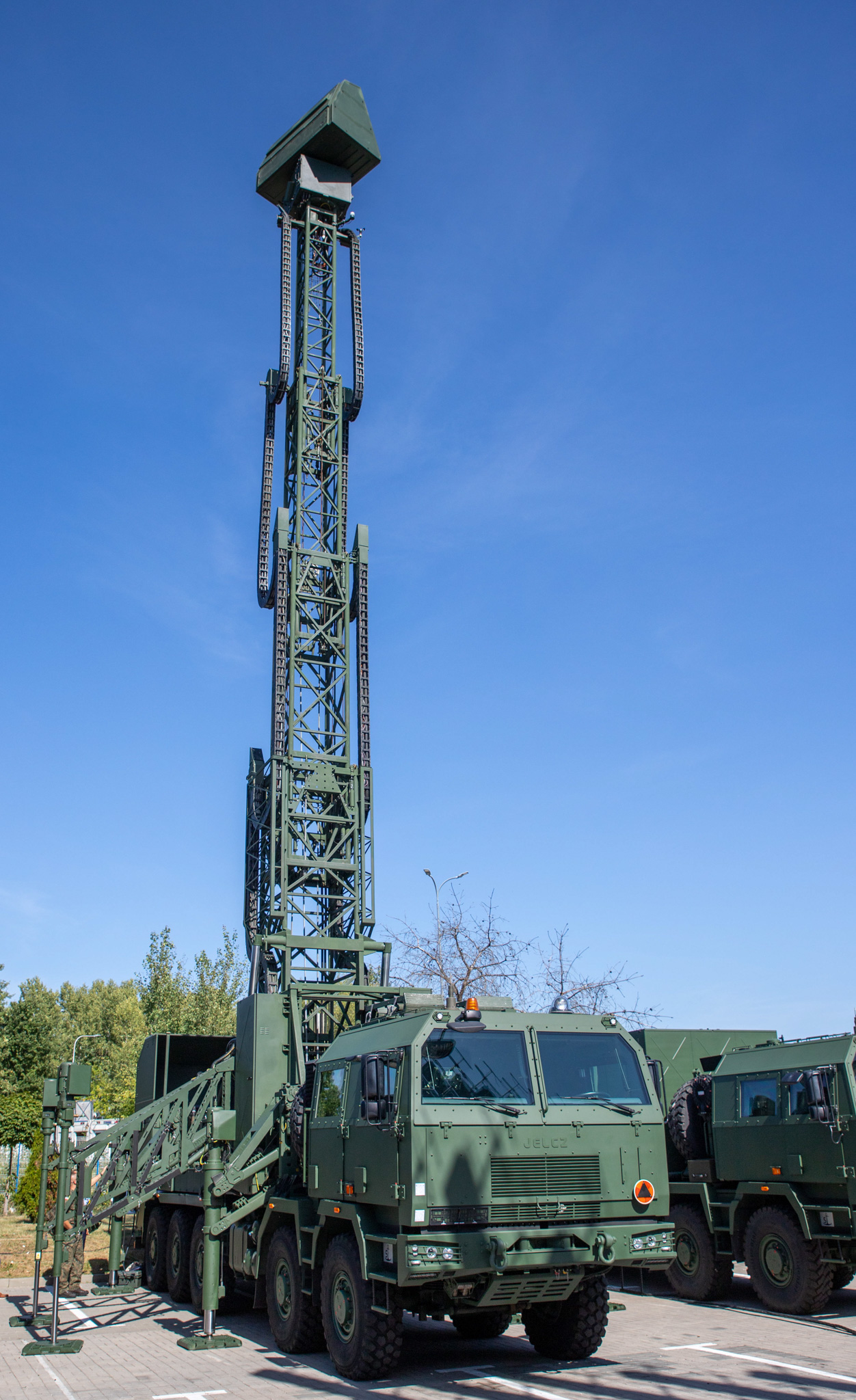
The project is of particular importance to the development of Poland’s domestic defense capabilities and contributes to building independent technological expertise within the Polish defense industry. The development of the prototype, completion of testing, and preparations for production represent an important step toward introducing advanced Polish radar technologies into air defense systems.
The Sajna project was carried out as a result of Competition No. 3/2012 for research and development projects supporting national defense and security. It received 127 million PLN in funding from the National Centre for Research and Development.
More on the Sajna radar can be found in an article by editor Przemysław Gurgurewicz: PIT-Radwar’s new products at MSPO 2024: Warta, Sajna, and Tuga.
🏆Radar Wielofunkcyjny Kierowania Ogniem #SAJNA otrzymał nagrodę Dyrektora #NCBR podczas #MSPO2026 w Kielcach!
Projekt został zrealizowany przez @PITRADWAR_PGZ, @PW_edu i @WAT_edu przy wsparciu środków z NCBR.
Gratulujemy! 👏👏👏
Więcej informacji ➡️ https://t.co/ijf7j6GKlA pic.twitter.com/L85DwiqAlg
— NCBR (@NCBR_pl) September 11, 2026
