



















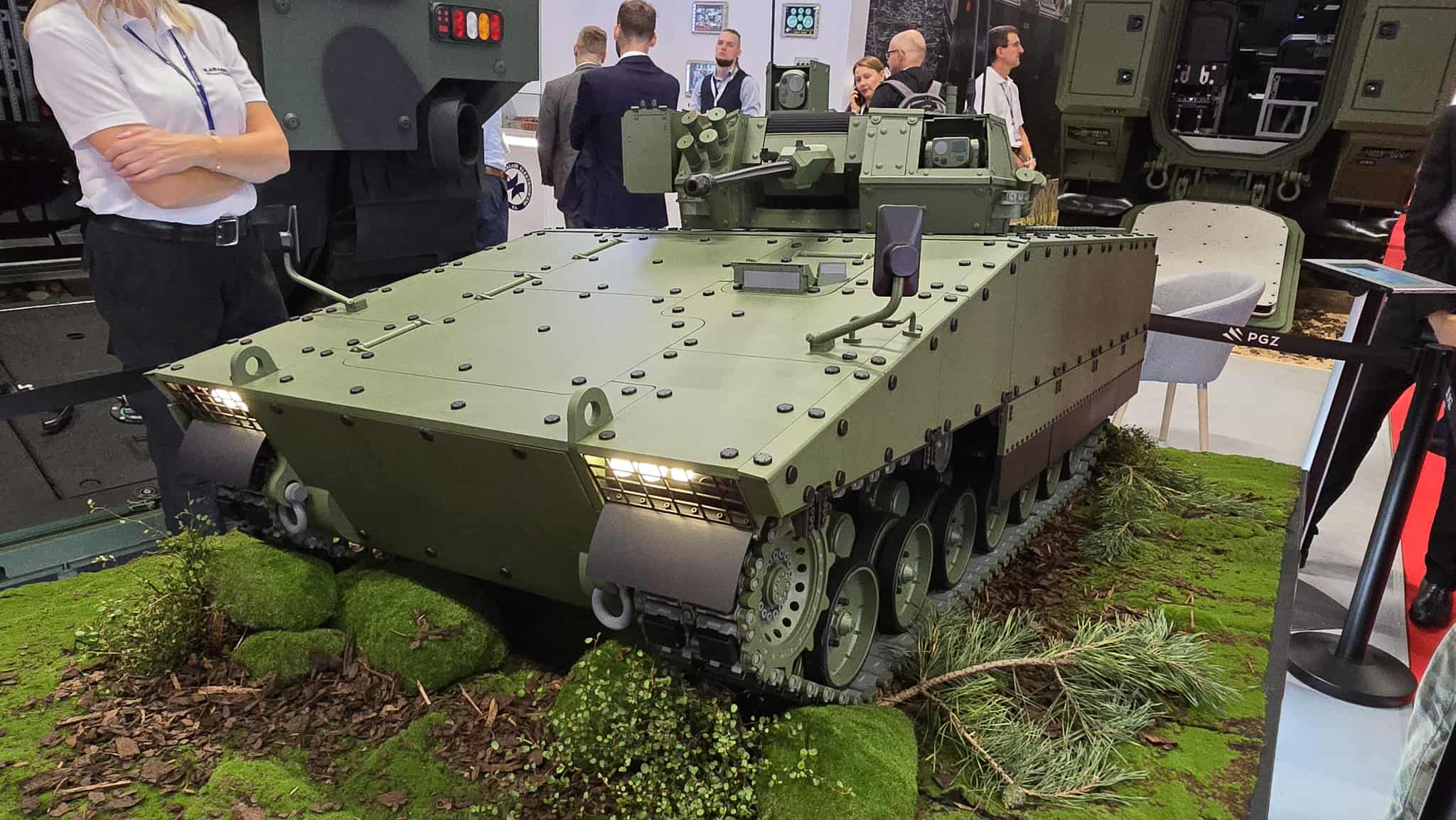
As we learned yesterday from HSW’s press release, the Ratel Heavy Infantry Fighting Vehicle is currently the most anticipated vehicle among the tracked combat platforms intended for the Polish Armed Forces. The Polish Armed Forces have not yet acquired a modern heavy infantry fighting vehicle and continue to operate the remaining small number of old BWP-1s while awaiting the introduction of the Borsuk (Badger) amphibious IFV into mechanized units.
 Photos: Jakub Link-Lenczowski, MILMAG
The Heavy Infantry Fighting Vehicle (CBWP – Ciężki Bojowy Wóz Piechoty) project is being carried out under the supervision of the Polish Armaments Group (PGZ). At Huta Stalowa Wola, the design process for the vehicle’s key component, the heavy IFV chassis, is currently underway. At MSPO, HSW is presenting its CBWP proposal, developed using experience from the Borsuk amphibious IFV (NBPWP – Nowy Bojowy Pływający Wóz Piechoty) program and the Polish-modified chassis used in the AHS Krab self-propelled gun-howitzer.
PGZ’s proposal, developed by HSW, is a modern tracked combat platform designed for operations on the contemporary battlefield. The primary role of the Heavy IFV is to transport and protect infantry squads while providing them with fire support under conditions of high threat intensity. The vehicle offers high tactical mobility thanks to its tracked chassis, allowing it to operate in difficult terrain. Its design ensures advanced ballistic and mine protection in accordance with STANAG standards, making it suitable for operations in areas with high concentrations of enemy firepower. The interior has been designed with crew and troop safety and ergonomics in mind, with space allocated for the commander, driver, and 6–8 fully equipped soldiers.
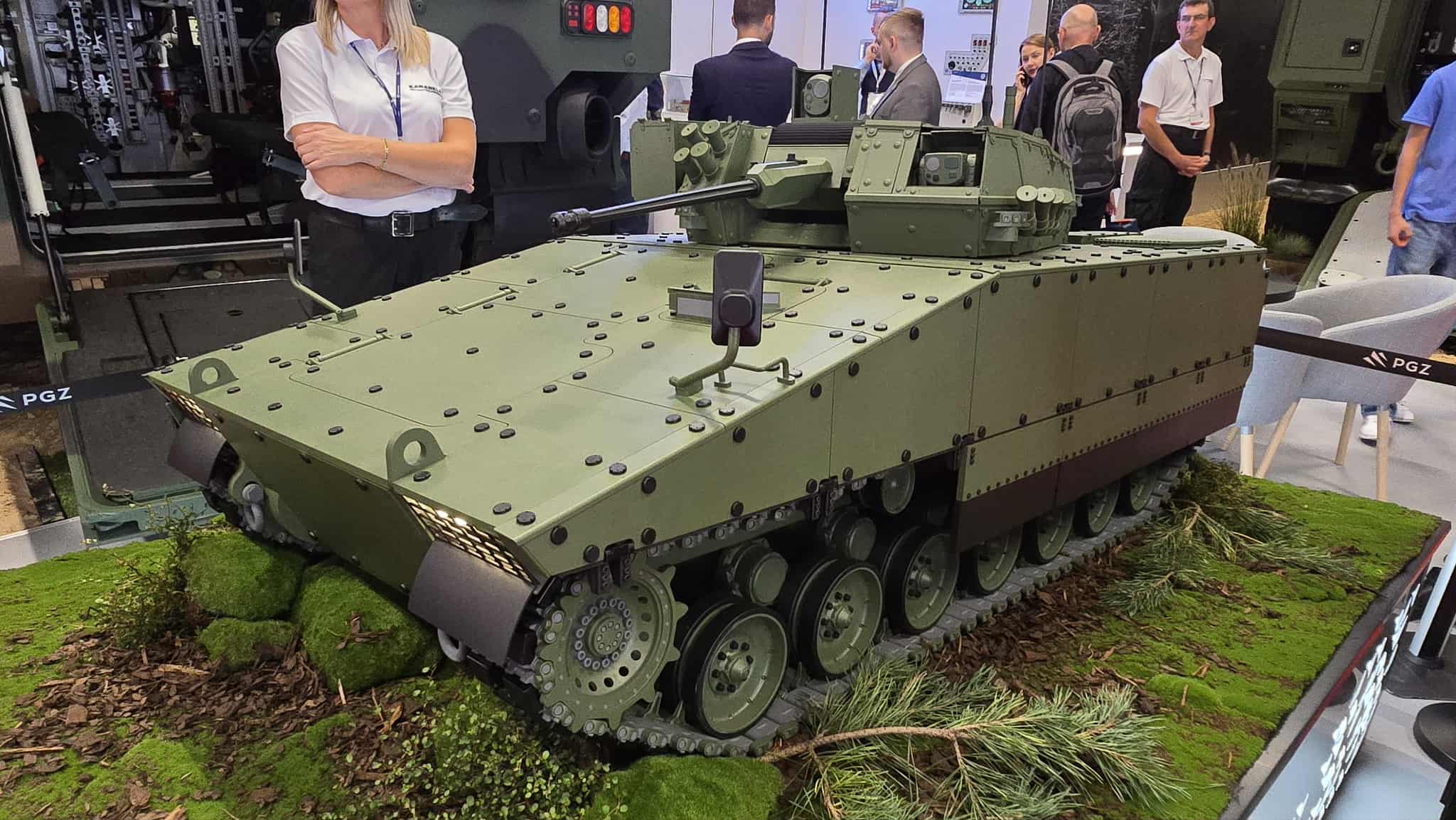
The primary armament of the CBWP is the ZSSW-30 remotely operated turret, equipped with a 30/40 mm cannon and an integrated Spike ATGM launcher. The turret system features advanced optoelectronic and targeting systems, enabling effective fire in all conditions. Optionally, the vehicle can be fitted with an Active Protection System (APS), which increases its survivability on the modern battlefield by countering threats from anti-tank missiles and drones. The vehicle is equipped with laser warning systems (e.g., OBRA-3), CBRN protection, and a filter-ventilation system. The Heavy IFV is therefore a fully integrated combat system, ready for operations in modern warfare characterized by speed, high precision, and elevated threat levels.
It is worth recalling that on 14 August 2023, the then-Minister of National Defense, Mariusz Błaszczak, approved a framework agreement for the acquisition and adaptation of up to 700 Heavy Infantry Fighting Vehicles (CBWP). Deliveries were planned to begin in 2025, but as is now known, this will not happen (Heavy Infantry Fighting Vehicles For Polish Armed Forces).