
























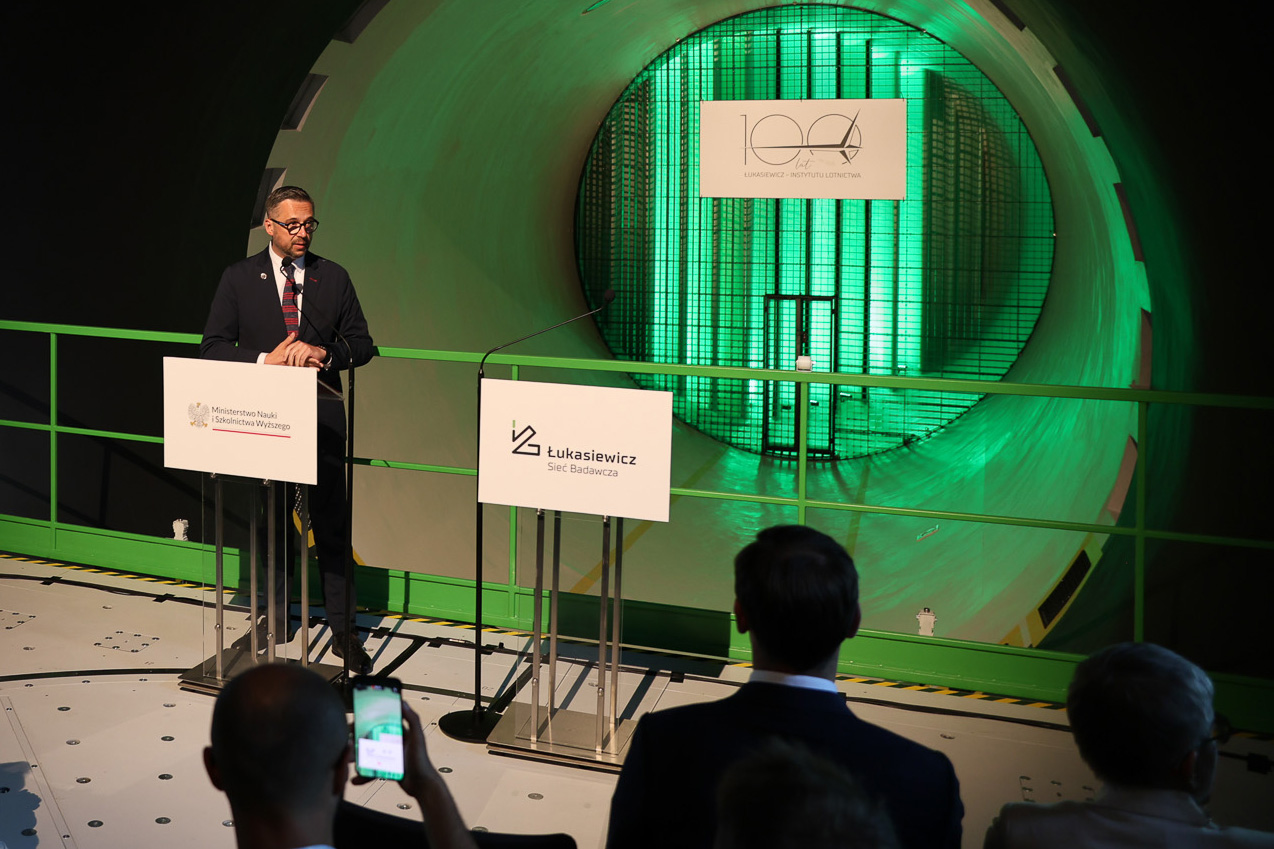
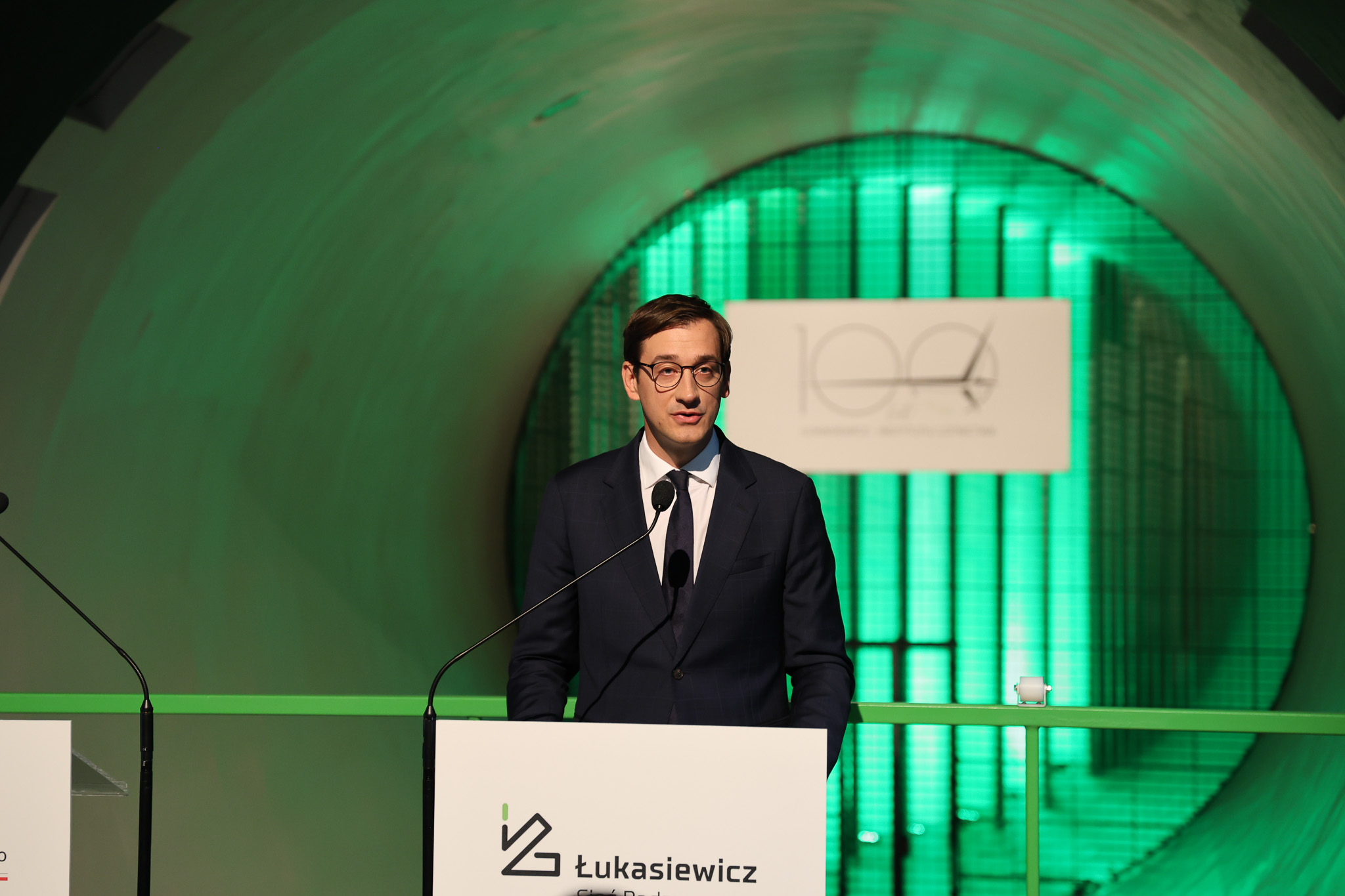
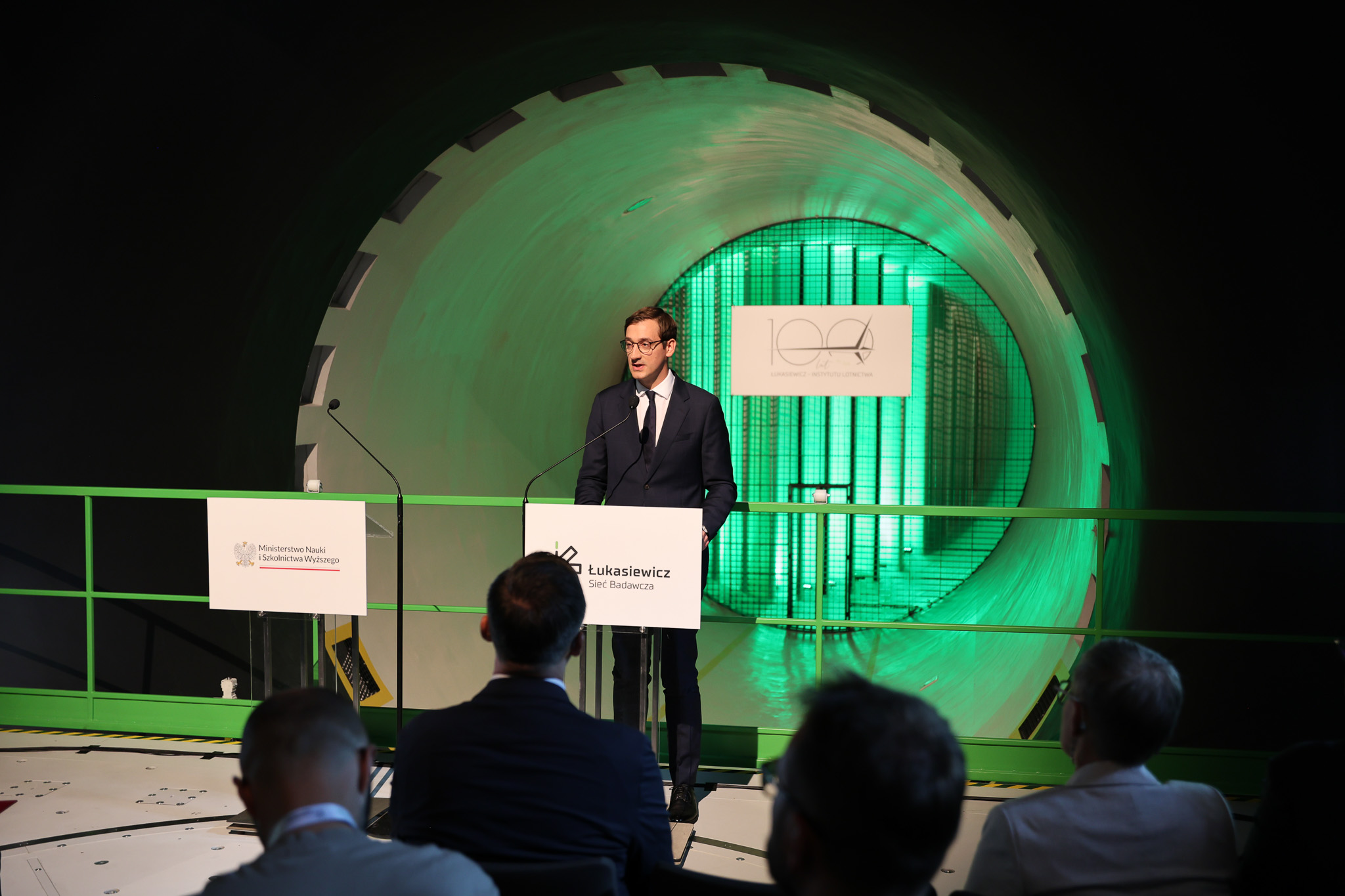
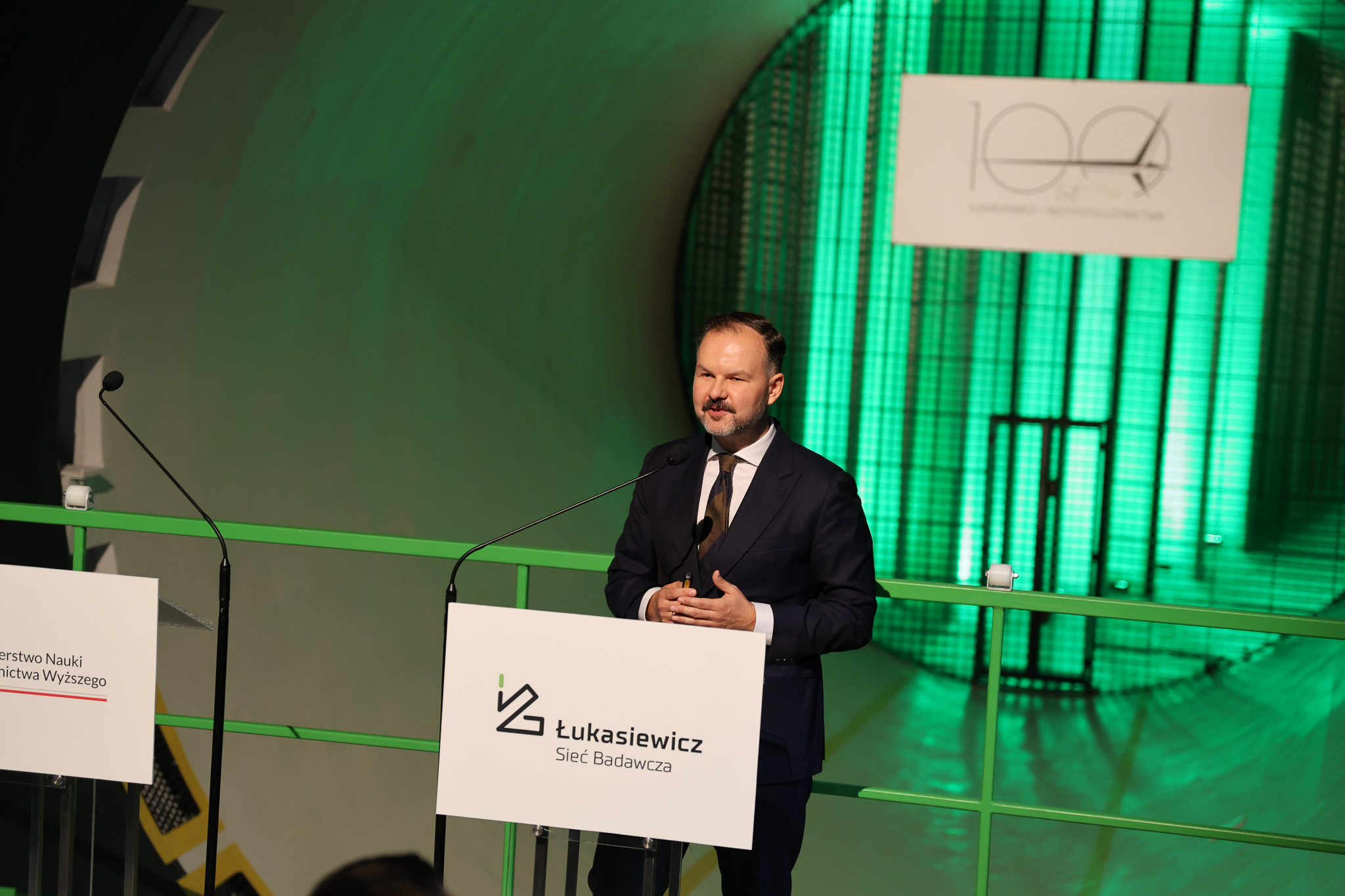
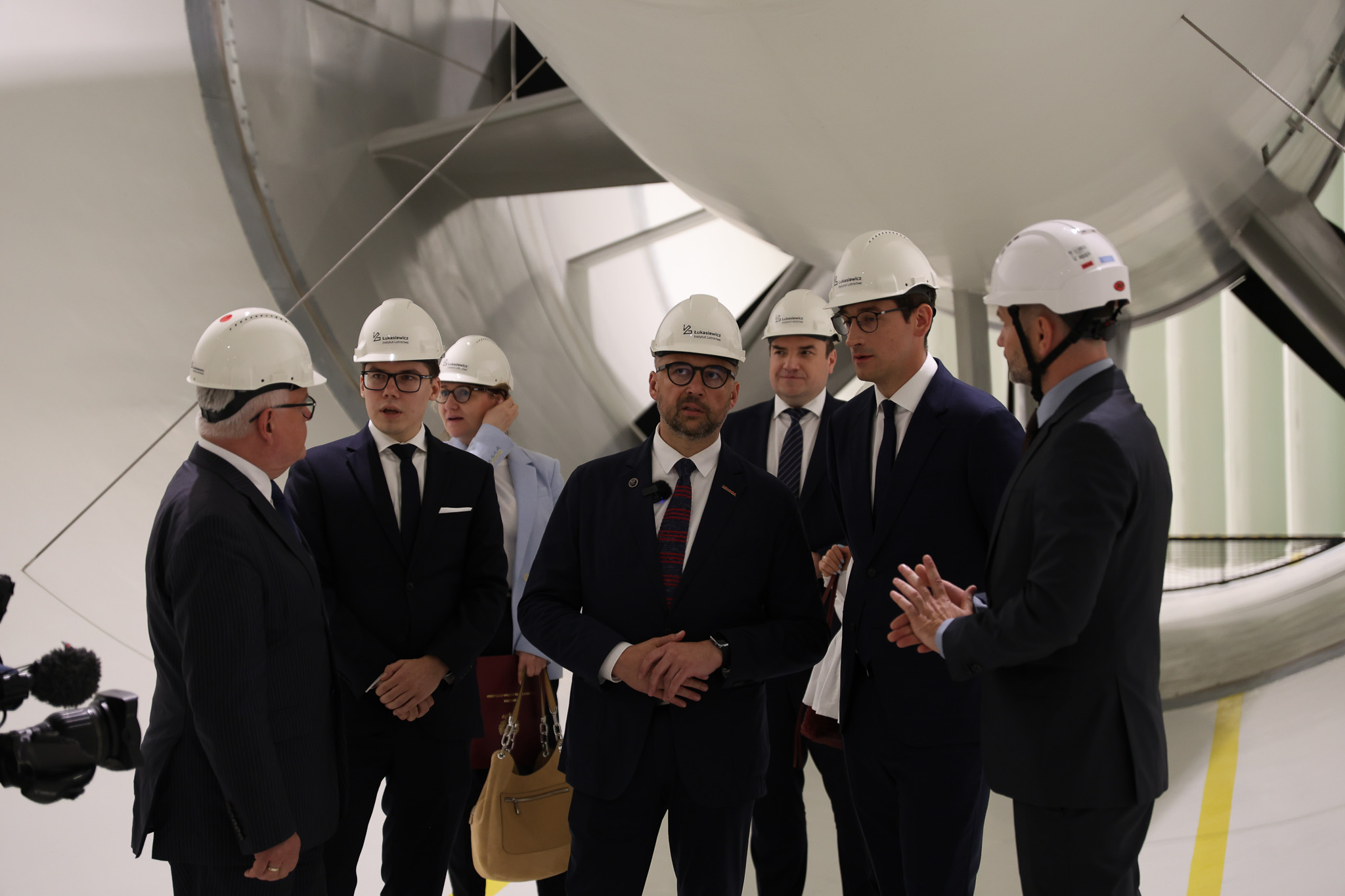
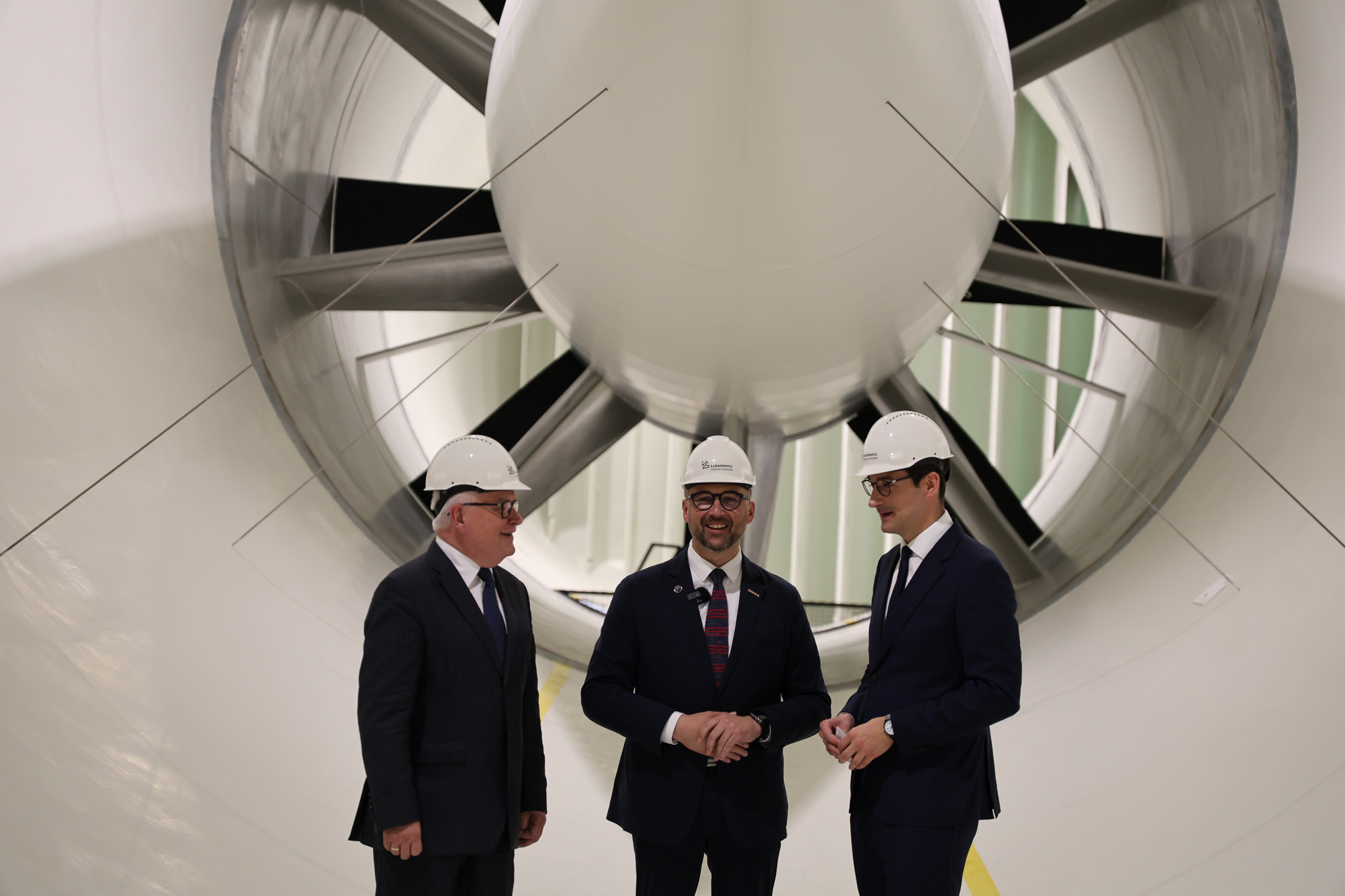
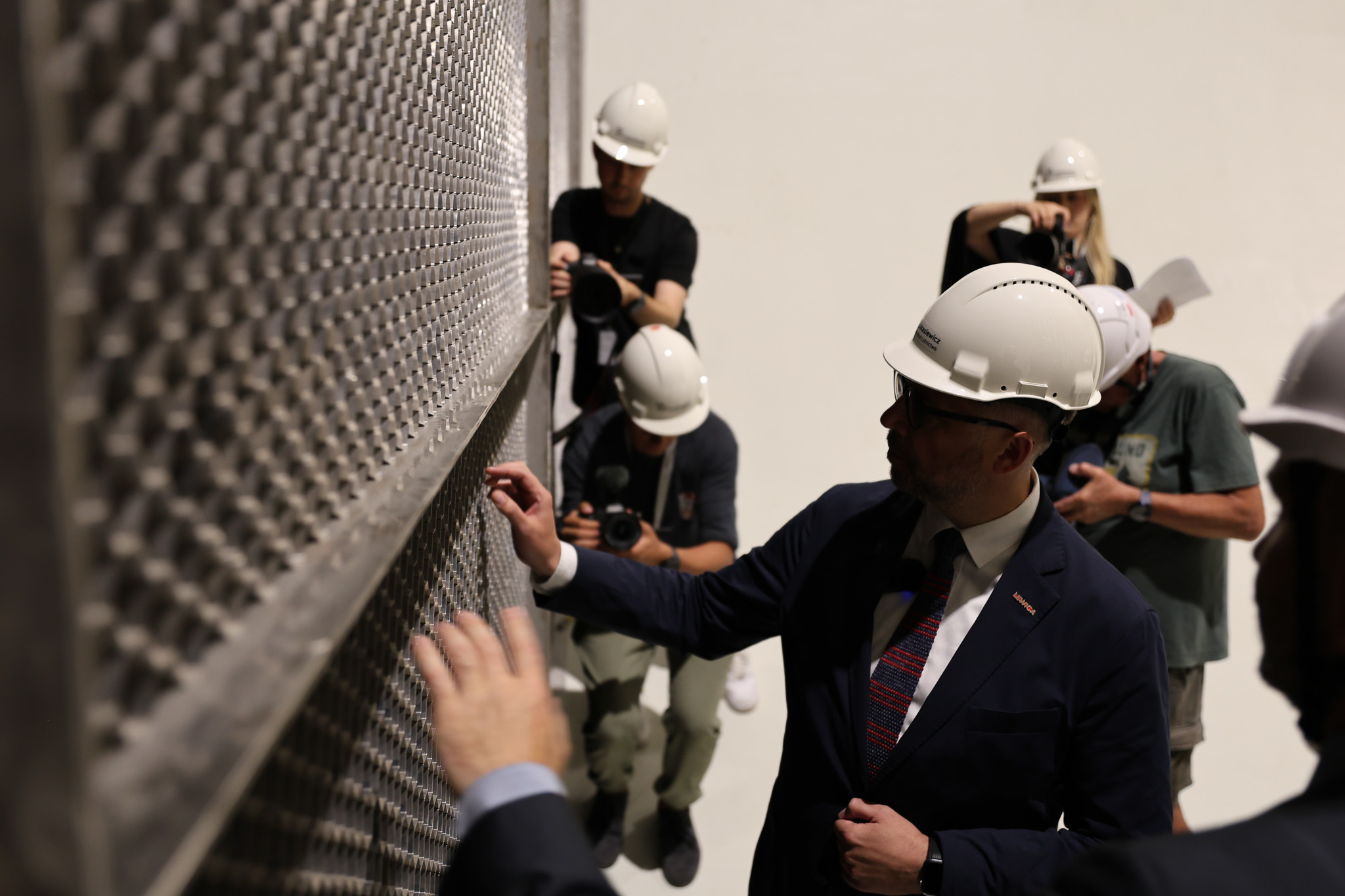
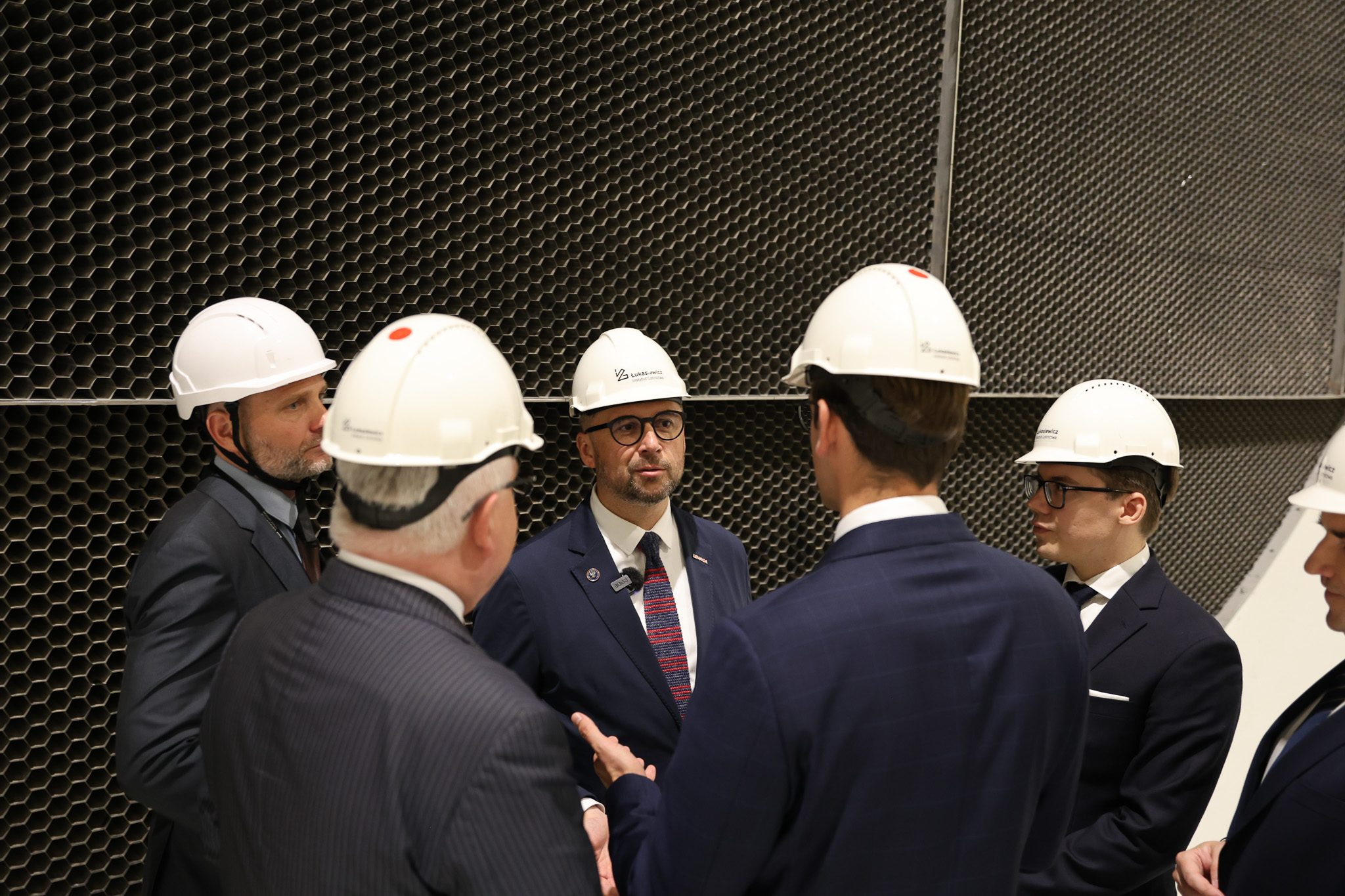
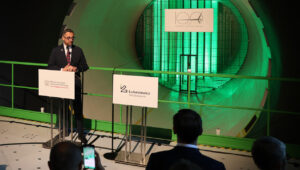
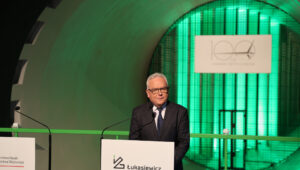
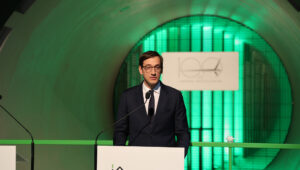
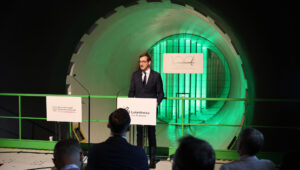
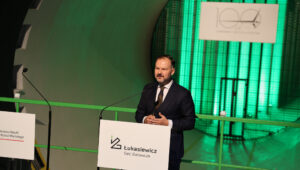
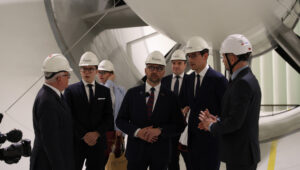
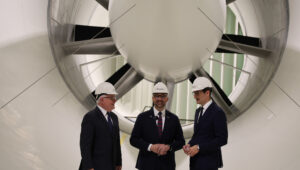
The Łukasiewicz Institute of Aviation (Łukasiewicz–ILOT), part of the Łukasiewicz Research Network, has unveiled the modernized T-3 wind tunnel, the largest facility of its kind in Central and Eastern Europe. It forms part of the 105 million PLN Innovative Propulsion and Aircraft Structures Research and Development Center (CeBRINS) project at Warsaw’s Okęcie district, financed under Poland’s National Recovery and Resilience Plan.

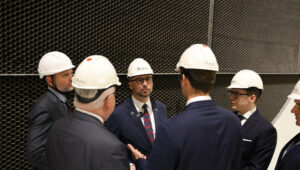

Photos: The Łukasiewicz Institute of Aviation
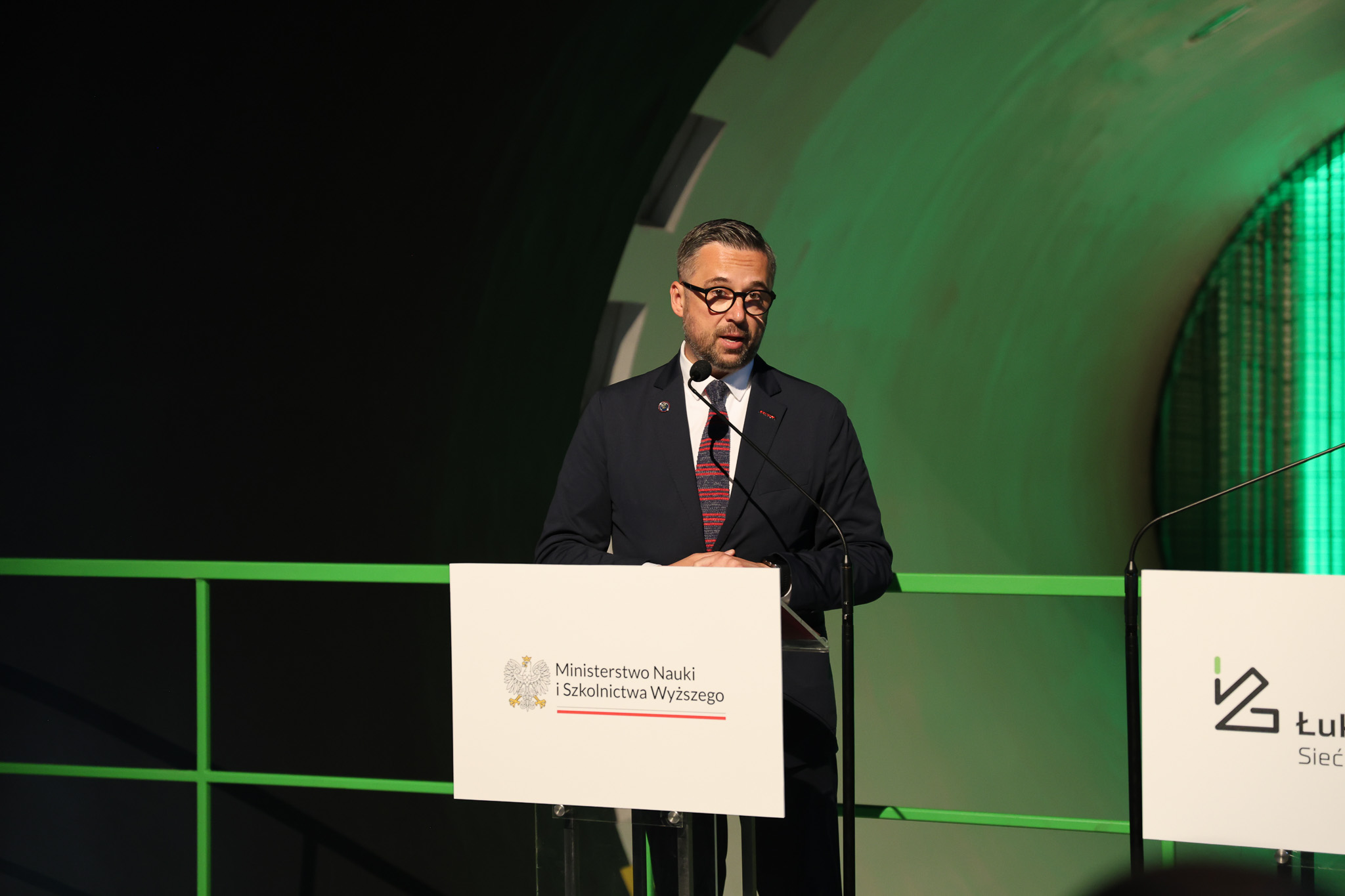
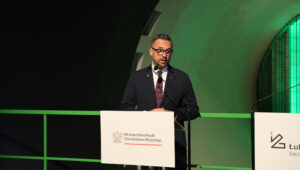
“We are investing in research infrastructure that gives Polish scientists and businesses access to advanced technology projects. This investment not only demonstrates our innovative potential, but also strengthens Poland’s position as a credible partner for international consortia participating in European programs,” said Minister of Science and Higher Education Marcin Kulasek.
“This investment is important not only for the Łukasiewicz Research Network, but also for Poland’s entire advanced-technology ecosystem, as it strengthens the competitiveness of the national economy. The role of the state is to create conditions in which Polish innovations can emerge, develop, and compete successfully at the global level. Such measures increase our technological independence, accelerate the transfer of knowledge to the economy, and ensure that public funding translates into faster skills development and the creation of high-quality jobs. This is why we are using funds from the National Recovery and Resilience Plan to build centers that will serve science, industry, and defense for decades to come,” emphasized Minister of Science Marcin Kulasek, PhD Eng.
The new infrastructure was developed with the institute’s strategic partners in mind, as well as small and medium-sized companies operating in the rapidly growing unmanned platform and new-space markets. A contract for a research campaign with one of Europe’s leading aircraft engine manufacturers is already being finalized.
The infrastructure will support both defense projects, financed largely through the European Defence Fund (EDF), and dual-use technologies related to the space sector, funded by the European Space Agency (ESA). Łukasiewicz–ILOT is already implementing several dozen projects under these programs.
Dr. Hubert Cichocki, President of the Łukasiewicz Center, emphasized the value of the new infrastructure for business and the implementation of the state’s broader priorities:
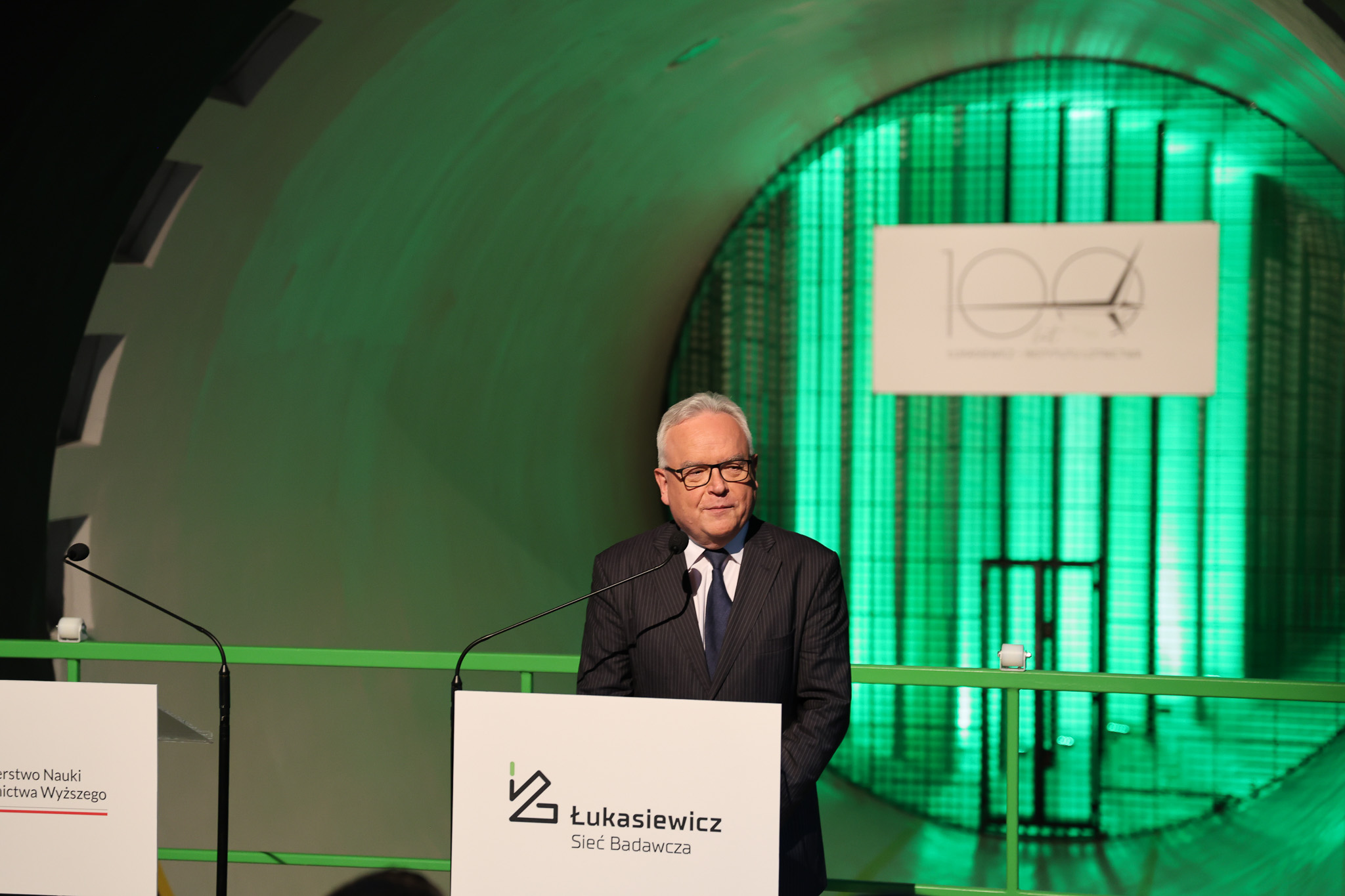
“We expect the investment to facilitate the commercialization of the Network’s projects, as well as the provision of R&D services to companies in the aviation and space sectors, whose value continues to grow year by year. Technologies in these areas are particularly important from the perspective of national security, which is why we also intend to make the tunnel available to our strategic partners in the defense industry. In this way, the more than 700 million PLN secured by Łukasiewicz under the National Recovery and Resilience Plan will contribute to the prosperity and security of Polish citizens for decades to come,” said Dr. Cichocki.
The Łukasiewicz Center plans to use the tunnel in the implementation of the Łukasiewicz Research Network’s Space Research Program, announced in March. Flow studies are important, among other applications, for testing launch systems. The Bursztyn rocket, one of the pillars of the program alongside the SPARK nanosatellite scheduled to enter orbit in the second half of 2027, has already undergone testing in Łukasiewicz–ILOT wind tunnels.
The first research campaign to be conducted in the tunnel will involve tests of an aeroelastic wing under the EU-funded EXAELIA project (Experimental Aircraft for European Leadership in Aviation). In addition to the tunnel, the project will use new Łukasiewicz–ILOT research equipment, including deformation measurement systems and a three-dimensional particle image velocimetry system (3D PIV).
The tunnel will also support other projects implemented across the Łukasiewicz Research Network, particularly in the fields of ground transportation, energy, construction, and defense systems. Alongside cooperation with industry, leveraging synergies between the institutes is currently one of the most important factors determining the allocation of public funding received by the Network.
Łukasiewicz–ILOT’s advantage in cooperation with Polish entities will be its extensive experience in the use of the T-3 tunnel by companies from the traditional aviation industry, such as Leonardo PZL-Świdnik, the rapidly developing unmanned platform sector, including WB Electronics, and Poland’s emerging high-speed vehicle market, represented by PESA Bydgoszcz.
The T-3 wind tunnel at Łukasiewicz–ILOT was built in the 1950s and for decades successfully met the research requirements of its time, supporting, among other projects, the development of the Iskra, Iryda, Wilga, Kruk, and Dromader aircraft and the W-3 Sokół helicopter. However, rapid technological development and growing demands for measurement precision, together with the evolving needs of the aviation and defense industries, made modernization essential to enable Poland to participate in the development of the new-space sector.
“Polish engineers can actively participate in the development and testing of breakthrough technologies, ranging from low-emission aviation to solutions for the energy sector and unmanned systems,” concluded Prof. Cezary Szczepański, PhD Eng., Director of the Łukasiewicz Institute of Aviation.
See also:
