







AH-64(I) Apache Guardian
On Monday, May 18, 2026, details were published of a package covering follow-on support for the fleet of Boeing AH-64E Apache Guardian attack helicopters and related equipment, worth up to 198.2 million USD.
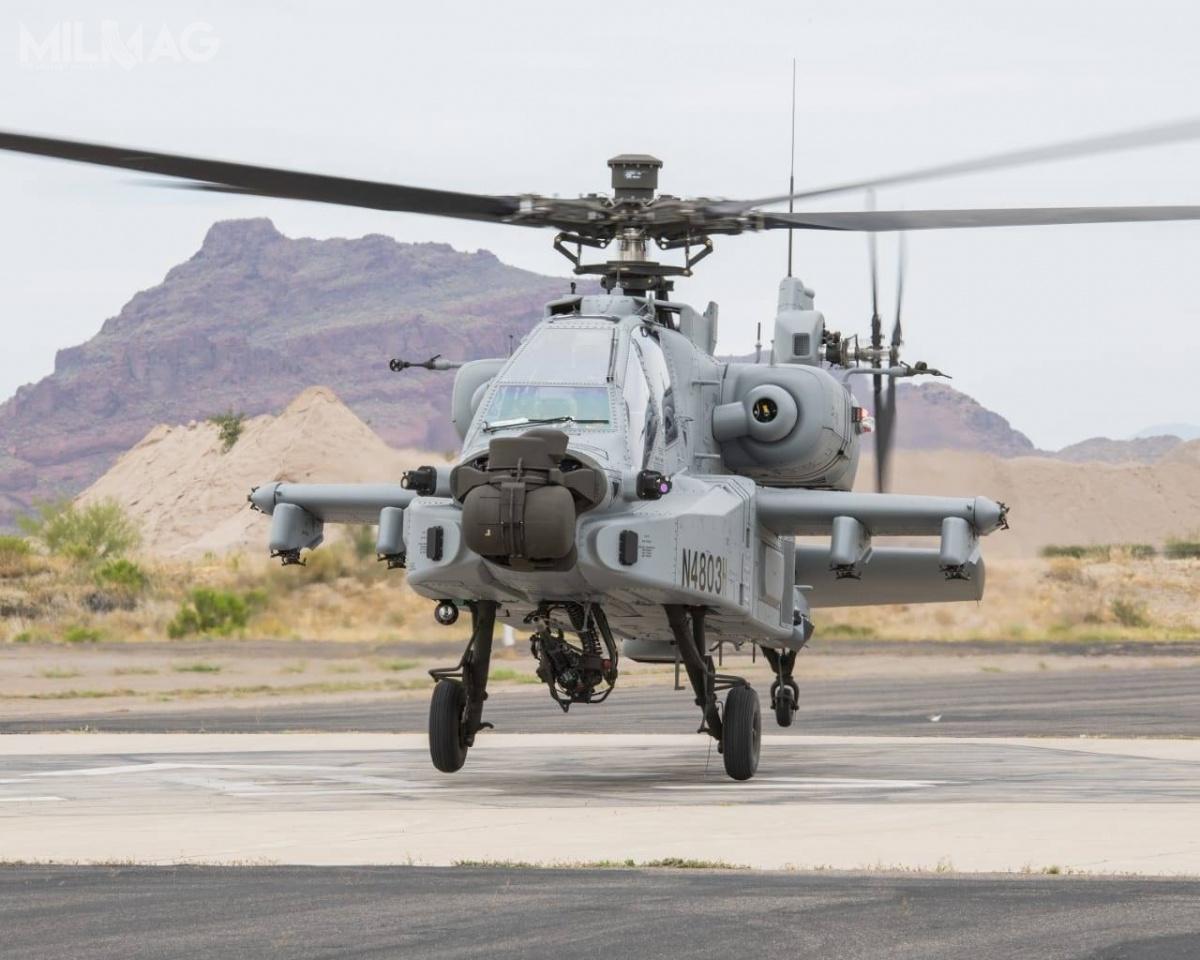 AH-64E(I) in Indian Air Force colors / Photo: Indian Air Force
According to the published information, the government in New Delhi requested the possible procurement of technical support services for the helicopters in question; engineering, technical, and logistics support services provided by the U.S. government and the contractors, Boeing and Lockheed Martin; technical data and publications; personnel training; and other related elements of logistics and program support.
As a reminder, in 2015 the Indian Air Force (Bhartiya Vāyu Senā) ordered 22 rotorcraft of this type for 2.02 billion USD, with an option for eight more. The first was delivered on May 10, 2019, and the last from the base order in June 2020.
In turn, on February 25, 2019, the Indian Army (Bhāratīya Sēnā) contracted six aircraft, plus six more under an option, for the equivalent of around 800 million USD. As reported, the first three AH-64E(I)s were delivered on July 20, 2025, and the remaining aircraft were expected to arrive by November, but were ultimately delivered in December.
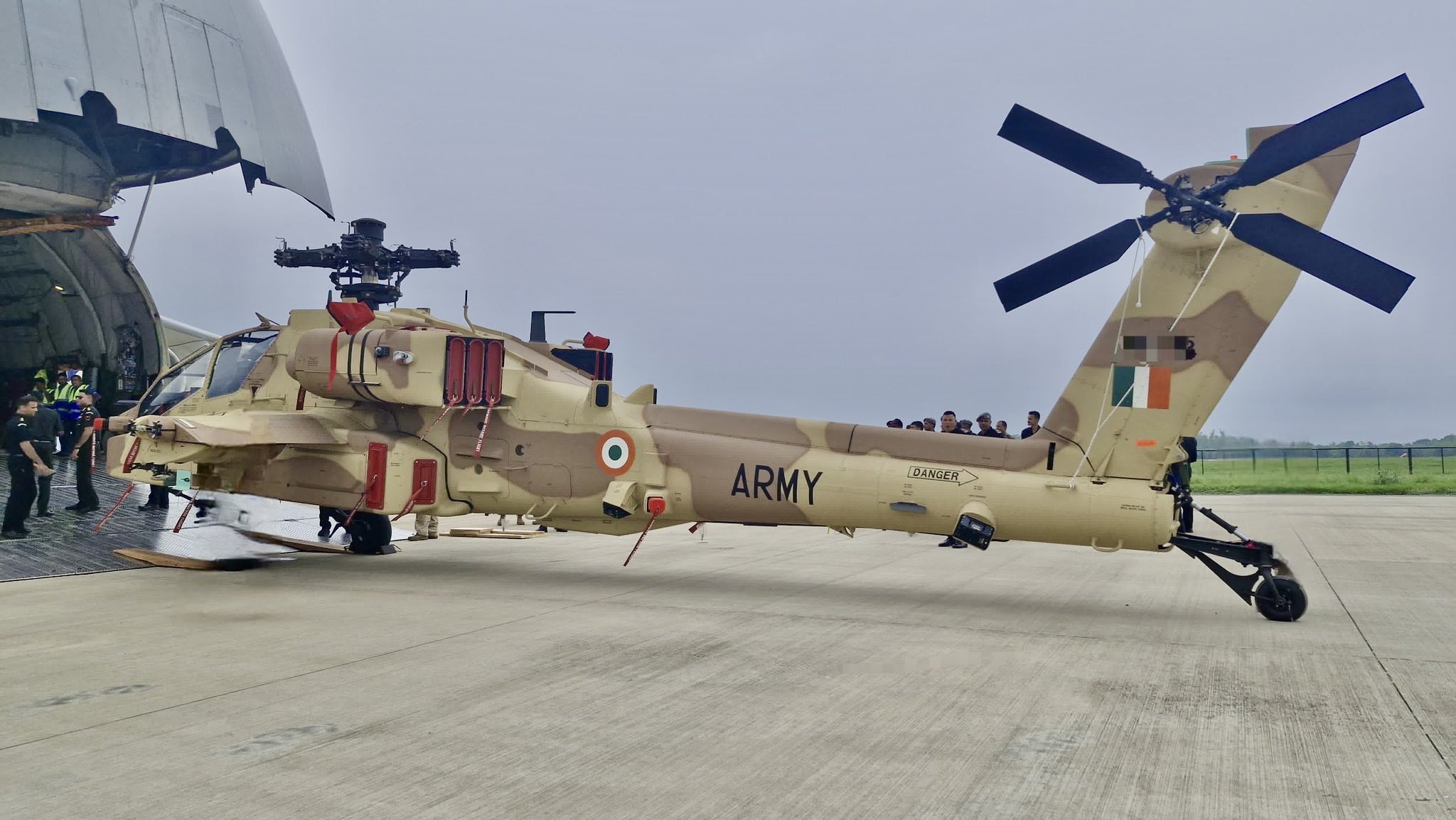 AH-64E(I) in Indian Army colors / Photo: U.S. Embassy India via X
Meanwhile, on August 28, 2025, Indian defense portal India Defence Research Wing reported, citing sources in the armed forces, that the Army planned to acquire 12 additional helicopters, increasing the total order for the armed forces to 40 aircraft.
Overall, the Ministry of Defence had originally estimated the requirement at 44 helicopters, but funding was insufficient and other difficulties arose, including the COVID-19 pandemic. As a result, a total of 28 rotorcraft have so far been ordered for both branches of the armed forces, excluding options. Additional helicopters, if contracted, would strengthen offensive capabilities, particularly in the context of tensions along the borders with China and Pakistan.
The Army’s long-term objective is to create a fleet of 18 Apache helicopters, as well as lighter domestically produced helicopters: 90 LCH Prachand and 75 Rudra WSI, with another 25 on order. The Air Force, in turn, would operate 22 Apache helicopters, 66 LCH Prachand, and 16 Rudra WSI, with another 50 on order.
M777A2
On the same day, a technical support package for M777A2 155 mm/L39 ultralight towed howitzers was authorized, worth up to 230 million USD.
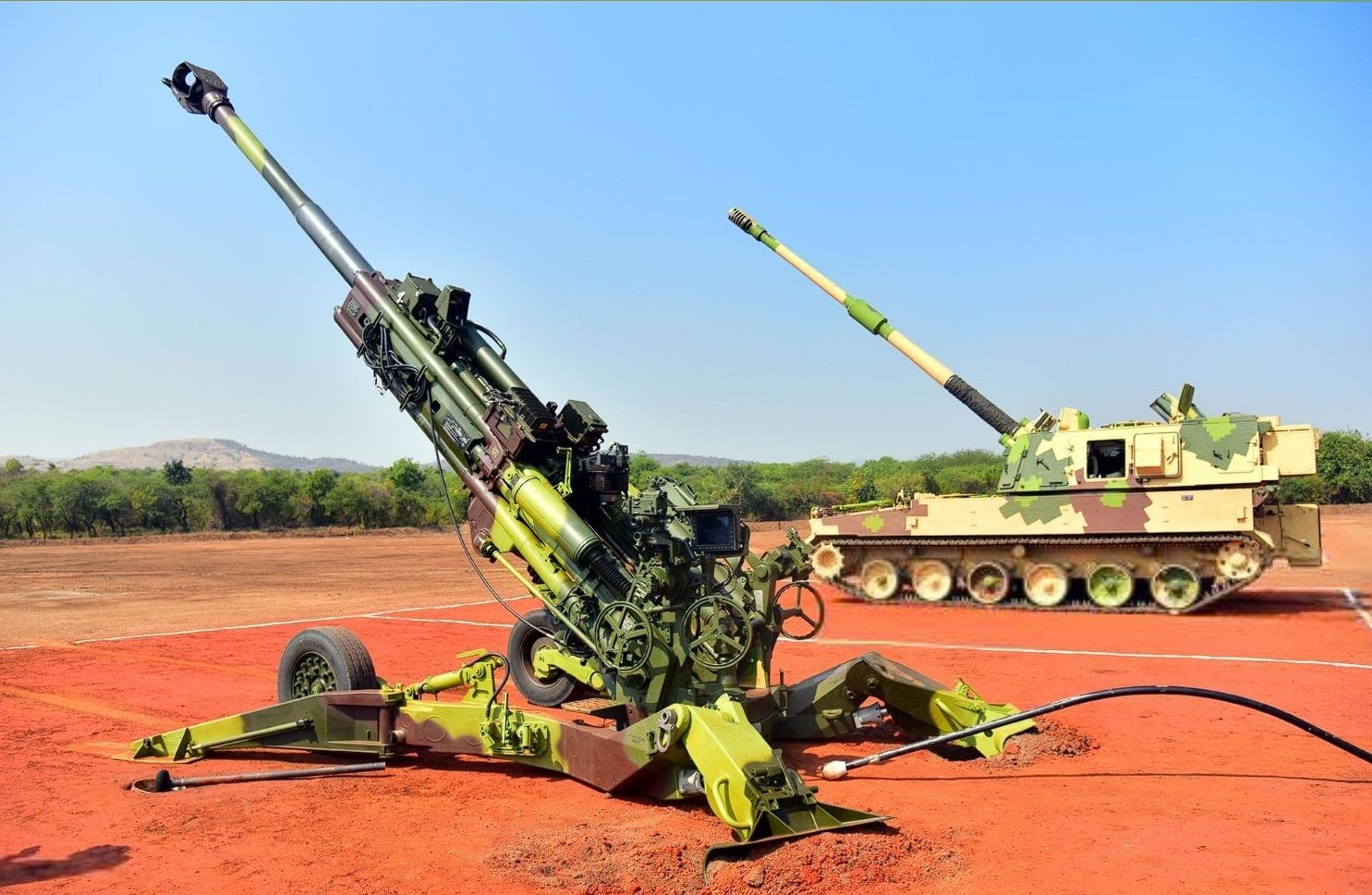 M777A2 in the foreground and a K9 Vajra-T self-propelled howitzer / Photo: Indian Army
The Government of India requested the purchase of long-term technical support for the M777A2 howitzers, comprising the following non-MDE (Major Defense Equipment) items: additional equipment, spare parts, repair and return services, training, technical assistance, field service representative support, storage capability, and other related elements of logistics and program support. The principal contractor will be BAE Systems, based in Cumbria, United Kingdom.
As a reminder, on November 30, 2016, under a contract worth 50 billion INR, India ordered 145 M777A2 howitzers, of which 25 were delivered from the facilities of BAE Systems Inc., the company’s U.S. subsidiary in Arlington, Virginia, while the remaining 120 were produced under license by Indian company Mahindra Defence Systems (MDS) in Faridabad, Haryana, in northern India. Deliveries began in November 2019 and were completed in 2022.
Interestingly, after the Indian contract was completed, BAE Systems Inc. discontinued series production of the guns, but work is now underway to restart it.
Given the current inventory of the Indian Army, obsolete towed howitzers of smaller calibers are to be withdrawn: the 105 mm OFB Indian Field Gun Mk 1/2/3 and 130 mm M-30, as well as 155 mm Haubits FH77 B02. Together with the M777A2, these are being replaced by domestically produced 155 mm howitzers: the ATAGS (Advanced Towed Artillery Gun System) and OFB Dhanush, of which 18 have been received out of 114 ordered, from a total planned fleet of 1,200 towed guns.
Self-propelled howitzers are also being introduced: 100 K9 Vajra-T, with another 100 ordered and 100 planned out of an original requirement for 714. Interestingly, some of the post-Soviet M-30 guns are undergoing modernization with barrel replacement to the Israeli M-46 Soltam standard, covering 180 units, and the Indian IOB Sharang standard, covering 28 out of 300 units. Plans also include the procurement of large numbers of wheeled self-propelled howitzers using domestic Dhanush or ATAGS guns, or foreign solutions.