















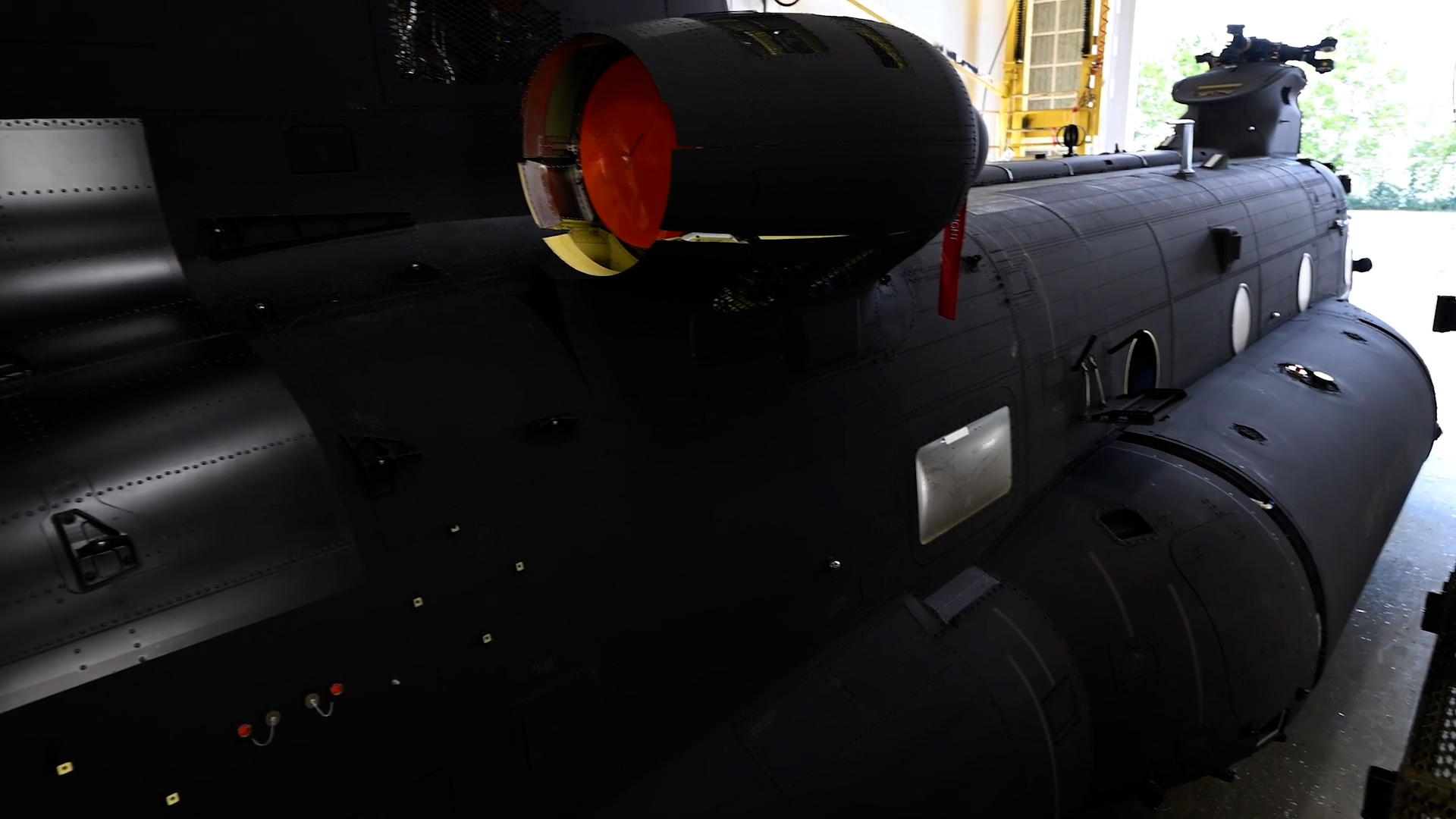
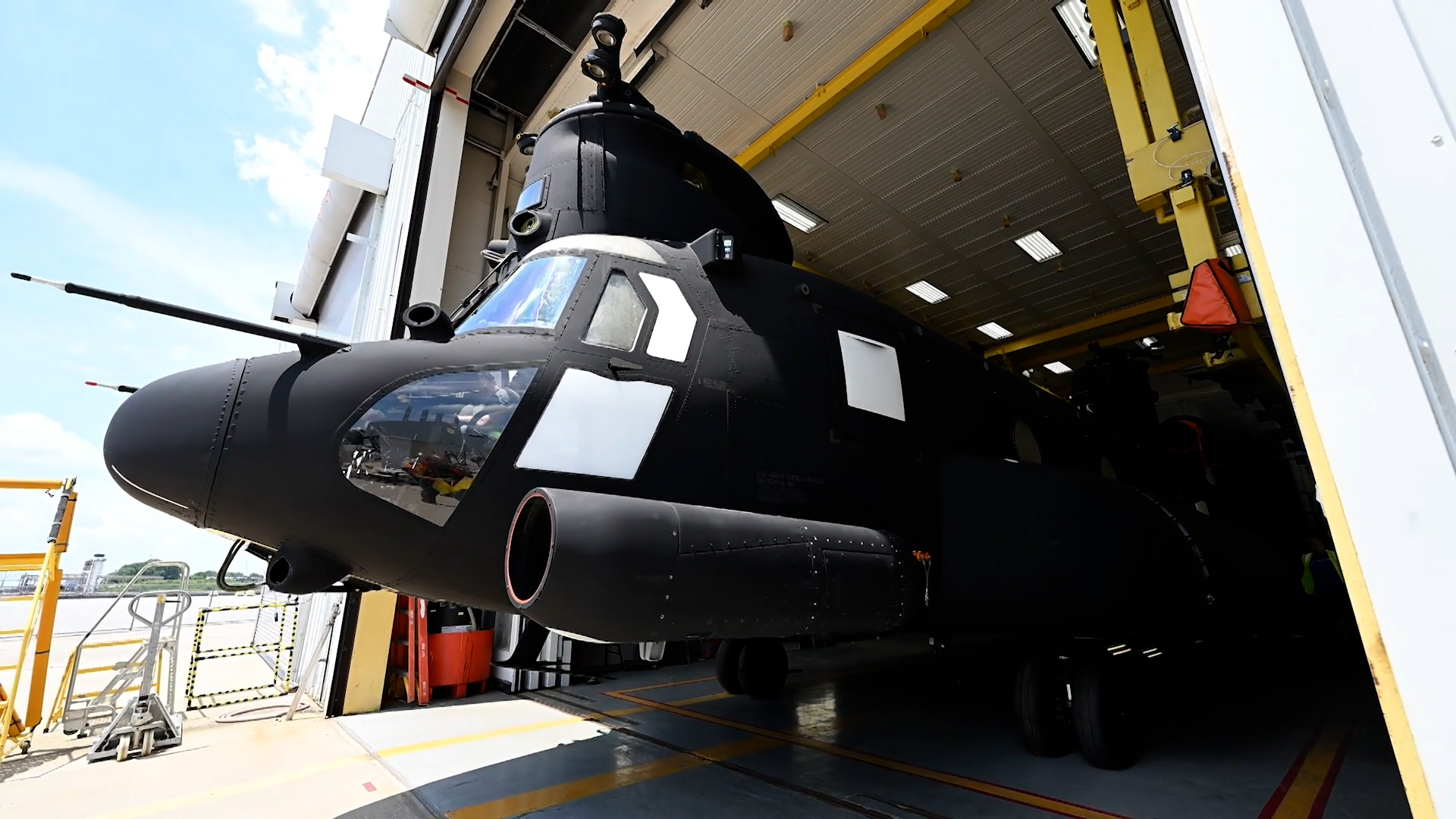
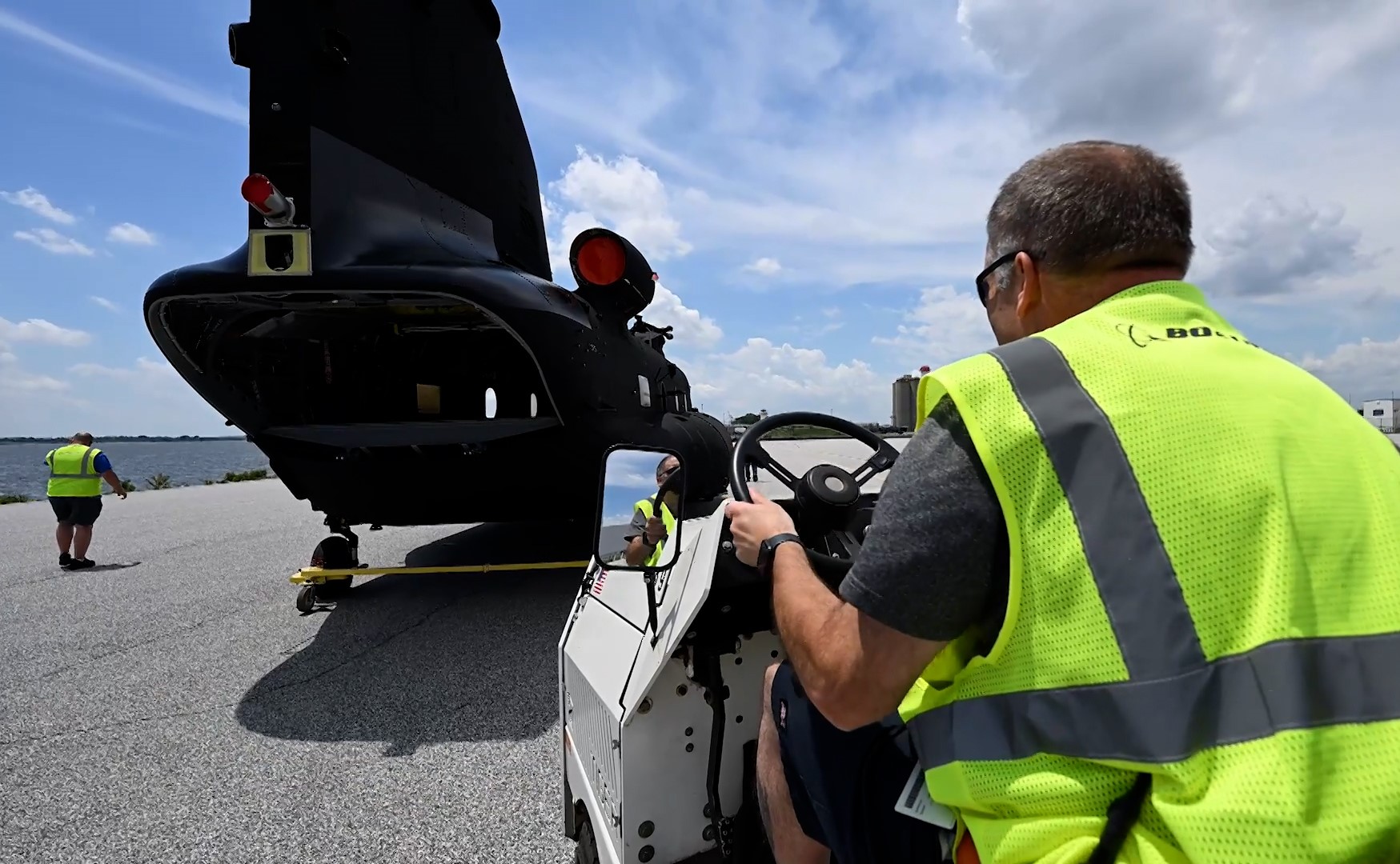
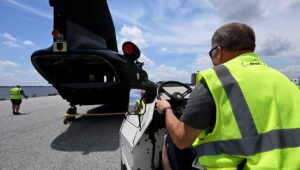
On Tuesday, July 21, 2026, during the ongoing Farnborough International Airshow 2026 in the United Kingdom, Boeing UK, part of the U.S.-based Boeing Company, released three photographs on social media showing the first of 14 extended-range CH-47ER Chinook heavy transport helicopters being built at the manufacturer’s facility in Philadelphia, Pennsylvania.
Photos: Boeing UK
The CH-47ER Chinook is an export variant of the CH-47F Block II, with the United Kingdom set to become its first operator. Germany has also selected the aircraft, ordering 80 examples, while Japan has ordered 17 aircraft as the CH-47JA in cooperation with Kawasaki Heavy Industries.
According to the photographs released, the British helicopter has already received the distinctive black paint scheme required by the Royal Air Force (RAF) and is ready for the integration of various structural components and equipment.
On October 19, 2018, the then UK government received approval to purchase 14 CH-47ER Chinook helicopters, together with an equipment and weapons package, for a maximum of 3.5 billion USD. An agreement was signed in April 2021, with the negotiated contract value reduced by 1.5 billion USD. On March 14, 2024, then Defence Secretary Grant Shapps announced further benefits: the cost of the government-to-government agreement with the United States had been reduced by more than 300 million GBP, from 1.4 billion GBP, while a further 151 million GBP would be invested in the UK economy through the program. British companies will supply components critical to the production and in-service support of the future helicopters, including avionics and power systems.
The CH-47ERs will be configured similarly to the MH-47G Block II special operations support variant being produced for U.S. Special Operations Command.
The CH-47F Block II is powered by upgraded Honeywell T55-715 turboshaft engines offering 20% more power and features new Advanced Chinook Rotor Blades with swept tips. The six-tank fuel configuration, with three tanks on each side of the fuselage, has been replaced by two larger tanks housed in the sponsons. This allows the helicopter to carry more fuel while reducing weight by 90 kg. The airframe structure has also been reinforced in key areas to permit the carriage of heavier loads. As a result, maximum takeoff weight has increased from 22,680 kg to 24,500 kg, while payload capacity has risen from approximately 9,000 kg to 10,000 kg. The helicopter is also equipped with three 60 kVA generators and an Active Parallel Actuator System.
The Royal Air Force operates an active fleet of 41 Chinook HC helicopters. Its Mk2/2A (CH-47D) and Mk3 (CH-47SD) variants were upgraded by Boeing under Project Julius, primarily in terms of avionics, to the Mk4, Mk5, and Mk6/6A standards. The latter corresponds to the CH-47F standard, while the newly ordered aircraft are based on its extended-range configuration with enlarged fuel tanks. In July 2017, it was announced that 38 HC Mk4 helicopters would be upgraded to the Mk6/6A standard, replacing analog cockpit instruments with the Boeing Digital Automatic Flight Control System.
The newly ordered helicopters will replace the oldest Mk2/2A aircraft, which are now around 45 years old, as outlined in the two-part Integrated Review of Security, Defence, Development and Foreign Policy published on March 16, 2021. All Chinook helicopters are expected to remain in RAF service into the 2040s. Chinook HC aircraft are operated by Nos. 7, 18, 27, and 28 Squadrons RAF.
Exclusive: photos of the UK’s first H-47 Extended Range Chinook at our factory in Philadelphia.
With 14 on order, the @RoyalAirForce will be the first international operator of a Block II Chinook, helping the UK fly farther and carry more in support of its missions. pic.twitter.com/NAOlQgBXA6
— Boeing UK (@BoeingUK) July 21, 2026