























South Korean company Korea Aerospace Industries (KAI) attended the Farnborough International Airshow 2026 in the United Kingdom, held from July 20 to 24. The company believes that the T-50/FA-50 family of light jet aircraft is well positioned in the competition for the United Kingdom’s new Advanced Jet Trainer (AJT) contract. At the same time, KAI is continuing work on further development of the design.
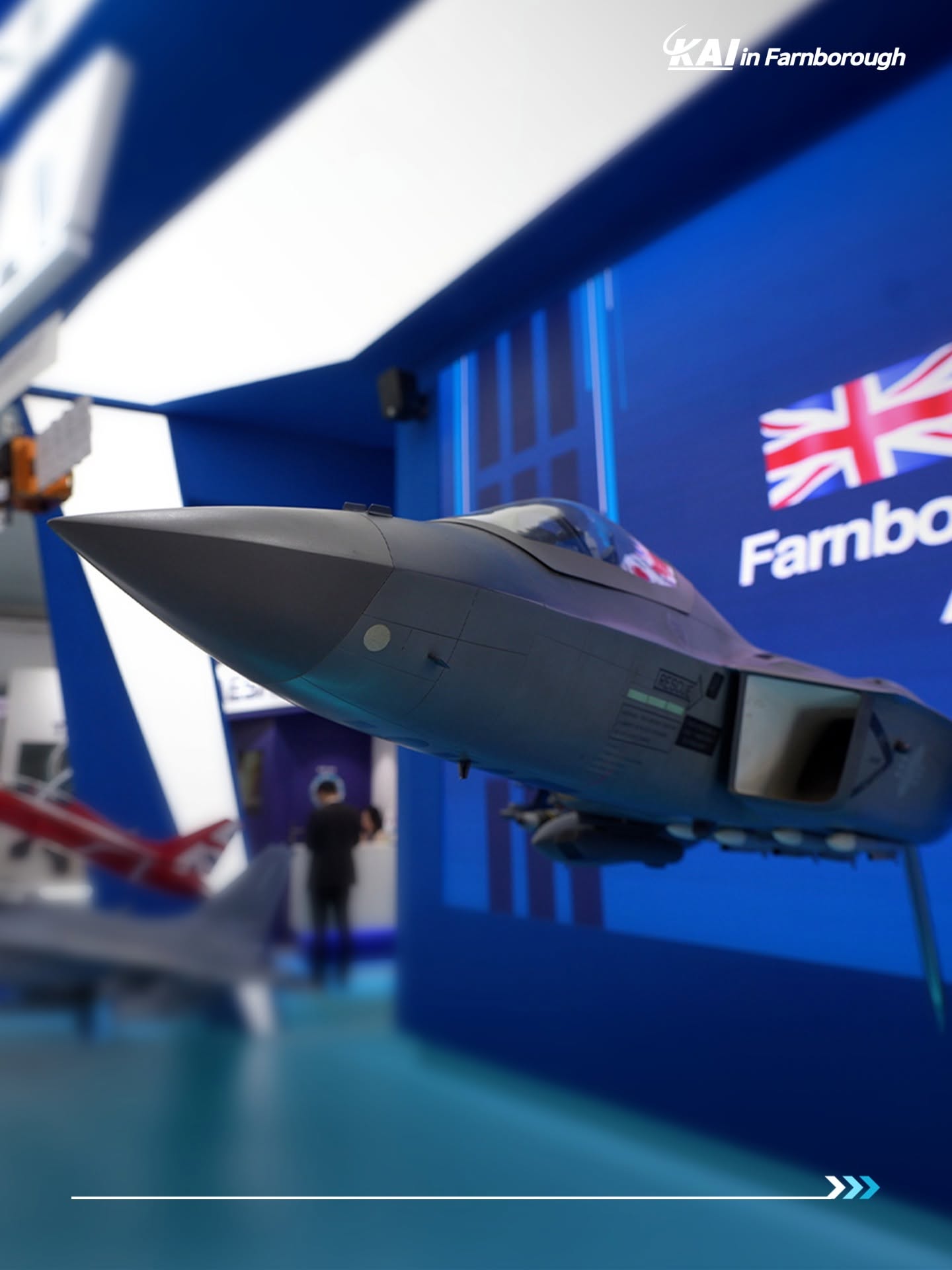 KAI on Farnborough 2026 / Photos: KAI
The South Korean manufacturer stresses that the T-50/FA-50 platform has already proven itself in three key mission areas.
According to Shin Dong Hak, KAI’s vice-president of international business development, the T-50/FA-50 family can demonstrate proven capabilities in several key areas.
“The T-50 already has three options: one is a trainer, one is light attack, and it’s also proven with a demonstration team.”
One of the Royal Air Force’s key requirements under the program to select a replacement for its BAE Systems Hawk aircraft is that the new type must be capable of operating in the colors of the Red Arrows aerobatic display team. South Korea’s Black Eagles display team operates the T-50B, a dedicated variant modified to provide performance characteristics optimized for aerobatic displays.
“The T-50 is the one solution to provide all three options to the UK Ministry of Defence,” says Shin.
Shin added that the T-50 could be produced locally in the United Kingdom, another important aspect of the program, and that KAI is currently seeking a local partner. The company is holding talks with Lockheed Martin regarding a joint bid for the UK competition. Boeing, offering the T-7A in cooperation with BAE Systems and Saab, and Leonardo, with the M-346, are also expected to submit proposals.
Shin estimates that the RAF requirement could amount to 40–50 aircraft. KAI responded to a Request for Information (RFI) last year and expects another RFI in 2027, following London’s recent publication of the Defence Investment Plan.
More broadly, KAI and Lockheed Martin plan to hold a meeting in August to develop a marketing strategy for the T-50 and FA-50 aircraft. The discussions will also address how the two companies intend to approach Australia’s forthcoming program to replace its Hawk aircraft.
“With the UK programme and also the Australian programme, teaming up is very important,” says Shin.
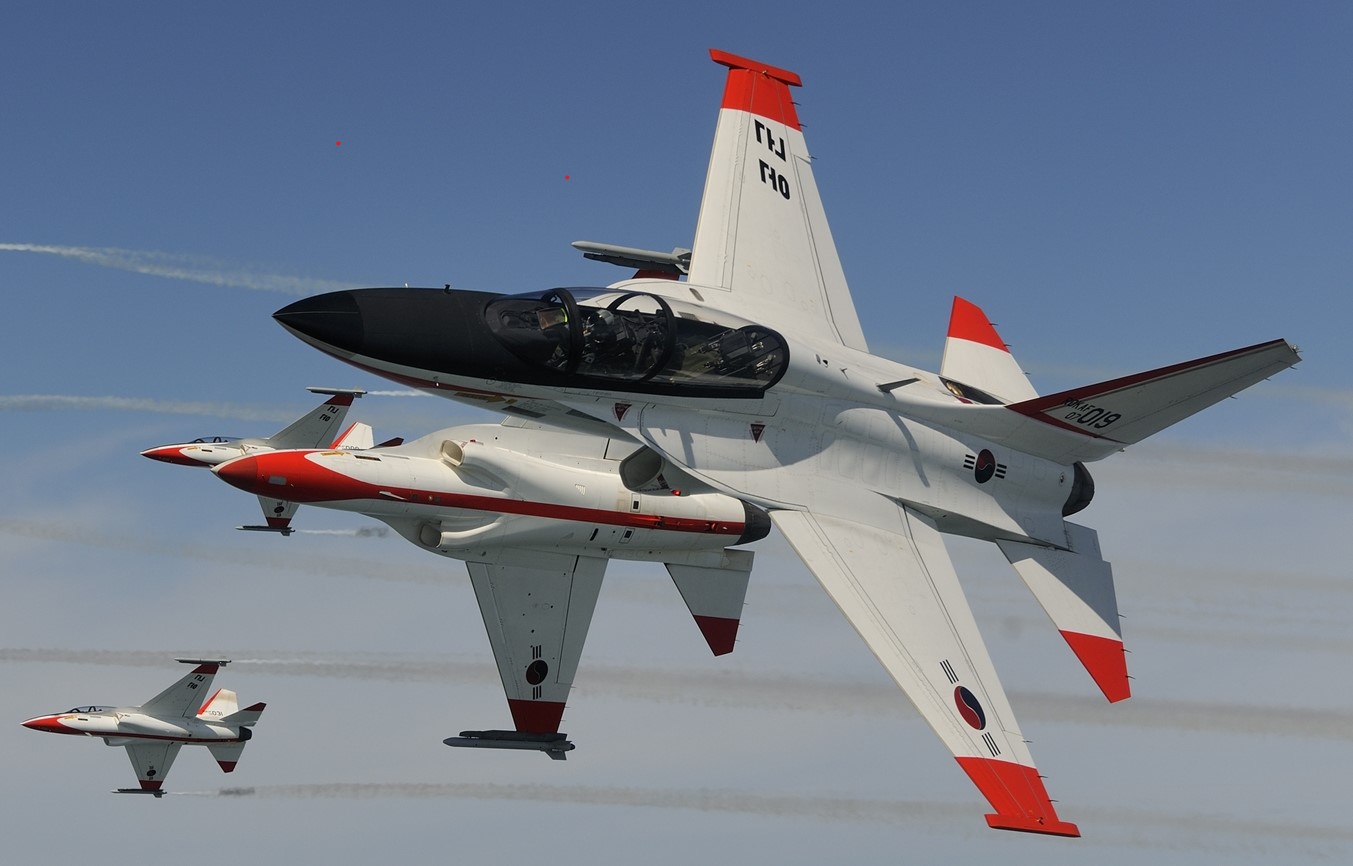 T-50A Golden Eagle
Development work is also underway on a single-seat variant of the FA-50, which is expected to offer increased range. The project is scheduled for completion by the end of 2028. Shin noted that one Asian country has expressed interest in the single-seat FA-50.
Trials are also underway to integrate the FA-50 with Raytheon’s PhantomStrike active electronically scanned array (AESA) radar. Flight testing is currently in progress. Malaysia will be the first customer to receive FA-50 aircraft equipped with an AESA radar. Kuala Lumpur is expected to take delivery of the first pair in October from its order for 18 aircraft.
The PhantomStrike radar will also equip Poland’s 36 FA-50PL aircraft, deliveries of which are scheduled to begin next year.
Shin added that customers have shown strong interest in integrating the FA-50 with BAE Systems’ Advanced Precision Kill Weapon System (APKWS). APKWS, which converts inexpensive unguided 70 mm rockets into precision-guided weapons, has proved to be a cost-effective means of engaging unmanned aircraft from combat jets.
KAI is currently seeking approval from the U.S. government to integrate APKWS with the FA-50.