














On Thursday, April 9, 2026, Estonia’s public broadcaster ERR (Eesti Rahvusringhääling) reported that the country’s Ministry of Defence had decided to redirect approximately 500 million EUR from the defense budget, funds originally planned for the purchase of new infantry fighting vehicles, to other priority needs identified on the basis of observations from the modern battlefield.
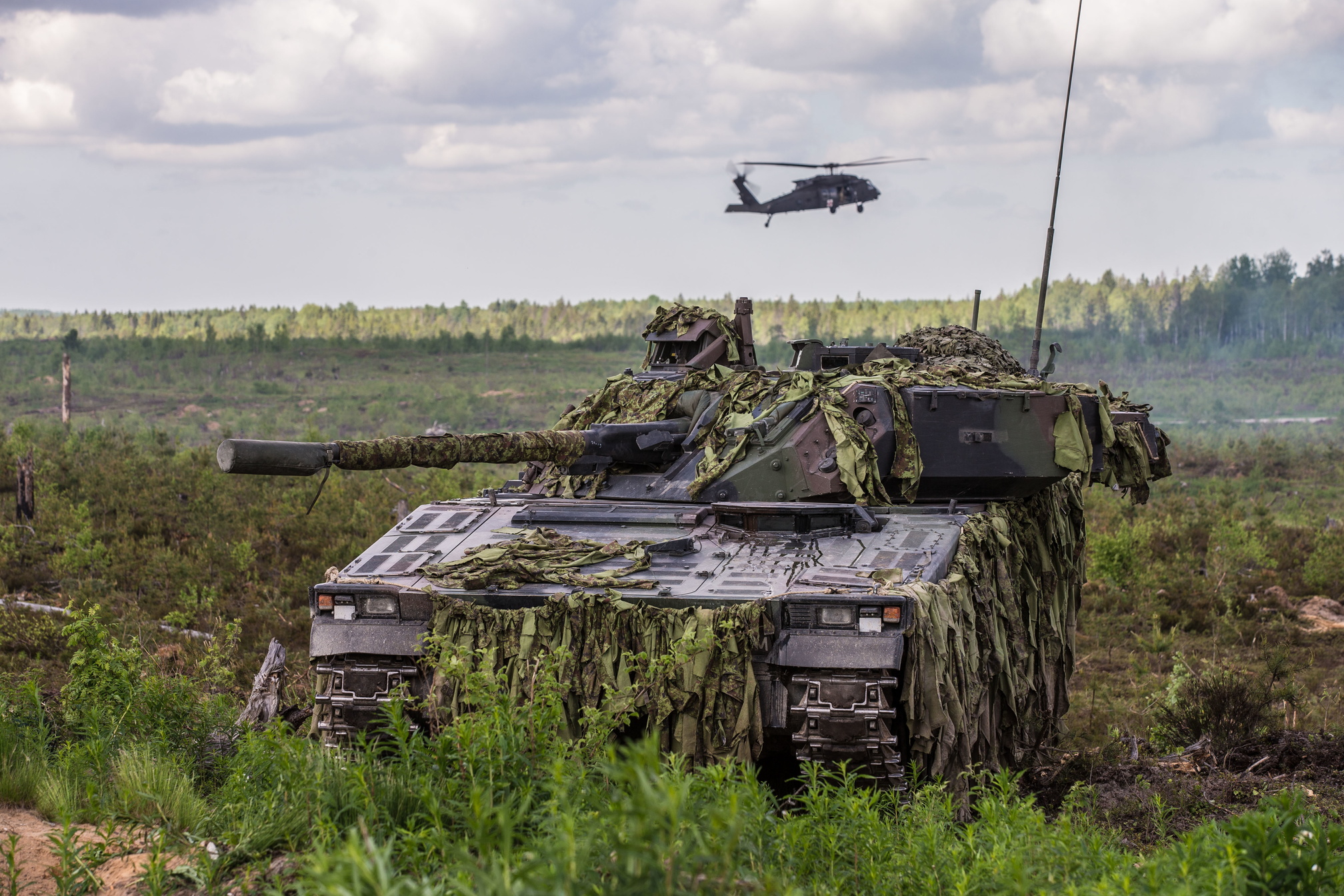 CV9035EE / Photo: Estonian Ministry of Defence
“On Thursday, the Estonian government decided to suspend a procurement program worth EUR 500 million for new combat vehicles, reallocating the funds to air defence, drones, and unmanned systems,” Estonian Minister of Defence Hanno Pevkur said.
Experience from Ukraine, market conditions, and the conclusions of the Commander of the Defence Forces led to the decision to suspend the program, Pevkur added.
The new infantry fighting vehicles had been intended for delivery to the Estonian Defence Forces in 2029–2030.
“To introduce other necessary capabilities and extend the service life of the existing combat vehicles, this decision had to be taken now,” Pevkur said.
Estonia’s Ministry of Defence plans to extend the service life of the currently operated CV9035EE tracked infantry fighting vehicles by up to 10 years. Although this will also cost significantly more, it is still many times cheaper than purchasing new vehicles, the Minister of Defence noted.
Pevkur said that combat vehicle prices are currently expected to rise, which is already reflected in the bids received.
“The role of heavy equipment on the battlefield is declining. Hence the view of the Commander of the Defence Forces that, over the next 10 years, replacement is not a sensible option and that modernization of the current vehicles is needed instead,” he explained.
The reallocated funds will make it possible to increase the armed forces’ firepower and mobility, while also financing unmanned systems and improving situational awareness.
“We are following what we are learning from Ukraine, and air defence capabilities and the ‘eyes and ears’ will certainly be significantly strengthened in the coming years,” Pevkur said. The Commander of the Defence Forces is updating his recommendations, after which the next four-year defence investment plan reflecting these capabilities can be approved. It focuses on counter-drone capabilities, air defence, and unmanned systems.
On Tuesday, April 7 this year, Hanno Pevkur noted on ERR radio that technology is developing very rapidly, meaning that future investments must remain flexible so that procurement plans can be adjusted when necessary.
“For example, we are seeing that laser weapons were used in Israel for the first time [Iron Beam – editor’s note]. Technological development will likely bring us to a point where our capabilities will improve continuously. However, it is difficult to guarantee whether we will be able to intercept everything, because the attacker will also change its vectors and develop new solutions. We already have drones with rocket engines, and now electric-powered drones are being tested, which means it is becoming increasingly difficult to rely on acoustic sensors – especially as we are currently building our own network of acoustic sensors,” he explained.
“That is why even the hundreds of millions of dollars we are investing in counter-drone capabilities in the coming months and years must remain flexible – we must keep pace with developments,” Pevkur added.
The Reconnaissance Battalion of the 1st Infantry Brigade (Scoutspataljon, 1. jalaväebrigaad) of the Estonian Defence Forces currently operates 44 ex-Dutch CV9035EE infantry fighting vehicles (previously designated CV9035NL) armed with 35 mm Bushmaster III automatic cannons, purchased in December 2014 together with six support vehicles based on Leopard 1 tank chassis. Deliveries began in October 2016 and were completed in April 2019. They are supplemented by 37 ex-Norwegian vehicles on the Mk I chassis, ordered in 2016 and rebuilt into support vehicles by the end of 2023. These were fitted with Kongsberg Protector RS4 remote weapon stations capable of firing FGM-148 Javelin anti-tank guided missiles. Since 2018, technical support for the vehicles has been provided by Milrem LCM as an official partner of the vehicle manufacturer, BAE Systems Hägglunds.
In June 2025, the defence ministers of Estonia, together with their counterparts from Sweden, Norway, Finland, the Kingdom of the Netherlands, and Lithuania, signed a letter of intent on joint procurement and life-cycle support for the CV90.
It is worth noting that Estonia had previously withdrawn from another armored vehicle program, developed since 2019 by several European countries, namely the Patria 6×6 wheeled armored personnel carriers under the international initiative codenamed CAVS (Common Armoured Vehicle System).
It is also unclear how the change in priorities will affect the financing of armament programs through loans under the European SAFE instrument (Security Action for Europe). On January 26 this year, the European Commission issued a positive opinion for Estonia in the amount of 2,343,897,000 EUR, of which the value of the first advance tranche is 351,584,550 EUR.
See also: