























The project is steadily transitioning from the planning stage to a phase of intensive implementation, integrating infrastructure, engineering, technological, and legal measures with broad international cooperation. The results achieved so far confirm a systematic increase in the state’s defense capabilities and the resilience of border regions.
 Photos: Ministry Of National Defence
Countermobility and Engineering Infrastructure
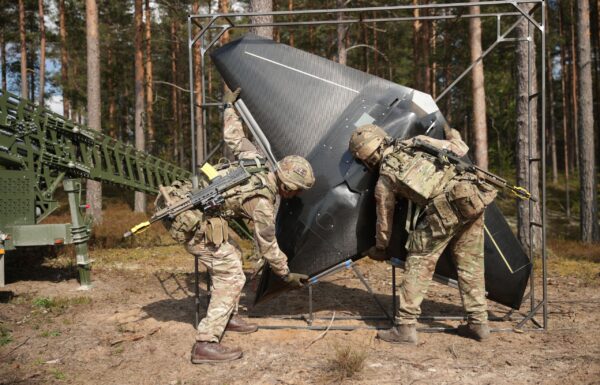
In 2025, as part of the implementation of the East Shield program, engineering fortifications were completed along a total of 60 km of the state border. These activities included the expansion of linear defensive elements over a section of approximately 10 km, as well as the use of engineering equipment intended for border blocking along 50 km. This equipment was stockpiled in 13 newly constructed material depots (Poland Begins Stocking Material Depots for the “East Shield” Program).
A significant intensification of engineering works is planned for 2026. More than 200 km of the border is to be secured, including nearly 20 km through further linear expansion. The remaining section, approximately 180 km, will be protected using engineering equipment stored in material depots and intended for rapid border blocking.
In total, by the end of 2026, engineering protection is planned to cover nearly 260 km of the state border. This will include almost 30 km of linear expansion and around 230 km secured using engineering equipment stored in 37 material depots. This scope will represent more than 38% of the border length along the direction covered by the East Shield program.
At the same time, in 2025, key tasks related to strengthening border crossings were completed. Five border crossings were blocked, and preparations were made to block a further 12 crossings, including 10 road crossings and seven rail crossings.
Acquisition of Real Estate
The expansion of engineering infrastructure required intensive efforts in acquiring real estate. In 2025, 38 properties were acquired for the purpose of linear engineering expansion, enabling work to begin on key sections of the border. At the same time, significantly more ambitious plans were prepared for subsequent years.
In the current year, these plans are more than three times larger, with the acquisition of 150 properties planned across 52 locations. In 2026, it is also planned to acquire 45 land plots from the resources of National Agricultural Support Center (Krajowy Ośrodek Wsparcia Rolnictwa, KOWR) for the expansion of 19 storage sites. The remaining storage sites planned for construction this year will be established on the premises of military units located along the border.
Cooperation with the National Agricultural Support Center plays a particularly important role in this process, as the agency provides the Ministry of National Defence with lists of plots suitable for use under the program. In parallel, proposals submitted by local governments and by Lasy Państwowe are being analyzed, covering areas located within a belt of up to 15 km from the border.

New Technologies and the Use of UBM
An important component of the East Shield program is the implementation of modern construction technologies. In 2025, the armed forces acquired two Ultimate Building Machine (UBM) sets, mobile systems capable of manufacturing ready-made steel building components. The UBM sets were introduced into service with the 2nd Engineer Regiment in Inowrocław and the 16th Airfield Maintenance Battalion in Jarocin. As a result, both units expanded their organizational structures by adding engineer companies. Following acceptance of the equipment from the manufacturer, practical training for soldiers was conducted in 2025, during which two garages were constructed. In 2026, additional training facilities are planned in Inowrocław and Jarocin, followed by the construction of the first UBM-technology garages at operational military units.
The UBM technology has proven sufficiently promising that the Chief of the General Staff of the Polish Armed Forces submitted a request to the Ministry of National Defense for approval to proceed with work on a draft ministry decision concerning the further development of Engineer Troops’ capabilities for rapid military infrastructure construction within the Polish Armed Forces, as well as approval to initiate the procurement procedure for two additional UBM sets. Approval of the request by the General Staff would significantly accelerate efforts to meet military infrastructure construction needs under the objectives of the East Shield program and those generated by developing tactical formations and units, while also delivering substantial savings within already planned financial allocations.
In parallel with the acquisition and introduction of UBM systems into the armed forces, the Military University of Technology conducted work in 2025 on an innovative solution involving a layered structural system, enabling the construction of facilities with larger spans as well as shell-and-soil structures. The outcome of this research was the development of an innovative solution providing protection against light and medium UAVs and 120 mm mortar rounds. The results will be reflected in the emerging catalog of standardized structures for the UBM system.
Communications and Digital Security
The East Shield program also includes measures to improve communications in border regions. As a result of cooperation between the Cyberspace Defense Forces Component Command, key telecommunications operators, and the Ministry of Digital Affairs, seven new base transceiver stations (BTS) were commissioned in 2025. These efforts not only improve operating conditions for the armed forces but also deliver tangible benefits for residents and users of civilian infrastructure. As the ongoing process of radio-frequency relocation and optimization by network operators concludes, along with the expansion of their radio capabilities, network coverage in the area covered by the East Shield program is planned to increase from 89% to 95%. In 2026, further expansion of the telecommunications network is planned through the construction of an additional dozen or so base stations, financed both from defense ministry funds and by network operators.

Military Equipment and Armaments
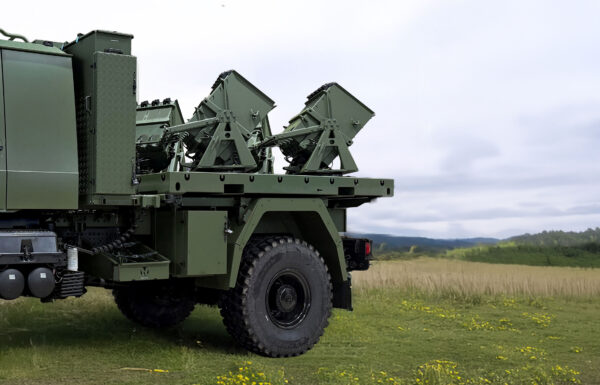
As part of the program, the combat capabilities of the Polish Armed Forces are being systematically strengthened. In addition to engineering equipment, modern reconnaissance and strike systems are being acquired. The Agencja Uzbrojenia is working on the procurement of, among other systems, an air-defense system with counter-UAV capabilities (codename San), and is also managing signed contracts related to the acquisition of Baobab-K and Baobab-G scattered mine-laying vehicles, FlyEye unmanned aerial systems, Gladius unmanned search-and-strike systems, munitions, and is planning further projects involving wheeled vehicles, reconnaissance assets, communications systems, and individual soldier equipment.
International Cooperation
The East Shield program has generated significant interest among allied countries, many of which have declared their readiness to take an active role in its implementation. The year 2025 was marked by particularly intensive international cooperation, including numerous visits by military and government delegations interested in exchanging experience in the planning, construction, and maintenance of defensive infrastructure. A key direction of cooperation involves the Baltic states – Lithuania, Latvia, and Estonia – as well as Finland, carried out through experience sharing and coordination of activities related to the Baltic Defense Line project. In parallel, cooperation is being expanded with the United Kingdom, Germany, and the United States, with a focus on supporting the practical implementation of the program. From mid-2026 onward, allied forces are expected to be involved directly in the expansion of engineering infrastructure along Poland’s eastern border.
Financial Outlays
The East Shield program makes extensive use of domestic industrial potential, focusing on the involvement of Polish companies at both local and national levels. At the same time, implementation of the program supports the development of technological competencies among domestic entities through intensive work on introducing innovative solutions that enhance deterrence effectiveness and strengthen the operational capabilities of the Polish Armed Forces. In 2025, more than 870 million PLN was committed to the implementation of the East Shield program from the budget of the Ministry of National Defense, understood as obligations resulting from contracts concluded. This amount does not include funding from European Union sources.

Adapting the Legal Framework
A key milestone in the implementation of the program was the entry into force in 2025 of the special act on defense investments. The new regulations have significantly streamlined the preparation and execution of military investment projects. In 2026, the full implementation of the statutory solutions is planned, including the development of the first list of key defense investments, which will also cover tasks carried out under the East Shield program.
Civil Protection Under East Shield
The East Shield program constitutes an important element of the state’s efforts in the field of civil protection and civil defense. In accordance with the Act on Civil Protection and Civil Defence, the Ministry of National Defence allocates funds annually amounting to 0.15% of GDP, more than 5 billion PLN, for civil protection and civil defense tasks, including defense-related activities incorporated into the Civil Protection and Civil Defence Program. Within the framework of East Shield, the development of medical support is also envisaged, including field hospitals and modular solutions integrated with the national civil protection and civil defense system.
Green East Shield
An integral component of the program is the so-called Green East Shield, which assumes the use of the natural environment as a means of supporting the state’s defense capabilities. In cooperation with the climate authorities, projects are being implemented to restore peatlands, marshes, and wetlands in areas of key operational importance. These efforts combine defense and environmental objectives, strengthening national resilience while respecting nature. Approximately 120 million PLN is planned to be allocated to these projects in the coming years. The initiatives represent an example of coordinated action between the defense and climate sectors, enhancing state resilience through the use of the natural environment’s potential.
#TarczaWschód: realne wzmocnienie bezpieczeństwa – podsumowanie efektów i plany na 2026 rok
Program Tarcza Wschód jest największym w historii przedsięwzięciem wzmacniającym bezpieczeństwo wschodniej granicy Rzeczypospolitej Polskiej oraz wschodniej flanki #NATO. Projekt… pic.twitter.com/MTK7S3v1Yn
— Ministerstwo Obrony Narodowej 🇵🇱 (@MON_GOV_PL) January 26, 2026
Składy materiałowe „Tarczy Wschód” – zaplecze szybkiego reagowania
W ramach programu „Tarcza Wschód” konsekwentnie rozwijamy zaplecze inżynieryjne Sił Zbrojnych RP.🔹 W 2025 roku powstało 13 składów materiałowych – zewnętrznych magazynów z asortymentem inżynieryjnym, który w… pic.twitter.com/fubntRzQM1
— Sztab Generalny WP (@SztabGenWP) January 27, 2026
See also: