







Defence & Space

Ukrainian DKBB Luch and European consortium MBDA to develop Neptun 2 missile

At the Eurosatory 2026 trade show, taking place June 15-19 of this year in Paris, Ukrainian company DKBB Luch and European consortium…

2026-06-20 | Rafał Muczyński | 3 minutes

Eurosatory 2026: Ukrainian company Yartura presents the Dancer 4.5.0 drone

At the Eurosatory 2026 trade show, taking place June 15-19 of this year in Paris, Ukrainian company Yartura presented the Dancer 4.5.0…

2026-06-20 | Rafał Muczyński | 3 minutes

ICEYE Federation: How can the effectiveness of national satellite constellations be increased?

In recent years, ICEYE has been increasingly developing its portfolio of services aimed at military customers. This European company, which builds satellites…

2026-06-17 | Przemysław Gurgurewicz | 14 minutes

MSBS Grot: A Polish firearm with its own DNA

The MSBS Grot is a family of carbines and rifles developed by Polish engineers, the military, and users who gradually shaped its…

2026-06-14 | Jakub Link-Lenczowski | 12 minutes

Ukrainian DKBB Luch and European consortium MBDA to develop Neptun 2 missile

At the Eurosatory 2026 trade show, taking place June 15-19 of this year in Paris, Ukrainian company DKBB Luch and European consortium…

2026-06-20 | Rafał Muczyński | 3 minutes

Eurosatory 2026: Ukrainian company Yartura presents the Dancer 4.5.0 drone

At the Eurosatory 2026 trade show, taking place June 15-19 of this year in Paris, Ukrainian company Yartura presented the Dancer 4.5.0…

2026-06-20 | Rafał Muczyński | 3 minutes

Quantum Systems and Rohde & Schwarz cooperate on unmanned systems programs

German companies Quantum Systems and Rohde & Schwarz have signed a memorandum of understanding (MoU) on cooperation in integrating electronic warfare and signals…

2026-05-13 | Rafał Muczyński | 3 minutes

Artificial Intelligence to Help Polish Interior Ministry Services Fight Fires and Crime, and Protect Borders

Artificial intelligence will help services subordinate to the Ministry of the Interior and Administration fight fires and crime, and protect borders.…

2026-05-08 | Redakcja | 4 minutes

Eurosatory 2026: Ukrainian company Yartura presents the Dancer 4.5.0 drone

At the Eurosatory 2026 trade show, taking place June 15-19 of this year in Paris, Ukrainian company Yartura presented the Dancer 4.5.0…

2026-06-20 | Rafał Muczyński | 3 minutes

Ukrainian SkyFall drones at the French Eurosatory 2026 trade show

At the Eurosatory 2026 trade show, taking place June 15-19 of this year in Paris, Ukrainian company SkyFall presented the Shrike series…

2026-06-20 | Rafał Muczyński | 3 minutes

Ukrainian DKBB Luch and European consortium MBDA to develop Neptun 2 missile

At the Eurosatory 2026 trade show, taking place June 15-19 of this year in Paris, Ukrainian company DKBB Luch and European consortium…

2026-06-20 | Rafał Muczyński | 3 minutes

Eurosatory 2026: Ukrainian company Yartura presents the Dancer 4.5.0 drone

At the Eurosatory 2026 trade show, taking place June 15-19 of this year in Paris, Ukrainian company Yartura presented the Dancer 4.5.0…

2026-06-20 | Rafał Muczyński | 3 minutes

SAFE: Romania’s Ministry of Internal Affairs orders Airbus H160 and H145 helicopters

Under the EU’s SAFE loan program, Romania’s Ministry of Internal Affairs has ordered 12 multi-role helicopters from the European company…

2026-06-11 | Rafał Muczyński | 4 minutes

200 Days of Operation Horyzont in Poland: Territorial Defence Forces Support Critical Infrastructure Security Day and Night

June 9 marks 200 days since the launch of Operation Horyzont, which is being carried out by soldiers of the Polish Armed…

2026-06-09 | Redakcja | 4 minutes

Ukrainian DKBB Luch and European consortium MBDA to develop Neptun 2 missile

At the Eurosatory 2026 trade show, taking place June 15-19 of this year in Paris, Ukrainian company DKBB Luch and European consortium…

2026-06-20 | Rafał Muczyński | 3 minutes

Latvian BLAZE interceptor drones for France

After extensive testing, the French Armed Forces have ordered BLAZE autonomous interceptor drones from Latvia’s Origin Robotics, which will deliver…

2026-06-17 | Rafał Muczyński | 4 minutes

F-35 flyover over Poland: Not just air shows and political battles

The sight of F-35s over successive Polish cities attracts public interest, and that is hardly surprising. For many people, this…

2026-06-13 | Sławek Zagórski | 5 minutes

U.S. under secretary of state for arms control and international security visits Poland

Secretary of State at the Polish Ministry of National Defense Paweł Zalewski met with U.S. Under Secretary of State for Arms…

2026-06-13 | Redakcja | 2 minutes

ICEYE Federation: How can the effectiveness of national satellite constellations be increased?

In recent years, ICEYE has been increasingly developing its portfolio of services aimed at military customers. This European company, which builds satellites…

2026-06-17 | Przemysław Gurgurewicz | 14 minutes

ILA Berlin 2026: Rafael and Reflex Aerospace form strategic partnership on smart space solutions

Israeli company Rafael Advanced Defense Systems and Germany’s Reflex Aerospace announced a strategic partnership at ILA Berlin 2026, presenting a new class of…

2026-06-11 | Redakcja | 4 minutes
Shooting

Soft armor vest Titanium Tactical QR I from Greek Anorak

The Greek company Anorak offers a soft bulletproof vest, Titanium Tactical QR I, available for sale from EUR 599 to EUR 738.

2026-06-23 | Rafał Muczyński | 2 minutes

MILTAC to supply ammunition for the Polish Biathlon Union

MILTAC has won a Polish Biathlon Union tender for the supply of small-caliber sports ammunition for national teams, Sports Excellence Schools,…

2026-06-17 | Michał Ihnatów | 3 minutes

MILTAC to supply ammunition for the Polish Biathlon Union

MILTAC has won a Polish Biathlon Union tender for the supply of small-caliber sports ammunition for national teams, Sports Excellence Schools,…

2026-06-17 | Michał Ihnatów | 3 minutes

KJI K950 Carbon – a tripod for discerning shooters

The concept of tripods in shooting has firmly taken root in shooters’ minds. The idea of using tripods began to take shape during…

2026-06-11 | Jarosław Lis | 10 minutes

Soft armor vest Titanium Tactical QR I from Greek Anorak

The Greek company Anorak offers a soft bulletproof vest, Titanium Tactical QR I, available for sale from EUR 599 to EUR 738.

2026-06-23 | Rafał Muczyński | 2 minutes

Eurosatory 2026: Haix Shadow Falcon Pro Mid for rope operations

At the Eurosatory 2026 trade show in Paris, Haix presented its latest mid-height boot model, the Shadow Falcon Pro Mid, featuring a construction…

2026-06-17 | Michał Ihnatów | 3 minutes

Polish team wins King of 2 Miles 2026 competition

Jakub Sidorowicz as the shooter and Rafał Rutkowski as the spotter won the demanding King of 2 Miles long-range competition in France, scoring two…

2026-05-12 | Michał Ihnatów | 3 minutes

This Year’s Spring Delta Long Range Weekend Concludes

Another edition of the Delta Long Range Weekend has concluded. Long-range shooting enthusiasts met at the Military Institute of Armament Technology…

2026-05-11 | Grzegorz Sobczak | 4 minutes

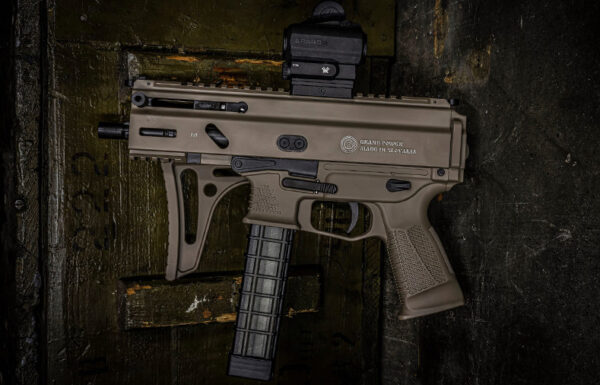
Eurosatory 2026: Grand Power M4M1 and offerings for security services

At the Eurosatory 2026 trade show in Paris, Slovak firearms manufacturer Grand Power presented a selection of its offerings aimed at institutional customers, including…

2026-06-17 | Michał Ihnatów | 2 minutes

MSBS Grot: A Polish firearm with its own DNA

The MSBS Grot is a family of carbines and rifles developed by Polish engineers, the military, and users who gradually shaped its…

2026-06-14 | Jakub Link-Lenczowski | 12 minutes

Mantis TitanX now available at the Strefa Celu store

Strefa Celu (Jammas) announces the arrival of advanced Mantis TitanX training devices, which, taking the form of a Glock pistol replica…

2026-04-02 | Michał Ihnatów | 3 minutes

Delta Long Range Weekend 2026 coming on May 9

This year’s edition of Delta Long Range Weekend will take place on May 9. Do you shoot mid-range, long-range, or extreme long-range? Test…

2026-03-16 | Michał Ihnatów | 5 minutes

Growth in Firearm Permits in Poland Continues in 2025

The National Police Headquarters has released a report on firearm permits in Poland in 2025. The number of shooters continues to increase, with nearly 45,000…

2026-02-06 | Michał Ihnatów | 6 minutes

Poland: Temporary Ban on Carrying Firearms in Warsaw on November 11, 2025

Minister Marcin Kierwiński has instructed the security services to take measures ensuring safety during the Independence March in Warsaw and other events…

2025-10-30 | Michał Ihnatów | 5 minutes

5 Best Value ATN Rifle Scopes Under €1500

ATN is a leading manufacturer of daytime optics, smart night vision, and thermal vision technology. The innovative features and ergonomic designs…

2022-11-11 | Redakcja | 9 minutes

MILMAG Visits Grand Power

Grand Power is a Slovak manufacturer of the acknowledged good quality firearms. Take part in our guided tour with English subtitles.

2022-05-23 | Redakcja | 1 minutes

KJI K950 Carbon – a tripod for discerning shooters

The concept of tripods in shooting has firmly taken root in shooters’ minds. The idea of using tripods began to take shape during…

2026-06-11 | Jarosław Lis | 10 minutes

KJI Mag Series – Alternative Rifle Tripod Mounting Systems That Make Shooting Easier

We recently wrote about KJI and its new products in connection with SHOT Show 2026. This time, we’re taking a closer look at a line…

2026-02-17 | Mariusz Piwowar | 5 minutes

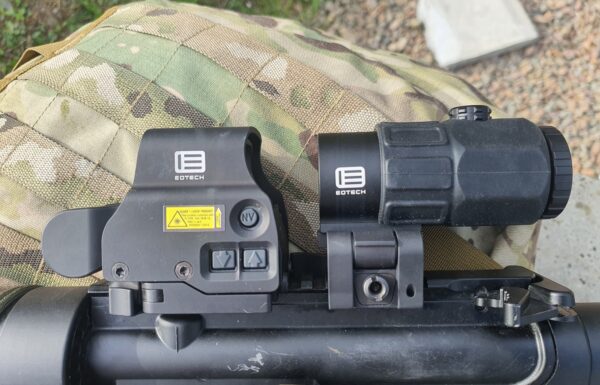
EOTECH Holographic Sight – History, Technology, Practice

The holographic sight is a device known for nearly 30 years and used by professionals around the world. A favorite sight of many…

2024-09-02 | Michał Gaweł | 12 minutes

Boeing plans to further expand its industrial cooperation in Poland

Polish suppliers produce components and assemblies for us, such as machined parts, auxiliary power units, and elements for aircraft landing gear. In the area of production related to military equipment, our cooperation with Polish industry includes the delivery of components within aircraft programs,” says Honorata Hencel, Managing Director of Boeing for Poland and Ukraine, in an interview with MILMAG Magazine.

Honorata Hencel, Managing Director of Boeing for Poland and Ukraine

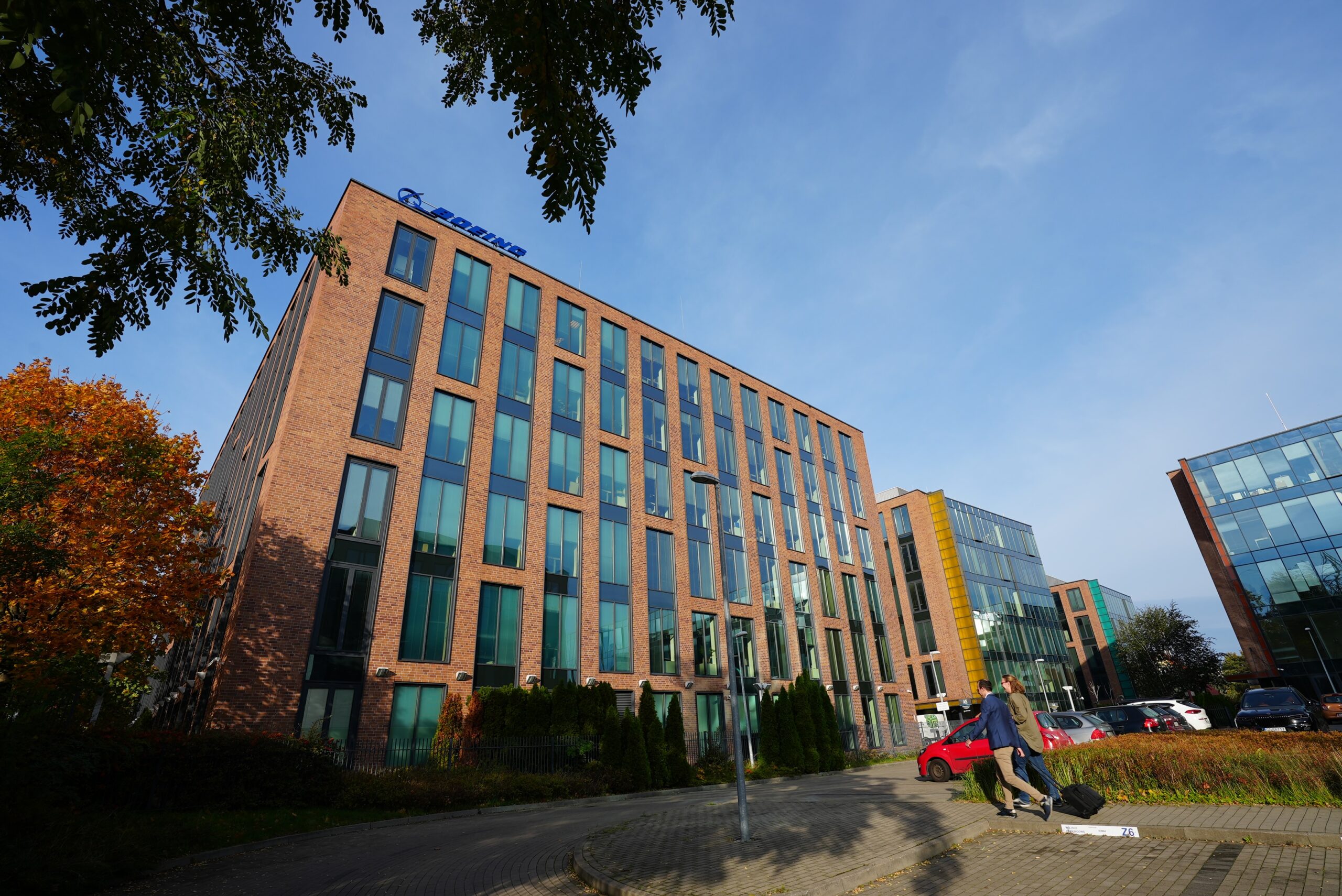
Boeing has been present in Poland since 1989, when the first Boeing 767 aircraft were delivered to LOT Polish Airlines. As part of the industrial cooperation associated with that contract, the Americans launched production of doors for the 757 model at the WZK facility in Mielec. Since then, Boeing has consistently strengthened its presence in Poland and expanded the scope of its industrial cooperation. The company has established subsidiaries in our country and also collaborates with Polish industrial entities.

We have around 30 suppliers from Poland. These include both fully Polish companies and Polish branches of foreign entities. We focus on several key activity areas, one of which is aircraft component manufacturing. Our suppliers in Poland produce, for example, engine blades in the Aviation Valley and complete auxiliary power units (APUs) for our Dreamliners. We are also involved in materials engineering, including composite technologies in cooperation with the Łukasiewicz Institute of Aviation. In this field we are talking both about manufacturing and development work in materials engineering for future requirements. Solutions developed in Poland are flying on aircraft operating all over the world, across all commercial aircraft types. We also have a very strong division working on avionics software. Components manufactured in Poland are delivered to our factories in the United States and used in current aircraft production,” says Honorata Hencel, Managing Director of Boeing for Poland and Ukraine, in an interview with MILMAG Magazine.

Rynek cywilny i wojskowy

The scope of industrial cooperation is very broad. It includes production for both the civil and military markets. Boeing operates in three locations in Poland. In Gdańsk, the company’s subsidiary focuses on avionics, including software for onboard computer systems. In Warsaw, the materials engineering division operates within the Łukasiewicz Institute of Aviation. In Rzeszów, Boeing is developing an engineering center specializing in production engineering, airline customer support, and defense programs. Near Rzeszów–Jasionka Airport, there is a spare parts distribution center – the second largest in Europe.

Polish suppliers produce components and assemblies for us, such as machined parts or aircraft landing-gear elements. Complete APU units (Auxiliary Power Units) for Dreamliners are also manufactured in Poland. In production related to military equipment, our cooperation with Polish industry includes the delivery of components within our various aircraft programs. When it comes to military production, we are not limited to aviation alone – Polish partners also supply us with parts for weapons-systems programs. This is a lesser-known aspect of our cooperation, but the segment of military production already exists in Poland,” continues Honorata Hencel.
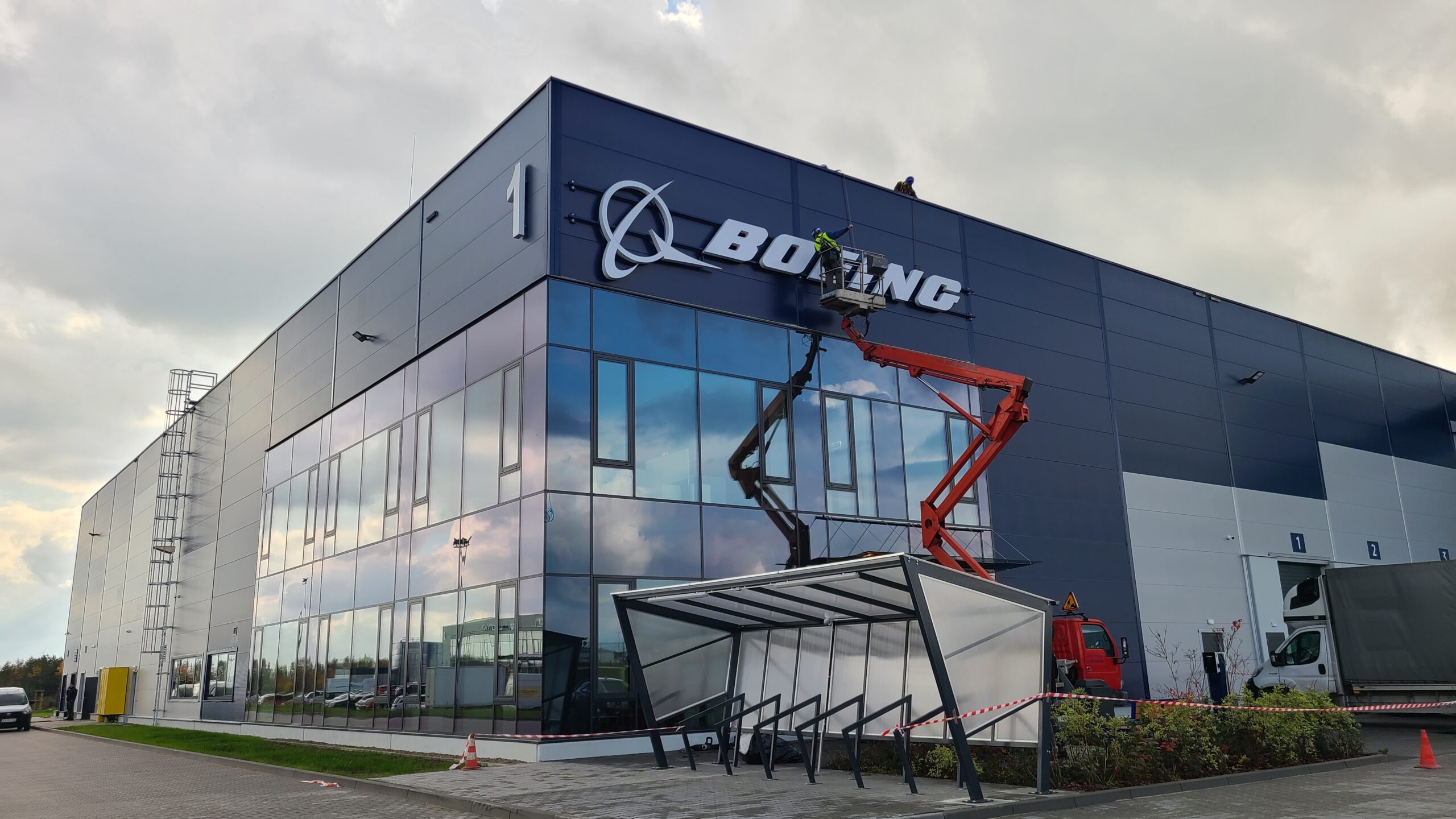
Oddział Boeinga w Rzeszowie

Szefowa Boeinga na Polskę i Ukrainę podkreśla również, że Boeing współpracuje zarówno z prywatnymi firmami, jak tez ze spółkami Skarbu Państwa.

Współpraca przemysłowa Boeinga z polskimi podmiotami nie ogranicza się tylko do produkcji. W zasadzie współpraca rozpoczęła się od obsługi technicznej samolotów tego producenta przez bazę techniczna LOTu. Z czasem rynek cywilny rozwinął się o kolejnych przewoźników jak Enter Air, czy polski oddział Ryanaira linia Buzz. Obaj przewoźnicy, podobnie jak LOT również eksploatują samoloty Boeinga. Jednak Boeing wchodzi również na polski rynek wojskowy.

Mamy szereg umów związanych z działalnością obsługową. Tu wspomnę o współpracy ze spółką LOT-AMS. Jeśli jednak Polska zdecydowałaby się za zakup kolejnej platformy Boeinga poza śmigłowcami Apache, to już teraz w Polsce nasze centrum inżynieryjne wykonuje prace dot. statków powietrznych użytkowanych przez Siły Zbrojne USA, a w przyszłości będzie mogło obsługiwać również maszyny używane przez Wojsko Polskie. Polska jest jedynym krajem w Europie, gdzie pracujemy nad procesami projektowania, wytwarzania, modernizacji, testowania i obsługi operacyjnej dotyczących platform latających w Siłach Zbrojnych USA. To bardzo unikatowa część naszego biznesu – zauważa Honorata Hencel.

To co uważam za ważne, jeśli firma otwiera swój biznes w Polsce, z reguły korzysta z talentów polskich inżynierów, ale nie łączy się to za bardzo z rynkiem. W naszym przypadku mamy tę wyjątkową szansę, żeby statki powietrzne latające w naszym wojsku były obsługiwane przez polskich inżynierów – dodaje Honorata Hencel.

Polish avionics

When it comes to Boeing’s operations in Poland, avionics and software development constitute a very important part. The American company has located a significant portion of its work in this field of aerospace technology in our country.

Our branch in Poland is also involved in avionics. The Gdańsk Boeing office develops software that is certified and without which an aircraft cannot leave the factory. This is also why, for example, Boeing’s subsidiary Wisk, which is developing a fully autonomous, electric air taxi, acquired Verocel, a company specializing in software certification. It was determined that Polish specialists are the best suited to deliver certified software and understand all regulatory requirements necessary to meet certification standards. This is something we excel at.

The work in Poland includes software for FMS (Flight Management Systems), but also communication systems, which have become extremely important. We are also involved in cabin-systems software and cargo-handling systems, including optimization of cargo-space use.

Boeing’s Gdańsk branch works on avionics, both hardware and software

We work on software that optimizes aircraft performance from both the user’s and safety perspectives. The software must meet the requirements of aviation regulators as well as the customer. All of this is handled by our branch in Gdańsk. In terms of software engineering, in addition to our U.S. division we have four such centers worldwide, each with its own area of specialization. Importantly, the Polish branch manages the entire process – from product design to testing and final certification,” says Honorata Hencel.

Around the AH-64E Apache contract

One of the most important contracts recently signed by the Ministry of National Defence is the agreement for the purchase of 96 AH-64E Apache helicopters.

As part of the offset agreement associated with the acquisition of AH-64E Apaches, one of its elements is an R&D project on composites conducted in cooperation with the Military University of Technology (WAT). We are also involved in materials engineering at the Łukasiewicz Institute of Aviation.

Regarding examples of cooperation, it is officially confirmed that maintenance of Poland’s AH-64E helicopters will be carried out by Military Aviation Works No. 1 (WZL-1), and if Poland decides to procure F-15EX aircraft, we assume their maintenance and sustainment would involve Military Aviation Works No. 2 (WZL-2) in Bydgoszcz. In the latter case, relevant MoUs (Memoranda of Understanding) have been signed. The maintenance arrangements for Apache helicopters fall under the offset agreement.

We are conducting discussions regarding delivery timelines for AH-64E helicopters for the Land Forces. Currently, AH-64D helicopters are systematically arriving in Poland for training ahead of the deliveries of the E variant. Training covers not only pilots, but also technical personnel. At the same time, as part of the offset package, a system for training technical personnel for Apache maintenance will be developed, implemented by the Military University of Technology (WAT) as part of the planned Apache Technician School, whose establishment we will support in accordance with the offset agreement,” emphasizes Honorata Hencel.

New opportunities for cooperation

The aforementioned AH-64E contract, along with other potential opportunities for acquiring military equipment produced by Boeing, opens new avenues of cooperation for Poland. It is worth recalling that among the capabilities sought by the Polish Air Force is the F-15EX as an air-superiority fighter, while the Land Forces are considering the purchase of heavy transport helicopters, with one of the most interesting options being the CH-47 Chinook.

Poland is now among Boeing’s top five defense customers worldwide – excluding the United States. This results not only from Poland’s increasing defense spending, but also from the capabilities of the domestic industry, which offers a broad and multidimensional range of competencies. It is also important that Boeing Poland holds authorizations to develop solutions domestically that are later used in the United States. This demonstrates genuine potential: Boeing products developed in Poland are delivered not only to the national market, but also to global markets, including the defense sector.

We have signed a number of MoUs, and if Poland decided to purchase F-15EX aircraft, this would open possibilities for cooperation in maintenance and overhaul in Poland, ground-support equipment, and training of personnel. We have signed four such agreements with universities and state-owned companies within the Polish Armaments Group (PGZ).

Regarding cooperation with Polish industry, it is not the case that only Poles employed directly by Boeing would work on maintaining these aircraft. Naturally, cooperation with entities responsible for servicing our platforms – designated by operators or by suppliers of components – is necessary. Engineers in Poland are already working on solutions for military aircraft that could operate in Poland in the future, and at the same time they are working with our suppliers to further expand our collaboration. Cooperation therefore includes not only manufacturing, but also servicing, education for work on new platforms, and of course R&D activities,” continues Honorata Hencel.

Prospects for the future

Although further acquisitions of Boeing equipment have not yet been decided, the company is preparing to expand its cooperation with Polish enterprises. At the end of October this year, a conference was held at the Institute of Aviation in Warsaw to discuss future collaboration between Boeing and Polish entities. Its aim was twofold: on one hand, to familiarize Boeing with the capabilities of Polish companies; on the other, to present the technical and organizational requirements associated with integrating Polish enterprises into the American corporation’s global supply chain.
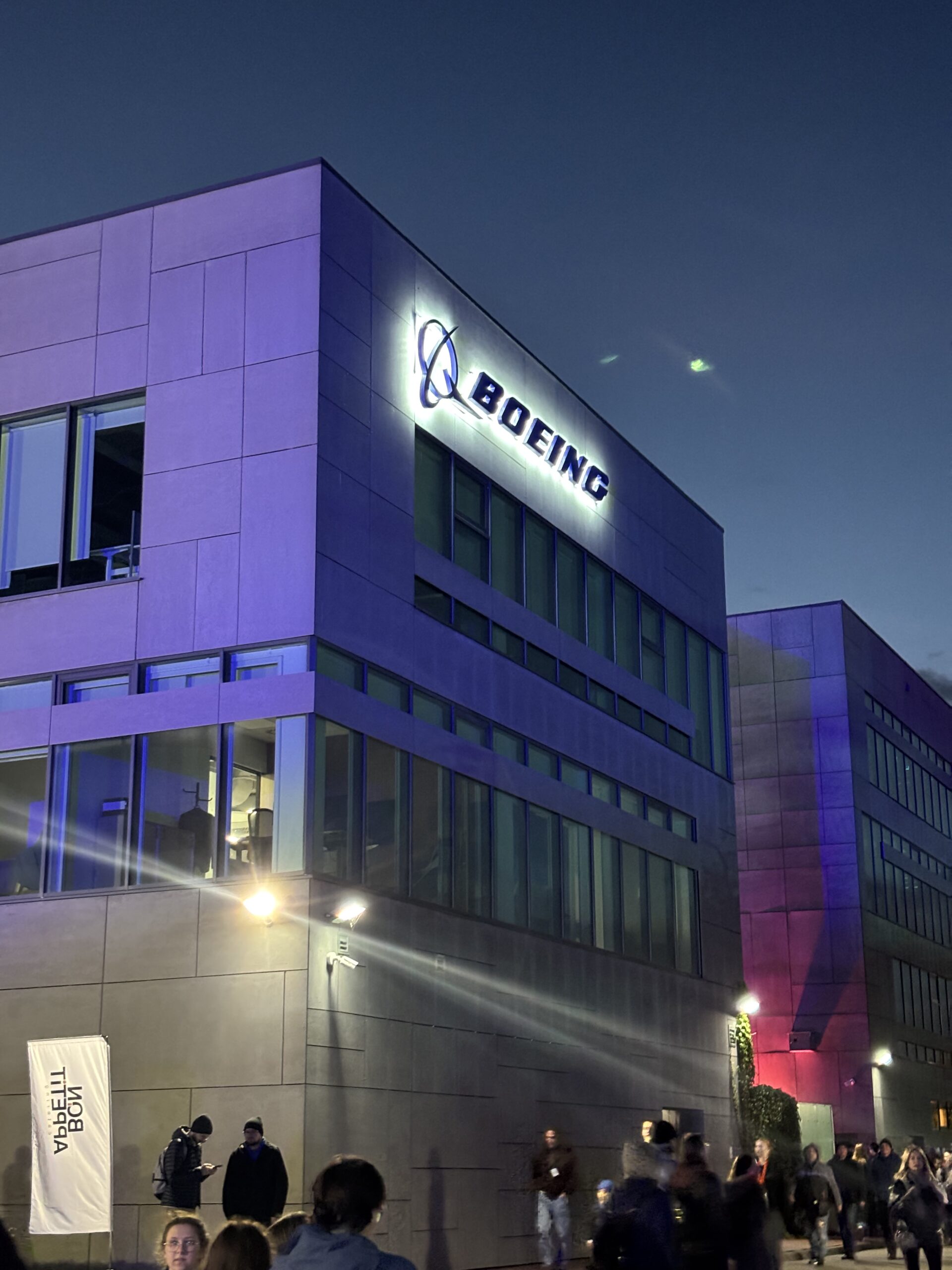

Boeing’s division at the Institute of Aviation in Warsaw / Photos: Boeing

As for the future, an important element is the previously mentioned integration of Polish industry into Boeing’s supply chain. On one hand, this includes the search for new suppliers, which was the purpose of the Boeing Industry Day event. Beyond propulsion systems, Polish industry is strong in the production of advanced machined components and in materials engineering. We want to assess how many Polish companies are interested in joining Boeing’s global supply chain, both in the civil and defense sectors. The second element involves development research – how Boeing’s new products will look in the future. This includes design issues on the one hand, and software on the other, which I mentioned earlier, meaning software development and the use of artificial intelligence – using data to improve successive products. This is something we are truly good at. It’s no longer a question of searching for what we could do. We already have many concrete examples that have proven successful regarding Polish suppliers, and we also see that areas related to programming and data use are increasingly important. Future aircraft will become even more digitalized.

Our group of engineers forming the engineering centers in Gdańsk, Warsaw, and Rzeszów will continue to grow to create teams supporting aircraft operations not only in Poland but worldwide. We plan to increase this number in the coming years.

Expanding the engineering division and increasing the number of suppliers are not separate issues. Considerable work remains to integrate these suppliers from an engineering perspective into Boeing’s applied solutions. It is about transferring knowledge to suppliers – how they should cooperate with Boeing, how they should produce components so that they fit into a Boeing product. That is a crucial element,” emphasizes Honorata Hencel.

Cooperation in education

Boeing currently cooperates with eight universities in Poland, including four technical universities. It is worth noting, however, that Boeing goes much further in its educational engagement, organizing a range of initiatives promoting STEM and engineering disciplines in Poland.

We meet not only with universities but also with technical secondary schools. I am very invested in this structural concept when it comes to schools. This is an area that could strongly support the aviation and defense industries if it became possible to engage technical-school students in a practical way, because to service Apache helicopters or to work in an aircraft maintenance base, not everyone needs to have a master’s degree in engineering. What they need is practical, vocational experience. We are running a pilot program with several schools. Our activities cover the Aviation Valley region and northern Poland. For now, these are pilot efforts because they require significant work and staff involvement on our side. We want to test these concepts and only then expand the program. Our cooperation with universities and technical universities has worked very well. We have an excellent internship program for engineering students, which is extremely popular every year, but I believe this is the right time to broaden our outreach and expand it to secondary and vocational education.

One of the things we do is the Newton Room – mobile aviation laboratories, which work wonderfully. We have one permanent aviation lab in Łódź and several mobile ones that travel to different locations for a few weeks at a time. We organize, for example, mathematics lessons there – often the longest math class the visiting students have ever attended. This doesn’t sound very exciting to young people at first, but they leave enthusiastic because they realize that mathematics and physics have practical applications, such as planning a rescue mission for an aircraft or working with a flight simulator. I believe that more companies should be involved in such initiatives,” emphasizes Honorata Hencel.

In this way, the American corporation enters an area that should largely be addressed by the Polish government, especially authorities responsible for education. Promoting STEM subjects and career paths that do not necessarily require university degrees is essential for building the future of Poland’s economy – not only in the context of cooperation with the American aerospace giant.