






















On Wednesday, April 8, 2026, Space Systems Command of the United States Space Force (USSF) announced that, on the previous day, it had concluded framework agreements on behalf of the U.S. Department of Defense with 14 companies, with a combined maximum value of 1,843,000,000 USD, under a new satellite-based geosynchronous orbit (GEO) monitoring program codenamed Andromeda.
 Images: USSF
The IDIQ (indefinite-delivery/indefinite-quantity) contracts were awarded to the following entities, in the order listed in the U.S. Department of Defense announcement:
- Anduril Industries Inc., Costa Mesa, California;
- Astranis Space Technologies Corp., San Francisco, California;
- BAE Systems, Space Mission Systems Inc., Broomfield, Colorado;
- General Atomics Electromagnetic Systems, San Diego, California;
- Intuitive Machines LLC, Houston, Texas;
- L3Harris Technologies Inc., Rochester, New York;
- Lockheed Martin Corp., Littleton, Colorado;
- Millennium Space Systems Inc., El Segundo, California;
- Northrop Grumman Systems Corp., Dulles, Virginia;
- Quantum Space LLC, Rockville, Maryland;
- Redwire Space Missions LLC, Littleton, Colorado;
- Sierra Space Corp., Louisville, Colorado;
- True Anomaly Inc., Centennial, Colorado;
- Turion Space Corp., Irvine, California.
Looking at the above list, it is not difficult to conclude that it includes entities from a range of specializations, from satellite platforms and payloads to instruments, equipment, and software. The Andromeda program is intended to enable the development and deployment of in-space space domain awareness capabilities. In other words, it is meant to create a satellite constellation (the Geosynchronous Reconnaissance & Surveillance Constellation) that will continuously observe other satellites, objects, and threats in geosynchronous orbit.
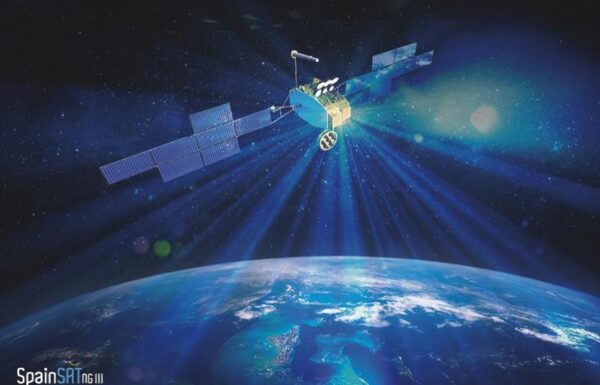
 GSSAP Program Satellites
The work will be carried out at various contractor facilities, as indicated above, and is scheduled for completion by April 8, 2036. These contracts were competitively solicited, with 32 bids submitted. The initial obligated funding of 1,400,000 USD comes from U.S. Space Force savings from the fiscal year 2025 NDAA defense budget, specifically from research, development, test, and evaluation funds.
The main requirements of the Andromeda program are a GEO space vehicle platform, a space-based electro-optical imaging system, and a system for rendezvous and proximity operations near other space objects.
The Andromeda program will replace the older initiative codenamed GSSAP (Geosynchronous Space Situational Awareness Program), under which eight satellites were launched into space in 2014, 2016, 2022, and 2026, with two satellites launched on each mission. Of those satellites, seven are still active, while one has likely been decommissioned. Satellites 9 and 10 are already in production but have not yet been launched. The program was initially intended to include only four satellites, but the USSF decided to expand it.