

















Gladius is a Polish unmanned reconnaissance-and-strike system developed by WB Group for the Rocket Forces and Artillery. It is a battery-level fire module combining aerial reconnaissance, data analysis, command and control, and precision long-range engagement. The system is not a single “drone,” but a complex suite of advanced unmanned aerial vehicles, encrypted communications assets, and a command system. Its backbone is TOPAZ, the national battle management system used by the Rocket Forces and Artillery (Poland: 1st Masurian Artillery Brigade Continues to Build Up Its Gladius Capability).
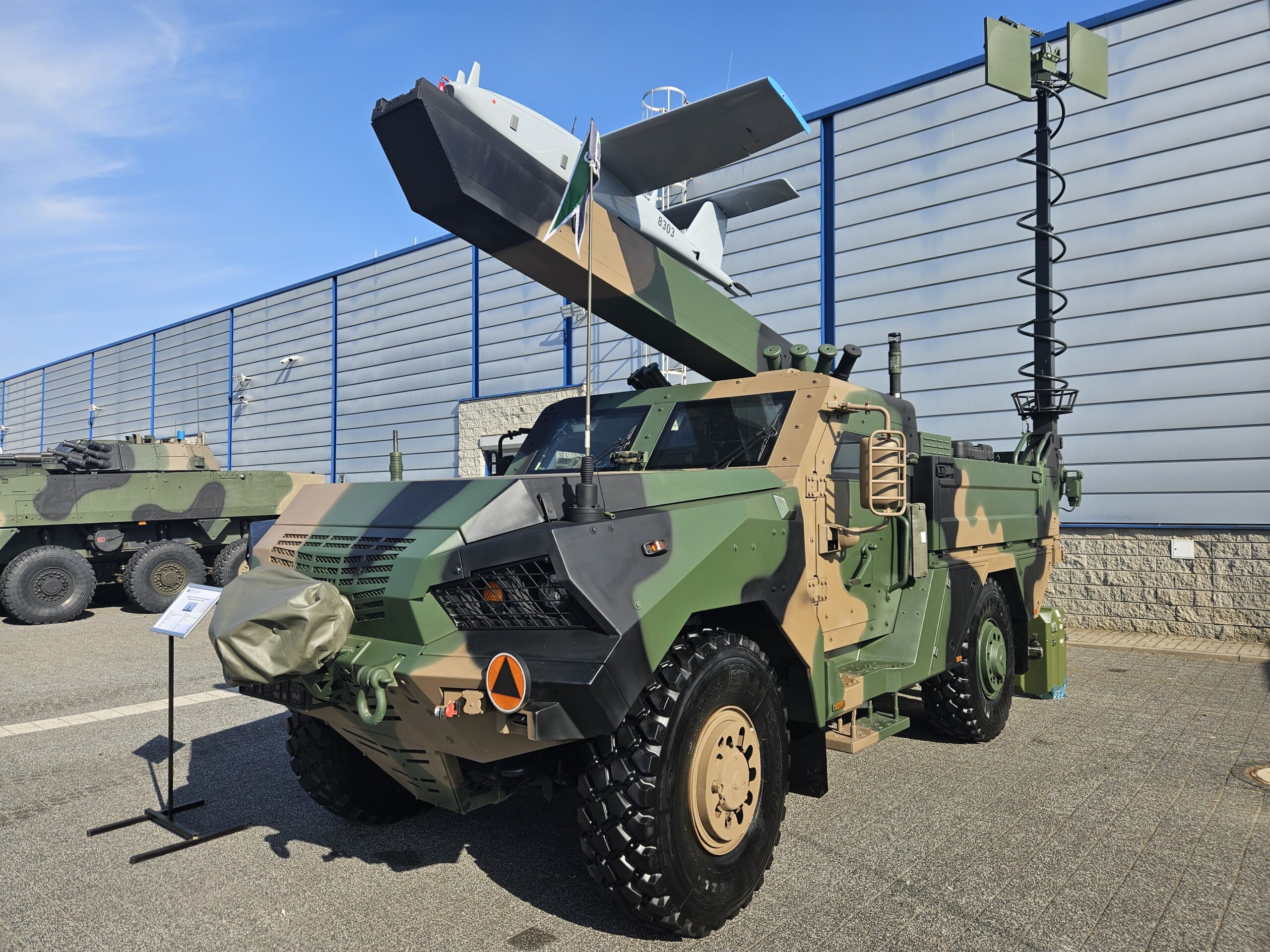
Launcher of the Gladius system based on a Waran 4×4 vehicle, with a BSP-U(T) effector on the launch rail
Gladius system components
Gladius consists of air and ground components. The aviation component includes FT-5 unmanned aerial systems intended for reconnaissance, as well as effectors in the form of BSP-U loitering munitions or, alternatively, WARMATE 5-10 for potential export versions. The reconnaissance FT-5 can be configured in ELINT or SIGINT variants or carry a SAR radar, enabling electronic, imagery, and radar reconnaissance.
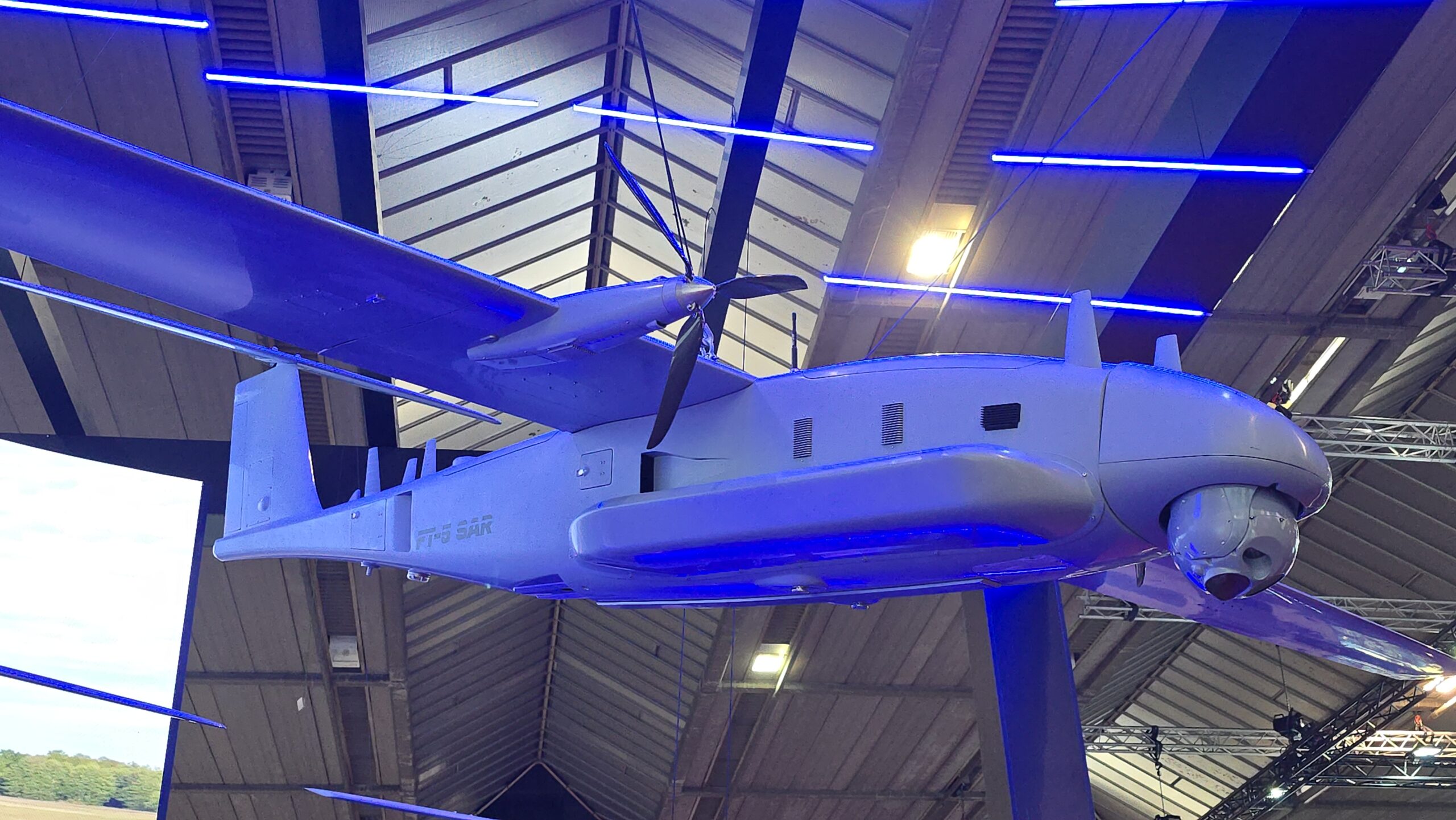
FT-5 shown with an integrated SAR radar, visible in the side panel
The BSP-U/WARMATE 5-10, in turn, is designed to carry 5–10 kg warheads and engage high-value targets, including armored vehicles, command posts, and fortifications. Importantly, WB Group and the Rocket Forces and Artillery carefully avoid disclosing the maximum ranges of individual platforms, stating only that they are “operational.” In line with Polish Army requirements, the range was set at approximately 100 km; however, it is now known that the BSP-U significantly exceeds those requirements. As a result, effectors of this type enable precision strikes at distances that make it possible to paralyze the deep rear area of a potential adversary.
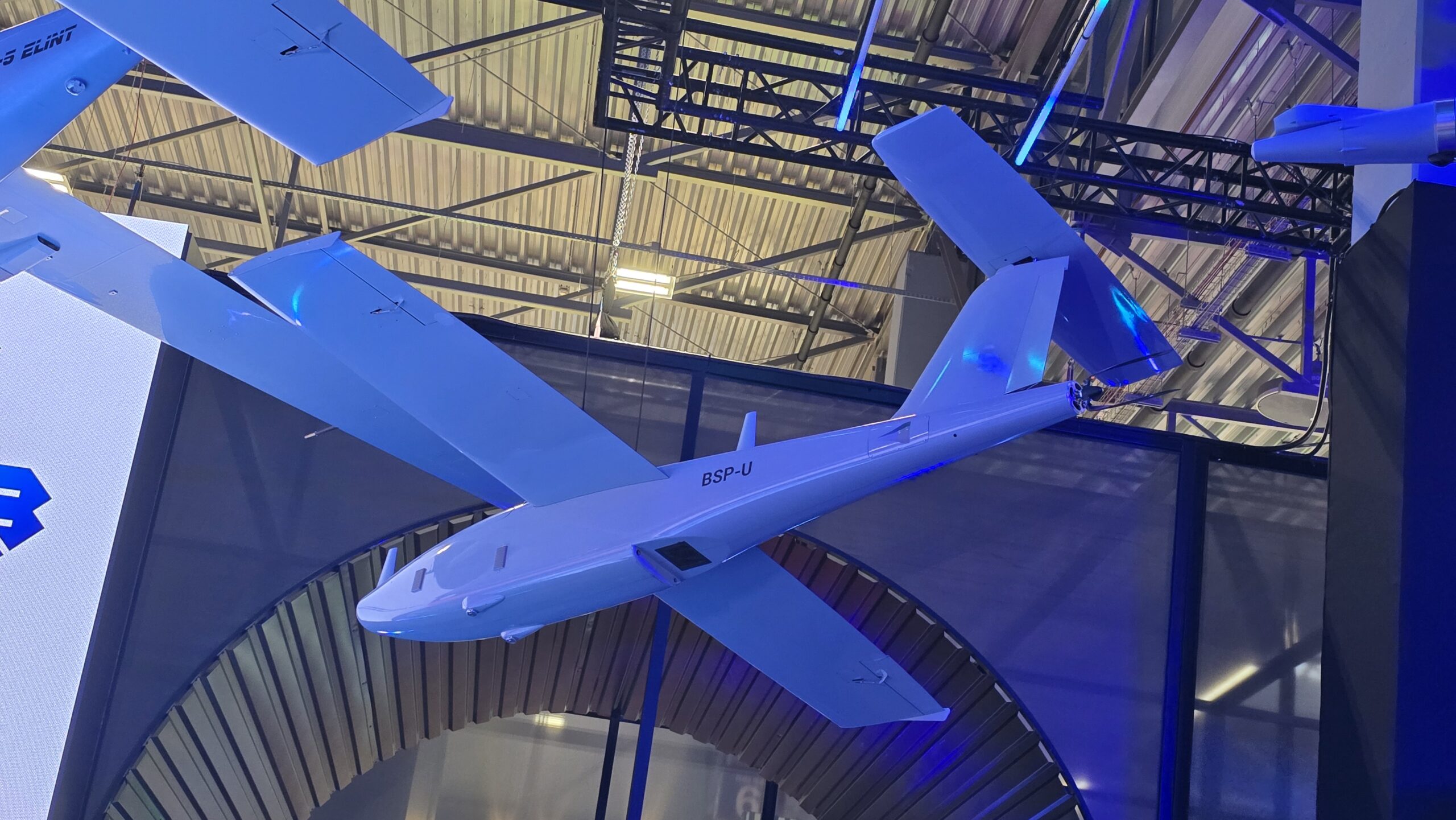
Armed effector – BSP-U
What is worth emphasizing in the context of the signed agreement is that WB Group has been developing a new generation of strike UAVs known as Gladius-2 since 2022. Based on the limited information that has been made available, it can be inferred that the new BSP-U vehicles will be equipped with jet propulsion and will have a profile that makes them much harder to detect by radar systems. At the heart of WB Group’s unmanned systems is its proprietary radio link with an encryption module, as well as control and target-recognition systems supported by its own software with artificial intelligence elements, EyeQ. It can therefore be assumed that the new generation of Gladius systems will also have significantly greater capabilities in this area, while maintaining full backward compatibility. This is of major importance when using TOPAZ. Taken as a whole, this could mean a severalfold increase in the strike capabilities of the Polish system.
The ground component of Gladius comprises several types of vehicles. The manufacturer lists command vehicles, launcher vehicles with universal launch ramps, command-and-control vehicles, mobile analysis stations supported by EyeQ AI systems, ammunition vehicles, and technical support vehicles. The launchers are mounted on Waran 4×4 vehicles produced by Huta Stalowa Wola, and their universal design allows them to launch both FT-5 reconnaissance UAVs and BSP-U strike and BSP-UT training vehicles. However, looking at WB Group’s earlier projects, it can be seen that the FT-5 launcher was initially a separate module towed on a trailer. This means that, if necessary, it can also be operated by light “civilian” vehicles equipped with a tow hitch.
WB Group’s proprietary concept
The structure of a complete battery-level fire module shows the scale of the system. The module is to have three reconnaissance UAV platoons, each consisting of a command vehicle, a vehicle with an FT-5 launcher, and an ammunition vehicle. In addition, there are two BSP-U strike UAV platoons, each with a command vehicle, four launcher vehicles, and two ammunition vehicles. The whole system is supplemented by a command vehicle for the BSP-U battery-level module, a mobile analysis station, and a technical support vehicle. In this configuration, one battery-level fire module comprises around 26 vehicles, including command vehicles, launchers, ammunition vehicles, and analysis and technical support vehicles.
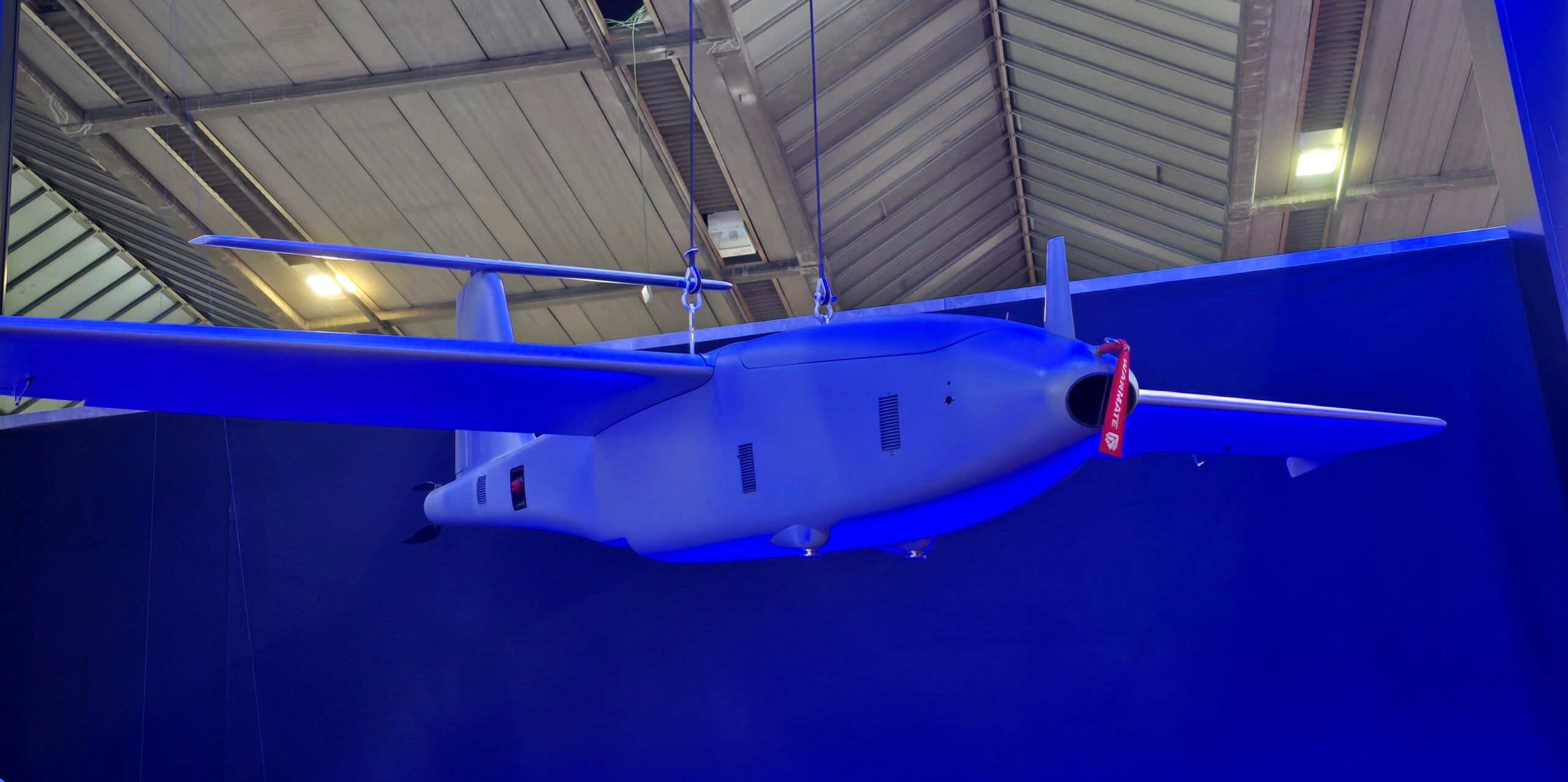
WB Group is currently developing an export version of its system. For foreign users, it offers Warmate 5 loitering munitions instead of the BSP-U
The mobile analysis station plays an important role in the system. It collects data from unmanned aerial vehicles, including imagery from the FT-5’s electro-optical sensors and from loitering munitions en route to their targets. The data can be analyzed using the EyeQ artificial intelligence module, which supports real-time detection, identification, and classification of objects. As a result, Gladius is not merely a “drone plus effector” set, but a reconnaissance-decision-strike system designed to accelerate target detection, classification, and the transfer of targeting data.
The FT-5 reconnaissance UAV is larger than the effectors. The manufacturer gives a wingspan of 6.4 m, a length of 3.1 m, an empty weight of 85 kg, an internal combustion engine, a ceiling of 5,000 m AMSL, and an endurance of up to 10 hours. According to WB Group, the FT-5 has a twin-engine design, with various propulsion configurations, including internal combustion, electric, and hybrid. This is intended to increase reliability and make the aircraft harder to detect and destroy. The FT-5 can carry electro-optical heads, COMINT/ELINT sensors, contamination detectors, and weapons. FT-5 SAR and FT-5 ELINT variants have also been presented, expanding the system’s capabilities to include radar and electronic reconnaissance, respectively.
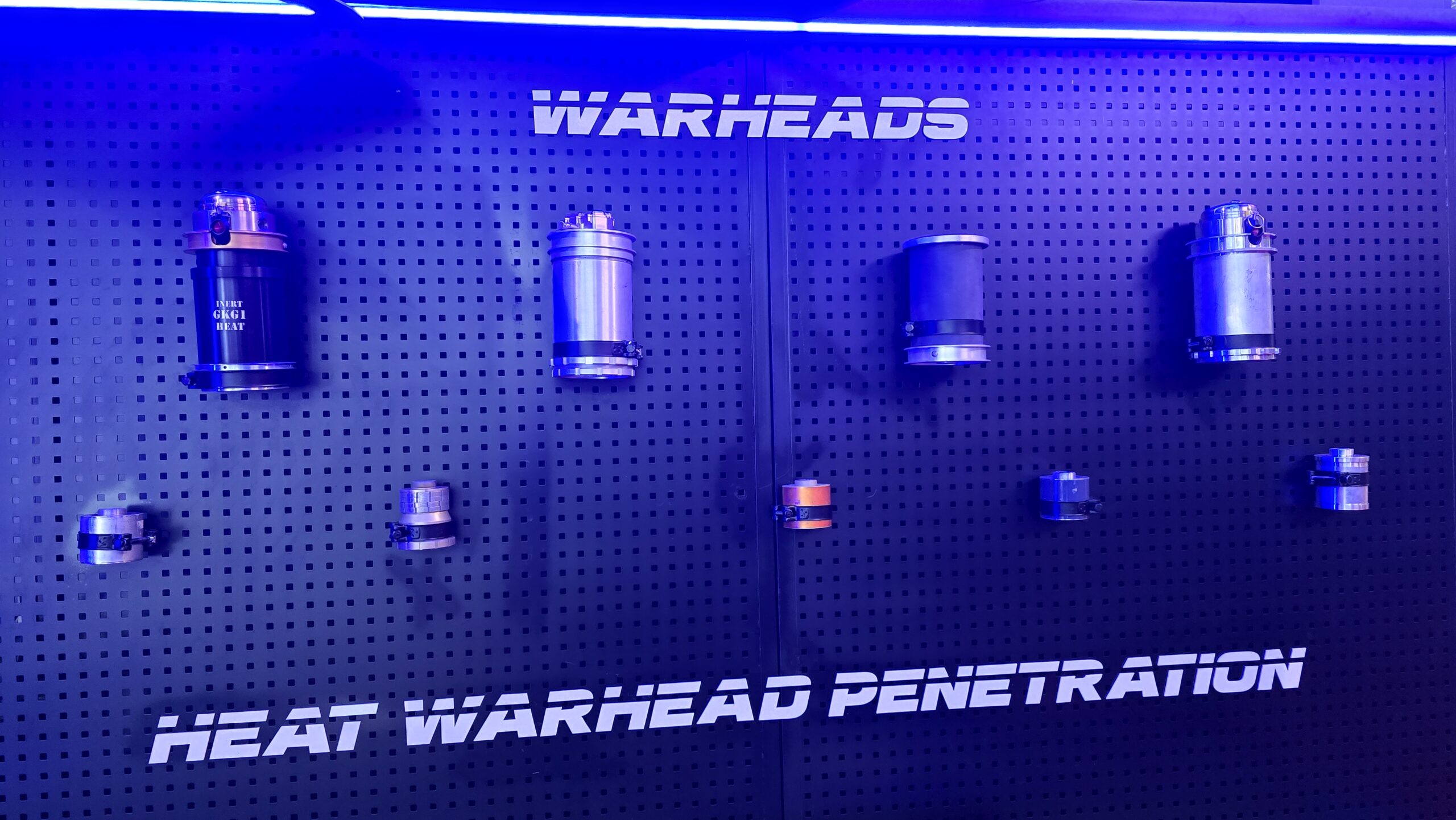
Warheads developed by WB Group for loitering munitions / Photos: Jakub Link-Lenczowski, MILMAG
The BSP-U Gladius serves as the system’s strike asset and is also available in the BSP-U(T) training version. The BSP-U/BSP-U(T) has a wingspan of 2.5 m, a length of 2.5 m, a takeoff weight of 31.5 kg, a cruising speed of 100–120 km/h, an endurance of more than two hours, and a speed of up to 220 km/h, most often reached during the attack phase. The combat version can be fitted with an anti-tank or high-explosive fragmentation warhead, while the training version is reusable and lands automatically in unprepared terrain.
The most important feature of Gladius is integration: UAVs, effectors, launchers, command vehicles, communications, data analysis, and TOPAZ form a single system. Command and communications systems, including FONET, terminals, LAN/WAN networks, tactical radios, and overall system integration, are supplied by WB Group. The lead manufacturer is WB Electronics, while Flytronic, RADMOR, ZAiUP Arex, and HSW, as the supplier of Waran 4×4 chassis, are also involved in the system. In practice, Gladius is therefore one of Poland’s most important unmanned systems programs: it is intended to give artillery its own reconnaissance, its own effectors, and the ability to strike rapidly without having to wait for external data sources. In the near future, based on Gladius, the Land Forces may gain deep-strike capabilities far exceeding those of systems currently being introduced.
See also:
- What does a fully equipped Gladius unmanned reconnaissance and strike system look like?
- The Suwałki Anti-Tank Regiment becomes another Polish unit equipped with the Gladius System