






















Last year, the first two representative offices responsible for the sale of Ukrainian armaments were established – in Berlin and Copenhagen. This was the first attempt at a more structured entry by Ukraine into the global arms market. On the one hand, the decision was intended to help stabilize funding for the war effort; on the other, it raised questions about the balance between frontline needs and the economic ambitions of a state at war that was simultaneously benefiting from extensive equipment support from its allies.
 Photo: Office of the President of Ukraine
The Ukrainian side emphasized that it planned to export only weapons available in surplus or produced in cooperation with Western partners. Zelensky stressed that the sales were intended to finance the further expansion of the defense industry and increase production in the most critically short supply categories of armaments, such as missiles, ammunition, and air defense systems. As a result, Ukraine began to function like a state with a developed and flexible defense sector, capable of both waging war and carrying out limited exports.
Government and industry data indicated that the production potential of Ukraine’s defense industry reached as much as 20 billion USD annually, while domestic military orders did not exceed 6 billion USD. Quite simply, the army is unable to absorb all of it because it lacks the necessary capacity and manpower. The production surplus is to be sold in order to finance the war through domestic arms production.
And while for the whole world President Donald Trump’s decision was seen as a godforsaken disaster, for Ukraine his stupidity turned out to be a blessing. It turned out that Ukraine not only held the right cards for negotiations with the White House, but that the wealthy and expansive markets of the Middle East had also opened up. Sending a counter-drone company that brought the equipment, used it, and trained local units in its operation was one of the best marketing moves in the industry. There is simply much to learn from the Ukrainians.
 P1-SUN / Photo: SkyFall
Wealthy Customers
Saudi Arabia, the United Arab Emirates, and Qatar quickly became Kyiv’s main partners after a series of Iranian attacks. These are the destinations where the first solutions are being delivered and where long-term cooperation projects are being built. Next come other countries in the region that are not the primary targets of attacks but have concluded that they must prepare for any possible escalation. Jordan, Kuwait, and Bahrain are exploring opportunities for cooperation.
The most important category is interceptor drones, meaning designs created to physically destroy other unmanned aerial vehicles. One of them is the P1-SUN developed by SkyFall, which has been used in frontline conditions against Russian drones and has been adapted for serial production.
At the same time, designs referred to as Octopus are being developed – the next generation of low-cost FPV interceptors with a very low unit price, which is of key importance when engaging targets such as Iranian Shaheds.
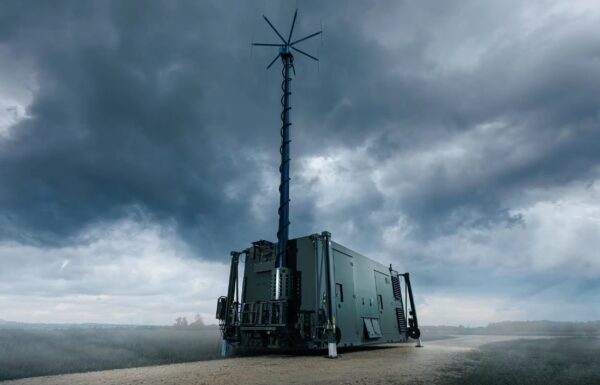
The second area, much less visible but equally important, is electronic warfare systems. Neither side has disclosed exactly which specific solutions are involved, but it is known that they will include mobile systems for jamming GPS signals and drone communications, as well as solutions capable of disrupting their operation without the use of kinetic means. These systems are often the first line of defense and are integrated with interceptor drones into a single coherent system.
The third element consists of IT systems and management software. This is a component that does not attract much attention, but in practice it determines the effectiveness of the entire solution. Ukraine offers software that integrates data from different sensors, enables coordination among operators, and supports rapid decision-making in conditions of heavy target saturation. Without it, even a large number of interceptor drones does not create a real defensive capability.
A separate category, still at the discussion stage for now, is maritime drones. Ukrainian designs used against the Russian shadow fleet in the Mediterranean have attracted the interest of countries in the region, especially in the context of protecting energy infrastructure and transport routes. For the time being, however, only preliminary talks are under way, with no concrete outcomes yet.
 Octopus-100 / Photo: TAF Industries
A Marketing Masterstroke
Finally, one element cannot be reduced to a specific product: operational and training teams. In practice, they are an integral part of both the contracts and the marketing effort. The deployment of Ukrainian specialists to the Gulf states was, in essence, part of the implementation of the systems being sold. They are the ones building the capability to use them from the ground up, which, in the face of new threats, matters even more than the equipment itself, because it shortens the time needed to field the product.
Taken as a whole, the Ukrainian offering comes down to several specific solutions. They did not overwhelm customers with a broad menu. They simply moved quickly to offer large numbers of inexpensive interceptor drones, electronic warfare systems, as well as the software and expertise needed to put them to use immediately.
It is not a broad offering, but it is precisely tailored to the nature of the threat that Middle Eastern states have faced following the escalation of the conflict with Iran. Quite simply, Ukraine capitalized on Trump’s folly and gained wealthy customers interested in a specific offering. Now ask yourselves whether any Polish government has supported Polish military equipment manufacturers in a similar way. The answer seems obvious.
We have arranged ten-year agreements with three countries. Ukrainian companies will work with the armed forces of these countries to protect specific facilities. My task is to negotiate volumes, services, and types of weaponry. Security talks are currently underway with Oman, and…
— Volodymyr Zelenskyy / Володимир Зеленський (@ZelenskyyUa) April 10, 2026
We sent our military experts to the Middle East, including specialists in interceptor drones and electronic warfare. We demonstrated to some countries how to work with interceptors. Did we destroy Iranian “shaheds?” Yes, we did. Did we do it in just one country? No, in several.…
— Volodymyr Zelenskyy / Володимир Зеленський (@ZelenskyyUa) April 10, 2026