


























On November 22, 2025, PERUN Rocket completed its third test flight, marking another significant step towards reaching outer space. The launch proceeded according to plan, and the rocket’s ascent was visible from the beach in Ustka. The operation was executed within the scheduled launch window (13:00–14:00), with preparations taking over seven hours. This perfectly illustrates the crucial role of permanent launch infrastructure. If such a base were operational in Poland, preparation time could be significantly reduced, and the entire process substantially streamlined.
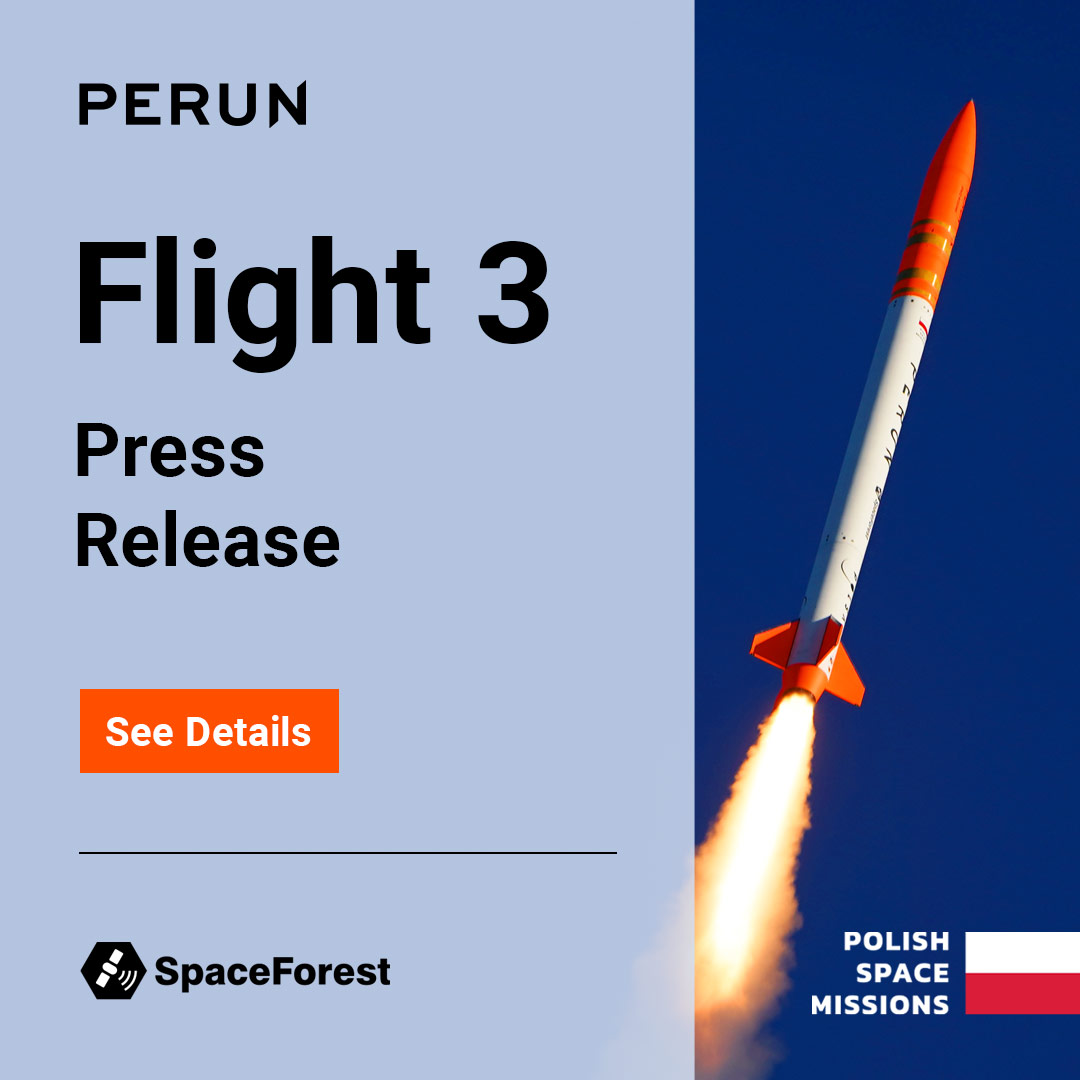 Image: SpaceForest
The mission’s objective was to test key systems, validating the solutions implemented in the new PERUN rocket prototype. The obtained results provide valuable data supporting the further development of the technology and bring the company closer to the commercialisation of space transport services and the execution of experiments in genuine space conditions.
Polish scientists had the opportunity to conduct research aboard a domestic rocket during the launch and suborbital flight phases. This was made possible by the collaborative effort within the consortium of Łukasiewicz Research Network – Institute of Aviation (ILOT), commissioned by the Polish Space Agency (POLSA). This represents an important milestone for the development of the national space sector and is a source of pride for the entire SpaceForest team.
During the flight, a number of operational aspects of the PERUN rocket were successfully confirmed, including:
- Demonstration of launch and safety procedures;
- Execution and recovery of scientific experiments;
- Validation of payload integration with the launch vehicle;
- Verification of the Thrust Vector Control (TVC) system;
- Operation of the onboard safety system with immediate mission termination capability;
- Study of physical launch and flight conditions, including vibrations and g-forces (overloads).
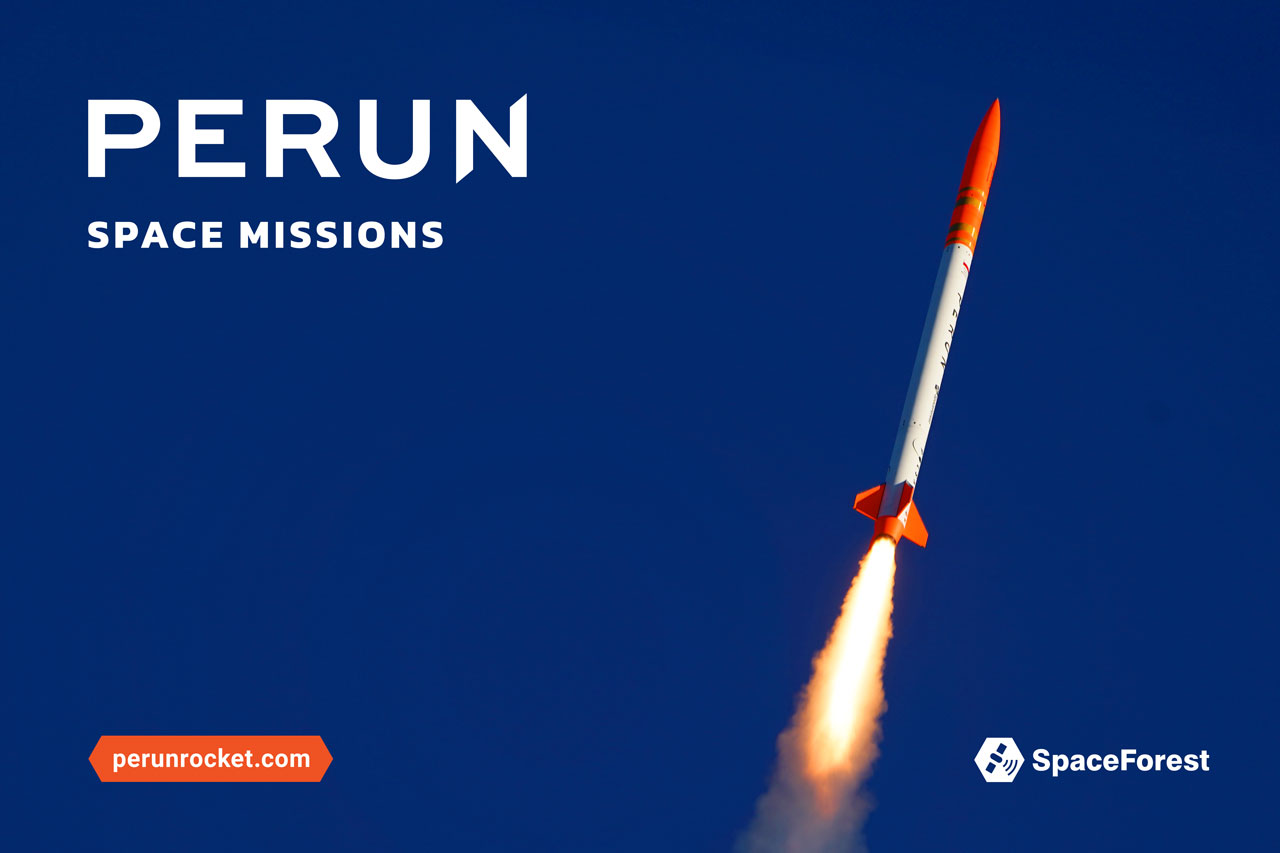
From the moment of liftoff from the launch pad, detailed telemetry data concerning flight parameters – including attitude, velocity vector, and precise geolocation – was continuously transmitted to the Ground Station. This facilitated constant trajectory monitoring and control. When, at the 29th second of flight, real-time data analysis indicated a risk of exceeding the designated Range Safety Zone, a decision was made, in accordance with established Safety Protocols, to execute a Mission Abort. From the Mission Control Centre (MCC), Mission Director issued the command to activate the Flight Termination System (FTS), resulting in a safe engine shutdown and subsequent stage separation
Both sections (stages) of the suborbital rocket were recovered within the range safety area. The transmitting experiments and commercial payloads have been retrieved and are being successively delivered to mission partners, along with data from the onboard computers, which are currently undergoing analysis.
The rocket is already back at the SpaceForest headquarters, where the analysed data will be used for preparations during the next phases of testing and suborbital flights of PERUN Rocket. Launch 4 is planned for the spring, featuring new experiments and collaboration with the same partners, inter alia, to obtain comparative data.
SpaceForest maintains its momentum. Based on the acquired experience and knowledge, the company continues to develop its technology, working with already contracted partners and progressing further scientific experiments and initiatives.
The entire PERUN launch team extends its gratitude to the partners for their trust and support in developing the integration solutions, as well as to all individuals supporting the project – including the community that observed the event on site. Special recognition is directed to the Command of Central Air Force Range (Centralny Poligon Sił Powietrznych) in Ustka for providing access to the area and logistical support; to the Polish Space Agency (POLSA) and the European Space Agency (ESA) for their continuous cooperation; and to the Łukasiewicz Research Network – Institute of Aviation for the professional qualification of some of the research payloads. Gratitude is also extended to partners ASC and EuroSpaceport, with whom PERUN rocket flights are planned outside Poland next year.
