
























Entities interested in obtaining funding were able to submit projects across fifteen thematic areas. Moskit was selected under the category “Development of existing defense technology demonstrators (from Technology Readiness Level VI) in areas defined in the Priority Directions of Scientific Research at the Ministry of National Defence for 2021–2035.” The Moskit project received the highest evaluation and was awarded funding of 120.5 million PLN. The work will be carried out by a consortium consisting of the Military Institute of Armament Technology (leader), RADMOR S.A., WB Centrum Kompozytów Sp. z o.o., and WB Electronics S.A.
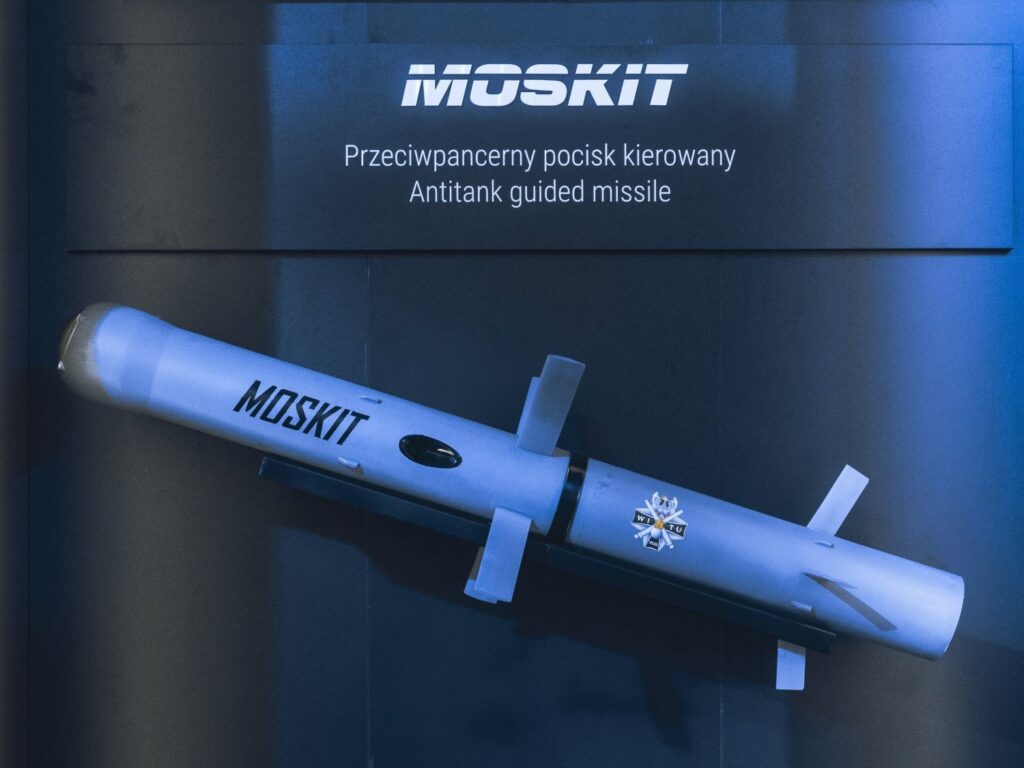
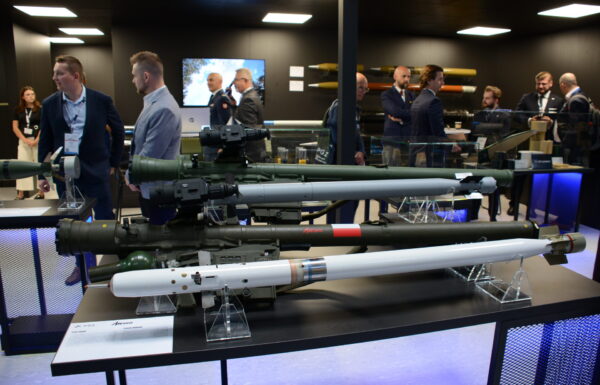
The Moskit anti-tank guided missile program has received NCBiR funding in the amount of 120.5 million PLN / Photo: WB Group
The Moskit anti-tank guided missile may serve as an alternative to U.S.-made systems (FGM-148 Javelin) and Israeli designs (Spike) currently procured by the Ministry of National Defence.
According to declarations, the missile is to feature a range of up to 4,000 meters. The system is expected to weigh up to 26 kg, while the tandem shaped-charge warhead (weighing approximately 1.8 kg) is intended to provide penetration of around 700–750 mm RHA behind reactive armor. Work on the system began in 2017. By the end of 2022, a preliminary and technical design had been completed, a prototype batch prepared, and initial and qualification testing of the prototype batch carried out.
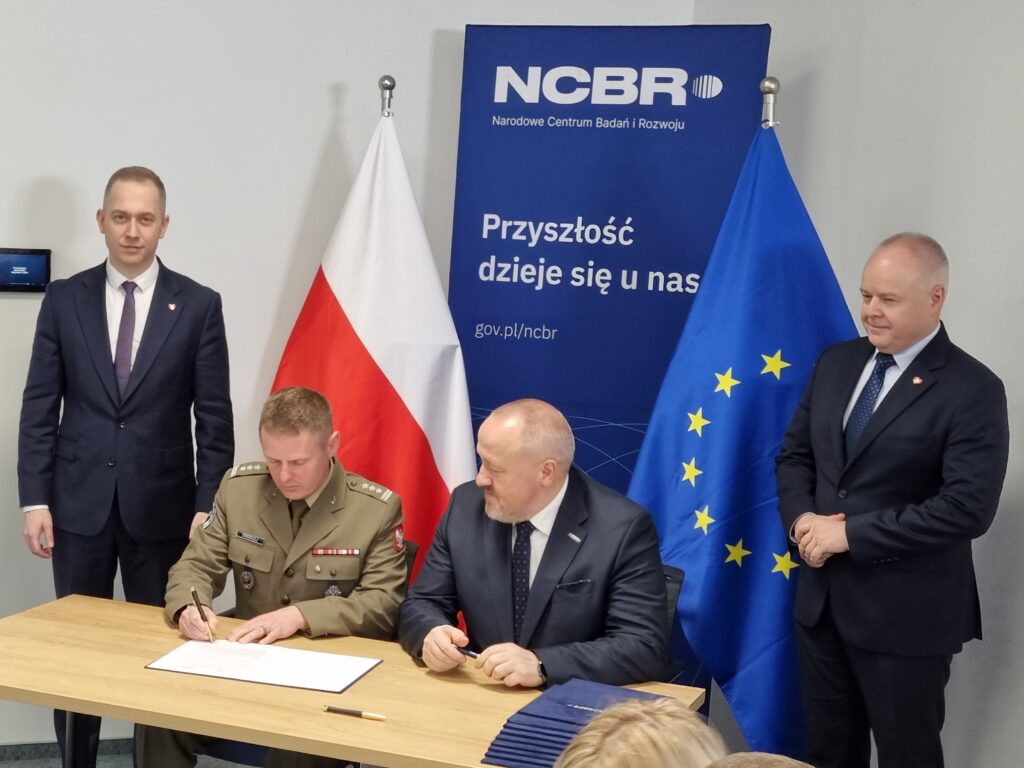
Photo: WB Group
The backbone of the Polish Armed Forces’ anti-tank armament consists of Rafael Spike LR systems, while FGM-148F Javelin missiles have also been procured in two batches. Currently, the signing of a third agreement with the U.S. administration is anticipated, which is to concern the continuation of deliveries of the FGM-148J Javelin. These systems are complemented by lighter Carl-Gustaf M4 recoilless rifles ordered from Sweden. In their case, the limiting factor is effective range, which does not exceed 800 meters.
