








On Thursday, May 14, 2026, Malaysian Prime Minister Anwar Ibrahim announced on social media that the Norwegian authorities had unilaterally terminated the agreement between Malaysia and Norwegian company Kongsberg Defence & Aerospace for the supply of NSM (Naval Strike Missile) anti-ship missiles.
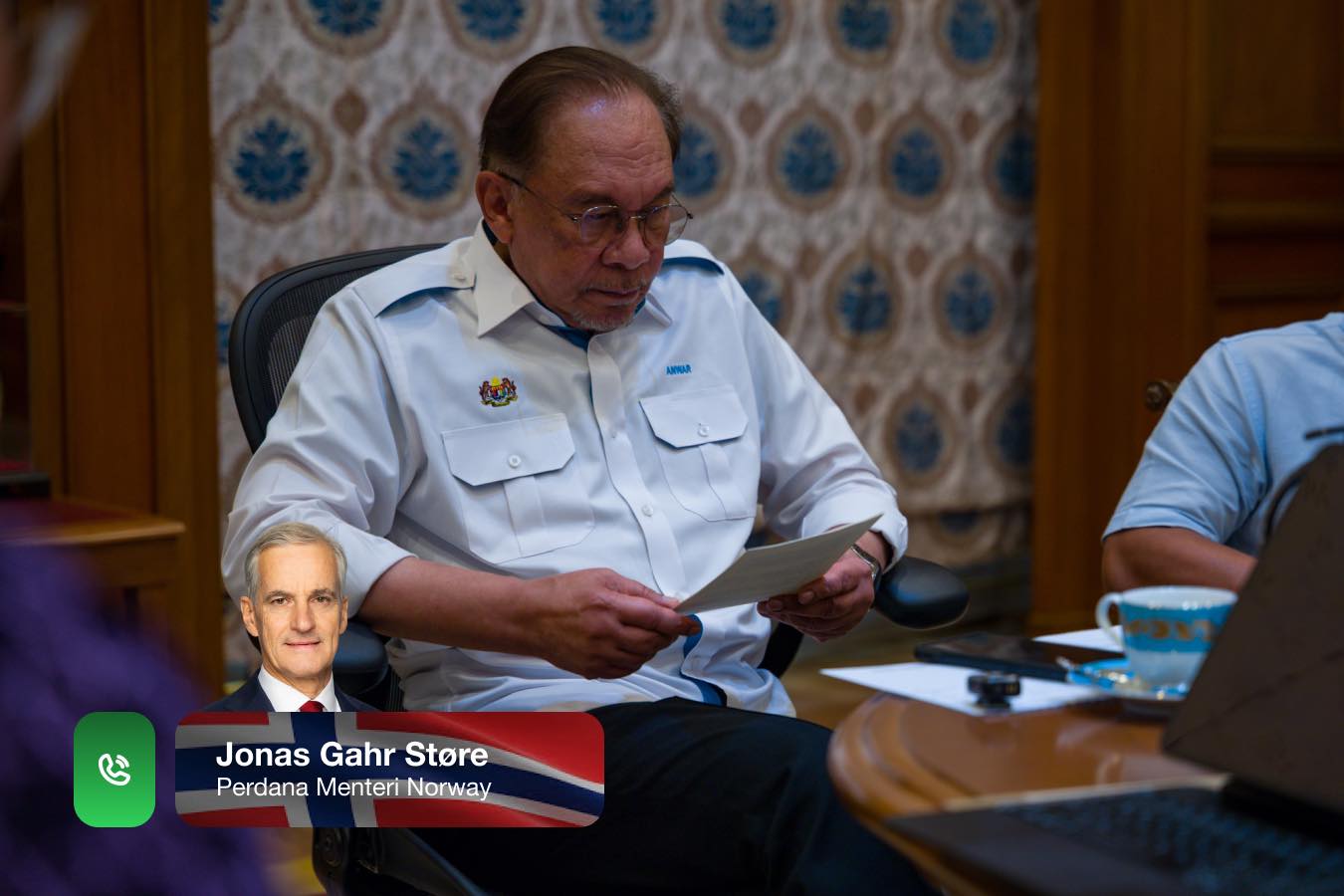 Photo: Anwar Ibrahim via Facebook
“I conveyed Malaysia’s vehement objection in a telephone conversation with Prime Minister Jonas Gahr Støre regarding Norway’s unilateral and unacceptable decision to revoke the export licence for the Naval Strike Missile (NSM) system and its associated launcher systems, ostensibly to protect Norway’s security.
Malaysia has honoured every obligation under this contract since 2018: scrupulously, faithfully and without equivocation. Norway, it appears, has not felt compelled to extend us the same courtesy and demonstration of good faith.
I made it plain that this decision will have grave consequences for Malaysia’s defence operational readiness and the Littoral Combat Ship (LCS) modernisation programme. It will undoubtedly carry broader ramifications for the regional balance.
Signed contracts are solemn instruments. They are not confetti to be scattered in so capricious a manner. If European defence suppliers reserve the right to renege with impunity, their value as strategic partners flies out the window.”
Anwar Ibrahim
On April 18, 2018, during the Defence Services Asia (DSA) conference and exhibition in Kuala Lumpur, Kongsberg Defence & Aerospace signed a 145 million USD contract with the Royal Malaysian Navy for the supply of NSM anti-ship missiles and their integration with six Maharaja Lela frigates, referred to as LCS; ultimately, five ships are being built to the French Gowind design, editor’s note. Another contract on the matter was signed in 2025 and was worth 11.19 million USD. It concerned the integration of the missiles with two Lekiu-class frigates.
According to Malaysian officials, the authorities in Kuala Lumpur have already paid more than 95% of the value of the 2018 contract, and deliveries were scheduled to begin in March this year. Malaysia will therefore demand that Norway reimburse the costs incurred. The Malaysian authorities were reportedly first informed of Norway’s move during the Defence Services Asia (DSA) Exhibition & Conference, held on April 20–23 this year at the Malaysia International Trade and Exhibition Centre (MITEC) in Kuala Lumpur.
 Photo: KDA
According to Secretary General of the Ministry of Defense Lokman Hakim Ali, Defense Minister Khaled Nordin held a routine telephone conversation and then a meeting with a Norwegian delegation headed by State Secretary Eivind Vad Petersson. Contrary to expectations, the officials were informed that new Norwegian restrictions on arms exports mean that Kongsberg can no longer deliver the NSM, as the system will be exported from Norway only to NATO and NATO partner countries, while Malaysia is neither a member nor a partner of the Alliance.
Lokman, who was present at the meeting, confirmed that Norway invoked force majeure when canceling the agreement between KDA and the Malaysian government. Force majeure is a contractual clause that releases both parties from liability or obligations arising from extraordinary circumstances affecting the contract.
Last week, Defense Minister Khaled issued an official statement saying that the Malaysian government would use diplomatic channels to seek further clarification from Norway and discuss next steps aimed at protecting national interests.
According to reports, Norway’s decision may be linked to the use in the NSM of a U.S.-made gyroscope component, the export of which to third parties is currently restricted. Gyroscopes are used to measure a missile’s orientation angles and maneuver rates, and the data is used to keep it on course.
Instead of the NSM, Malaysia is now expected to seek the acquisition of French Exocet missiles. The latest version, Block 3C, has so far been exported only to Greece for its FDI HN frigates.