

















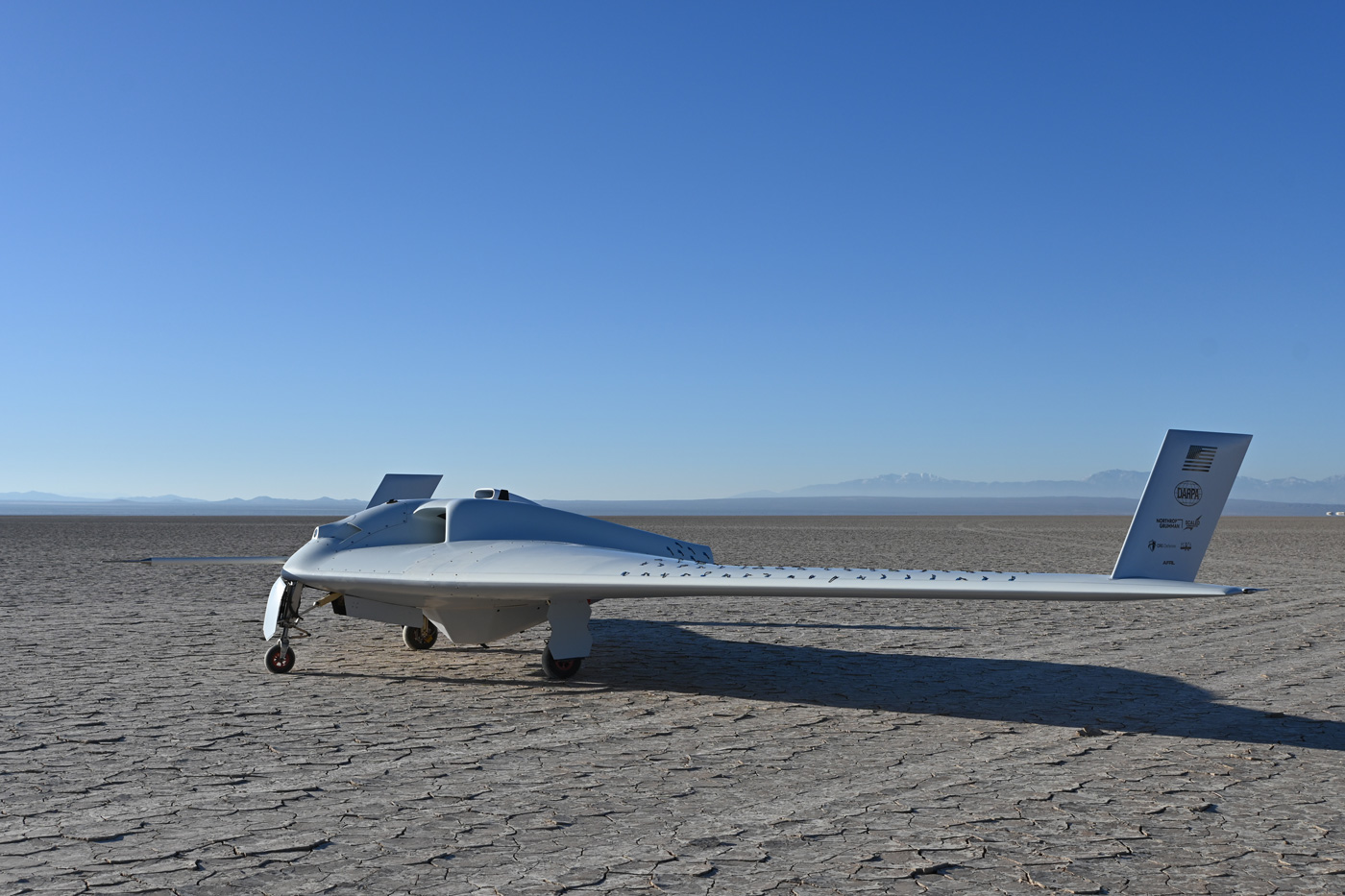
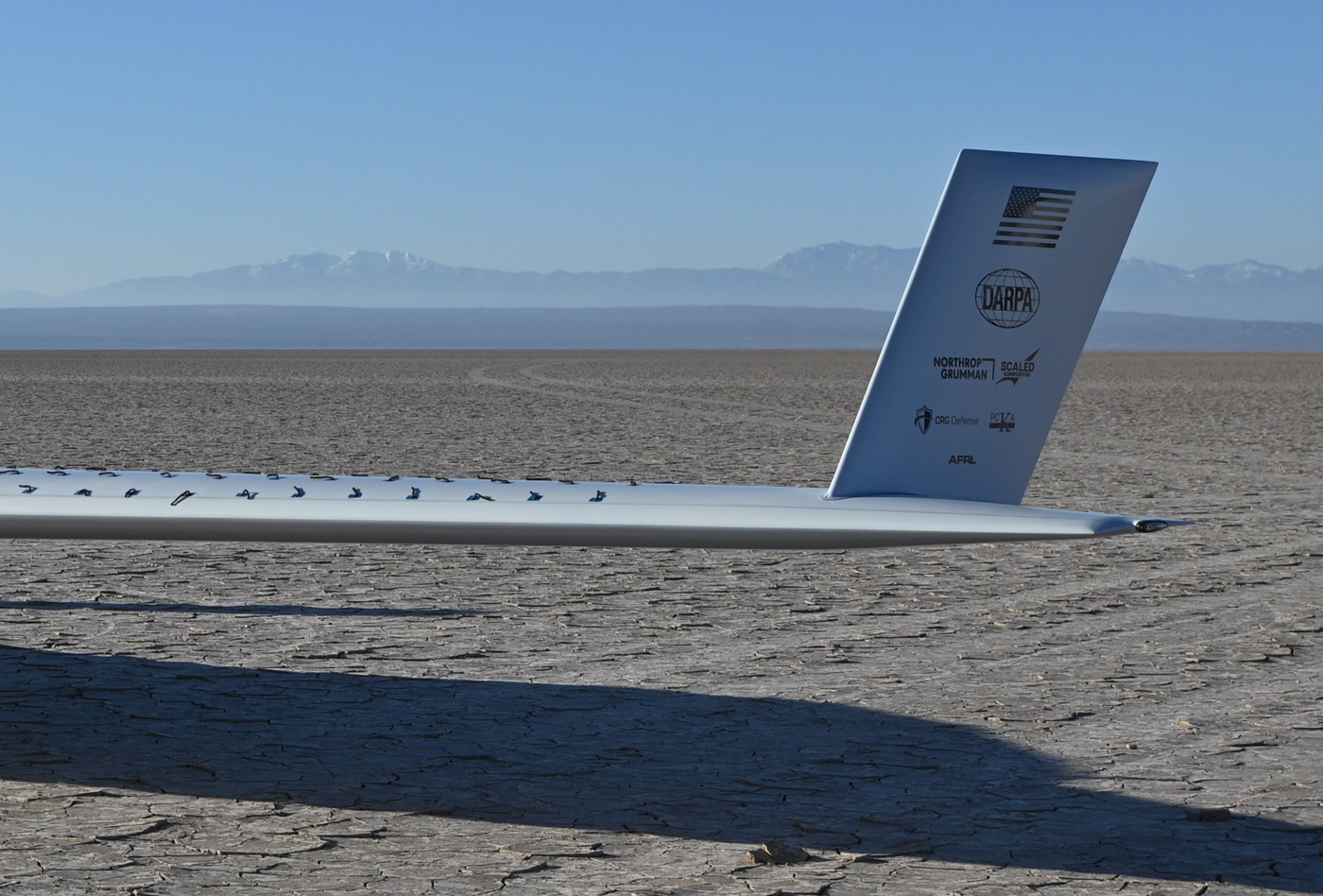
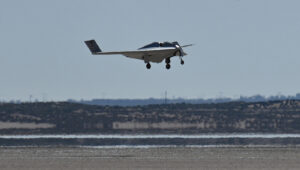
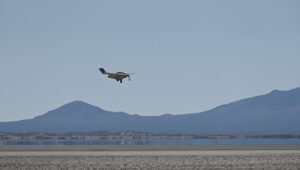
Photos: Northrop Grumman
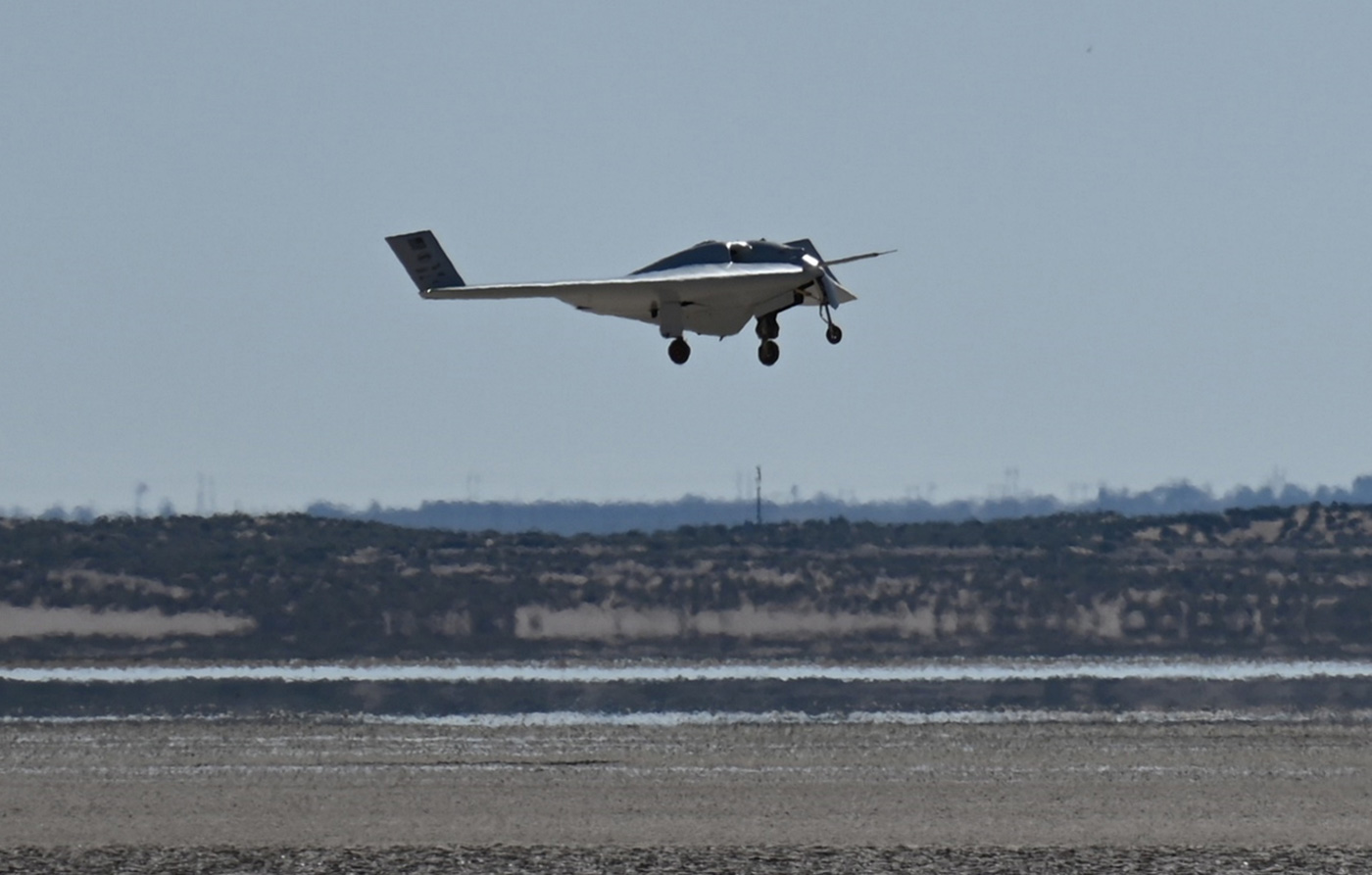
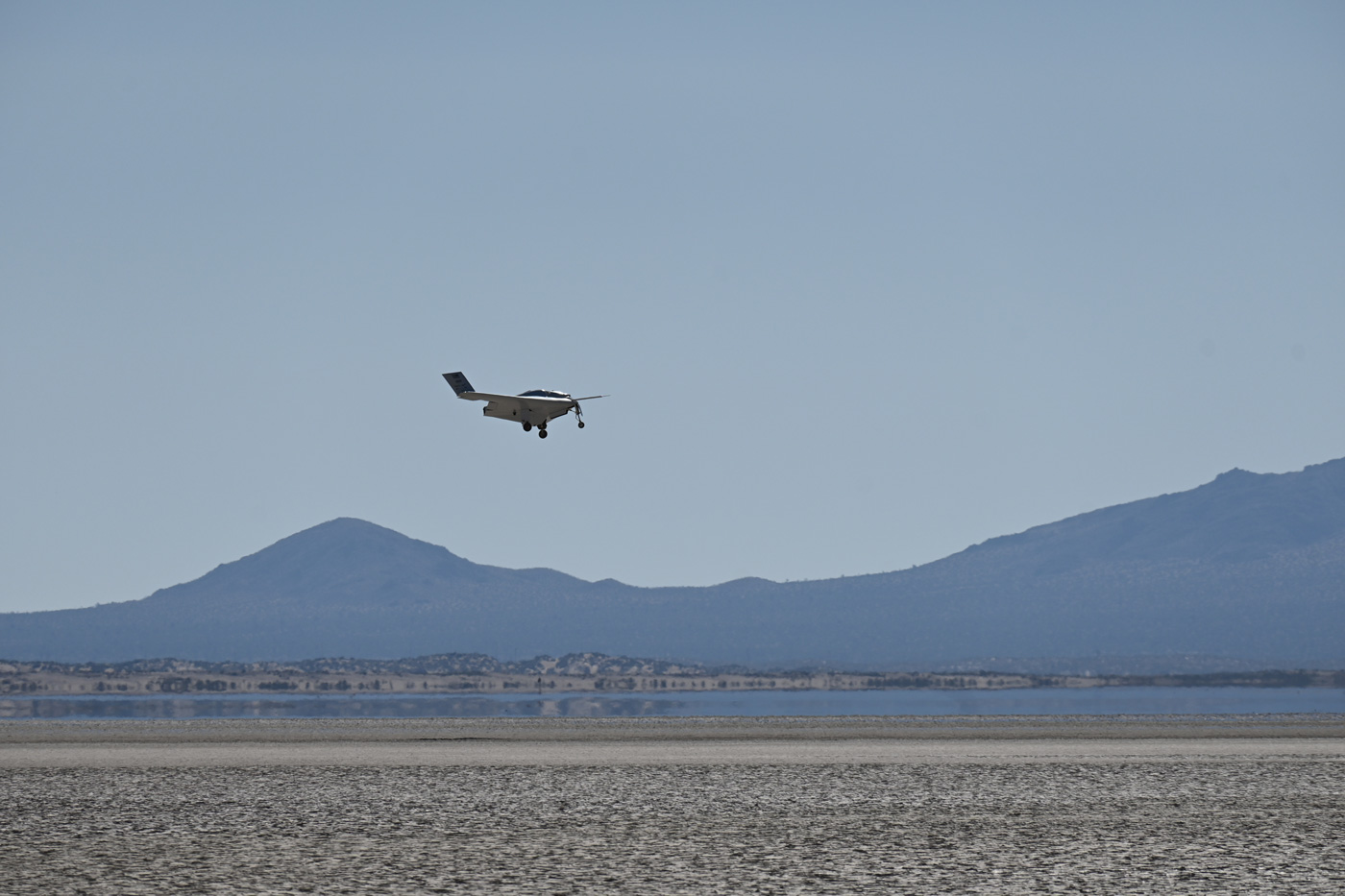
As reported, flight testing began in April this year at Edwards Air Force Base in California, in cooperation with the U.S. Air Force Research Laboratory (AFRL). Interestingly, the first flight had originally been planned for late 2024.
According to DARPA’s press release, the flight represents a step forward in demonstrating the military utility of hybrid-electric propulsion. According to the agency, hybrid-electric propulsion architectures will drive the development of revolutionary new aircraft designs, offering a combination of fuel savings, reduced emissions, and greater operational flexibility.
“This milestone is not just about a single flight,” said Lt. Col. Clark McGehee, SHEPARD program manager. “The architecture proven by the XRQ-73 paves the way for new types of mission systems and delivered effects. We look forward to advancing this technology through the flight test program and delivering new capabilities for our warfighters.”
It should be recalled that work on the unmanned aircraft under the SHEPARD program was disclosed on June 24, 2024, and Northrop Grumman presented the XRQ-73 aircraft as early as July 10 of the same year.
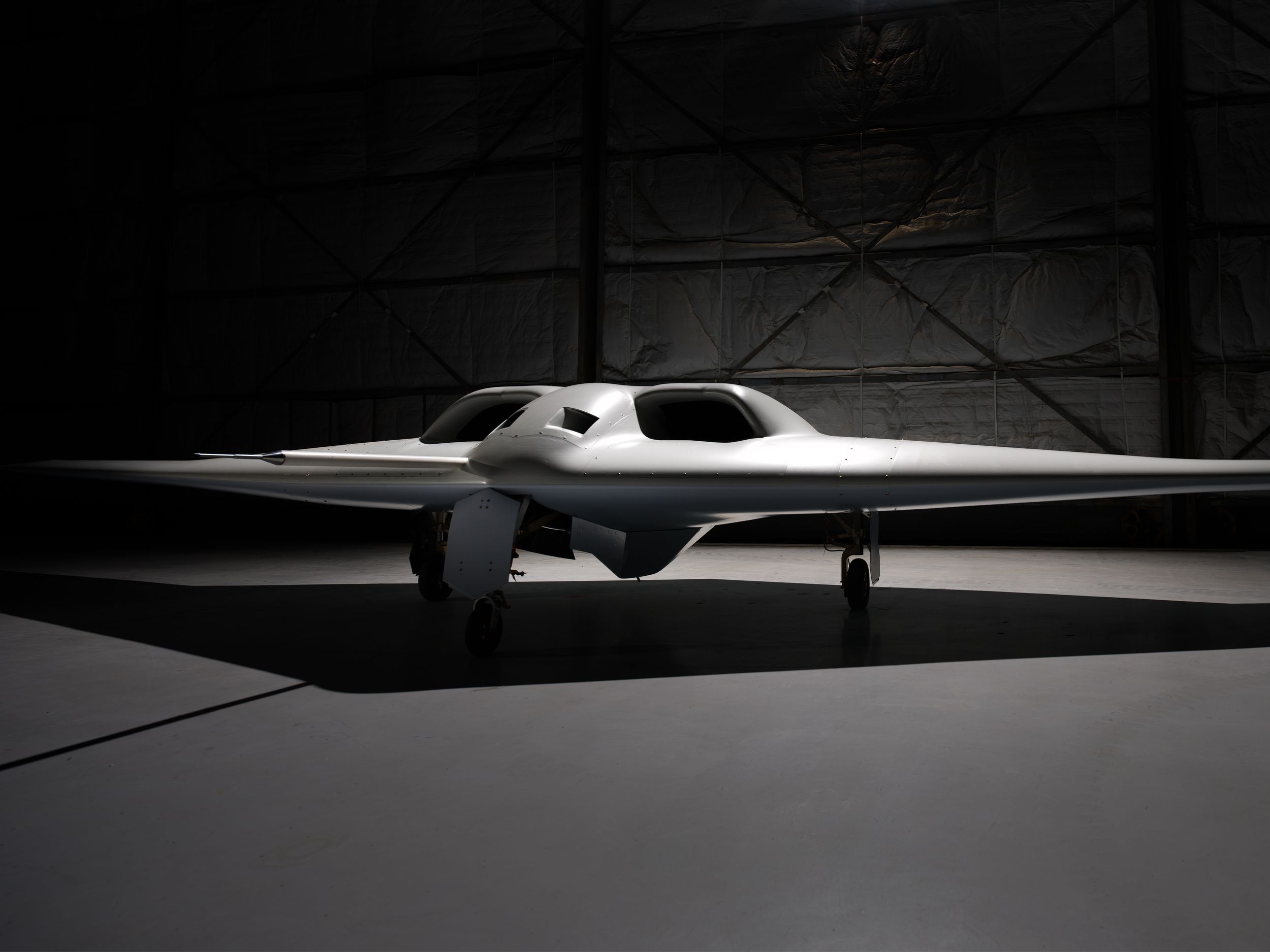 First photo of the XRQ-73 from 2024 / Photo: Alan Radecki, Northrop Grumman
SHEPARD was launched in 2021 as one of the key X-plane experimental aircraft programs with X-prime status. It is intended to use a series hybrid-electric architecture and some component technologies from the earlier XRQ-72A project under the Great Horned Owl (GHO) program, on which Northrop Grumman worked at the request of AFRL for the U.S. Intelligence Community (IC), which brings together 16 U.S. intelligence agencies. The Office of Naval Research (ONR) also became a partner in the new initiative.
The main industry contractor is Aeronautics Systems, part of Northrop Grumman, based in Redondo Beach, California, while Scaled Composites, also part of Northrop Grumman, supplied the airframe. The subcontractors are Cornerstone Research Group, Inc., Brayton Energy, LLC, PC Krause and Associates, and EaglePicher Technologies, LLC.
The XRQ-73 aircraft is a Group 3 unmanned aerial vehicle with a takeoff weight of around 567 kg, or 1,250 lb. According to the U.S. Department of Defense definition, Group 3 UAVs weigh between 25 and 600 kg, or 55–1,320 lb, can fly at altitudes from 1,067 to 54,864 m, or 3,500–180,000 ft, and have a maximum speed of 185 to 463 km/h, or 100–250 kt.
According to U.S. Department of Defense budget documents, SHEPARD was previously a much broader DARPA initiative focused on novel approaches to hybrid-electric propulsion for unmanned aircraft under the codename AGAVE, or Air-Ground Autonomous VEhicles. In 2021, 42.77 million USD was allocated for this purpose, and in 2023 another 22 million USD. No funding was allocated in 2022, nor were further funds provided for 2024 and 2025.
We recently flew the XRQ-73 hybrid-electric unmanned aircraft in collaboration with @AFResearchLab and @northropgrumman at Edwards Air Force Base, Calif.
Part of the SHEPARD program, the flight proves the military utility of hybrid-electric propulsion. ✈️⚡️ pic.twitter.com/CEO4GD7CqL
— DARPA (@DARPA) May 6, 2026
We’re moving closer to the future of next-gen military aircraft with hybrid-electric propulsion on the XRQ-73 and DARPA. https://t.co/oyvOO3s0Ar pic.twitter.com/HEFoYIiAWW
— Northrop Grumman (@NGCNews) May 6, 2026
See also: