










On Friday, May 8, 2026, U.S. company Pratt & Whitney, part of RTX, announced that it had completed a fully digital Assembly Readiness Review for the prototype XA103 next-generation three-stream turbofan engine under the NGAP, or Next-Generation Adaptive Propulsion, program, which is intended to develop a propulsion system for the sixth-generation Boeing F-47 NGAD, or Next Generation Air Dominance, combat aircraft.
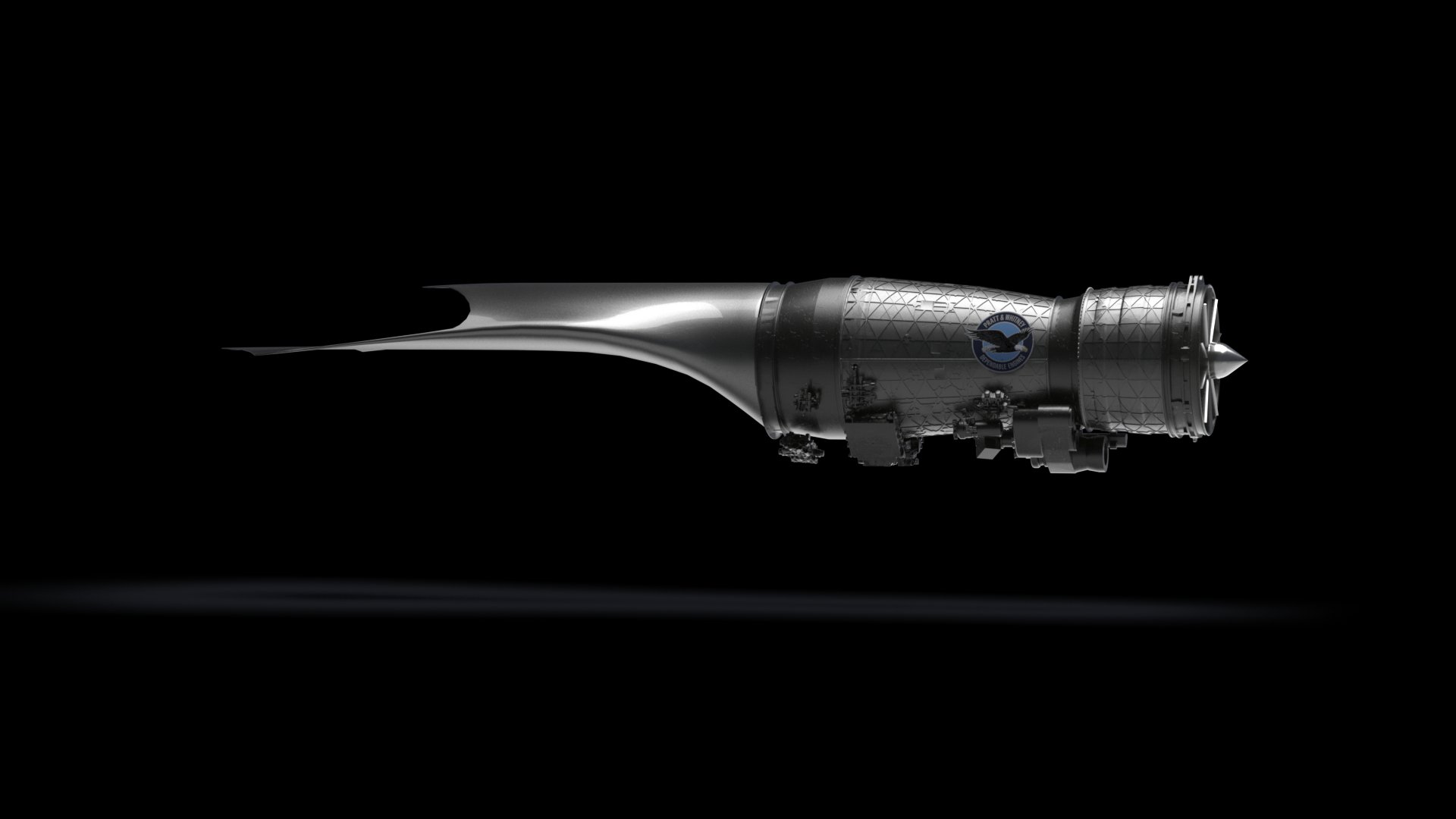 Image: Pratt & Whitney
Przegląd gotowości montażowej oznacza postęp Pratt & Whitney w przejściu od projektowania w środowisku cyfrowym do zakupu komponentów i produkcji prototypu silnika.
„This milestone demonstrates Pratt & Whitney’s investment in digital infrastructure, showcasing seamlessly integrated digital capabilities and reinforcing our strong collaboration with the U.S. Air Force,” said Jill Albertelli, president of Pratt & Whitney’s Military Engines business. „As we move forward with assembling our engine for testing, our NGAP team is simultaneously developing novel digital validation tools. The performance we expect this engine to deliver exceeds anything available today, reinforcing the critical importance of continuous improvement and stable investment in maintaining propulsion as a strategic competitive advantage.”
It should be recalled that on September 23, 2025, progress on the XA103 was reported, including the completion of the program’s detailed design review earlier that year. The prototype will be tested and refined up to a ground test expected in the late 2020s. Pratt & Whitney’s NGAP program team is therefore working with its supplier base to source the components needed to assemble the XA103.
As the manufacturer emphasizes, the three-stream turbofan engine with a variable bypass ratio will provide the F-47 with advanced survivability, low fuel consumption, and robust power and thermal management. A competing design is the XA102 engine offered by GE Aerospace, part of General Electric Co.
On January 27, 2025, the U.S. Air Force signed framework agreements with both bidders, each with a maximum value of 3.5 billion USD, for the development of the XA102 and XA103. One of the designs will ultimately be selected as the propulsion system for the F-47.
The NGAP program replaced the Adaptive Engine Transition Program, or AETP, which envisaged the development of a next-generation engine for U.S. F-35A Lightning II multirole aircraft and sixth-generation combat aircraft. Ultimately, the replacement of the F-35A engines was abandoned. Instead, modernization programs are being pursued for the F135 Engine Core Upgrade, or ECU, and the Enhanced Power and Cooling System, or EPACS. Earlier, under AETP, Pratt & Whitney tested a technology demonstrator designated XA101.
On September 22, 2025, it was reported that Boeing was building the first F-47 prototype, which is expected to make its first flight in 2028. It is only known that the aircraft’s combat radius is to exceed 1,000 miles, or 1,600 km, and that the U.S. Air Force plans to purchase more than 185 aircraft of this type. Its maximum speed is to exceed Mach 2.