




























On Tuesday, 14 April 2026, the US Missile Defense Agency (MDA), acting on behalf of the Department of Defense, signed a 475,297,523 USD contract with Northrop Grumman Systems Corp. (part of Northrop Grumman) under the Glide Phase Interceptor (GPI) program, intended to counter hypersonic threats.
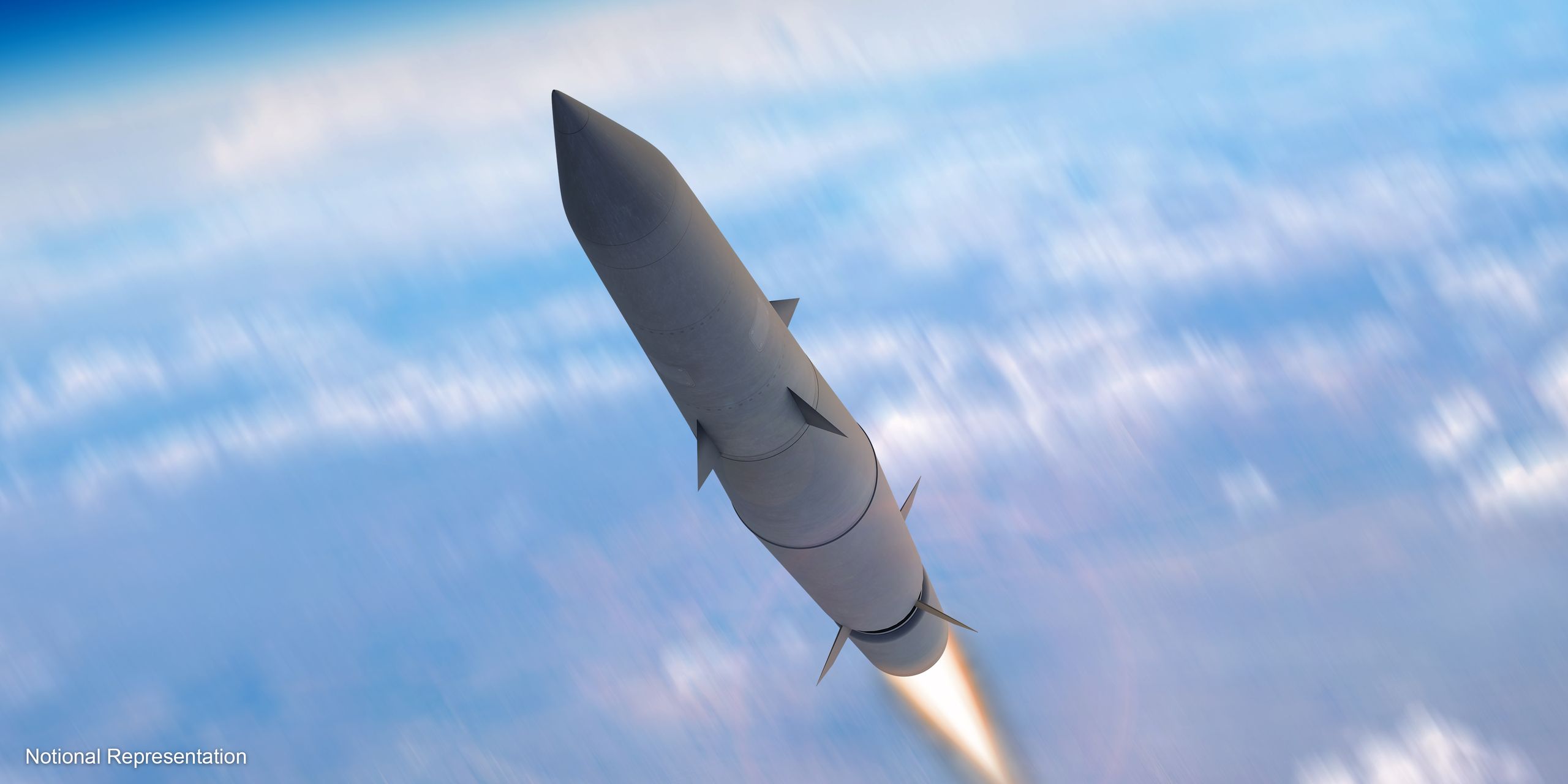 Image: Northtop Grumman
The contract, awarded in the form of a Prototype Project Other Transaction Agreement, increases total funding committed to date from 832,778,556 USD to 1,308,076,079 USD. At the time of award, the first tranche of funding in the amount of 174,133,086 USD was released.
Under this contract, the contractor will continue work on the development and refinement of the Glide Phase Interceptor design concept on an accelerated schedule. The estimated completion date is June 2028.
It is worth recalling that on 25 September 2024, the MDA announced the selection of Northrop Grumman’s bid under the regional hypersonic missile defense program in the Glide Phase Interceptor (GPI) phase, rejecting a competing bid from RTX. Initial funding was later released.
Earlier, on 15 May 2024, the MDA and Japan’s Ministry of Defense signed a formal agreement on cooperation in the development of the GPI.
The GPI program, launched in 2021, is a continuation of the 2019 Glide Breaker initiative, under which three contracts were awarded to Lockheed Martin, Boeing, and Raytheon (now part of RTX). In June and July 2022, bids were submitted by Northrop Grumman and Raytheon. Then, on 21 April 2023, the MDA received approval from the US Department of Defense to move the GPI program from the material solutions analysis phase in the missile defense system acquisition process to the technology development phase, the equivalent of Milestone A. The MDA continued maturing two GPI concepts until the decision to select Northrop Grumman’s offer for the next stage.
Under the FY2024 NDAA defense budget, lawmakers directed the MDA to achieve Full Operational Capability (FOC) by the end of 2032 and to procure no fewer than 12 GPI prototypes for testing by the end of 2029.
The system will be compatible with the architecture of the current Aegis BMD Baseline 9 missile defense system aboard Arleigh Burke-class guided missile destroyers in US Navy service, and possibly with the new ASEV destroyers in Japan as well.
Aegis BMD is intended to enable the detection, tracking, targeting, and, thanks to GPIs launched from Mk 41 VLS universal vertical launch systems, the engagement of targets with hypersonic characteristics at altitudes of around 70,000 m and at speeds above Mach 5. It is also to be compatible with the land-based Aegis Ashore Missile Defense System (AAMDS), meaning it cannot be ruled out that these missiles could eventually be deployed at Aegis Ashore Poland in Redzikowo.