
























Modern air defense is undergoing a profound transformation. Low-cost unmanned aerial vehicles are forcing militaries around the world to employ expensive combat platforms, a practice that is increasingly criticized as economically inefficient. In this context, the Iryda Plus project and the Right of First Refusal (ROFR) agreement signed on 20 February 2026 with a partner from Turkey represent an important step toward building a rational, multilayered response to UAV threats.
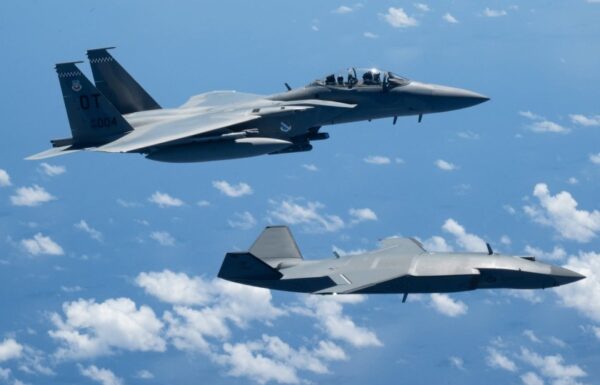
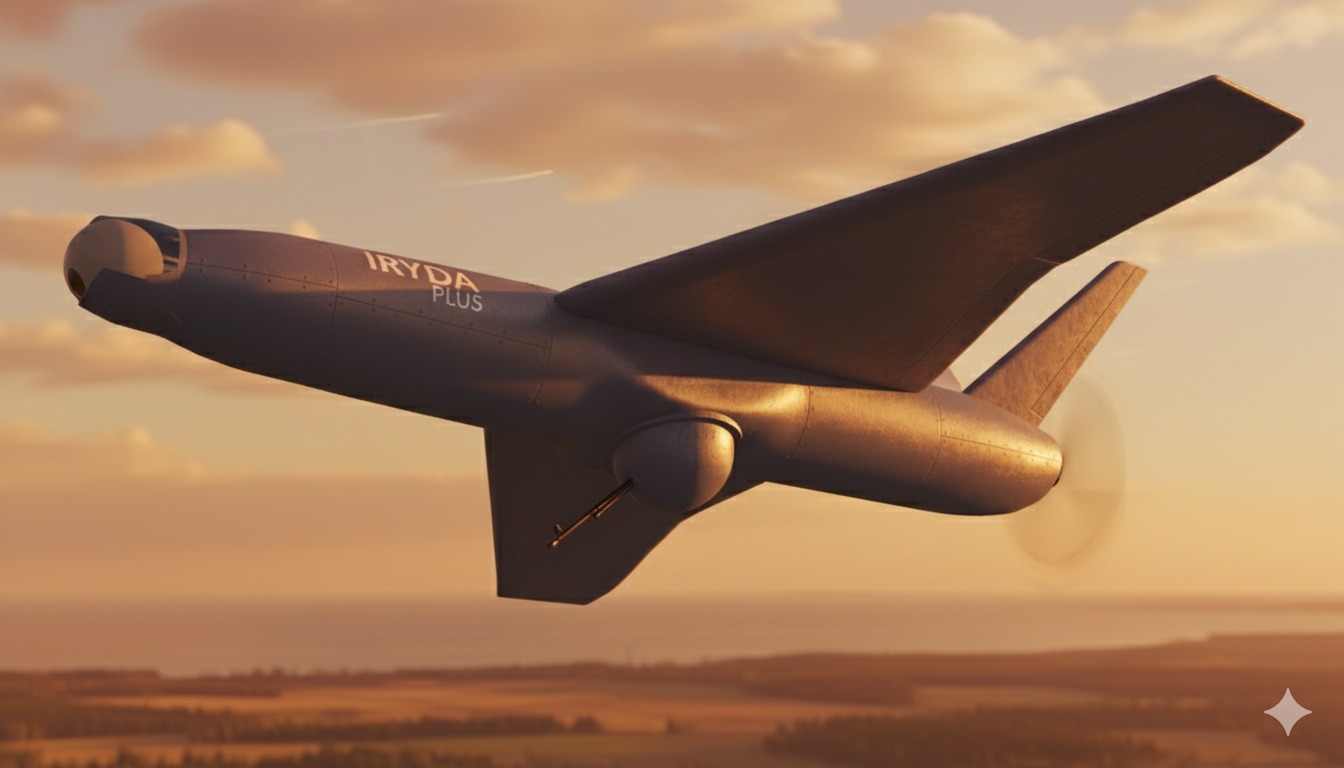 Iryda Plus is a project carried out by MBF Group in cooperation with the company Squadron and the Polish Industrial Lobby. It aims to develop Europe’s first C-UAS hard-kill fighter drone, designed to counter swarms of drones and loitering munitions / Graphics: MBF Group
The Economics of Modern Air Defense – Why New Solutions Are Needed
The modern battlefield has changed faster than many analysts were ready to admit. Low-cost unmanned aerial vehicles, such as the Shahed with a speed of around 180 km/h or the Bayraktar TB2 exceeding 200 km/h, can now force the deployment of combat platforms worth hundreds of millions of dollars. Sending a fighter aircraft worth a billion dollars to intercept a drone costing a fraction of that amount is increasingly criticized as economically inefficient. It is precisely within this gap between cost and effectiveness that space emerges for new, specialized interception systems.
The discussion about the cost-effectiveness of air defense is no longer theoretical. An hour of flight time for an F-16 costs on the order of tens of thousands of dollars, and the operational costs of the F-35 are even higher. Meanwhile, drones such as the Shahed, Orlan-10, or mass-produced loitering munitions remain relatively inexpensive and difficult to counter economically with conventional means. Very light interceptor platforms moving at speeds of 80–100 km/h are also not always able to respond effectively to targets traveling at speeds exceeding 180–220 km/h.
It is precisely in the space between expensive aviation systems and slow, improvised interceptor platforms that the concept of Iryda Plus emerges. The project envisages the development of a specialized system designed to counter medium-class unmanned aerial vehicles, including those moving at speeds of around 180–220 km/h. Rather than competing with fighter aircraft or missile systems, Iryda Plus is intended to fill a specific, economically justified operational niche. This approach aligns with the global trend toward building layered, cost-balanced defenses against unmanned aerial systems.
ROFR with a Turkish Partner – Validation and International Positioning of Iryda Plus
On 20 February 2026, MBF Group signed a Right of First Refusal (ROFR) agreement with a technology partner from Turkey concerning the Iryda Plus system. In practice, this means reserving priority rights to purchase a specified number of systems, while not creating an obligation to acquire them at this stage. This type of instrument is not merely a letter of intent – it constitutes a formal contractual confirmation of operational interest in the project. For a project still in the development phase, this is an important signal that its concept is seen as realistic and potentially useful in an international environment.
The choice of Turkey as the destination for the first reservation is not accidental. It is a country with the second-largest army in NATO and at the same time one of the most dynamically developing markets for unmanned technologies in the world. Platforms such as the Bayraktar TB2 have become a global symbol of the effective use of drones in both asymmetric and conventional conflicts. Turkey is also a natural gateway to the markets of the Middle East and other regional states, where UAV systems and counter-drone solutions are among the key modernization priorities.
The right of first refusal for Iryda Plus should be viewed not only as a commercial instrument but, above all, as a form of market validation of the project. In practice, it means that a partner operating in one of the most advanced UAV markets has recognized the system as worth securing priority rights for a potential deployment. Such decisions are usually made after analyzing the concept, operational parameters, and cost model. As a result, Iryda Plus gains not only a technological dimension but also strategic international positioning.
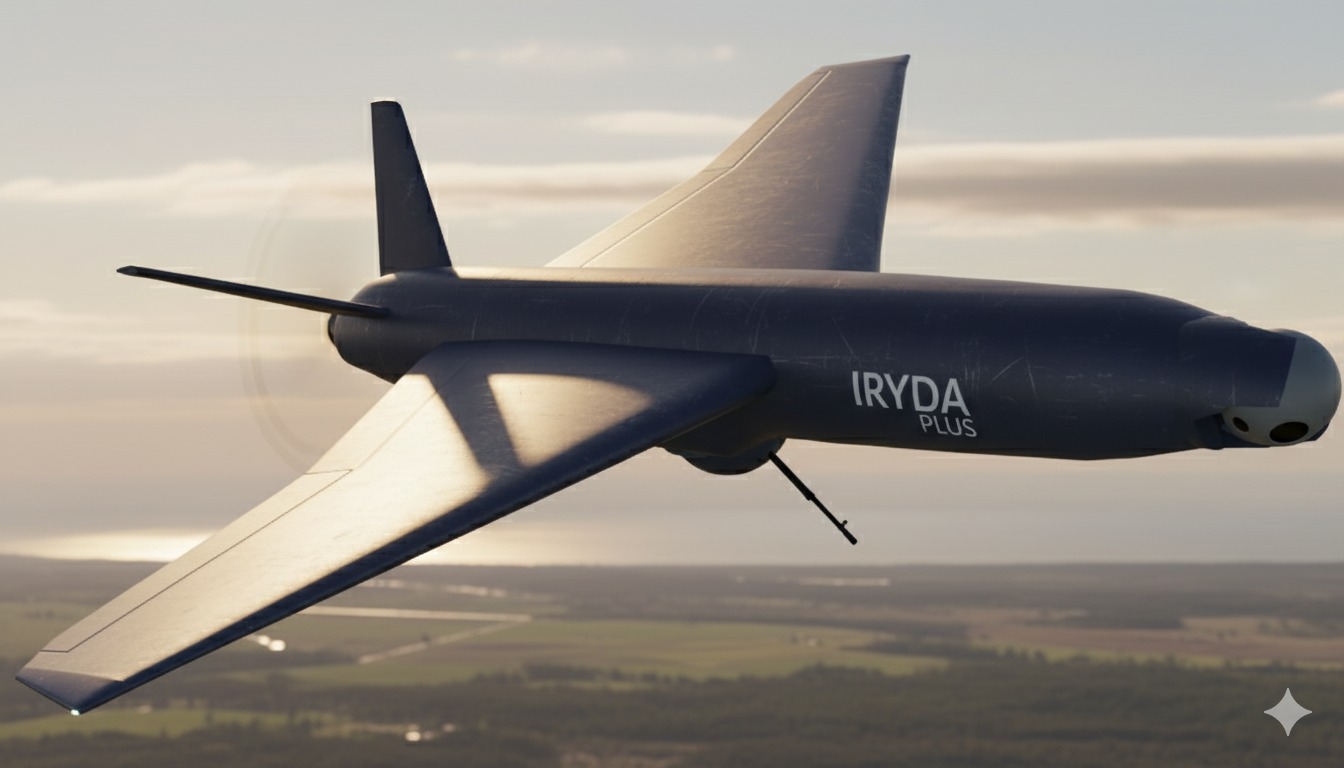 The technical assumptions for Iryda Plus include a maximum/pursuit speed of 250–280 km/h, a cruise/patrol speed of 180–200 km/h, and a minimum speed of 50–60 km/h. The system is expected to have an endurance of 8–10 hours and a payload capacity of 15–20 kg. Its armament consists of a 7.62 mm carbine mounted in a 360° rotating pod, along with a TAS (Target–Aim–Shot) system supported by artificial intelligence.
From a capital market perspective, the ROFR agreement also has a structural dimension. For entities analyzing the possibility of financial participation in the project – whether through a targeted share issuance, bonds, or an industry partnership – the formal reservation of systems by a foreign partner represents an important element confirming the commercial potential of the solution. In practice, this means that the project is no longer operating solely in the conceptual sphere but is beginning to be embedded in real international relationships. Such signals often become one of the key arguments in discussions with institutional investors and funds specializing in the dual-use and defense sectors.
At the current conceptual and development stage, based on market analysis of specialized systems in this class, the estimated value of a complete Iryda Plus package – including a ground station, three interceptor platforms, a training package, technical support, and service support – could fall within the range of several million euros, depending on configuration and equipment scope. In practice, this represents a cost many times lower than the price of a single combat aircraft platform or a missile system used to neutralize unmanned aerial vehicles. The final valuation will depend on user requirements and the specifics of deployment, but even now the project is positioning itself as an economically rational solution within its class.
The MBF Group Ecosystem – From Technology to a Scalable Revenue Model
Iryda Plus has been designed as a system, rather than a one-off product. This means that, beyond the delivery of platforms and a ground station, a key role will be played by operator training, technical support, maintenance inspections, software updates, and potential hardware upgrades. In the specialized systems sector, it is precisely the service and training component that builds long-term relationships with users and ensures the stability of the operational model. Such an approach increases the predictability of the project’s operation and enhances its attractiveness from an investment perspective.
Parallel to the ROFR agreement, MBF Group is developing technological cooperation with its Turkish partner in the field of UAV components and solutions. This includes, among other things, access to selected unmanned platforms, flight controllers (FCU), and GCS-class software used for mission planning and monitoring. Building such a technological backbone strengthens the design and operational capabilities surrounding Iryda Plus while also enabling the expansion of offerings in the civilian and industrial applications of unmanned systems. It is precisely this project and technological synergy that forms the foundation for the further scaling of the venture.
It is possible that during the Drone World Expo 2026 (3–5 March), a personal meeting will take place with the management and engineers of Shark Aviation, with the aim of signing another agreement within the projects carried out by the MBF Group – Squadron ASE – Polish Industrial Lobby consortium. At the same time, the parties are analyzing and negotiating the possibility of signing an annex to the ROFR, which could in the future clarify the financial parameters of cooperation or the expected pricing range for the Iryda Plus system. Any decisions in this regard will depend on project progress and further arrangements between the partners.
Iryda Plus is not being developed as a response to a temporary trend, but rather as an attempt to rationalize the costs and operational logic of modern air defense. The ROFR agreement with the Turkish partner demonstrates that the project is beginning to operate within a real international operational context. For MBF Group, it represents another step toward building a Polish solution that could find its place within the global ecosystem of dual-use technologies. In a world where effectiveness increasingly must go hand in hand with economic efficiency, projects like this are no longer an option—they are becoming a necessity.
See also:
- MBF Group and Rohde & Schwarz Polska to Pursue Joint Technology Projects
- MBF Group signs strategic agreements with Warsaw University of Technology and Franklin
- MBF Group and Lviv Polytechnic University sign UAV and C-UAS R&D agreement
- MBF Group Launches Unmanned Cargo Transport Project Mallard
- MBF Group accelerates implementation of Iryda Plus project