





















On Saturday, January 24, 2026, France 24 published an article addressing the issue of the French Armed Forces’ adoption of combat unmanned systems in light of Ukraine’s wartime experience. In this context, it was revealed that the French company EOS Technologie has delivered a number of Rodeur 330 combat-reconnaissance unmanned aerial vehicles to the battlefield in eastern Ukraine.
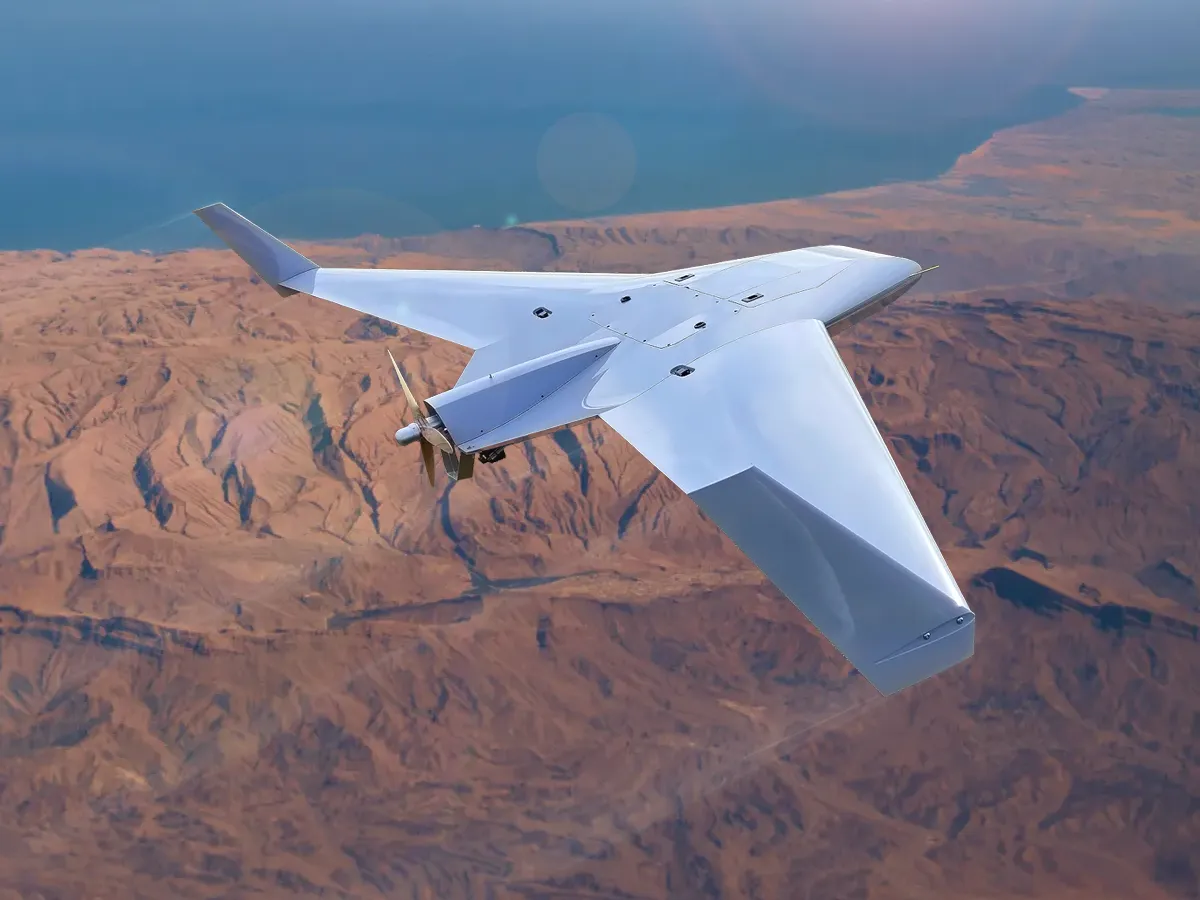 Photo: EOS Technologie
The article focuses on an interview with Hadrien Canter, co-founder and chief executive officer of Alta Ares, a French start-up registered in Ukraine. He emphasized that Russia is already producing 1,000 strike drones per day, which now constitute the majority of combat assets used during mass drone-and-missile attacks, while Ukraine needs around 20,000 drones per month to respond adequately. “That is a huge number,” Hadrien Canter stressed.
The first Franco-Ukrainian forum on the joint production of combat unmanned systems, held on November 17, 2025, in the presence of Presidents Emmanuel Macron and Volodymyr Zelensky, was intended to help Ukraine reach such a scale, Canter added. Interceptor drones produced by Alta Ares have increased effectiveness from 30% to 65%, with the start-up aiming for 85%—a level comparable to that of the U.S. Patriot missile system.
However, interceptor drones are not the whole picture. Later in the article, it is reported that the French group EOS Technologie has delivered the first Rodeur 330 drones to Ukraine, marking the first confirmation of such deliveries. The shipments were confirmed to the AFP news agency—cited by France 24—by the company’s president, Jean-Marc Zuliani. The drones can perform both reconnaissance and strike roles.
“The Ukrainians have gained unique experience worldwide,” Jean-Marc Zuliani stressed, adding that they now “need technology more than platforms themselves. For Western manufacturers, this represents an opportunity to test aerial systems in real combat conditions,” he added.
As he noted, the French government is “asking us for mass production, and automotive manufacturers are capable of producing very large series within much shorter timeframes,” Jean-Marc Zuliani said. He added that EOS Technologie has signed a partnership agreement with “a major player in the automotive industry, whose name he did not disclose, capable of producing 10,000, 100,000, or even 1 million units by 2030 to meet France’s needs.”
Rodeur 330
According to information provided by EOS Technologie, the Rodeur 330 can remain airborne for up to five hours, flying at a speed of 100 km/h while carrying a 4 kg payload over a distance of up to 500 km. The aircraft is launched from a pneumatic catapult, and preparation takes just three minutes for two trained soldiers (with operator and maintenance training lasting one week).
The aircraft has a wingspan of 3.3 m and a maximum takeoff weight of 25 kg. Its minimum speed (stall speed) is 80 km/h, while the maximum speed is 120 km/h. The maximum operating altitude is 5,000 m. The Rodeur 330 flies along preprogrammed waypoints and automatically homes in on its target.
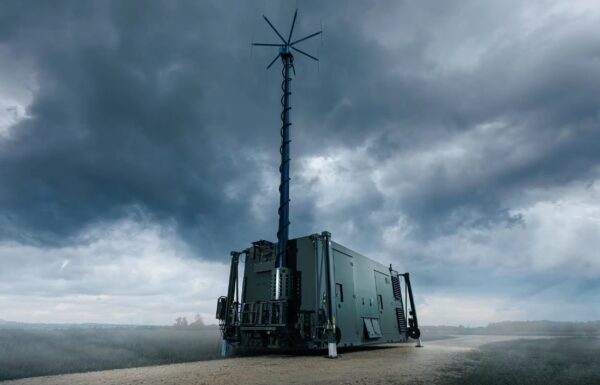
One system is transported in a case measuring 155 × 85 × 56 cm. It consists of a single propeller-driven airframe, two Getac V110 laptops and two gamepads for control, a radio-control unit for the aircraft, two battery chargers powering the drone, and an antenna mast with transmitters offering short-, medium-, long-, and very-long-range coverage. The cases are transported in a towed, twin-axle trailer pulled by an off-road vehicle or a van-type vehicle, which then serve as mobile command posts.
As for payloads, the company offers a range of electro-optical sensor heads: the 180 g Colibri 2, the 350 g Nighthawk UZ II, the 640 g Raptor, as well as the heavier 6 kg eOPIC 8, which is not suitable for use on the platform discussed. It is not clear what type of warheads are being carried, but given the weight of the listed electro-optical payloads, their mass is estimated to range from approximately 3.36 to 3.82 kg.
The company also offers two other drones: the Strix 500 reconnaissance UAV with a range of up to 80 km and an endurance of up to four hours carrying a 1.5 kg payload, and a jet-powered variant of the discussed model, the Veloce 330, with a reduced range of up to 100 km, an endurance of up to 40 minutes, but capable of reaching speeds of up to 200 km/h.
It is worth noting that in June 2025, the Ukrainian Armed Forces received the then-new MV-25 OSKA loitering munition, whose development involved EOS Technologie.