

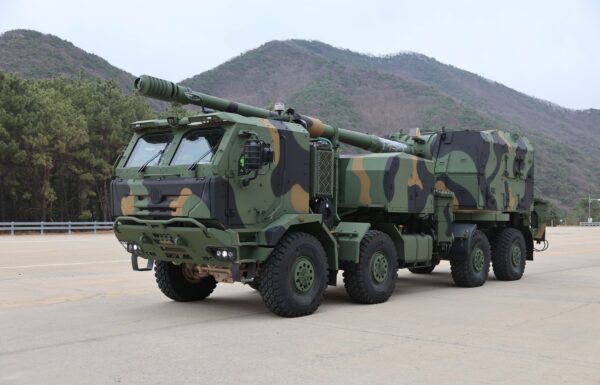



























On Wednesday, 1 April 2026, the European Commission (EC) announced that it is taking preparatory steps toward providing Ukraine with 90 billion EUR in financial support in the form of a loan. The loan is intended to secure essential budgetary support and accelerate urgent military procurement for the Armed Forces of Ukraine in 2026 and 2027, including an increase in drone production in the country.
 Photo: European Comission
A package of legislative proposals has been adopted to ensure continued financial support for Ukraine’s budget in 2026 and 2027. This marks an important milestone in the EU’s strong support for the country’s defense against Russian aggression.
The legislative package includes:
- a new proposal establishing a Ukraine Assistance Loan of 90 billion EUR under Article 212 TFEU;
- a new proposal amending the Ukraine Facility under Article 212 TFEU, as one of the instruments for implementing budget support for Ukraine;
- a new proposal amending the regulation on the multiannual financial framework under Article 312 TFEU, in order to make it possible for the Ukraine loan to be backed by the EU budget.
In December 2025, the European Council agreed to provide Ukraine with 90 billion EUR in robust budgetary and military support over the following two years. This instrument was named the Ukraine Support Loan.
The proposed support will be divided into two components, with around two-thirds, or 60 billion EUR, allocated to military assistance, while the remaining one-third, corresponding to 30 billion EUR, will be provided as general budget support. It will be split equally between 2026 and 2027, with 45 billion EUR in each year, including 16.7 billion EUR annually for the budget and 28.3 billion EUR annually for the defense industry.
The support will help Ukraine strengthen its defense capabilities and ensure the continued functioning of the state and essential public services, while also contributing to Ukraine’s resilience and its closer integration with the European defense industrial base.
Brussels reserves the right to use Russian assets frozen in the EU to repay the loan, in accordance with EU and international law. The reparations loan, proposed on 3 December 2025, remains valid.
The agreement was concluded under enhanced cooperation, a mechanism that allows EU member states to cooperate in specific areas when it proves that the EU as a whole is unable to achieve the objectives of such cooperation within a reasonable period.
 Photo: 33rd Separate Mechanized Brigade of the Ground Forces of the Armed Forces of Ukraine
Support for Ukraine will be financed through common EU borrowing raised on the capital markets, in line with the European Commission’s original proposal among the available financing options. The loan for Ukraine will be guaranteed by the EU budget “headroom,” as is the case with other financial assistance programs for Ukraine implemented since 2023, such as Macro-Financial Assistance+, the Ukraine Facility, and the macro-financial assistance loan under the G7-led Extraordinary Revenue Acceleration (ERA) Loans initiative.
Based on the decision of the European Council, the European Commission immediately adopted a proposal for a Council decision authorizing enhanced cooperation in order to establish the loan for Ukraine.
Drone production
As a country at war, Ukraine’s ability to defend its territory depends on the rapid availability of key military capabilities in the required quantities and within very short timeframes. Accordingly, the European Commission also adopted a decision allowing Ukraine to apply derogations in drone procurement. This will support preparations for the first urgent defense orders under the instrument, while additional product roadmaps covering other military systems, including missiles and ammunition, are expected in the coming months.
Next steps
The legislative proposals have been submitted to the European Parliament and the Council in order to launch the legislative process for their consideration and adoption. For the European Commission to begin providing financial support to Ukraine in the second quarter of 2026, in line with the European Council agreement reached in December last year, these acts must be adopted swiftly.
Once this has been achieved, the European Commission will proceed with the adoption of the relevant implementing decisions and will work closely with the Ukrainian authorities to put in place the necessary arrangements so that the Commission can make the first disbursement of the loan.
As with other EU financial support mechanisms for Ukraine, this package will be based on strong conditionality mechanisms. These include measures aimed at strengthening the rule of law and combating corruption, as well as promoting economic resilience and sustainable development, as set out in the Ukraine Plan, with the first component to be provided under macro-financial assistance.
Background
Since the start of Russia’s full-scale aggression against Ukraine on 24 February 2022, the EU and its member states have provided Ukraine and the Ukrainian people with total support amounting to 195 billion EUR, including 3.7 billion EUR from proceeds generated by frozen Russian assets – more than anyone else.
The support package presented on 1 April this year covers two-thirds of Ukraine’s total financing needs for the next two years, according to the assessment of the International Monetary Fund (IMF). Therefore, continued and coordinated support from international partners remains essential, including the timely fulfillment of the commitments undertaken by the G7 for 2026 and the years beyond, in particular under the G7-led ERA Loans initiative.