
























On Tuesday, April 21, 2026, President Donald Trump’s request for the defense budget under the FY2027 National Defense Authorization Act (NDAA) was made public during a briefing at the US Department of Defense. The administration wants to spend a record 1.5 trillion USD on the military next year, of which 1.15 trillion USD would form the main discretionary budget, while 350 billion USD would be mandatory reconciliation spending required by Congress and not subject to the regular annual legislative process. These funds could be shifted into future years.
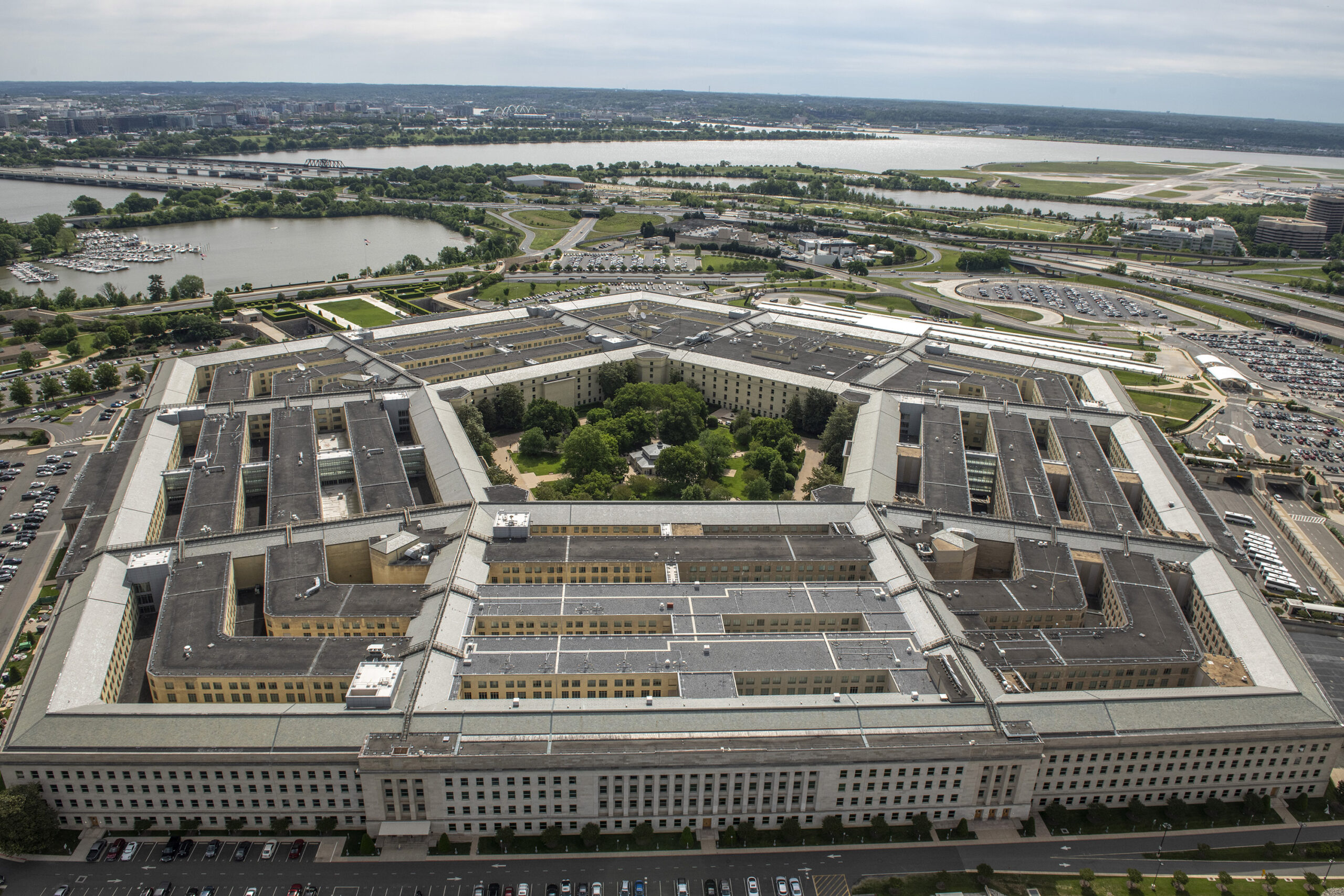 Photo: Staff Sgt. Brittany A. Chase, USAF
As emphasized, the funding will be allocated to supporting service members and their families, including pay raises; ensuring national security; modernizing military equipment; and expanding the defense industrial base. This represents a 42% increase compared with this year’s budget, which stands at 838.7 billion USD.
Jules W. Hurst III, acting Under Secretary of Defense (Comptroller)/Chief Financial Officer, said this year’s budget request places a major emphasis on purchasing and investing in weapons systems. Around 52% of the funding, or more than 750 billion USD, is to be allocated to the procurement of ammunition, aircraft, unmanned systems, vehicles, ships, and space assets. He also announced major investments in the maintenance, renovation, and modernization of military infrastructure facilities, worth 57 billion USD, as well as investments in artificial intelligence and the development of database infrastructure.
The Department of the Army’s budget will increase by 23.9%, the Department of the Navy’s by 24.3%, and the Department of the Air Force’s by 33.6%, while overall Department of Defense funding will rise by 22.6%. 21 billion USD, will be allocated to ammunition, counter-drone technologies, and advanced unmanned systems, such as MQ-25A Stingray unmanned aerial refueling aircraft.
More than 100 billion USD, will be allocated to strengthening the domestic defense industrial base, including both major corporations and small and medium-sized enterprises that form critical supply chains. Further seven-year framework agreements are planned for the purchase of key ammunition, which will not only secure deliveries but also ensure that smaller companies invest in expanding production lines. The increased spending is expected to create 800,000 new jobs.
 Photos: Navy Petty Officer 1st Class Alexander Kubitza
Space Force Gen. Steven P. Whitney, Director for Force Structure, Resources, and Assessment at the Department of Defense, added that the FY2027 budget request includes 71.4 billion USD for sustaining and modernizing the nuclear triad: 16.2 billion USD for the next-generation Columbia-class strategic nuclear-powered submarines under the Ohio Replacement Submarine program; 6.1 billion USD for B-21A Raider strategic bombers under the Long Range Strike-Bomber (LRS-B) program; 4.6 billion USD for LGM-35A Sentinel intercontinental ballistic missiles under the Ground Based Strategic Deterrent (GBSD) program; and 1.5 billion USD for AGM-181A strategic cruise missiles under the Long-Range Stand-Off (LRSO) program. In addition, 20.2 billion USD will be allocated to the Nuclear Command, Control, and Communications (NC3) architecture.
A further 65.8 billion USD will be allocated to the purchase of 18 combat ships – including the first Trump-class missile battleship and PAC-3 MSE missiles for Arleigh Burke-class guided-missile destroyers – and 16 support ships under the so-called Golden Fleet initiative. This is the largest shipbuilding request since 1962. The carrier-based sixth-generation F/A-XX aircraft program will continue.
Another 8.7 billion USD will go toward investments in the maritime industrial base and shipyard infrastructure, including seven private shipyards, four public shipyards, and numerous so-called Tier 2 private shipyards. The next-generation multilayer missile defense program SHIELD, or Scalable Homeland Innovative Enterprise Layered Defense, more widely known as Golden Dome for America, will also continue.

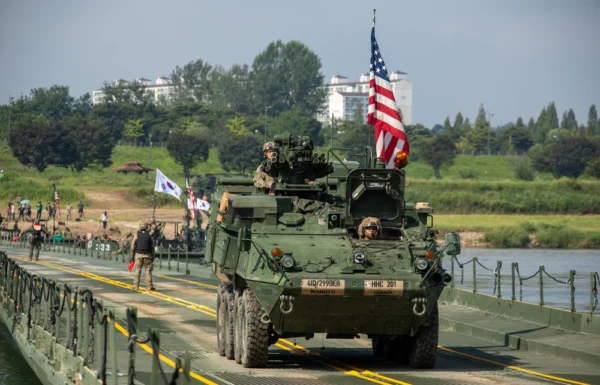
For the US Army, the FY2027 budget proposal includes funding to expand production capacity and build stockpiles for MIM-104 Patriot and THAAD air and missile defense systems, GMLRS precision-guided munitions, and PrSM ballistic missiles for rocket artillery, totaling 31.8 billion USD. It also includes 65 billion USD, for the procurement of vehicles, helicopters, and ammunition for them. Of this amount, 3.2 billion USD, is allocated to the AMPV and XM30 programs and the development of the M1 Abrams, while 2.2 billion USD, is earmarked for MV-75 Cheyenne II tiltrotor aircraft.
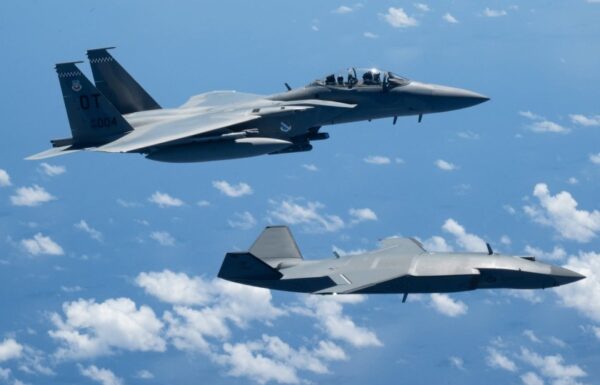
For the US Air Force (USAF), the budget includes 102 billion USD. This covers, among other items, an increase in production of Lockheed Martin F-35 Lightning II multirole aircraft to 85 units, compared with 47 in FY2026, as well as an increase in production of Boeing KC-46A Pegasus aerial refueling aircraft. Further investments have also been announced in the Boeing F-47 sixth-generation air-superiority aircraft under the Next Generation Air Dominance (NGAD) program, along with the purchase of 24 additional Boeing F-15EX Eagle II multirole aircraft, and 145 more in subsequent years, raising the total fleet to 267.
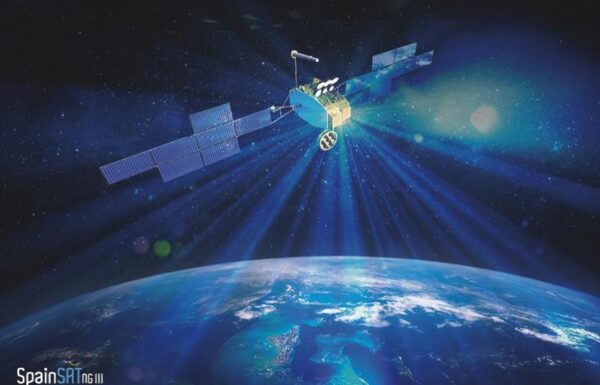
The Space Force will receive 75 billion USD. This will cover 31 launch vehicle missions, including 13 billion USD, for the Space-Based Infrared System (SBIRS) early-warning system, two GPS GNSS satellites and their supporting infrastructure; 5.9 billion USD, for satellite communications systems; 7.7 billion USD, for space-based airborne moving-target indication capabilities; and 3.1 billion USD, for investment in a next-generation space data network.
In cybersecurity, more than 20 billion USD, is planned for the protection of federal systems, critical infrastructure, and supply chains across all domains.
As regards service members’ living conditions, the proposal includes investments in housing and pay raises of 7% for military personnel in grades E-5 and below, from Private to Sergeant; 6% for personnel in grades E-6 to O-3, from Staff Sergeant to Captain; and 5% for personnel in grade O-4 and above, from Major upward. In addition, the personnel strength of the US Armed Forces will be increased by 44,000 troops from the current level of 1,340,000, which itself represented an increase of 30,000 compared with 2025.
Another 45.7 billion USD, will be spent on the military health care system, which provides services to around 9.5 million beneficiaries: uniformed service members, military retirees, and their families. This represents a 5% increase.
More than 190 billion USD, will be allocated to military exercises, a 20% increase.
Details of the presidential FY2027 NDAA proposal.