


























One of the most important aspects of warfare is information. The ability to transmit data quickly and securely — in other words, communication — is crucial. Without efficient and secure data transfer, modern automated command and battle management systems simply cannot function. Disrupting communication or blocking data exchange can significantly hinder, and in many cases even prevent, effective military operations. Recent events — specifically, the ongoing war in Ukraine — have shown how political constraints can affect the ability to use foreign-supplied weaponry. This raises an important question: to what extent can, and should, a country rely on imported products? This question is especially relevant when it comes to command and communication systems — the so-called nervous system of the army.
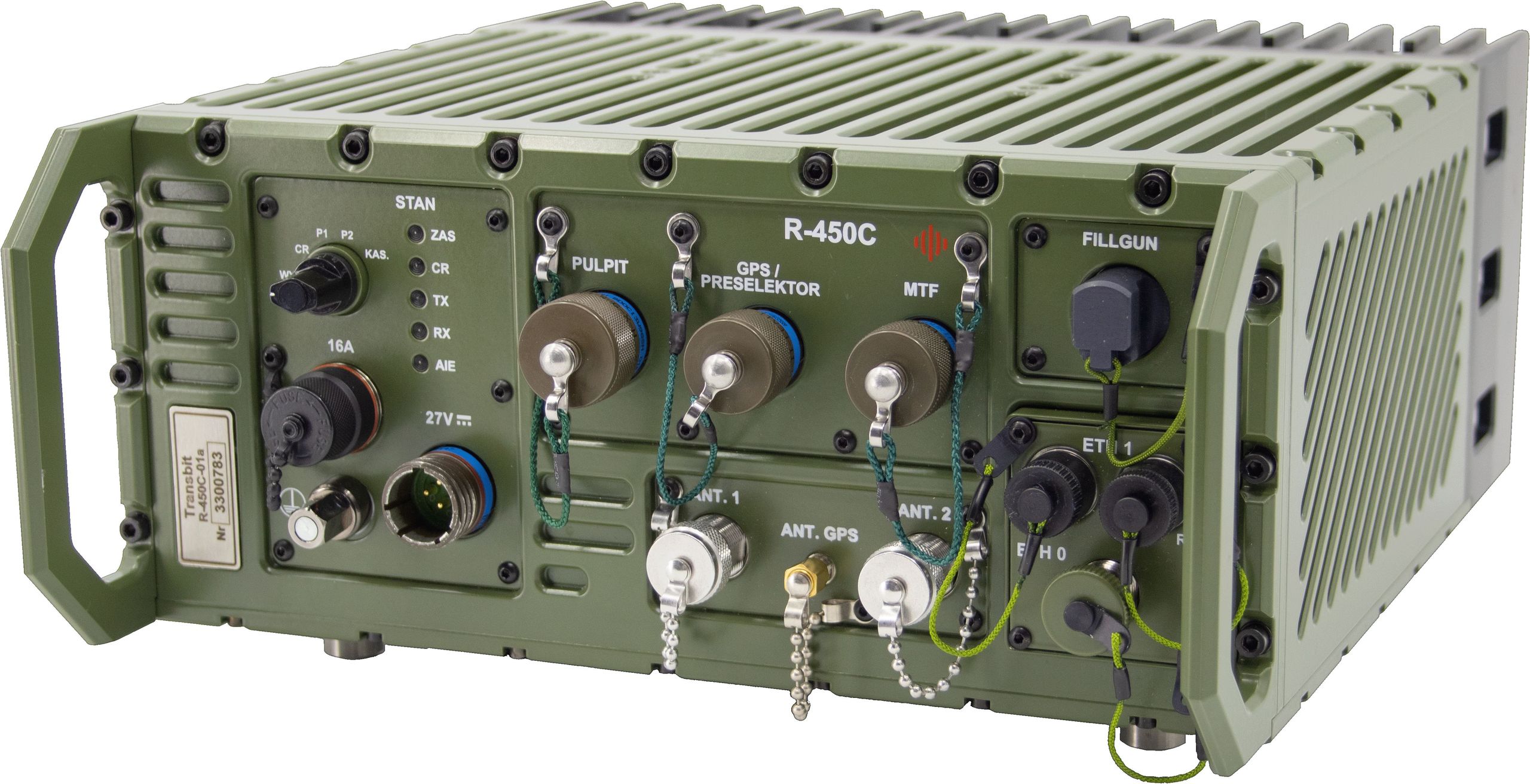 Broadband digital radio station R-450C, which was used in the development of the Command System for the Naval Missile Unit. It also served as the foundation for the entire communication system in the Pilica air defense missile and artillery system / Photo: Transbit
In Poland, one of the leading companies specializing in the production of communication systems is Transbit Sp. z o. o. (LLC). The company’s devices are designed from the ground up by its in-house team of engineers, electronics specialists, and software developers. Transbit’s flagship communication solutions currently include the R-460AM-2 radio relay, based on Software Defined Radio (SDR) technology, and the broadband R-450C radio station. Along with other network devices offered by the company — such as AC-30IP digital communication consoles, SUS-24-01 tactical servers, RP-201-01 routers, SP-110C-01 switches, and VoIP (Voice over IP Network) communication exchanges — these systems form the backbone for building integrated communication networks. In projects carried out for the Polish Armed Forces, Transbit provides the complete communication and ICT (Information and Communications Technology) infrastructure. This ensures that the Polish state and its military have full access to the technology, as well as the ability to further develop and adapt the equipment to the needs of the Polish soldier (MSPO 2024: Concept of the New Mobile Communication Node by Transbit).
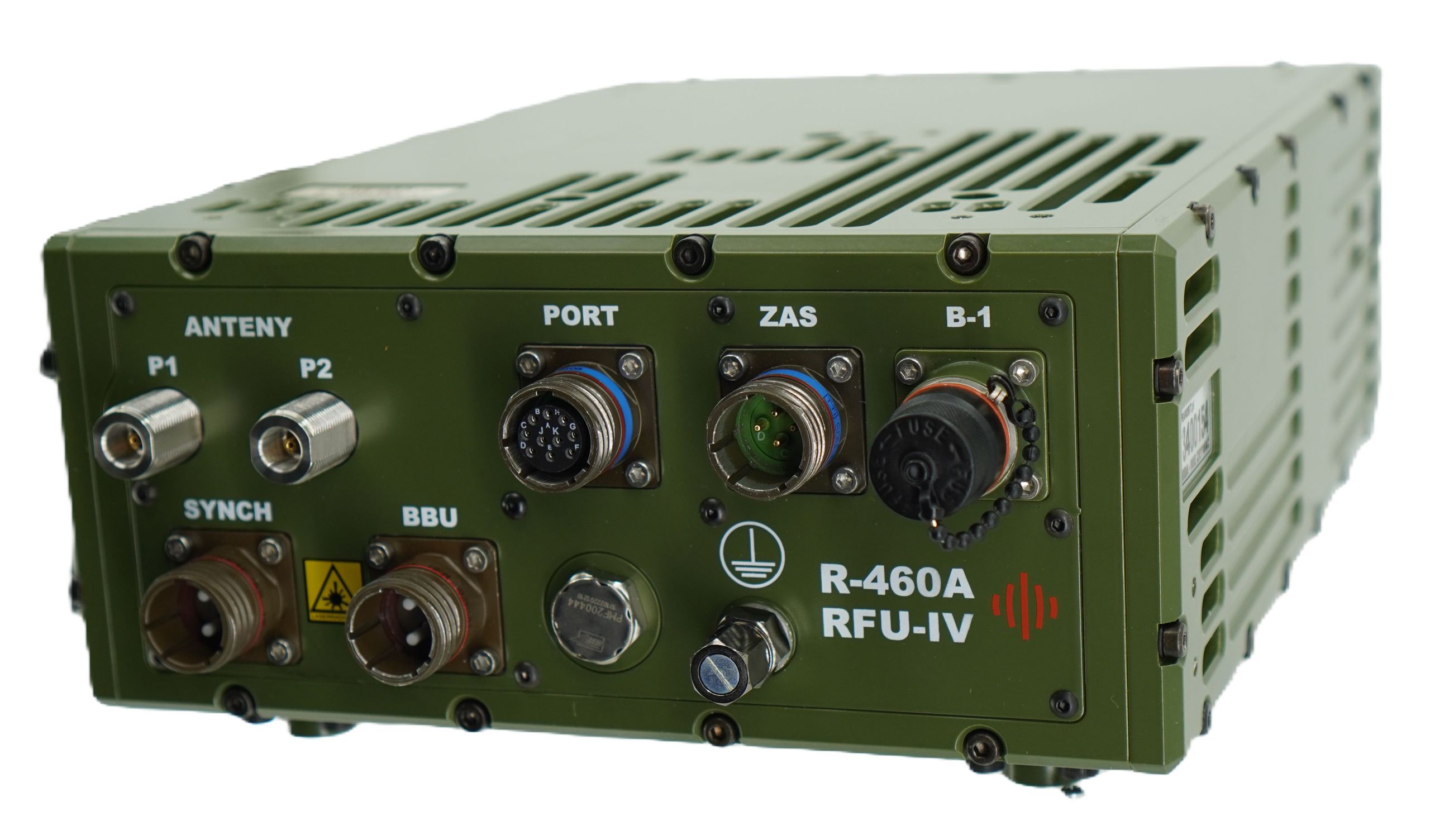
The first of the mentioned devices — the R-460AM-2 radio relay — is part of the MCC1 mobile communication nodes used in the Wisła and Narew air defense missile systems. Thanks to its integration with the IBCS (Integrated Battle Command System) for air and missile defense command and control, the Polish Armed Forces have at their disposal an independent, sovereign communication subsystem within this framework. It is worth noting that the R-460AM-2 became the first non-American radio communication device to be integrated with IBCS. Another example of its use is in the latest AŁC-T mobile digital communication center. Through the implementation of the RFU-III module in the R-460AM-2, compatibility has been ensured with communication equipment already in service with the Polish Armed Forces — specifically, the R-450A radio relays used in the RWŁC-10/T mobile digital communication nodes. To date, Transbit has delivered approximately 1,500 units of this communication system to the Polish Armed Forces (MSPO 2024: Polish Communication Systems in Wisła program).
The second flagship communication device from Transbit is the R-450C digital radio — the first Polish Software Defined Radio (SDR). It was first used in the development of the Command System for the Naval Missile Unit, where it was integrated with systems from Kongsberg. The entire communication infrastructure in the Pilica air defense missile and artillery system was built on the R-450C platform. It is also used in other programs such as Rosomak Command Vehicle and is planned for use in the new Borsuk amphibious infantry fighting vehicle. The R-450C serves as a Polish solution for building tactical IP networks on the battlefield. It is designed for “on-the-move” operations, enabling the creation of self-organizing MANET (Mobile Ad hoc NETwork) systems. The waveforms that define the radio’s functionality were developed by Transbit’s programmers based on the requirements of the Polish Armed Forces. This radio is intended for use in modern systems that require real-time data transfer, such as C4ISR-class systems, including the Battle Management System (BMS).
Transbit is an example of a company that not only designs its equipment independently but also operates its own technological lines for manufacturing key components. One such example is its automated Surface-Mount Technology (SMT) assembly line, which is responsible for placing electronic components on multilayer printed circuit boards (PCBs). This setup ensures maximum control over the entire production process of the individual components used in the company’s devices.
Having domestic control over the entire process of developing and manufacturing military-purpose equipment provides the procuring party with significant advantages. When purchasing a finished product from abroad, the ability to make modifications is often severely limited — and when possible, such changes tend to be time-consuming and costly. For a foreign supplier, especially when you’re not a top-tier client, you won’t be treated as a priority. The same applies to servicing foreign-made equipment, where turnaround times often stretch over several months. What’s more, the ability to expedite such processes is very limited — unlike when working with a domestic supplier. Relying on domestic solutions also offers other benefits. The cooperation is typically closer and more direct, enabling faster resolution of identified issues, full control over development and modernization processes, and significantly lower operating costs compared to foreign systems (Polish servicing still is — and likely will remain — less expensive than that of global industry leaders). An additional advantage is the full ownership of intellectual property rights within the country. This greatly facilitates potential exports, which are not burdened with foreign licensing restrictions (though limitations may still apply to specific imported components or subsystems).
Equipment developed entirely in Poland ensures full domestic control not only over the hardware, but also over the management software, which is written by Polish IT engineers. This enables continued development, updates, modernization of software, and integration with new weapons systems — all without having to negotiate each of these steps with a foreign supplier. Just as important is the freedom to use or transfer this equipment — for example, to a foreign ally — without needing approval from the original manufacturing country.
 The R-460AM-2 radio relay integrated with IBCS. It is part of the MCC1 mobile communication nodes used in the Wisła and Narew air defense missile systems
Can communication devices from foreign manufacturers be integrated with Polish systems? This is a very difficult task to accomplish, as it would require transferring part of the technology to another country. Even among allied NATO nations, this is far from a given. That is why having a domestic high-tech industry capable of meeting the most demanding requirements of the modern battlefield is so important. It ensures independence from foreign subcontractors — a prime example being Transbit’s radio relays and radio stations, which form a network-centric data exchange environment within the Polish Armed Forces.
In this context, it’s important to highlight another key aspect. For years now, the role of electronics has been steadily increasing across all products — including everyday consumer goods — and military equipment, especially communication systems, is no exception. Electronics, of course, means not only hardware, but also software — the management and control systems behind the technology. And here, another issue arises. When purchasing an off-the-shelf solution, access to the software — let alone the ability to modify it — is usually not granted. In fact, the end user often doesn’t even know exactly what functions the software performs. Gaining access to the source code is not always possible, and even if it is, it tends to be expensive and still requires a team of qualified specialists capable of making meaningful use of that access.
Australia experienced firsthand the risks associated with purchasing foreign software. In 2009, the country acquired an automated Battle Management System (BMS) for its armed forces from Elbit Systems. The system was fully implemented by 2015, but in April 2021, an unexpected announcement was made that the Australian military would suspend its use starting in mid-May. This decision came abruptly — less than two weeks after signing a new agreement with Elbit for further development of the system. The reasons for the suspension were never officially disclosed, though reports suggested concerns that the software may have violated security protocols. The issue must have been serious, as Australia chose not to resume cooperation with Elbit, despite having no ready alternative. In contrast, the communication systems produced by Transbit rely entirely on domestically developed software. Full access to the source code is guaranteed, ensuring there are no hidden surprises or so-called backdoors embedded in the software. The communication devices designed by Transbit’s specialists are entirely Polish products, developed from the ground up, providing full control over their future development — free from licensing restrictions.
It’s important to understand that in some cases, developing a domestic equivalent of foreign command or broader IT systems may not be possible or even rational — such as the Integrated Air and Missile Defense Battle Command System (IBCS), mentioned earlier. Its development began in 2004 and it only entered serial production nearly 20 years later, in April 2023. Building a similar system from scratch in Poland would not have allowed for its timely use in the ongoing procurement programs for air and missile defense systems. However, it is both possible and necessary to apply domestic solutions wherever Poland already possesses proven, in-house capabilities — as is the case with Polish communication systems used in the Wisła and Narew programs.
The importance of securing IT systems — including communication systems — will only continue to grow in the future. The risk of remote interference and cyberattacks makes it essential to develop domestic capabilities in this area, relying on imported solutions only where absolutely necessary, and only when there is no Polish manufacturer of the required military equipment. However, to remain competitive with leading global producers, Polish products must be continuously developed. This means that new generations of these systems should be consistently introduced into service with the Polish Armed Forces.
Unfortunately, the current international situation shows that one can never be fully certain of the permanence of existing alliances. This underscores the need to achieve independence in as many areas as possible — especially where we are capable of matching global standards.
Sponsored content
