












On Thursday, March 5, 2026, as reported by the Chinese news agency Xinhua, the fourth session of the 14th National People’s Congress (parliament) announced a 7% increase in the People’s Republic of China’s defense spending for this year compared with the previous year. This represents a slight slowdown, as last year an increase of 7.2% was approved (the same as two and three years earlier), but it still marks the eleventh consecutive year of rising military spending by the Middle Kingdom.
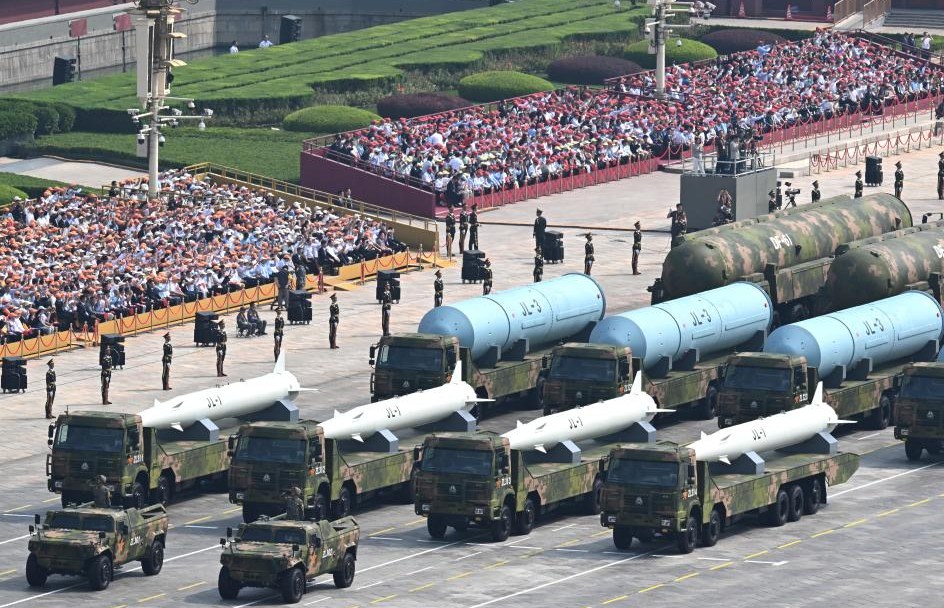 Photo: Chinese Internet
According to the report accompanying the draft budget law for fiscal year 2026, approximately 1.9 trillion CNY will be allocated to national defense, the equivalent of 276.9 billion USD. This will allow China to maintain second place globally after the United States, which this year will spend 838.7 billion USD under the federal National Defense Authorization Act (NDAA).
As emphasized by the Chinese news agency Xinhua, China’s defense spending remains relatively moderate according to key relative indicators, including its share of GDP, defense spending per capita, and defense spending per soldier. For many years, China has consistently kept its defense expenditures below 1.5% of GDP. However, these are official figures.
According to the U.S. Department of Defense report Annual Report to Congress: Military and Security Developments Involving the People’s Republic of China 2025, released on December 23, 2025, Beijing deliberately understates publicly reported figures to conceal the true scale of its military buildup. For example, based on intelligence data, in 2024, the most recent year with complete data available, China officially spent 231 billion USD, whereas the Pentagon estimates the actual amount at 304–377 billion USD (between 32% and 63% higher), as defense-related expenditures were embedded in other parts of the national budget.
If this trend continues, in 2026 Beijing could in reality spend between 365 billion USD and 452 billion USD on its military. At the upper end of this estimate, China’s spending would amount not to one-third of U.S. defense expenditures, as the official figures suggest, but closer to one-half.
As further noted in Xinhua’s report, Beijing has taken note of the fact that most NATO countries have reached the 2% of GDP threshold for defense spending and plan to increase it to 5% by 2035.
Meanwhile, one of China’s key neighbors, Japan, has been increasing its defense budget for 13 consecutive years, recording an increase of about 60% over the past five years. According to Xinhua, in fiscal year 2025, Japanese defense spending per capita and per military personnel was three times and more than twice as high, respectively, as in China.
According to official data from the Japanese government, a record 9.04 trillion JPY / 58 billion USD will be allocated to defense in the current fiscal year, which begins April 1. This means that Tokyo spends between five and even eight times less on defense than Beijing. It is also worth noting that Chinese defense spending accounts for about 44% of all defense budgets in Asia.
The latest report by the Stockholm International Peace Research Institute (SIPRI) titled Trends in World Military Expenditure, 2024, concerning global military spending in 2024, was published on April 28 last year.
See also: