







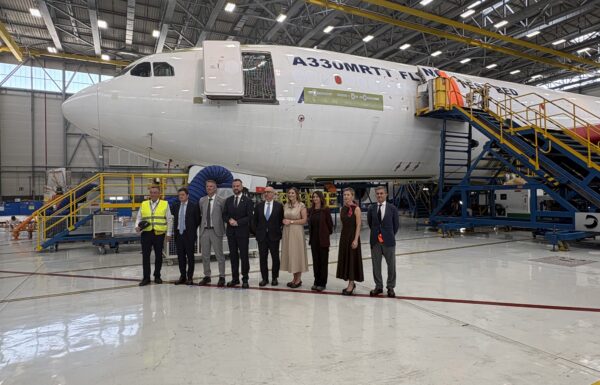









On Tuesday, April 28, 2026, a group of Spanish defense companies led by Airbus Defence and Space, part of the European Airbus SE group, presented the industrial program for the new Integrated Combat Training System (ITS-C) for the Spanish Air and Space Force (Ejército del Aire y del Espacio). The program, for which a 3.1 billion EUR contract was awarded in December 2025, will replace the current F-5 fleet and envisages a 60-percent share for domestic industry.
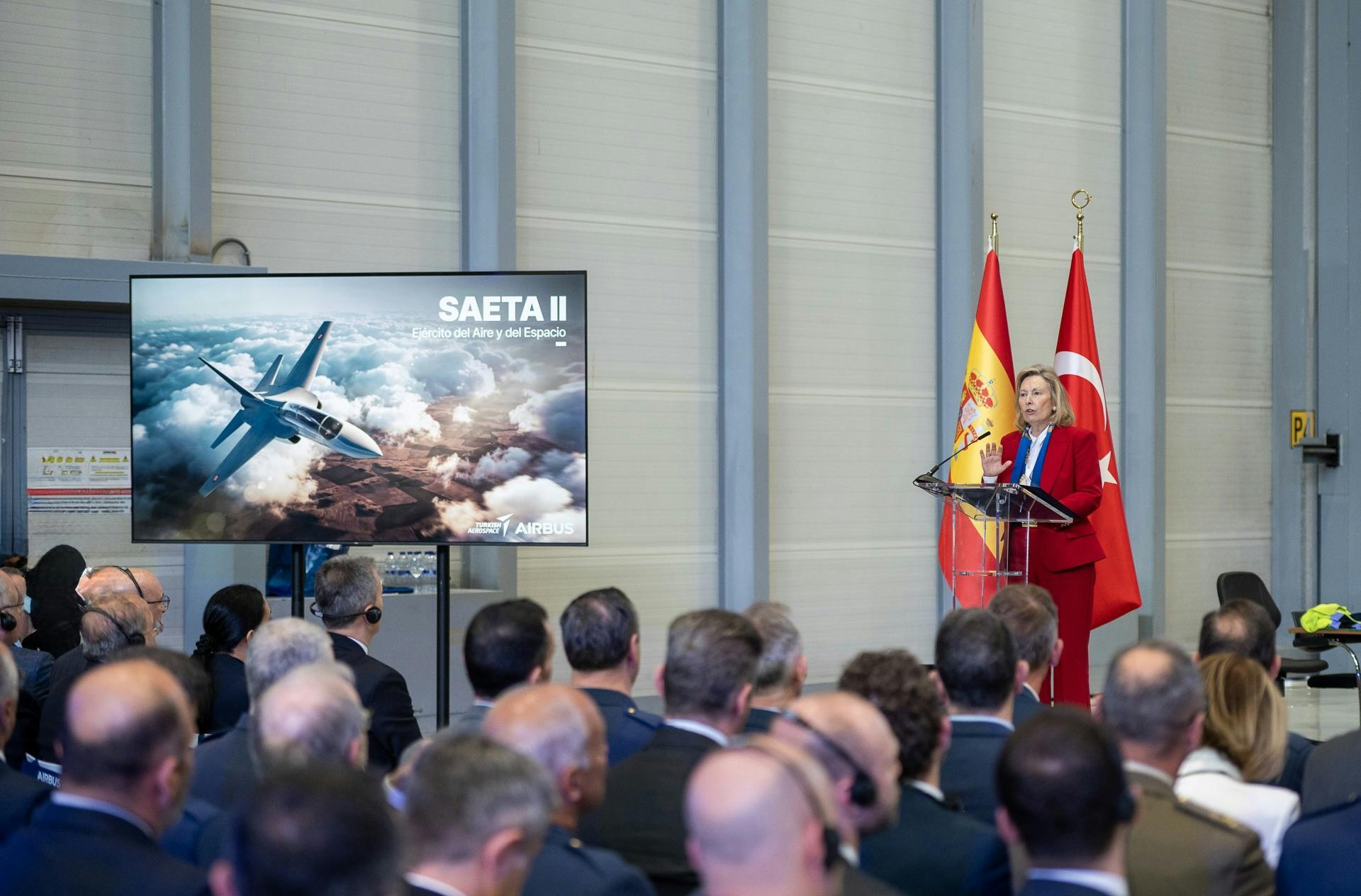 Photo: Airbus Defence and Space
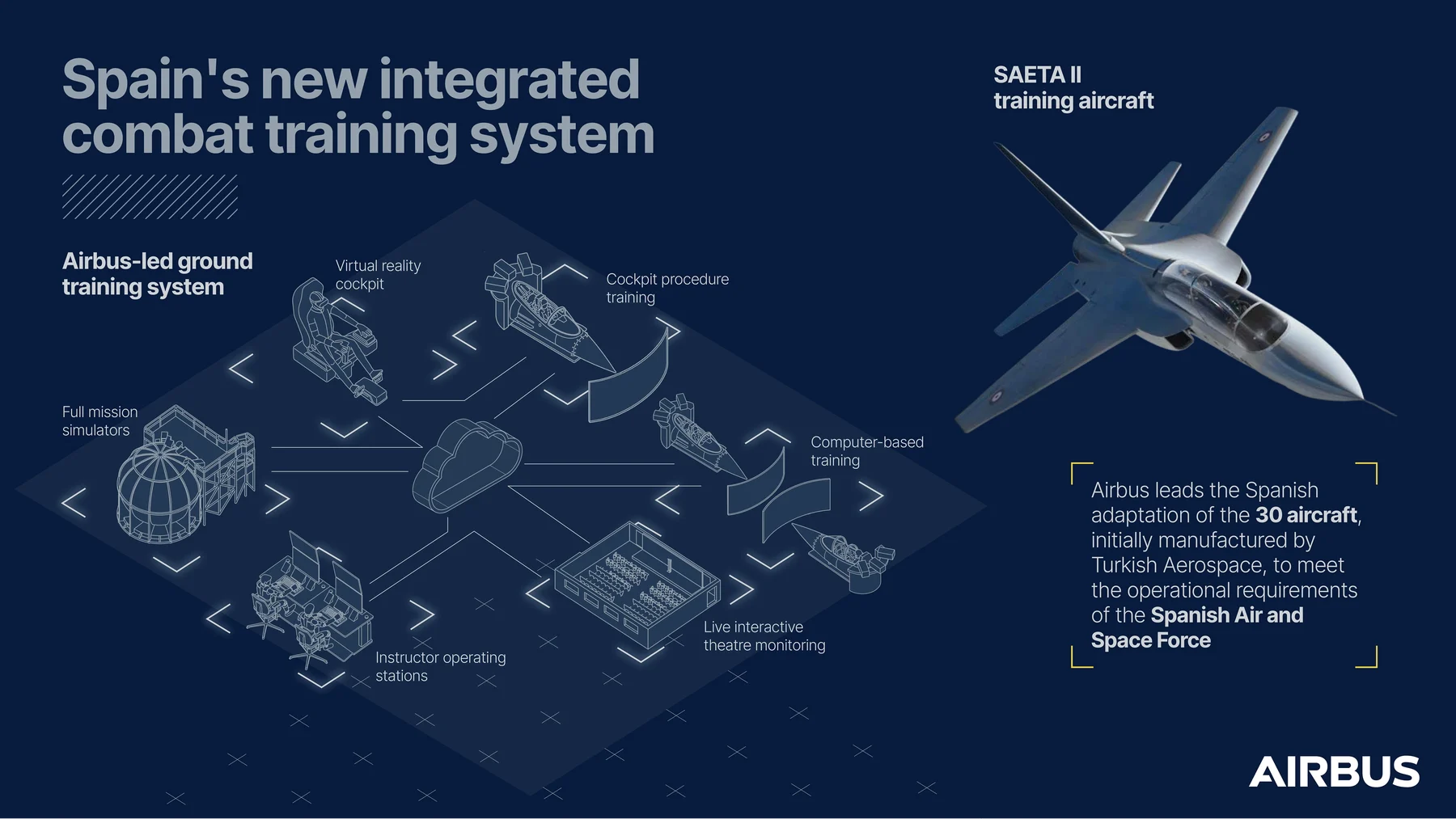
The ITS-C program, based on a joint development agreement between Airbus as the prime contractor and the Turkish defense holding TAI/TUSAŞ (Türk Havacılık ve Uzay Sanayii / Turkish Aerospace Industries), the manufacturer of the Hürjet aircraft, covers the entire advanced fighter pilot training process for the Spanish Air and Space Force. Its scope includes adapting a fleet of 30 light aircraft, with an option for 15 more, to Spanish specifications. The aircraft will receive the designation SAETA II, and the program will also include the delivery of an integrated package of operational and maintenance services.
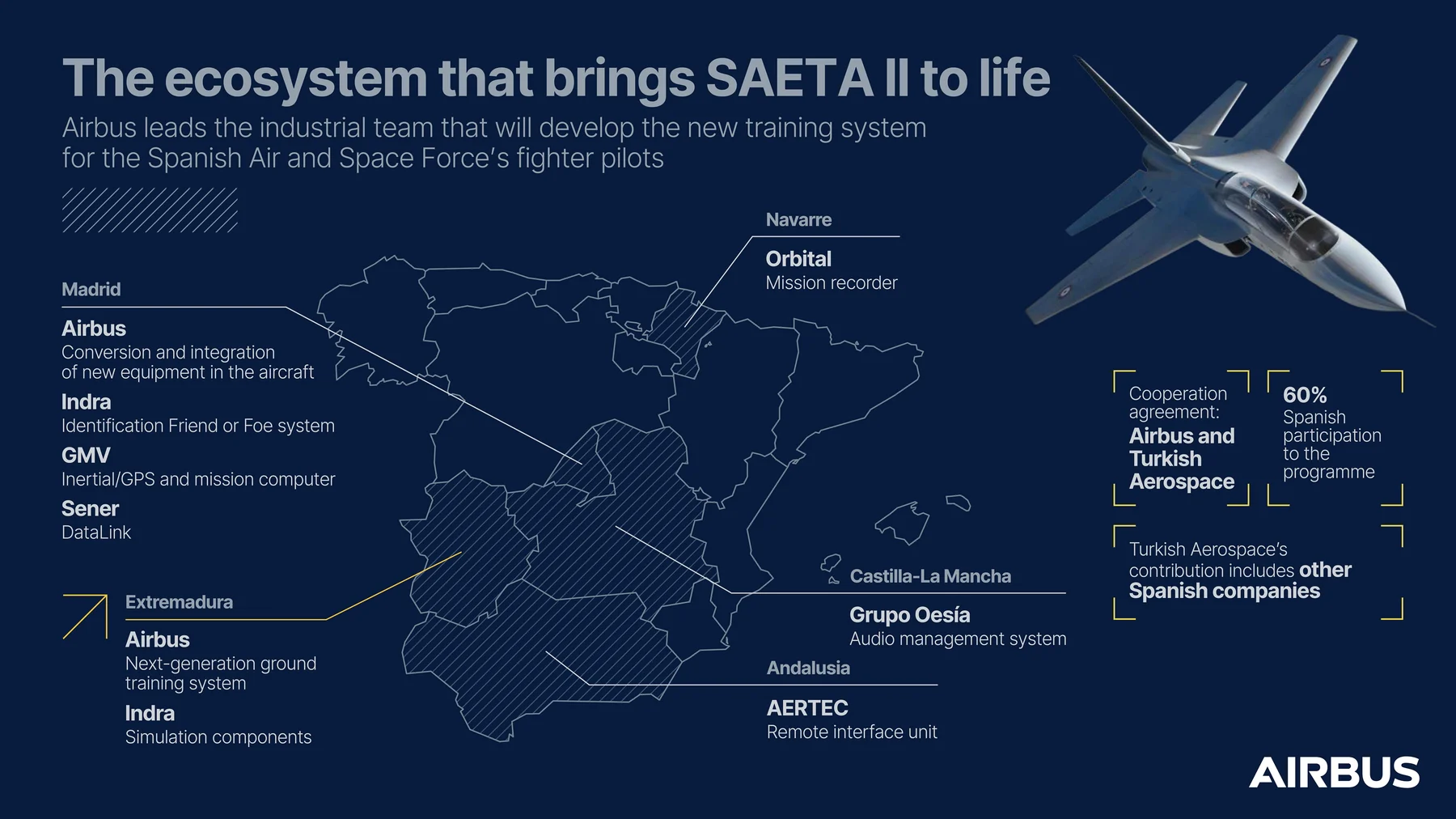
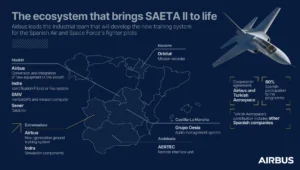
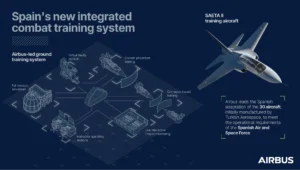
In addition to converting the aircraft and integrating new equipment, Airbus will be responsible for refurbishing the Fighter and Attack Training Center at Talavera la Real Air Base in Extremadura. The center, which will be equipped with state-of-the-art simulators developed in cooperation with the Indra Group, will provide logistical support for the operation and maintenance of both the aircraft and the synthetic training systems, ensuring maximum fleet availability.
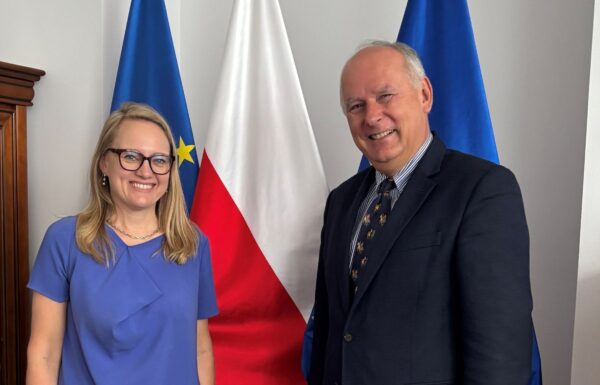
“As a result of this national programme, Spain achieves three strategic milestones: we ensure technology transfer in key areas, we obtain a deep-reaching industrial return, and, above all, we provide the programme with the strategic sovereignty and independence necessary to manage the sustainment and any future evolution of the system,” said Marta Nogueira, Head of Business Spain, Airbus Defence and Space.
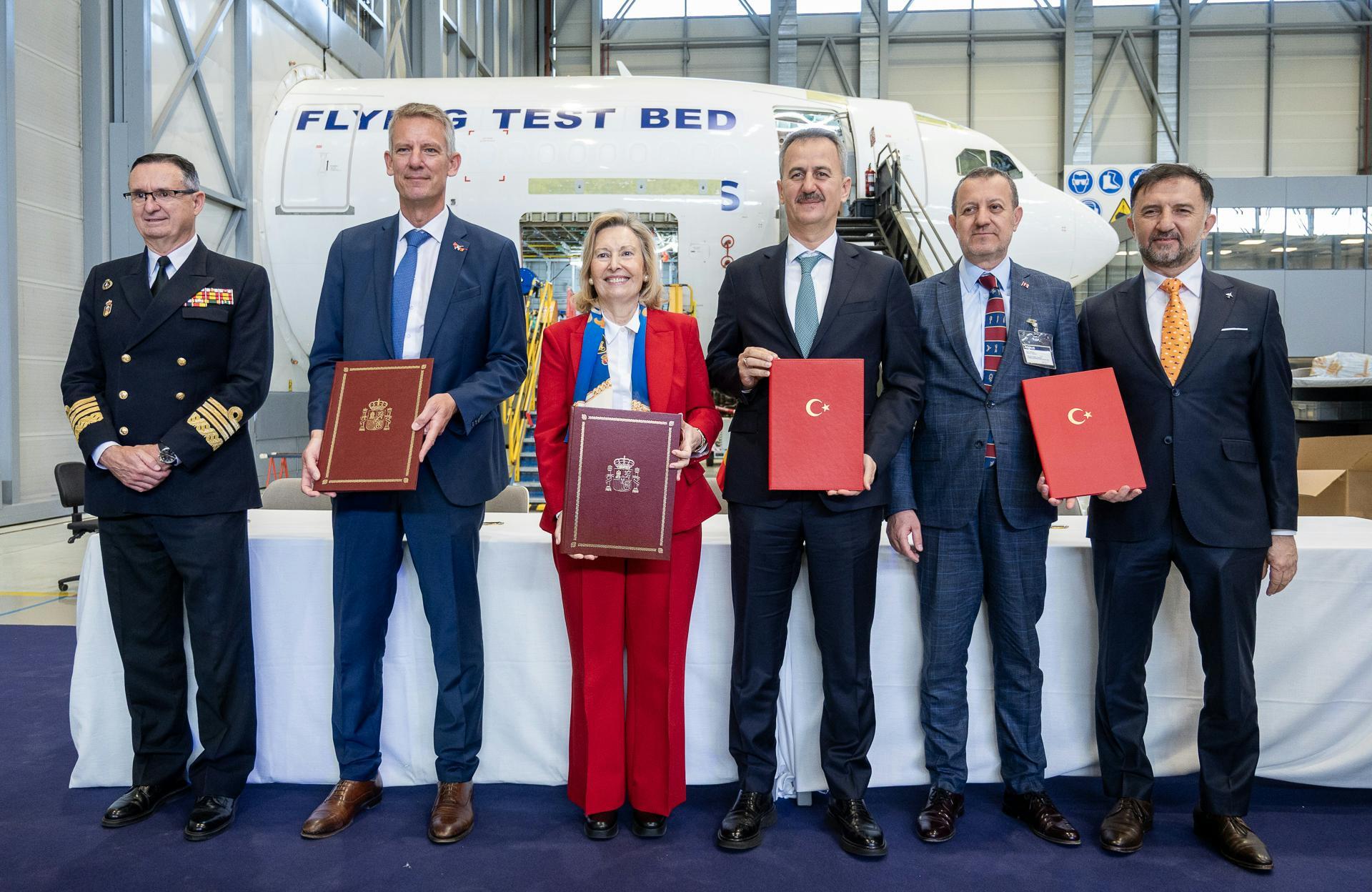
During her speech, the Spanish Secretary of State for Defence, Amparo Valcarce, highlighted the program’s strong national component, underlining that “it is a project that mobilises our industry, generates knowledge, employment, and opportunities throughout the entire value chain.” Furthermore, Valcarce emphasised the national industry’s capacity to participate in the development of complex systems, noting that the project “strengthens our strategic autonomy by allowing us to design, integrate, and evolve our own capabilities, reducing critical dependencies.”
Two stages: modifying the aircraft’s “brain” and nationalizing the system
The first stage, scheduled to begin in 2028, covers the delivery of an initial batch of 21 aircraft. One of these first aircraft will be used by Airbus as a prototype for integrating next-generation avionics and mission equipment. In parallel, work will continue on the development and construction of the ground-based training system, which is expected to enter service in the 2029/2030 academic year.
In the second stage, all 21 delivered aircraft and the remaining nine ordered examples will be converted to the Spanish standard, along with an upgrade of the simulators to this new version. Deliveries of the completed Spanish SAETA II variant, together with the ground-based training system, are scheduled for 2031–2035.
Technological sovereignty and domestic integration
Spanish industry, led by Airbus, will independently manage the maintenance, day-to-day servicing, and future evolution of this fleet.
In addition to producing basic parts and electrical systems, as well as designing and building the conversion center, Spanish industry will be responsible for integrating key domestic technologies in the fields of avionics and mission systems, including: GMV for the inertial and satellite navigation system and mission computer, Sener for the data exchange link, or DataLink, Aertec for the remote interface unit, Grupo Oesía for cockpit audio management, Orbital for the VMDR mission recorder, and the Indra Group for the identification friend-or-foe system, or IFF.
The SAETA II will replace 19 Northrop SF-5M Freedom Fighter advanced training aircraft, which entered service in 1970 with the 231st and 232nd Squadrons of the 23rd Wing at Talavera la Real Air Base in Badajoz Province, in western Spain.
Hürjet
The first prototype, PT-1, made its maiden flight on April 25, 2023, while the second, PT-2 (TUS-A003), followed on November 12 of the same year. The manufacturer is still assembling two additional prototypes and plans to build six to seven Block 0 pre-production aircraft, so that from 2025 serial production can reach two aircraft per month.
Turkey initially ordered four Block 0 aircraft with an option for 12 improved Block 1 aircraft, but the terms of the agreement were later changed to only 16 Block 1 examples. Deliveries are expected to begin in 2026.
Launched on July 14, 2017, the Advanced Jet Trainer & Light Attack Aircraft (Hürjet) Project envisaged the development of a successor to 68 T-38 Talon training aircraft and, in the attack version, support for the F-16. It is also intended eventually to replace 12 NF-5A/B aircraft used by the Turkish Stars (Türk Yıldızları) aerobatic team.
The Hürjet is intended to serve as an Advanced Jet Trainer (AJT) and Lead-in Fighter Trainer (LiFT), act as an adversary aircraft, or Red Force, in an unarmed configuration, and perform Close Air Support (CAS) and Air Policing missions in an armed configuration. It is also intended to enable pilot training for the fifth-generation TF Kaan aircraft.
In September 2020, a full-flight simulator called Hürjet 270 was built, and in January 2021 Malaysia was invited to cooperate on the development of the platform, although no order has been confirmed to date.
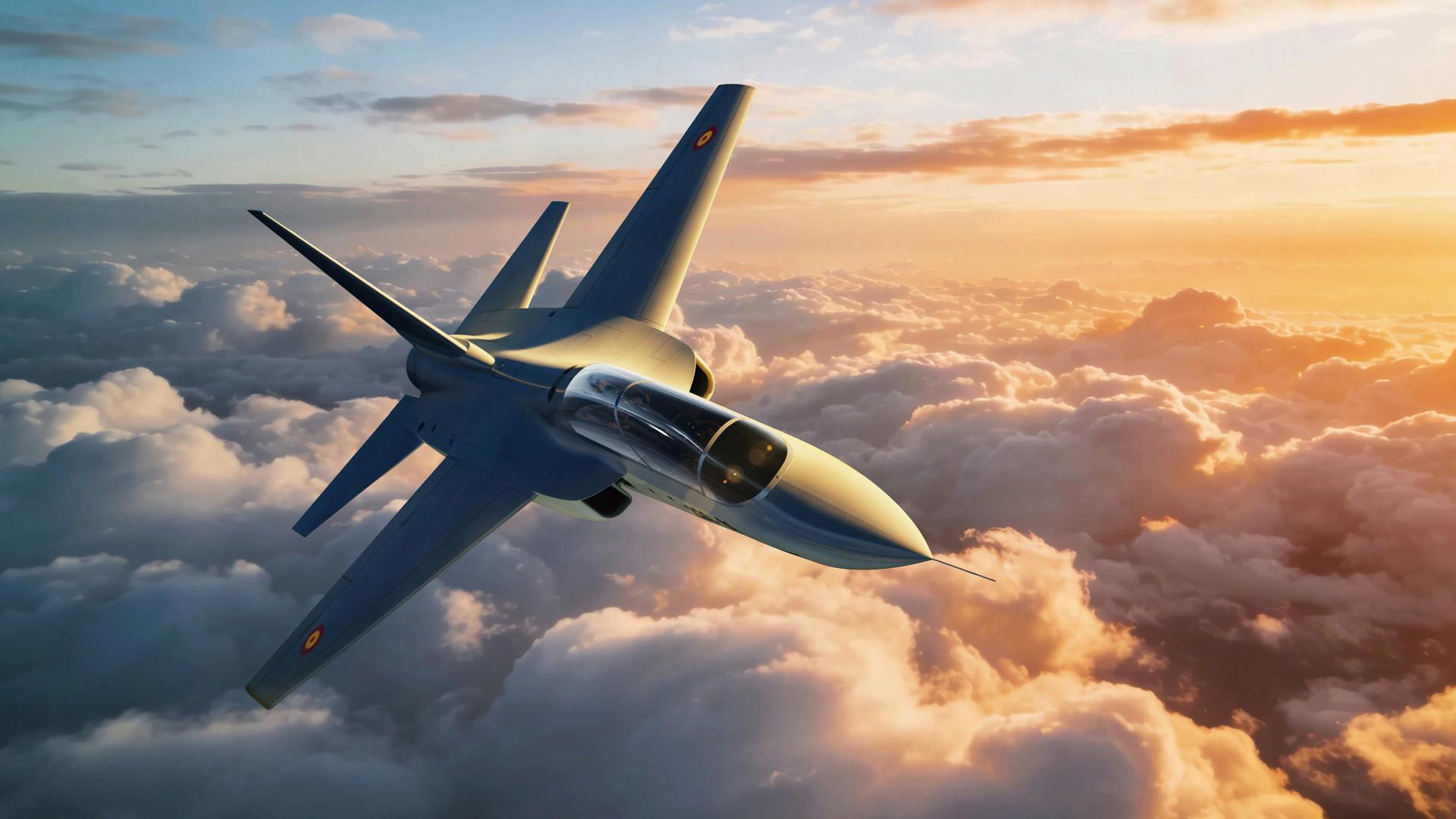
The aircraft is 13.6 m long, has a wingspan of 9.5 m, is 5.1 m high, and has a wing area of 25 sq m. Its General Electric GE F404-GE-102 turbofan engine generates around 17,600 lbf (79 kN) of thrust; the Eurojet EJ200 had also previously been considered. The aircraft is expected to have a range of up to 2,222 km, a maximum speed of around Mach 1.4, and a payload capacity of up to 2,721 kg.
The Hürjet is Turkey’s second indigenous military training aircraft project, after the Hürkuş-A/B light turboprop and its Hürkuş-C attack variant.
An Airbus-led group of Spanish companies presented today the industrial programme of the @EjercitoAire's new Integrated Combat Training System. Based on a co-development agreement between Airbus, as the prime contractor, and @TUSAS_EN, as the manufacturer of the Hürjet training… pic.twitter.com/0SSgeL8fYN
— Airbus Defence (@AirbusDefence) April 28, 2026