










Defence & Space

Twelve Thousand BLU-110 Bombs for Israel

The U.S. Department of State has approved the potential sale of a batch of 12,000 BLU-110A/B half-ton aerial bombs to Israel.

2026-03-07 | Rafał Muczyński | 3 minutes

Iran destroyed the U.S. AN/TPY-2 ballistic missile defense radar in Jordan

There has been visual confirmation that Iranian forces destroyed the U.S. AN/TPY-2 ballistic missile defense radar at Muwaffak Salti Air Base…

2026-03-07 | Rafał Muczyński | 2 minutes

Update on the Situation in the Islamic Republic of Iran

The events that unfolded in the Middle East between February 10 and 28, 2026, constitute one of the most dramatic chapters…

2026-03-01 | Adam Frelich | 38 minutes

The SAFE Program (Security Action for Europe) as the Foundation of a New European Defense Architecture and Industrial Sovereignty

The Security Action for Europe (SAFE) Instrument, adopted by the Council of the European Union on 27 May 2025, constitutes the most…

2026-02-17 | Adam Frelich | 18 minutes

Twelve Thousand BLU-110 Bombs for Israel

The U.S. Department of State has approved the potential sale of a batch of 12,000 BLU-110A/B half-ton aerial bombs to Israel.

2026-03-07 | Rafał Muczyński | 3 minutes

Iran destroyed the U.S. AN/TPY-2 ballistic missile defense radar in Jordan

There has been visual confirmation that Iranian forces destroyed the U.S. AN/TPY-2 ballistic missile defense radar at Muwaffak Salti Air Base…

2026-03-07 | Rafał Muczyński | 2 minutes

Cybersecurity and AI: Polish Armed Forces Join Forces with Dell Technologies Polska and the SpeakLeash Foundation

The Cyberspace Defence Component Command has signed a cooperation agreement with Dell Technologies Polska and the Fundacja SpeakLeash in the field of…

2026-02-18 | Redakcja | 5 minutes

Samsung Knox on Galaxy S23 and S24 Receives Cryptographic Security Certification in Poland

The Polish Cyberspace Defence Forces Component Command announced that, as part of the certification process, selected security mechanisms of the Samsung…

2026-01-22 | Redakcja | 3 minutes

WB Group’s Cooperation with Britain’s Applied AGI

The Embassy of the Republic of Poland in London organized an event showcasing the cooperation between WB Group and the UK’s…

2026-03-07 | Rafał Muczyński | 4 minutes

Drone World Expo 2026: Unmanned Systems from FlyFocus

During the first edition of the DRONE World Expo, held from March 3 to 5 this year, the exhibit of the Warsaw-based company…

2026-03-04 | Grzegorz Sobczak | 4 minutes

WB Group’s Cooperation with Britain’s Applied AGI

The Embassy of the Republic of Poland in London organized an event showcasing the cooperation between WB Group and the UK’s…

2026-03-07 | Rafał Muczyński | 4 minutes

The First BR71 Mk II Missile Corvette for Angola Launched

The hull of the prototype missile corvette Ekuikui II (F 300) of the BR71 Mk II class, intended for Angola, has been…

2026-03-06 | Rafał Muczyński | 4 minutes

Tender for Five HEMS Helicopters for the Polish Air Ambulance Service

The Polish Air Ambulance Service has announced the launch of a tender procedure for the delivery of five helicopters to support the…

2026-03-04 | Rafał Muczyński | 4 minutes

Airbus Helicopters to Upgrade the Capa-X UAV for the European M2UAS Program

The company Survey Copter, a subsidiary of Airbus Helicopters, has been selected by the European Defence Agency (EDA) to carry out the M2UAS…

2026-03-04 | Rafał Muczyński | 3 minutes

Twelve Thousand BLU-110 Bombs for Israel

The U.S. Department of State has approved the potential sale of a batch of 12,000 BLU-110A/B half-ton aerial bombs to Israel.

2026-03-07 | Rafał Muczyński | 3 minutes

Iran destroyed the U.S. AN/TPY-2 ballistic missile defense radar in Jordan

There has been visual confirmation that Iranian forces destroyed the U.S. AN/TPY-2 ballistic missile defense radar at Muwaffak Salti Air Base…

2026-03-07 | Rafał Muczyński | 2 minutes

Polish–Slovak Defense Industry Dialogue in Bratislava: Borsuk and Rosomak IFV in the Background

During the Polish–Slovak Defense Industry Dialogue 2026 in Bratislava, it was announced that the Polish and Slovak defense industries are in talks…

2026-03-03 | Redakcja | 8 minutes

Poland Interested in France’s Advanced Nuclear Deterrence Program

French President Emmanuel Macron said that France is holding talks with eight countries, including Poland, regarding an advanced nuclear deterrence…

2026-03-02 | Rafał Muczyński | 5 minutes

Poland: The ARGUS Satellite Operations Center Has Reached Operational Readiness

Satellite Operations Center (Centrum Operacji Satelitarnych, COS) of the Agency for Geospatial Intelligence and Satellite Services (ARGUS) has reached operational…

2026-03-05 | Rafał Muczyński | 4 minutes

ICEYE launches deforestation monitoring solution to accelerate enforcement against illegal tropical forest loss

Polish-Finnish company ICEYE, a leader in disaster intelligence from space, today announced the launch of its deforestation monitoring solution.

2026-03-03 | Rafał Muczyński | 4 minutes
Shooting

Meprolight introduces Sting Lumina, a CQB solution developed in collaboration with Special Forces units

Israeli-based Meprolight has introduced the Sting Lumina, a state-of-the-art dual wavelength compact laser pointer with integrated IR illuminator.

2026-03-06 | Redakcja | 2 minutes

IWA 2026: Bergara – New Additions to the Premier and B14 Lines

Bergara, a Basque Country–based firearms manufacturer, unveiled new products for demanding hunters at IWA OutdoorClassics 2026, including new models in its Premier and…

2026-03-05 | Michał Ihnatów | 5 minutes

Meprolight introduces Sting Lumina, a CQB solution developed in collaboration with Special Forces units

Israeli-based Meprolight has introduced the Sting Lumina, a state-of-the-art dual wavelength compact laser pointer with integrated IR illuminator.

2026-03-06 | Redakcja | 2 minutes

KJI Mag Series – Alternative Rifle Tripod Mounting System That Make Shooting Easier

We recently wrote about KJI and its new products in connection with SHOT Show 2026. This time, we’re taking a closer look at a line…

2026-02-17 | Mariusz Piwowar | 5 minutes

Direct Action invites you to Enforce Tac 2026

Direct Action, a brand known for its high‑quality apparel and gear for professionals, invites you to visit its booth at Enforce Tac 2026…

2026-02-17 | Michał Ihnatów | 3 minutes

Reforger at Enforce Tac 2026

Reforger – Enforce Tac 2026, February 23–25, 2026, Booth 8/500, Nuremberg. Now you know!

2026-02-13 | Michał Ihnatów | 1 minutes

„Crisis Preparedness”: IWA addresses current issues

IWA OutdoorClassics, the world’s leading exhibition for hunting, shooting sports, outdoor equipment and civilian security, is once again placing a highly…

2026-02-19 | Michał Ihnatów | 5 minutes

Direct Action invites you to Enforce Tac 2026

Direct Action, a brand known for its high‑quality apparel and gear for professionals, invites you to visit its booth at Enforce Tac 2026…

2026-02-17 | Michał Ihnatów | 3 minutes

IWA 2026: Bergara – New Additions to the Premier and B14 Lines

Bergara, a Basque Country–based firearms manufacturer, unveiled new products for demanding hunters at IWA OutdoorClassics 2026, including new models in its Premier and…

2026-03-05 | Michał Ihnatów | 5 minutes
Strzelba bullpup Smith & Wesson M&P 12

SHOT Show 2026: Smith & Wesson – New FPC Variants and a Kel-Tec Challenger

This year’s SHOT Show in Las Vegas belonged to Smith & Wesson. The American giant not only expanded its best-selling line of…

2026-02-18 | Jakub Buczma | 4 minutes

SightMark Mini Shot M-Spec M1 V2 – a Complicated Name for Simple, Reliable Gear

The name of this unassuming little SightMark device sounds like the name of a vampire from The Witcher saga: Emiel Regis…

2025-11-26 | Anna Mielczarek | 9 minutes

Mantis TitanX – dry fire training taken to a new level?

Mantis, the American manufacturer of dry fire training solutions, introduces the TitanX – a laser-based training device that replicates a Glock-style pistol…

2025-11-13 | Michał Ihnatów | 4 minutes

Growth in Firearm Permits in Poland Continues in 2025

The National Police Headquarters has released a report on firearm permits in Poland in 2025. The number of shooters continues to increase, with nearly 45,000…

2026-02-06 | Michał Ihnatów | 6 minutes

Poland: Temporary Ban on Carrying Firearms in Warsaw on November 11, 2025

Minister Marcin Kierwiński has instructed the security services to take measures ensuring safety during the Independence March in Warsaw and other events…

2025-10-30 | Michał Ihnatów | 5 minutes

5 Best Value ATN Rifle Scopes Under €1500

ATN is a leading manufacturer of daytime optics, smart night vision, and thermal vision technology. The innovative features and ergonomic designs…

2022-11-11 | Redakcja | 9 minutes

MILMAG Visits Grand Power

Grand Power is a Slovak manufacturer of the acknowledged good quality firearms. Take part in our guided tour with English subtitles.

2022-05-23 | Redakcja | 1 minutes

KJI Mag Series – Alternative Rifle Tripod Mounting System That Make Shooting Easier

We recently wrote about KJI and its new products in connection with SHOT Show 2026. This time, we’re taking a closer look at a line…

2026-02-17 | Mariusz Piwowar | 5 minutes

STEYR ATC & ATD – The Austrian Approach to Dynamic Shooting

The ATC and ATD mark the first time Steyr openly states: we are entering the dynamic shooting market, but we are doing…

2026-02-05 | Grzegorz Kochan | 19 minutes

EOTECH Holographic Sight – History, Technology, Practice

The holographic sight is a device known for nearly 30 years and used by professionals around the world. A favorite sight of many…

2024-09-02 | Michał Gaweł | 12 minutes

The Impact of the United States’ Withdrawal from International Institutions on European Union Policy

In January 2026, as Donald Trump’s second term gathers momentum, the European Union is facing one of the greatest challenges in its history. A presidential memorandum dated January 7, ordering the United States to withdraw from 66 international organizations, including key United Nations agencies such as UN Women, United Nations Population Fund, and the Intergovernmental Panel on Climate Change, represents not only a symbolic blow to multilateralism, but also a tangible threat to the global order in which the EU plays a central role.

This move, aligned with the “America First” doctrine, undermines the foundations of transatlantic relations and forces Brussels to redefine its foreign, economic, and security policy. I aim to highlight the broad impact of these decisions on EU policy, drawing on current reports and expert commentary, and to identify potential opportunities for Europe in this new reality. Particular emphasis is placed on the impact on EU climate policy and Poland’s policy, and on concrete examples illustrating the practical consequences of the U.S. withdrawal.

Photo: White House

Reasons for the Withdrawal

President Donald Trump’s decision to withdraw the United States from dozens of international institutions is not a surprise, but rather the culmination of a trend that began during his first term (2017–2021). At that time, the U.S. withdrew from, among others, UNESCO, the United Nations Human Rights Council (UNHRC), and the World Health Organization (WHO), citing alleged anti-Israel bias, inefficiency, and excessive Chinese influence. The withdrawal from the WHO took effect on January 20, 2025, pursuant to Executive Order 1415. In Section 1 of the order, the U.S. leader stated:

The United States noticed its withdrawal from the World Health Organization (WHO) in 2020 due to the organization’s mishandling of the COVID-19 pandemic that arose out of Wuhan, China, and other global health crises, its failure to adopt urgently needed reforms, and its inability to demonstrate independence from the inappropriate political influence of WHO member states. In addition, the WHO continues to demand unfairly onerous payments from the United States, far out of proportion with other countries’ assessed payments. China, with a population of 1.4 billion, has 300 percent of the population of the United States, yet contributes nearly 90 percent less to the WHO.

Donald Trump viewed these institutions as constraints on U.S. sovereignty and multilateralism as a tool used by globalists to exploit American resources. During his second term, this process accelerated: an executive order issued in February 2025 initiated a review of all organizations of which the United States is a member, leading to the January 2026 memorandum. The list includes 35 entities outside the UN system, among them the Intergovernmental Panel on Climate Change, as well as organizations such as the European Centre of Excellence for Countering Hybrid Threats, the Venice Commission of the Council of Europe, the Global Counterterrorism Forum, and the Science and Technology Center in Ukraine, which focuses on nonproliferation of weapons of mass destruction. In addition, 31 UN agencies are covered, including those dealing with gender equality, environmental protection, and climate change.

In Poland, particular attention was drawn to the dismantling of the United States Agency for International Development (United States Agency for International Development), which resulted in the termination of funding for various social groups and think tanks in the first half of 2025. The Trump administration argued that these institutions were unnecessary, poorly managed, wasteful, captured by interests pursuing their own goals contrary to those of the United States, or posed a threat to the nation’s sovereignty, freedom, and overall prosperity.

For the European Union, which for years has built its identity on multilateralism and international rules, this withdrawal represents a fundamental shift. President Donald Trump has described the EU as a globalist entity that exploits the United States, favoring bilateral agreements over multilateral cooperation. According to analysts at the European Council on Foreign Relations (ECFR), this approach forces Europe to defend a system it helped create, at a time when China and Russia are increasingly stepping in to fill the vacuum left by the United States. Kevin Roberts, president of the Heritage Foundation, has described Donald Trump’s actions as a second American Revolution.

The European Union recognizes that this new revolution is not merely an American phenomenon, as decisions taken in Washington resonate far beyond the borders of the New World, including in Europe, and have a tangible impact on EU policy. Revolutionary changes in the United States signal the collapse of assumptions that underpinned European security for decades. Reliance on American guarantees, NATO as an alliance of liberal democracies, the promotion of free trade, and the taboo against aggressive nationalism, all of this is unraveling. The new reality is a crisis of the alliance itself, a growing risk of a global trade war, and the threat of U.S. forces withdrawing from Europe. As ECFR polling shows, this in turn is reshaping Europe’s political and geopolitical identity.

Impact on European Union Economic Policy

One of the most immediate consequences of Donald Trump’s actions has been the destabilization of international trade. The U.S. president, continuing a policy of maximum pressure, imposed tariffs on EU exports, including steel, automobiles, and agricultural products, which could cost Europe billions of euros annually. For example, tariffs on European wines and cheeses (set at 25%) already caused losses of around USD 1 billion for French and Italian producers in 2019. Now, in 2026, similar measures may be extended to German electric vehicles, threatening the automotive sector in Germany and Poland, where factories operated by Volkswagen and BMW employ thousands of workers. The most significant impact would be felt by brands such as Porsche, Audi, Volkswagen, Mercedes-Benz, and BMW. Porsche, which does not operate manufacturing facilities in the United States, would be forced to raise prices by 10–20%, leading to declining sales. BMW, although it produces SUVs in the U.S., could face difficulties in China if Beijing decides to impose retaliatory tariffs. This approach undermines not only bilateral relations but also the principles of the World Trade Organization (WTO), which Trump has accused of favoring China. As of April 2026, tariffs imposed on the German automotive sector reached 27.5%, effectively rendering exports to the United States unprofitable. In June, an agreement was reached setting tariffs at 15%.

Trump’s second term is also driving fragmentation of global trade, with bilateral agreements replacing multilateral rules, weakening the EU’s position as the world’s largest trading bloc. The European Union must now strengthen its economic autonomy. The European Commission is considering new anti-dumping tools and protective mechanisms against tariffs, such as the Carbon Border Adjustment Mechanism (CBAM). This system is designed to equalize the CO₂ emissions costs embedded in imported goods, directly reducing the economic rationale for external protectionist measures. If imported products are charged a cost reflecting their emissions, the cost advantage of producers in countries with lower climate standards is diminished, and the justification for protective tariffs by trading partners becomes weaker. For CBAM to serve a defensive function, it must be transparent, based on uniform emissions-calculation methodologies, and supported by audits, enhancing its resilience to accusations of trade discrimination and easing its defense against potential WTO complaints. At the same time, CBAM is becoming a political instrument: the EU can use it in negotiations, offering technological cooperation, know-how transfer, or phased relief in exchange for the removal of trade barriers, giving the EU additional leverage against protectionist moves.

An illustration of CBAM’s impact could be the fees imposed in 2025 on steel imports from the United States, which might have escalated into a full-scale trade war, raising energy prices for European households by 5–10%. Experts from Princeton University argue that Trump’s second term is forcing the EU to accelerate integration of its internal market, including joint procurement of energy and technologies, to reduce dependence on the United States. Specifically, the REPowerEU program, despite being based on the contested assumption of climate neutrality, could be used to procure LNG from Qatar, eliminating U.S. supplies.

Moreover, the United States’ withdrawal from organizations such as the International Monetary Fund and the Organisation for Economic Cooperation and Development weakens global financial stability. As the second-largest contributor, the EU could step up its contributions to these institutions, thereby strengthening its influence over global economic standards. However, this would require additional funding from the EU budget, potentially from cohesion funds, which could reduce support for poorer regions such as eastern Poland. Such a move would likely meet public resistance in these areas, making it doubtful that any Polish government would agree to it.

Impact on Security Policy

The United States’ withdrawal from multilateral security institutions, including the potential reduction of its engagement in NATO, poses an existential threat to European defense policy. Donald Trump has pressed allies to raise defense spending to 2% of GDP (and even higher), threatening to withdraw U.S. troops from Europe. For example, in 2025, the United States reduced its contingent in Germany by 12,000 troops, weakening NATO’s eastern flank. Now, in 2026, similar steps could affect bases in Poland, such as Redzikowo and Żagań, where more than 4,000 U.S. service members are stationed. This dynamic is forcing the European Union to accelerate initiatives such as the European Defence Fund (EDF) and Permanent Structured Cooperation (PESCO), promoting deeper defense integration. In particular, the “Future Combat Air System” (FCAS) project involving France, Germany, and Spain could gain momentum, with its budget potentially increased to 100 billion EUR by 2030. Attention should also be paid to the SAFE program. On January 26, the European Commission approved Poland’s national defense spending plan under SAFE (Security Action for Europe). Poland submitted applications for funding for 139 projects totaling 43.7 billion EUR (The European Commission approved Poland’s applications for SAFE program).

Photo:  Emily J. Higgins, White House Press Service

Although Trump’s actions may be assessed as ill-considered and impulsive, they ultimately demonstrated the validity of the American leader’s ideas. As early as 2024, Donald Trump argued for increasing NATO spending to 4% of GDP, a proposal that met with predictable resistance from most members. He repeatedly emphasized that the United States was financing NATO and the security of its members, while countries such as Germany benefited from this protection without bearing their fair share of the costs. Ultimately, Trump secured the required declaration from NATO members. On Wednesday, June 25, NATO countries agreed to invest 5% of GDP annually in core defense needs and defense- and security-related expenditures by 2035. Spain was the only country to break ranks, stating that it does not plan to reach such a level of spending, a stance that drew criticism from the U.S. president.

In the context of the war in Ukraine, a U.S. withdrawal from multilateral support frameworks (for example, through the United Nations) would force the European Union toward greater defense, diplomatic, and economic consolidation. Financing aid for a fighting Ukraine would place additional strain on national budgets, but it would also strengthen Brussels’ position as a regional leader. For instance, the EU had already provided EUR 50 billion to Ukraine in 2025 under the Ukraine Facility; without U.S. participation, this amount could rise by around 20%, financed through joint debt. At the same time, assuming financial obligations in support of Ukraine faces resistance among many citizens of member states. According to information released by the EU, the bloc considered using frozen Russian assets, but leaders failed to reach a consensus. As a result, the adopted solutions rely primarily on joint debt guaranteed by the EU budget rather than on Russian funds. Consequently, any potential U.S. withdrawal from assistance to Ukraine, should it occur, could present an opportunity for the EU to replace the U.S. and assume a more decisive role as a key player at the negotiating table with Russia. On the other hand, the position of the United States appears largely unchallenged. The European Union will not be able, in the short term, to deliver the quantity and quality of equipment required to confront the Russian Federation. The data are clear: the role of the United States is and remains crucial. The U.S. defense budget amounts to approximately 860–900 billion USD annually, and the United States accounts for more than two-thirds of NATO’s total defense spending. Although European defense expenditures are rising rapidly, the EU increased its combined defense budgets from 218 billion EUR in 2021 to 392 billion EUR in 2025; they remain insufficient for Europe to assume a dominant position within the North Atlantic Alliance.

Impact on Multilateralism and Global Institutions

Donald Trump’s challenge to the multilateral system that has existed since the end of World War II directly affects the foreign policy of the European Union, which is built on rules and institutions. The U.S. withdrawal from UN agencies creates a vacuum that China and Russia are seeking to fill, threatening global norms in the areas of human rights and security. One consequence of Trump’s decisions was the United Nations’ announcement of plans to reduce global peacekeeping forces by one quarter, meaning that between 13,000 and 14,000 UN soldiers and police officers will end their service and return to their home countries. Changes in UN policy are closely correlated with shifts in U.S. financial policy, as the United States remains the organization’s largest donor. In 2025, the U.S. accounted for 22% of the UN’s regular budget and around 26% of the budget allocated to peacekeeping missions. By comparison, Poland contributed 28,301,826 USD in the same year, representing less than 1% of total UN funding. Each of the UN’s 193 member states is required to make annual contributions, calculated on the basis of gross national income, debt levels, and population size. The U.S. share is fixed as a percentage, meaning that the nominal value of its contribution may rise as the overall UN budget grows. A U.S. withdrawal automatically strengthens the position of the People’s Republic of China, which has so far been the second-largest contributor, providing 20% of the UN’s regular budget and 23.8% of the peacekeeping budget.

The European Union, as a supporter of the existing system, must now defend these institutions, for example, by increasing contributions to the World Health Organization and the United Nations Framework Convention on Climate Change (UNFCCC). This would require reform of the EU budget and coordination with partners such as Canada and Japan. Concretely, the EU could double its contribution to the UN Democracy Fund (from 10 million EUR to 20 million EUR annually) to promote democracy, for example, in Sub-Saharan Africa, effectively replacing the U.S. role.

This also creates opportunities: the EU could emerge as a global leader in areas such as public health and sustainable development. Reports from the Centre for European Policy Studies (CEPS) suggest that Europe should build new coalitions in support of multilateralism, led by France and Germany – an approach that already resulted in a Paris summit in 2025 involving 50 countries. However, this will require overcoming internal divisions, for example, between older and newer EU member states, where countries such as Poland are calling for a greater voice in decision-making.

Impact on EU Climate Policy

The U.S. withdrawal from the Paris Agreement, the Intergovernmental Panel on Climate Change, and the United Nations Framework Convention on Climate Change weaken global climate efforts, forcing the European Union to assume leadership and accelerate its own climate policy. The European Green Deal, which aims for climate neutrality by 2050, could become a global model, but it requires new alliances, for example, with Australia, India, or Brazil, to fill the gap left by the United States. More specifically, the absence of U.S. support at the COP31 negotiations (scheduled for November 2026 in Brazil) means the EU must lobby independently for ambitious emissions-reduction targets. This could raise costs for Europe’s heavy industries, for instance in Poland, where the coal sector (responsible for around 70% of energy production) must accelerate its transformation with support from the Just Transition Fund, which has been increased to 40 billion EUR. Despite the EU’s efforts to promote Green Deal–based solutions, much of the world remains reluctant to adopt them due to higher energy prices and increased industrial costs. Europe itself accounts for only about 7% of global CO₂ emissions (by comparison: China 30%, the United States 14%, India 7%), a relatively small share on a worldwide scale.

U.S. policy also creates challenges for climate financing. Without the United States, global climate funds such as the Green Climate Fund could lose up to 2 billion USD annually, placing additional obligations on the EU. Germany and France, for example, have already announced a combined increase of 500 million EUR in contributions. At the same time, this creates an opportunity to strengthen internal EU policy. The Union can expand the EU Emissions Trading System (ETS) to maritime and aviation sectors, which in 2025 generated 10 billion EUR in revenue earmarked for innovations such as green hydrogen. Concrete examples include the North Sea Wind Power Hub project, under which Denmark, Germany, and the Netherlands are developing offshore wind farms with a combined capacity of 100 GW, reducing dependence on U.S. technologies. Donald Trump’s policies could also accelerate the implementation of the Carbon Border Adjustment Mechanism (CBAM), potentially imposing charges on imports from the United States (such as aluminum), thereby protecting the European market from emissions dumping.

In the longer term, EU climate policy is becoming a geopolitical instrument: exporting green technologies, such as solar panels from the Netherlands or wind turbines from Denmark, could fill the vacuum left by the United States, generating millions of new jobs by 2030.

Impact on Health Policy

The formal withdrawal of the United States from the World Health Organization in January 2026 deprives the global public health system of roughly 20% of its operational budget, as well as a key participant in data exchange, standards-setting, and operational coordination. The WHO is losing not only funding, but also access to U.S. reference laboratories, early-warning systems, and logistical capabilities that previously enabled rapid responses to epidemic outbreaks. As a result, the global pandemic preparedness network becomes noticeably weaker, with gaps in surveillance, data verification, and the equitable distribution of vaccines and medicines likely to become evident with the first major epidemiological threat.

For the European Union, this marks the end of the comfort of relying on U.S.-led global health protection. Europe is being forced to build its own health security architecture. A central role in this process is set to be assumed by the Health Emergency Preparedness and Response Authority (HERA). To realistically replace part of the WHO’s functions on the continent, HERA would require a radical increase in scale. Credible proposals point to raising its annual budget to around 5 billion EUR, a level that would allow not only the maintenance of strategic medical stockpiles and the financing of rapid clinical trials, but also the creation of European manufacturing capacities for vaccines and medicines in the event of disruptions to global supply chains.

The clearest illustration of what awaits Europe is the COVID-19 pandemic. In 2021 alone, the EU spent approximately 2.4 billion EUR on its initial contracts with Pfizer-BioNTech, while the total value of all advance purchase agreements, including later, larger tranches, exceeded several tens of billions of euros. If a new, dangerous variant or an entirely new pathogen were to emerge today, Europe could no longer count on WHO-led global coordination and U.S. financing to accelerate deliveries. It would have to organize everything itself, from research and scaling up production to distribution among member states.

This is precisely where the greatest opportunity lies. The crisis of confidence in multilateralism is becoming a catalyst for the development of Europe’s pharmaceutical and biotechnology industries. The EU4Health program, which in recent years has funded, among other things, research into antimicrobial resistance (AMR), rapid point-of-care diagnostics, and alternative therapies, could be significantly expanded. Investments in new mRNA vaccines produced in Europe, along with the expansion of manufacturing capacity for critical medicines, would not only reduce dependence on non-European suppliers but could also turn Europe into an export leader in 21st-century health technologies.

The gap created within the WHO by the U.S. withdrawal is painful, but it also forces the European Union toward health sovereignty. If Europe manages to seize this moment, within a few years it could emerge not only with a much stronger HERA, but also with a more competitive, innovative, and less externally dependent pharmaceutical industry. Paradoxically, the U.S. withdrawal may prove to be the strongest impetus for building European health autonomy since the creation of the single market.

Impact on Poland’s Policy

For Poland, as an EU member and a close ally of the United States, Trump’s withdrawal carries complex implications—deepening dependence on Brussels while also risking internal divisions. Poland, which has strong ties with the U.S. (for example, through the idea of establishing a permanent U.S. military base on Polish territory, the so-called “Fort Trump,” and the purchase of F-35 fighter jets), could lose out if the U.S. military presence is reduced. Specifically, the base in Redzikowo (the Aegis Ashore system) could be put at risk, weakening defense against the Russian Federation. This dynamic forces Warsaw to engage more deeply in Permanent Structured Cooperation (PESCO), for example, through joint projects with France on combat drones, supported by a 500 million EUR budget from the European Defence Fund (EDF). The allocation of 44 billion EUR to Poland under the SAFE program could be used to procure armaments both domestically and on the internal European market, as purchases of U.S.-made equipment are excluded from the program.
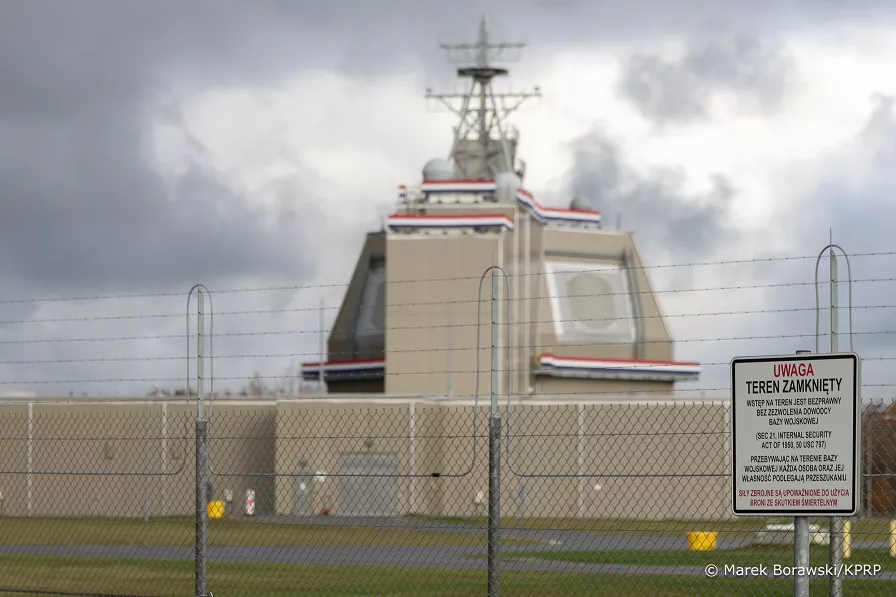
Photo: Marek Borawski, Chancellery Of The President of Republic Of Poland

In economic terms, Donald Trump’s tariffs on steel would hit Polish exports. Huta Częstochowa exports around 20% of its output to the United States, which could result in annual losses of up to 200 million EUR, according to Poland’s Central Statistical Office (GUS). At the same time, Poland could benefit from the EU’s Green Deal by receiving up to EUR 30 billion from cohesion funds for its energy transition, for example, through the construction of a nuclear power plant in Żarnowiec using French EDF technology, bypassing U.S.-based Westinghouse.

Within the framework of multilateralism, Poland could strengthen its role at the United Nations by increasing its contribution to the United Nations Population Fund (from 5 million EUR to 10 million EUR), supporting programs in Africa. However, the government may remain divided: pro-American rhetoric versus the need for EU unity, a tension already visible in 2025 during disputes over the rule of law. Poland could also lobby more strongly for NATO’s Eastern Flank, but without U.S. backing, this would require a further increase in national defense spending.

EU Response

Responses vary, from condemnation voiced through the High Representative to pragmatic adaptation. European leaders such as Ursula von der Leyen have called for strengthening Europe, which may translate into pressure for deeper integration, already visible in initiatives such as joint defense borrowing or treaty reforms pursued outside traditional EU institutional frameworks (for example, the EU–Mercosur agreement). Opportunities include strengthening strategic autonomy through new agreements and alliances, such as a prospective trade deal with India, estimated at 10 billion EUR, and an increase in the EU’s global influence.

However, the risk of fragmentation within the European Union remains. Hungary offers a telling example. In 2025, Prime Minister Viktor Orbán signed a bilateral agreement with the United States covering gas supplies, as well as the purchase of U.S. nuclear fuel and technology for a nuclear power plant being expanded by Russia. Russia’s state-owned company Rosatom is currently building two new nuclear units, each with a capacity of 1,200 MW. The project, known as Paks II, is one of the Orbán government’s flagship energy investments. Its total value is expected to reach around 12 billion EUR and is to be fully financed by the Hungarian state, which has borrowed the necessary funds from Russia. Such actions weaken the European Union’s energy solidarity.

What Will Be the Future of the European Union?

The withdrawal of the United States from more than sixty international organizations, including key United Nations bodies, under Donald Trump’s second administration, represents both the greatest crisis of trust within the transatlantic community since the end of the Cold War and the most serious impulse for Europe’s strategic awakening since the creation of the European Communities. Washington’s decision unequivocally undermines multilateralism as a principle for organizing the world. Europe, which for decades could rely on American guarantees, funding, and a political umbrella, suddenly finds itself in a position where it must independently define the rules of the game in areas such as climate policy, public health, trade, technology, and security. This is no longer a question of whether Europe should become more autonomous, it is a question of necessity. Europe must become autonomous because there is no longer an alternative.

Paradoxically, this very compulsion may prove salutary. For years, the European Union developed in the shadow of American dominance, allowing it to avoid difficult choices such as building its own defense capabilities, pursuing a coherent industrial policy, or competing with China on its own territory. That comfort is now gone. Europe is being forced to assume full responsibility for itself. Whether this crisis turns into an opportunity hinges on two conditions: preserving unity and making real investments in autonomy. If member states can refrain from bilateral arrangements with Washington or Beijing and instead deepen cooperation within the EU, especially in defense, critical raw-material supply chains, quantum and space technologies, and climate policy, Europe will emerge from this period stronger than it entered it.

What today appears to be a dramatic weakening of the West may ultimately mark the moment when Europe ceases to be the junior partner and becomes an independent pole of power. Europe minus one, without the American umbrella, but with its own defense budget and strategic vision, does not have to be weaker. Which path Europe ultimately chooses will be revealed over time.