





Defence & Space

Enforce Tac 2026: AKU Sentinel LTR Boots

AKU, an Italian manufacturer of professional footwear known in the military sector for the Pilgrim line, is introducing a new model to its…

2026-03-09 | Michał Ihnatów | 4 minutes

Delegation from the Kingdom of the Netherlands Visits WB Group

A delegation of representatives of the Dutch defense industry visited Poland as part of a mission related to programs of the European Defence Fund…

2026-03-09 | Redakcja | 3 minutes

Update on the Situation in the Islamic Republic of Iran

The events that unfolded in the Middle East between February 10 and 28, 2026, constitute one of the most dramatic chapters…

2026-03-01 | Adam Frelich | 38 minutes

The SAFE Program (Security Action for Europe) as the Foundation of a New European Defense Architecture and Industrial Sovereignty

The Security Action for Europe (SAFE) Instrument, adopted by the Council of the European Union on 27 May 2025, constitutes the most…

2026-02-17 | Adam Frelich | 18 minutes

Second Iranian Missile Attack Attempt Against Turkish Territory

The Turkish Ministry of Defense reported that NATO air and missile defense forces shot down another Iranian ballistic missile, which…

2026-03-09 | Rafał Muczyński | 3 minutes

The Last Operational F-14 Tomcats Likely Destroyed

The Israeli Air Force reportedly destroyed what were likely all operational F-14A/AM Tomcat interceptor fighters of Iran at the 8th Tactical…

2026-03-09 | Rafał Muczyński | 4 minutes

Italy’s Leonardo and Spain’s Indra Sign Cyber Defense Cooperation Agreement

Leonardo and Indra Group have signed a Memorandum of Understanding in the field of cyber defense. The aim of the agreement is…

2026-02-20 | Rafał Muczyński | 4 minutes

Cybersecurity and AI: Polish Armed Forces Join Forces with Dell Technologies Polska and the SpeakLeash Foundation

The Cyberspace Defence Component Command has signed a cooperation agreement with Dell Technologies Polska and the Fundacja SpeakLeash in the field of…

2026-02-18 | Redakcja | 5 minutes

WB Group’s Cooperation with Britain’s Applied AGI

The Embassy of the Republic of Poland in London organized an event showcasing the cooperation between WB Group and the UK’s…

2026-03-07 | Rafał Muczyński | 4 minutes

Drone World Expo 2026: Unmanned Systems from FlyFocus

During the first edition of the DRONE World Expo, held from March 3 to 5 this year, the exhibit of the Warsaw-based company…

2026-03-04 | Grzegorz Sobczak | 4 minutes

Enforce Tac 2026: AKU Sentinel LTR Boots

AKU, an Italian manufacturer of professional footwear known in the military sector for the Pilgrim line, is introducing a new model to its…

2026-03-09 | Michał Ihnatów | 4 minutes

Delegation from the Kingdom of the Netherlands Visits WB Group

A delegation of representatives of the Dutch defense industry visited Poland as part of a mission related to programs of the European Defence Fund…

2026-03-09 | Redakcja | 3 minutes

Tender for Five HEMS Helicopters for the Polish Air Ambulance Service

The Polish Air Ambulance Service has announced the launch of a tender procedure for the delivery of five helicopters to support the…

2026-03-04 | Rafał Muczyński | 4 minutes

Airbus Helicopters to Upgrade the Capa-X UAV for the European M2UAS Program

The company Survey Copter, a subsidiary of Airbus Helicopters, has been selected by the European Defence Agency (EDA) to carry out the M2UAS…

2026-03-04 | Rafał Muczyński | 3 minutes

Second Iranian Missile Attack Attempt Against Turkish Territory

The Turkish Ministry of Defense reported that NATO air and missile defense forces shot down another Iranian ballistic missile, which…

2026-03-09 | Rafał Muczyński | 3 minutes

The Last Operational F-14 Tomcats Likely Destroyed

The Israeli Air Force reportedly destroyed what were likely all operational F-14A/AM Tomcat interceptor fighters of Iran at the 8th Tactical…

2026-03-09 | Rafał Muczyński | 4 minutes

Polish–Slovak Defense Industry Dialogue in Bratislava: Borsuk and Rosomak IFV in the Background

During the Polish–Slovak Defense Industry Dialogue 2026 in Bratislava, it was announced that the Polish and Slovak defense industries are in talks…

2026-03-03 | Redakcja | 8 minutes

Poland Interested in France’s Advanced Nuclear Deterrence Program

French President Emmanuel Macron said that France is holding talks with eight countries, including Poland, regarding an advanced nuclear deterrence…

2026-03-02 | Rafał Muczyński | 5 minutes

Poland: The ARGUS Satellite Operations Center Has Reached Operational Readiness

Satellite Operations Center (Centrum Operacji Satelitarnych, COS) of the Agency for Geospatial Intelligence and Satellite Services (ARGUS) has reached operational…

2026-03-05 | Rafał Muczyński | 4 minutes

ICEYE launches deforestation monitoring solution to accelerate enforcement against illegal tropical forest loss

Polish-Finnish company ICEYE, a leader in disaster intelligence from space, today announced the launch of its deforestation monitoring solution.

2026-03-03 | Rafał Muczyński | 4 minutes
Shooting

Enforce Tac 2026: AKU Sentinel LTR Boots

AKU, an Italian manufacturer of professional footwear known in the military sector for the Pilgrim line, is introducing a new model to its…

2026-03-09 | Michał Ihnatów | 4 minutes

Meprolight introduces Sting Lumina, a CQB solution developed in collaboration with Special Forces units

Israeli-based Meprolight has introduced the Sting Lumina, a state-of-the-art dual wavelength compact laser pointer with integrated IR illuminator.

2026-03-06 | Redakcja | 2 minutes

Meprolight introduces Sting Lumina, a CQB solution developed in collaboration with Special Forces units

Israeli-based Meprolight has introduced the Sting Lumina, a state-of-the-art dual wavelength compact laser pointer with integrated IR illuminator.

2026-03-06 | Redakcja | 2 minutes

KJI Mag Series – Alternative Rifle Tripod Mounting System That Make Shooting Easier

We recently wrote about KJI and its new products in connection with SHOT Show 2026. This time, we’re taking a closer look at a line…

2026-02-17 | Mariusz Piwowar | 5 minutes

Enforce Tac 2026: AKU Sentinel LTR Boots

AKU, an Italian manufacturer of professional footwear known in the military sector for the Pilgrim line, is introducing a new model to its…

2026-03-09 | Michał Ihnatów | 4 minutes

Direct Action invites you to Enforce Tac 2026

Direct Action, a brand known for its high‑quality apparel and gear for professionals, invites you to visit its booth at Enforce Tac 2026…

2026-02-17 | Michał Ihnatów | 3 minutes

„Crisis Preparedness”: IWA addresses current issues

IWA OutdoorClassics, the world’s leading exhibition for hunting, shooting sports, outdoor equipment and civilian security, is once again placing a highly…

2026-02-19 | Michał Ihnatów | 5 minutes

Direct Action invites you to Enforce Tac 2026

Direct Action, a brand known for its high‑quality apparel and gear for professionals, invites you to visit its booth at Enforce Tac 2026…

2026-02-17 | Michał Ihnatów | 3 minutes

IWA 2026: Bergara – New Additions to the Premier and B14 Lines

Bergara, a Basque Country–based firearms manufacturer, unveiled new products for demanding hunters at IWA OutdoorClassics 2026, including new models in its Premier and…

2026-03-05 | Michał Ihnatów | 5 minutes
Strzelba bullpup Smith & Wesson M&P 12

SHOT Show 2026: Smith & Wesson – New FPC Variants and a Kel-Tec Challenger

This year’s SHOT Show in Las Vegas belonged to Smith & Wesson. The American giant not only expanded its best-selling line of…

2026-02-18 | Jakub Buczma | 4 minutes

SightMark Mini Shot M-Spec M1 V2 – a Complicated Name for Simple, Reliable Gear

The name of this unassuming little SightMark device sounds like the name of a vampire from The Witcher saga: Emiel Regis…

2025-11-26 | Anna Mielczarek | 9 minutes

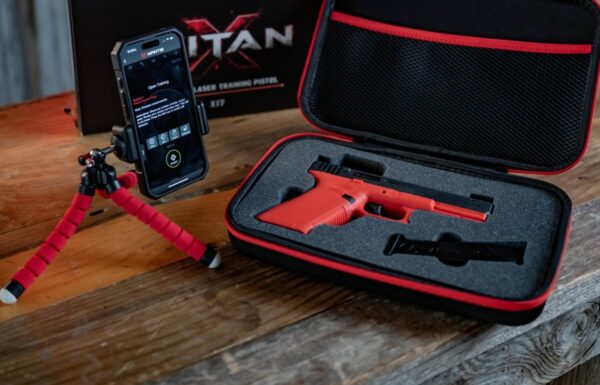
Mantis TitanX – dry fire training taken to a new level?

Mantis, the American manufacturer of dry fire training solutions, introduces the TitanX – a laser-based training device that replicates a Glock-style pistol…

2025-11-13 | Michał Ihnatów | 4 minutes

Growth in Firearm Permits in Poland Continues in 2025

The National Police Headquarters has released a report on firearm permits in Poland in 2025. The number of shooters continues to increase, with nearly 45,000…

2026-02-06 | Michał Ihnatów | 6 minutes

Poland: Temporary Ban on Carrying Firearms in Warsaw on November 11, 2025

Minister Marcin Kierwiński has instructed the security services to take measures ensuring safety during the Independence March in Warsaw and other events…

2025-10-30 | Michał Ihnatów | 5 minutes

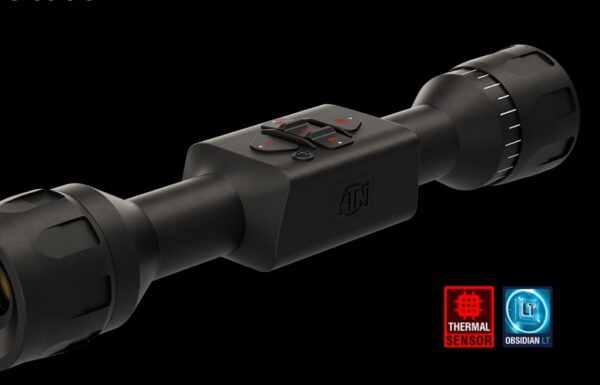
5 Best Value ATN Rifle Scopes Under €1500

ATN is a leading manufacturer of daytime optics, smart night vision, and thermal vision technology. The innovative features and ergonomic designs…

2022-11-11 | Redakcja | 9 minutes

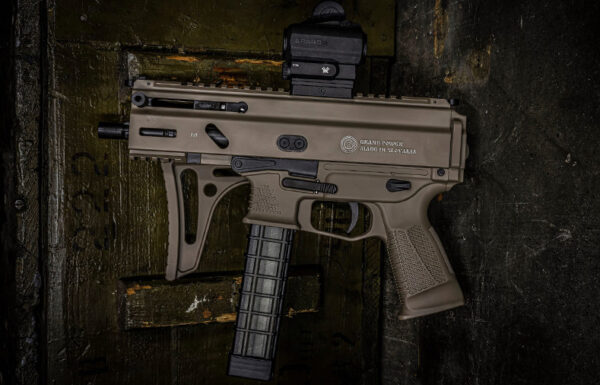
MILMAG Visits Grand Power

Grand Power is a Slovak manufacturer of the acknowledged good quality firearms. Take part in our guided tour with English subtitles.

2022-05-23 | Redakcja | 1 minutes

KJI Mag Series – Alternative Rifle Tripod Mounting System That Make Shooting Easier

We recently wrote about KJI and its new products in connection with SHOT Show 2026. This time, we’re taking a closer look at a line…

2026-02-17 | Mariusz Piwowar | 5 minutes

STEYR ATC & ATD – The Austrian Approach to Dynamic Shooting

The ATC and ATD mark the first time Steyr openly states: we are entering the dynamic shooting market, but we are doing…

2026-02-05 | Grzegorz Kochan | 19 minutes

EOTECH Holographic Sight – History, Technology, Practice

The holographic sight is a device known for nearly 30 years and used by professionals around the world. A favorite sight of many…

2024-09-02 | Michał Gaweł | 12 minutes

STEYR ATC & ATD – The Austrian Approach to Dynamic Shooting

The ATC and ATD mark the first time Steyr openly states: we are entering the dynamic shooting market, but we are doing it our own way. Without creating an entirely new platform, without pursuing revolution for the sake of revolution. Instead, the company has chosen to refine what was already good and adapt it to the realities of the sport. It is a very Austrian approach. Perhaps not spectacular, but effective.

A Brief Introduction

Photo: Grzegorz „Szkot” Kochan, MILMAG

On a dynamic shooting range, there is a moment you never see in videos and that never appears in tables. The split second between the timer’s beep and the first shot. A fraction of time in which you already know everything: does the gun sit in your hand the way it should, or do you need to adjust it? Is the grip natural, or forced? Will you trust what you are holding, or will you fight it throughout the entire stage?

It is in that silence, before the report shatters the air, that the truth about a pistol reveals itself.

The Steyr ATC and ATD do not try to drown out that silence. They do not distract. They do not impose themselves. They simply exist, and wait for you to do your part. This approach is rare today, because the sports firearms market has learned to shout. More aggressive shapes, longer names, louder marketing promises. “Faster,” “better,” “higher.” Steyr moves in exactly the opposite direction. And that is precisely why these pistols deserve a long-form article, not a short note.

Because the ATC and ATD are not an answer to a trend. They are an answer to the question every dynamic shooter eventually asks after a few seasons: does my firearm help me shoot — or does it get in my way?

Engineering Instead of Marketing

Steyr has never been a company that chases trends. In the world of handguns, that is a rather unusual stance, as the market has long thrived on repeating the same patterns. Someone introduces something, it sells – and the rest either copy it or try to present it as something entirely different. Glock set the standard for the polymer service pistol, and for two decades others attempted either to improve upon it or to pretend they were doing something fundamentally new. Steyr, from the very beginning, stood slightly apart.

Even the company’s first polymer designs looked as though they had been created not to meet procurement requirements, but to fit the human hand. The distinctive grip angle, the deeply seated grip, the low bore axis – all of this was present at a time when much of the market did not yet fully understand why such features mattered. The result? Pistols that some shooters loved from the very first contact, while others immediately rejected them.

Steyr did not try to convince the latter. That is important, because the same attitude returns today with the ATC and ATD. These are not designs created to appeal to everyone. They are built around a very specific vision of the shooter – someone who spends real time on the range, who knows what hand fatigue feels like after several hundred rounds, who understands that ergonomics is not a matter of taste but of biomechanics.

For many years, the brand was associated primarily with the service and military market. The M and L models, later the A1 and A2 MF, were pistols designed for duty. Reliable, durable, predictable. Sport was present, but never the central direction of development.

The ATC and ATD mark the first time Steyr openly says: we are entering the dynamic shooting market – but we are doing it our own way. Without creating an entirely new platform, without pursuing revolution for the sake of revolution. Instead, the company chose to refine what was already good and adapt it to the realities of the sport. It is a very Austrian approach. Perhaps not spectacular – but effective.

Two Ways, One Objective

The ATC and ATD differ in size, weight, and intended purpose, yet they share a common character, something you can feel from the very first grip. These are not “soft” pistols in their demeanor. They do not try to be friendly like recreational firearms; they are neutral. If you make a mistake, they will expose it mercilessly. If you do everything right, they reward you with consistency.

The ATC is clearly oriented toward dynamic shooting. A longer slide, greater mass, enhanced stability during rapid fire. It is a pistol that thrives on pace and handles pressure well. It does not make the shooter faster on its own, but it allows them to maintain rhythm when other designs begin to “float.”

The ATD is more versatile. Shorter, lighter, a classic duty gun. It does not feel like a compromise; rather, it is a pistol that seems to say: you can do anything, as long as you do it deliberately.

Dynamic shooting has changed significantly over the years. There was a time when equipment mattered most, then tuning became the focus. Today, more often than not, composure is what counts. Competitors understand that the differences between pistols are smaller than ever, and that an advantage is built through consistency, ergonomics, and trust in one’s firearm.

The Steyr ATC and ATD fit perfectly into this moment. These are pistols that do not try to be stars. They are tools, and in a sport measured in fractions of a second, a tool can matter more than a legend.

How the ATC and ATD Perform in Practice

If earlier I wrote about where Steyr came from and why it appeared on IPSC stages in the first place, now we move into the area that is truly decisive for a dynamic shooter. Not in theory, but in practice. In sweat, in fatigue, in mistakes that never show up in slow-motion footage. Because the truth about a competition pistol does not reveal itself in the first magazine, nor in the third. It emerges when your hands begin to feel heavy, when concentration starts to fade, when the stage is long and you know that every mistake will cost time you will never get back.

Ergonomics Without Gimmicks

In the world of modern pistols, ergonomics has become a buzzword. Every manufacturer talks about it; every brand claims its firearm fits perfectly in the hand. The problem is that, all too often, nothing tangible stands behind the claim. Ergonomics is frequently subordinated to aesthetics, production compromises, or simply to trends. Steyr approaches ergonomics differently, more like an engineer, less like a marketer.

The first contact with the ATC or ATD can be surprising, especially for shooters raised on Glock. The grip angle is different, the hand sits deeper, and the wrist operates in a more neutral position. For some, it feels as though someone has adjusted their grip without asking; for others, it brings relief. This is not ergonomics designed to impress during a dry grip at a gun store counter. It is meant to reduce fatigue and minimize micro-corrections during real shooting.

The undercut beneath the trigger guard on the ATC is pronounced and deep, no half measures. It allows the hand to ride high, which directly translates into better recoil control. On the ATD, it is slightly more restrained, yet still clearly superior to many strictly duty-oriented designs.

The grip texture deserves a paragraph of its own. It is not the kind of aggressive, cheese-grater-style surface that leaves your hands battered after a full day of shooting. Instead, it is functional texturing – sharp enough to maintain control in any conditions, but not excessive. After a few hours on the stage, you begin to appreciate that approach.

Balance and Weight – Where Theory Meets Practice

The ATC is noticeably heavier than the ATD, and you feel it immediately. But more important than the overall weight is how that weight is distributed. The slide and barrel of the ATC provide clearly greater front-end stability, which during rapid fire acts like a natural dampener. The pistol does not jump off target; instead, it makes a short, predictable movement.

This is not a handgun that does everything for the shooter. Proper grip and recoil management are still essential. But the ATC forgives more. It allows you to maintain rhythm when other designs begin to drift apart.

The ATD, by contrast, feels more lively. It reacts faster to input and transitions between targets more quickly. For shooters who favor dynamic target-to-target movement, it may even feel more enjoyable. It provides more feedback – you feel every shot, every return of the slide.

And this is where an important point emerges: neither of these pistols imposes a shooting style. They adapt to it.

The Trigger — The Unsung Hero of Dynamic Shooting

Steyr’s trigger is not something people talk about loudly. And perhaps that is precisely why it works so well in the context of dynamic shooting. It is not ultra-light, nor is it race-tuned. It does not deliver a “wow” factor during dry fire, but it is predictable, and in dynamic shooting, predictability is currency.

The take-up is noticeable, the resistance builds in a linear manner, the break is clear, and the reset is distinct, though not excessively short. It is a trigger that allows you to work with rhythm rather than forcing you to constantly micromanage your finger.

Compared to the competition:

  • Glock tends to feel more rubbery,
  • Walther is more overtly sporty, but also more nervous,
  • Canik can be faster, yet less refined.

Steyr sits somewhere in between. It is a trigger for people who shoot a lot – and do not want to wrestle with their gun.

Recoil and Return to Target – The Mathematics of Fractions of a Second

Matches are not won with a single shot. They are won with strings of shots that form a coherent whole, and this is where the ATC truly shows its value. The recoil is short and controlled, without lateral surprises. The pistol returns to where it was, and you get the sense that the target is “waiting” for the next shot. It is difficult to describe technically, but every experienced shooter knows exactly what it means. It is the moment when you stop chasing the front sight or the dot, and start driving it.

The ATD does the same, only a bit faster and with slightly more aggression. For some, that will be a drawback; for others, an advantage. It ultimately comes down to style.

Performance on the IPSC Stage

In practice, both pistols perform very well within the realities of IPSC.

In the Production division, the ATD feels like a natural choice. It is stable enough, fast enough, and does not require ergonomic compromises. The ATC, depending on configuration, can also appear here, although its full potential is better utilized elsewhere.

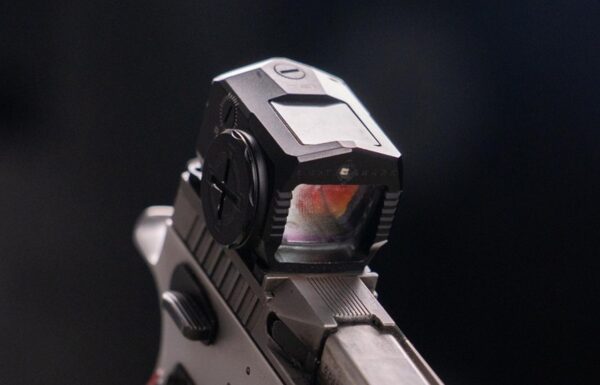
Production Optics is the obvious direction today, and Steyr does not pretend otherwise. Both pistols are sensibly prepared for optics, without unnecessary complications. The low mounting position of the red dot makes a significant difference in dynamic shooting – the dot tracks where it should, rather than “floating” above the bore axis.

Standard is the environment where the ATC truly begins to breathe. Its mass, stability, and geometry provide an advantage with hotter ammunition and rapid shot strings.

Open? That is not their world. And that is perfectly fine – they do not need to be everything to everyone.

Steyr Against the Competition

Comparisons are inevitable, but they should be made fairly.

  • Glock still wins in terms of parts availability and shooter familiarity – that is a fact. Yet ergonomically and in recoil control, Steyr takes a step further.
  • The Walther PDP is an excellent competition pistol, highly refined and more “aggressive” in its character. Steyr, by contrast, is calmer and more technical in its demeanor.
  • Canik offers a great deal in its out-of-the-box package, but Steyr delivers something different – a refinement of operation that you come to appreciate over time.
  • CZ boasts fantastic balance, though its geometry does not suit everyone. Steyr, once again, follows its own path.

There is no single winner here – only different philosophies. And that, ultimately, is good news.

STEYR ATC and ATD – The Austrian Answer to Pace, Pressure, and the Silence Between Shots

At a certain stage in dynamic shooting, you stop asking, “Is this gun good?” You begin asking far less flashy, but far more important, questions. How long will it retain its characteristics? How does it handle shooter fatigue? After several seasons, will it still perform exactly the same? And after hundreds of hours on the range, will it start to irritate you with small details that once seemed insignificant?

That is the moment when the ATC and ATD begin to make sense.

Optics as a Foundation, Not an Afterthought

Just a few years ago, manufacturers treated red dot mounting as an option. Today, it is no longer optional – it is the standard. Steyr understands this perfectly, and with the ATC and ATD there are no half measures. Both pistols are designed with optics in mind from the very beginning. That translates into several factors that make a real difference on the stage. First, the low mounting position of the red dot. The dot does not sit high above the bore axis, it does not require “searching” for it on the draw, and it does not force you to change your habits. Second, a sensible mounting plate system that accommodates popular footprints without awkward workarounds or improvised adapters.

This may sound trivial, but anyone who has shot dynamically with a red dot mounted too high knows how much time and frustration it can cost. Steyr approaches the issue from an engineering standpoint: the dot should be where you are looking – the rest is irrelevant.

In practice, the ATC with a red dot is a very stable platform. The mass of the slide and the overall geometry keep the dot tracking calmly, without nervous jumps. The ATD feels more lively, yet remains predictable. Once again, it comes down to style – some shooters prefer a “floating” dot, others want it to feel almost motionless.

Reliability and Long-Term Performance

Steyr does not build pistols for short-term testing. These are not designs meant to shine in a review after 300 rounds. Their true character reveals itself over extended use.

The mechanics of the ATC and ATD are refined and conservative. There are no exotic solutions that look impressive on diagrams but cause issues after a few thousand rounds. The slide runs smoothly, the rails are robust, and the tolerances are set to ensure reliable operation with both training ammunition and hotter loads.

In practice, this means one thing: these pistols are not temperamental. They do not demand special care, they do not “take offense” at lower-quality ammunition, and they do not change their character after a longer interval between cleanings. For a dynamic shooter, that is a major advantage – a competition firearm should not become another source of stress.

Tuning and aftermarket

This needs to be said plainly: Steyr does not have an aftermarket ecosystem like Glock. It probably never will. If someone is looking for a platform with a hundred different trigger options, ten types of slides, and fifty mounting plates – this is not the place. At the same time, the ATC and ATD do not require extensive tuning to perform well. The trigger is sufficiently predictable, the ergonomics are well thought out, and recoil control is at a high level. Yes, upgrades are available – springs, trigger components, grip panels – but these are refinements rather than necessities. Once again, this aligns perfectly with Steyr’s philosophy: the firearm should work straight out of the box, not only after spending thousands more on modifications.

What’s in the Box?

This is a question that comes up frequently, and rightly so. One important point, however, must be made: box contents may vary depending on the market and distributor. Steyr does not always ship identical packages to every region.

In a standard configuration, when purchasing a Steyr ATC or ATD, you can generally expect:

  • the pistol itself,
  • two magazines (three in some versions),
  • a set of mounting plates for optics,
  • interchangeable grip backstraps (in different sizes),
  • factory-installed iron sights,
  • the manual and basic mounting tools.

It is not a “rich starter package” in the style of some sport-oriented brands, but it is complete and fair. You receive everything necessary to head to the range and start shooting – including with a red dot.

Technical comparison of ATC vs ATD

Below is a summary of the key specifications of both models. The figures may vary slightly depending on the version and market, but they accurately reflect the character of each design.

ATC 5”

ATD Compact Comp

Cartridge

9 mm x 19 Para

Purpose

Sport / Dynamic Shooting

Sport / Duty

Total length

221 mm

195 mm

Barrel length

127 mm

101 mm

Weight without magazine

1141 g

782 g

Frame

Stainless steel

Aluminum

Action

SA/DA

Optics mounting

Mounting plates

Magazine capacity

18 / 20 rounds (+2 extension)

Personality

Stable and calm

Quick and lively

This table does not tell the whole story, but it clearly illustrates the philosophical differences. The ATC is heavier, longer, and distinctly focused on stability. The ATD is shorter, lighter, and more versatile.

A Purposeful Choice for the Right Shooter

The Steyr ATC and ATD are not pistols chosen by accident. They tend to find their way into the hands of people who know what they want – or at least know what they no longer want.

If you are looking for a firearm that:

  • does not impose a shooting style,
  • does not require constant tuning,
  • allows you to focus on performance rather than equipment,
  • behaves predictably even when you are no longer at your best,

then Steyr makes sense.

It is not a “trendy” gun. It is not an “Instagram” gun. It is a gun for shooters who understand that dynamic shooting is not only about speed, but also about composure and consistency.

Conclusion

On a dynamic stage, many factors matter. Equipment is only one of them. Yet poorly chosen equipment can ruin everything. The Steyr ATC and ATD are examples of designs that do not try to be more important than the shooter. They simply accompany them.

And perhaps that is precisely why, after several thousand rounds, you begin to see them not as a “new pistol,” but as something far more natural. A tool you know. One you trust. One that does its job when you do yours.

And in dynamic shooting, that is often enough to win against those who are still searching for the perfect gun.

We would like to thank Hubertus PRO, the distributor of the Steyr brand, for providing the ATC and ATD pistols for testing.

Sponsored content. Product testing is conducted independently, and the opinions expressed are solely those of the author. The advertiser has no influence over the content of the review.