




















Reading statements by politicians from the Polish right and the comments under their posts, I increasingly support mandatory psychiatric evaluations before taking up a parliamentary mandate, as well as compulsory, even basic, military training. Not to mention that politicians should be punished with particular severity for spreading false information and manipulating facts. I have not read such a volume of claims detached from reality in a long time. What is truly alarming is that this was happening with the applause of voters.
 Photo: Forsvaret
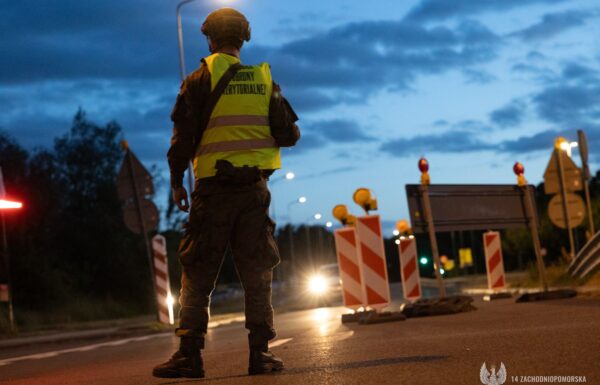
The appearance of small groups of soldiers from several NATO countries in Greenland was neither a show of force nor the beginning of a permanent troop deployment. It was a classic operational and logistical reconnaissance. The purpose of such groups is not to conduct combat operations, nor even to prepare for them in a direct sense. Their task is to collect data that cannot be fully obtained from a desk at headquarters, even with access to satellite imagery and intelligence reports.
Reconnaissance in this form includes assessing port and airfield infrastructure, the real capacity to receive allied forces, the availability of fuel, storage facilities, technical support, access roads, accommodation conditions, and local environmental constraints. It also involves verifying procedures for cooperation with civilian authorities and host-nation forces, including the authorities of Denmark, which is formally responsible for the island’s defense. These are issues that cannot be reliably evaluated without a physical presence on the ground.
Rapid Action
Why were these forces so small, and why did they return after just two or three days? Because reconnaissance, by definition, is limited in both time and scale. A team of a dozen or a few dozen specialists is able, within a few days, to complete its tasks, compile reports, hold consultations, and return home. Keeping them on site longer would make no sense and would only generate unnecessary costs.
It is also worth stating clearly that this was not allied reinforcement, that is, a genuine military strengthening of the region, but rather preventive deployment in its mildest, reconnaissance-focused form. This is a fundamental distinction that some commentators consistently ignore or simply fail to understand. Allied reinforcement would mean the deployment of combat units, logistical support, and command structures. Greenland, by contrast, saw at most symbolic contingents whose role was to prepare the ground for potential future political decisions, not to implement them.
The fact that some reconnaissance groups returned to their home countries, while others may remain temporarily as a reception element for future, also symbolic, contingents, is a natural part of the planning process. First, data are collected; then they are analyzed; and only at the very end are political and military decisions made. Reversing this order would be a sign of amateurism, something NATO simply cannot afford.
In simple terms, the soldiers sent to Greenland did exactly what is done before any larger operation or exercise: they checked the conditions, identified real capabilities and constraints, and then reported back. It is the equivalent of visiting a restaurant before hosting a large reception, checking prices, the menu, and availability, and reserving tables. Without such a visit, organizing the event would be pure improvisation.
Stupidity or Treason?
The problem is that part of the right wing of the political scene tries to interpret every NATO move in terms of sensation, betrayal, or a secret plan to subordinate Poland and Europe to foreign interests. Such narratives have nothing to do with military reality, but they fit perfectly into the logic of media-driven outrage that energizes one’s own social media bubbles. Reconnaissance is neither an occupation nor an escalation. It is a planning tool used by all modern armed forces around the world, regardless of political orientation.
Greenland will remain an area of interest for NATO, just like the entire Arctic. That does not mean we will see armored divisions or permanent combat bases there tomorrow. What it does mean is that the Alliance wants to know what is realistically possible before anyone starts making political declarations. And that is precisely why small, short-term reconnaissance teams are sent. Everything else is journalistic fantasy with very little to do with military reality.
This was summed up very well by Maj. (res.) pilot Michał Fiszer: they popped into a bar to check prices and reserve tables before the main event. If everything looks good, a larger group might show up shortly and sit down. Who hasn’t done that when wandering around with a bigger group on a Friday night? Maybe this analogy will get through to some people. Though one can still have doubts.