




















On Saturday, June 20, 2026, the British Ministry of Defence presented at RAF Northolt three prototypes of long-range missiles developed under Project Brakestop by MBDA UK, MGI Engineering, and Rotron Aerospace, intended for the Armed Forces of Ukraine. The program is managed by Qinetiq.
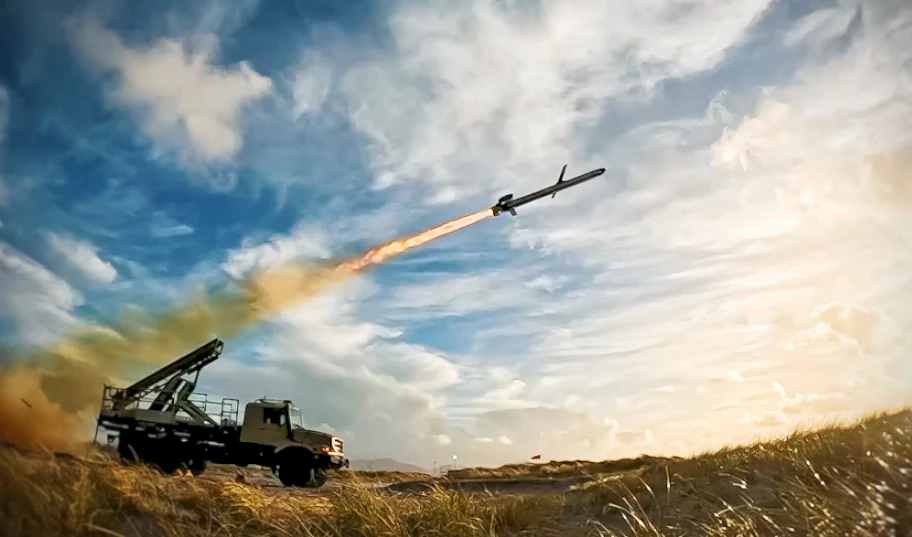 Crossbow / Photo: MBDA UK
Project Brakestop was launched in autumn 2024 as a response to the needs of the Armed Forces of Ukraine for independent long-range strike capabilities. Initial tests have already been conducted at a military range in the Western Isles of Scotland, though some failures were reported, as The Independent newspaper reported. A second phase of the program, worth 15 million GBP, has now been launched, covering the construction of at least 15 improved test missiles along with launchers, so that first deliveries can begin in late 2026 or early 2027. The Ministry of Defence expects a unit price of approximately 400,000 GBP per missile.
MBDA UK (part of the European MBDA consortium) developed the Crossbow One Way Effector (Heavy), a scale model of which was presented at the DSEI 2025 defense and security trade show in London. It was announced that the first flight tests were conducted in December 2025 and February 2026, with the system progressing from design to demonstration in just nine months. Partners in the project include British and European companies. MBDA UK declares the ability to begin serial production still this year.
According to earlier information, the Crossbow OWE (H), with a launch weight of approximately 750 kg, is to carry a modular, multi-purpose, and non-kinetic payload of over 300 kg. It is to measure 5.3 m in length and have a wingspan of 3.5 m. It is to be launched from a ground platform with one or two launchers and achieve a flight range of over 800 km at subsonic speed. The containerized launcher on a 6×6 truck chassis is to be ISO-compliant and 6 m in length, carrying one or two effectors. It is intended for striking high-value stationary targets. The effector is to be equipped with a highly jam-resistant GPS GNSS satellite navigation guidance system, inertial navigation (INS), and an AI-based optical sensor in the terminal phase of flight.
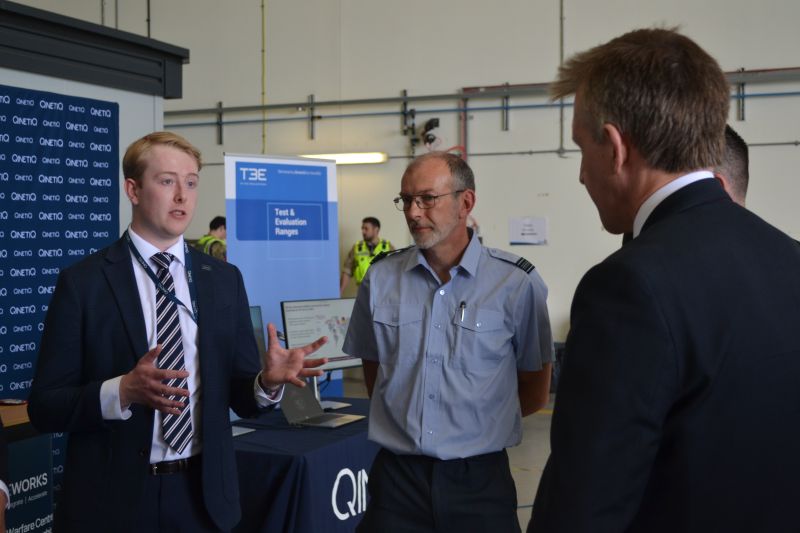

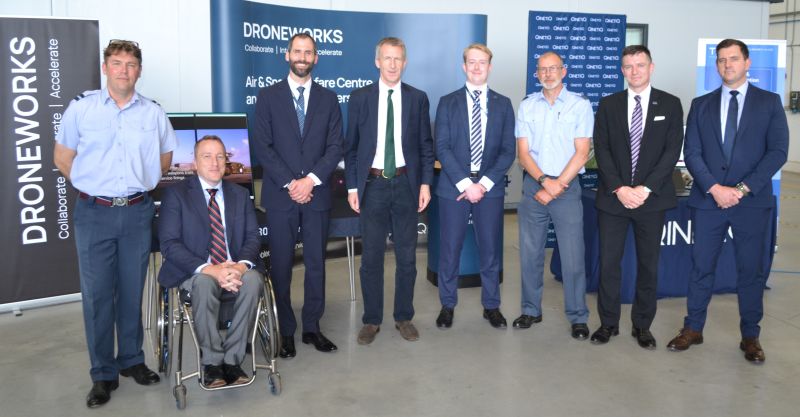


Photos: Qinetiq
MGI Engineering Ltd., in turn, developed the TigerShark missile, which is intended to carry a 300 kg warhead and has a declared range of 1,000 km. The manufacturer states a low unit price of 500,000 USD. The company was founded by Mike Gascoyne, a former Formula 1 car designer.
❗️The United Kingdom has unveiled three prototypes of cruise missiles for Ukraine as part of the Project Brakestop programme.
The weapon is cheaper to manufacture, contains no American components, and was developed by the companies MBDA UK, MGI Engineering, and Rotron Aerospace.… pic.twitter.com/5qDw5Vqc8B
— 🪖MilitaryNewsUA🇺🇦 (@front_ukrainian) June 20, 2026
The third weapon system was developed by Rotron Aerospace and has been named SkyLance One Way Effect. The long-range drone is intended to have a range of up to 1,200 km while carrying a 300 kg warhead (with a smaller warhead, the range would increase – ed.).
Crucially, the components of all three systems are free from US ITAR (International Traffic in Arms Regulations) restrictions.
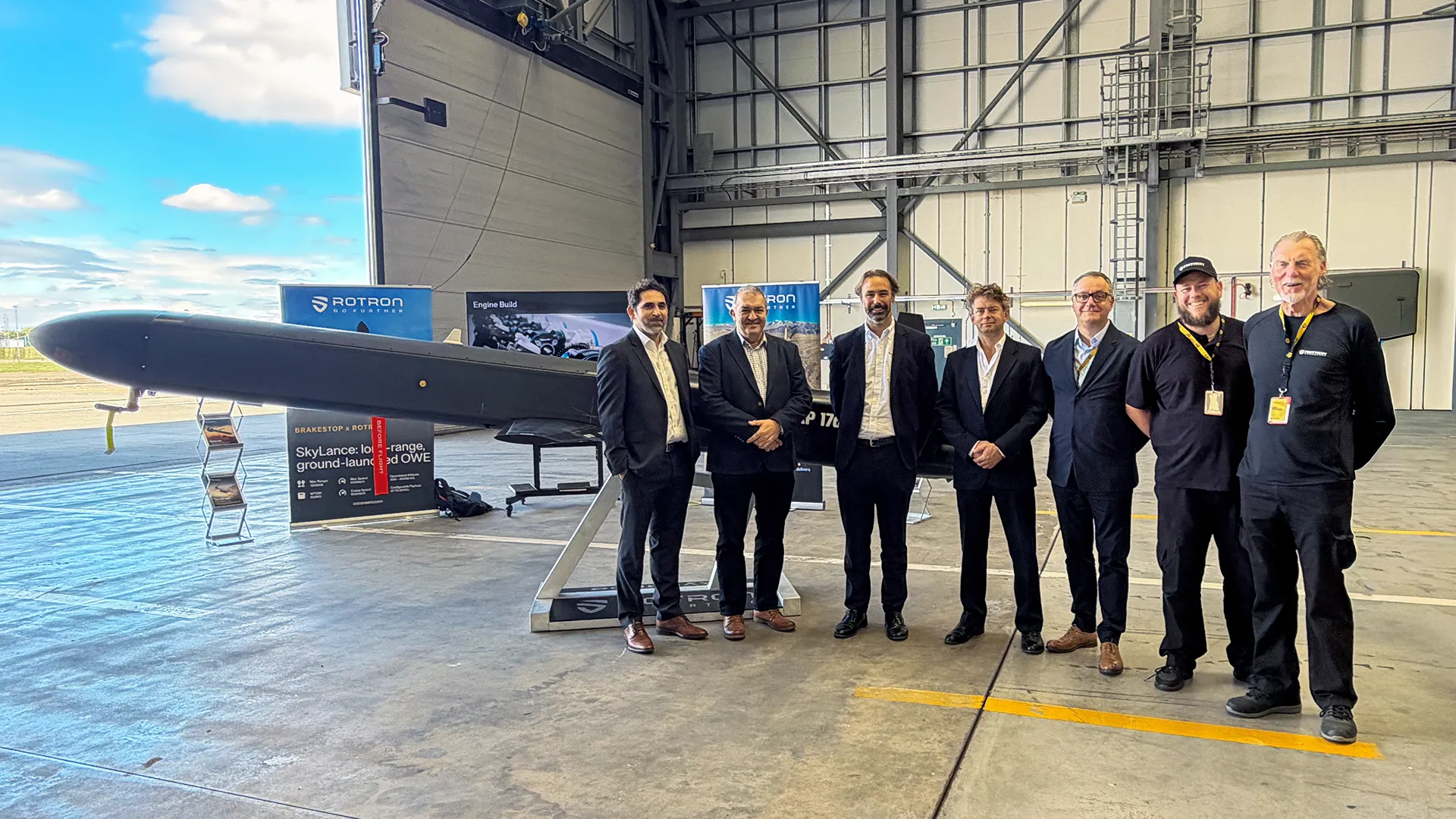 Photo: Rotron Aerospace
As a direct result of Project Brakestop, Rotron Aerospace has already created over 160 highly skilled jobs across the UK defense aerospace sector. This expansion strengthens sovereign industrial capability while supporting economic growth through the development of specialist engineering, manufacturing, and technological expertise.
The key differentiator of the SkyLance system is its advanced propulsion technology, which provides a significantly greater operational range than alternative solutions in its class. Designed, developed, and manufactured entirely in the United Kingdom, the propulsion system ensures full sovereign control over critical technology, manufacturing, and future development.