
























On 23 September 2025 the Wojskowe Zakłady Elektroniczne (WZE; part of the Polish Armaments Group) and Lockheed Martin have carried out validation of the production line for two key processes under the Patriot Advanced Capability-3 Missile Segment Enhancement (PAC-3 MSE) program. These activities represent an important component of fulfilling the offset commitments of the Wisła program.
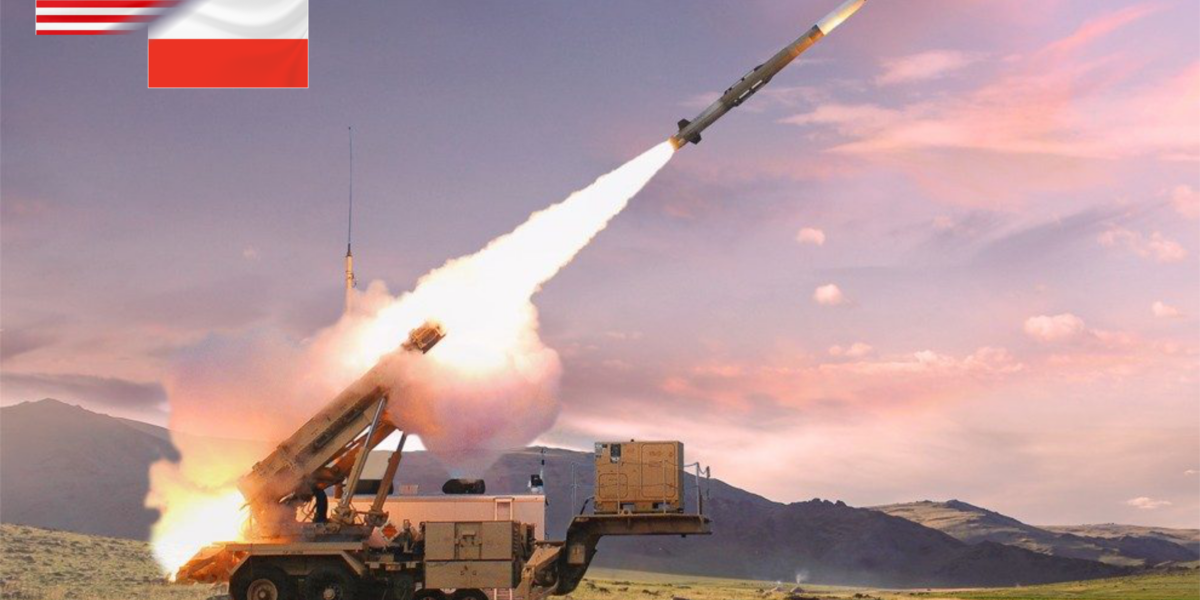 Photo: WZE
The detailed audit, which also involves the U.S. government, aims to confirm that WZE’s ACM (Attitude Control Motors) thrusters and ACS (Attitude Control Section) maneuver-control sections meet quality, safety, and compliance standards. This is a key stage leading into the final phases of launching these two production lines, completing the offset projects, and transitioning to full-scale production.
“Validating the production lines is a major step for WZE on its path to joining the global PAC-3 MSE supply chain and an important milestone in fulfilling the Wisła program’s E4a offset commitment. After five years of implementing the offset agreement, it is clear that this has been a productive and mutually beneficial form of cooperation, as it opens new opportunities for both the U.S. and Polish partners,” said Damian Gorzelany, President of the Military Electronic Works.
The PAC-3 MSE ACS and ACM are critical components responsible for controlling the missile’s flight trajectory and hit-to-kill accuracy. The ACMs, housed within the ACS, fire explosive charges to correct the missile’s course and ensure a body-to-body collision.
“Cooperation with Polish industry benefits the U.S., Poland, and our PAC-3 users worldwide,” said Robert Orzyłowski, Lockheed Martin’s Director for Poland and Central and Eastern Europe. “The new ACS and ACM production lines will allow WZE S.A. to join the global PAC-3 MSE supply chain and will further strengthen our long-term partnership with the Polish defense industry, Orzyłowski added.”
PAC-3 MSE is a key element of Poland’s air and missile defense system. It uses unique hit-to-kill technology that enables direct detection, tracking, and destruction of threats such as ballistic missiles, cruise missiles, advanced aerial targets, and aircraft
See also: