























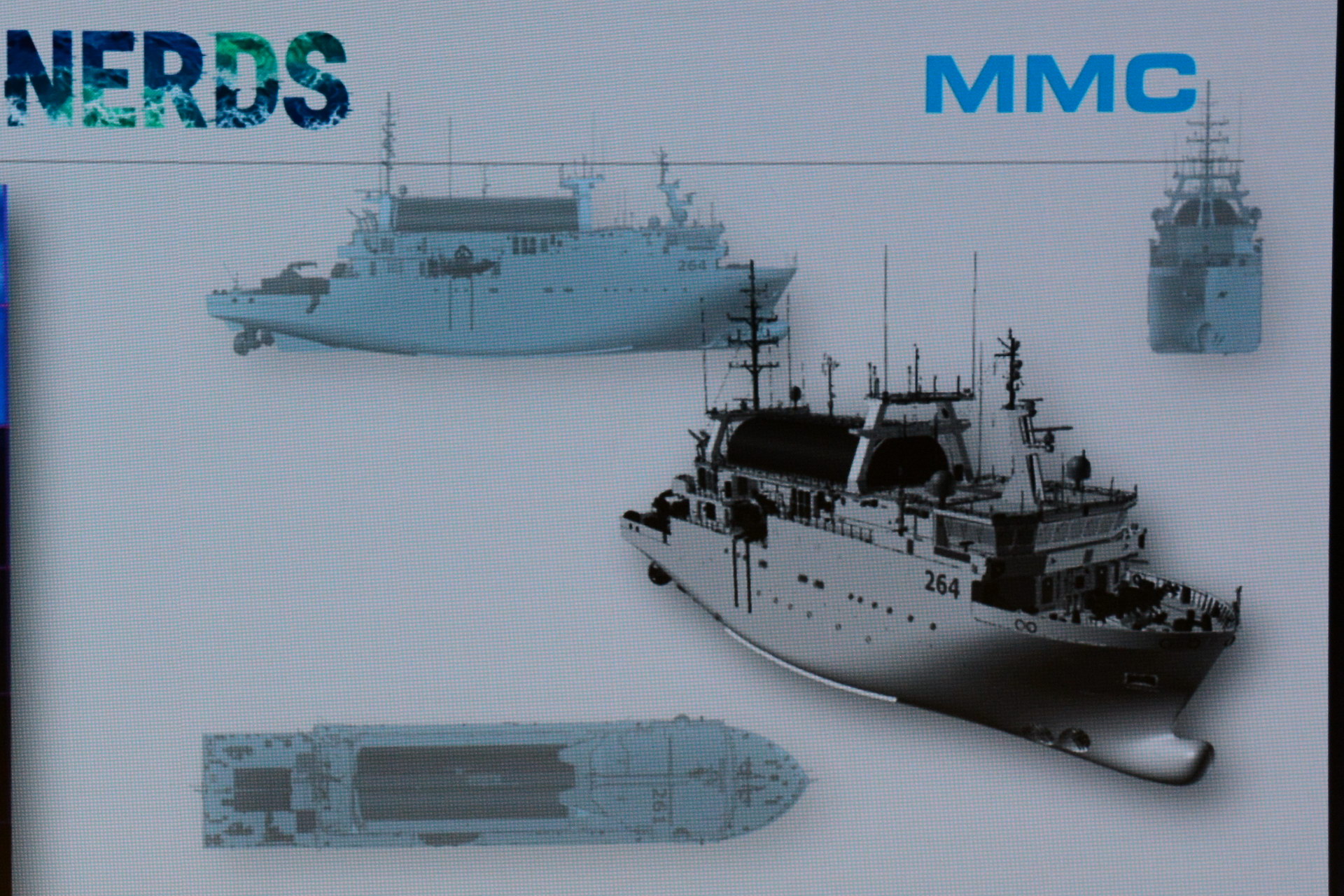
The event was organized by Gdynia-based design office MMC Ship Design & Marine Consulting Ltd together with Saab, with which it cooperates on designs commissioned by the Swedish side for signals intelligence vessels: HMS Artemis for the Swedish Navy and the Project 107 Delfin vessel for the Polish Navy.
 Photos: Przemysław Gurgurewicz, MILMAG
During the presentations and panel discussions, participants discussed issues related to the process of developing a modern naval vessel. The first presentation, by Magnus Olsson of Saab Naval, focused on the process of delivering a warship, showing how decisions made at the pre-contract stage and in the early phases of technical design affect execution, coordination, and delivery efficiency later in the program. From our perspective, the most interesting part of the presentation was its discussion of the similarities and differences between the signals intelligence vessels for Sweden and Poland mentioned in the introduction, which were developed on the basis of similar requirements but designed according to differing national requirements.
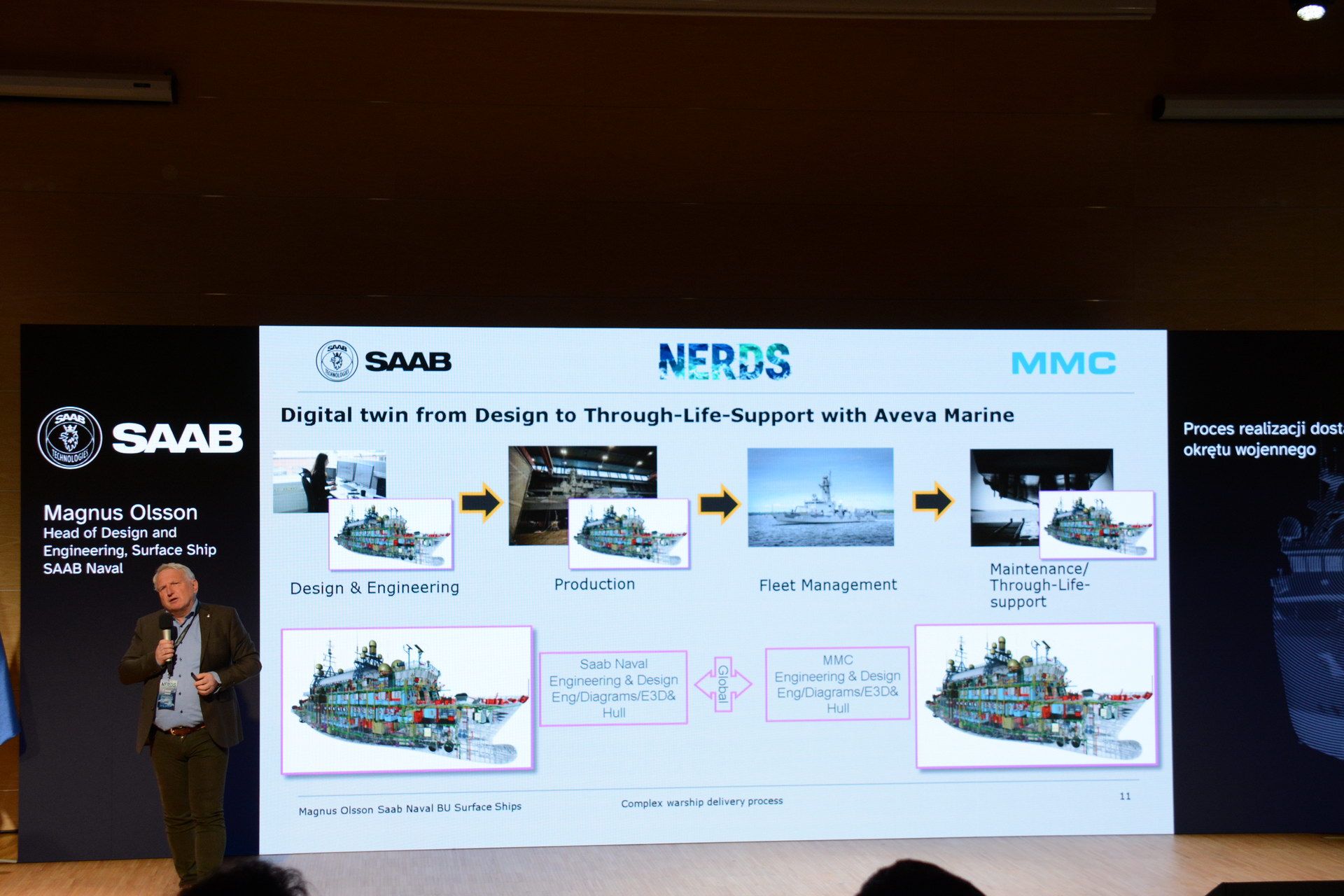 Discussing the warship delivery process, Magnus Olsson of Saab Naval used the Artemis and Delfin signals intelligence vessels delivered by Saab in recent years as examples.
The similarities between Artemis and Delfin included:
- the hull of the same shape and dimensions;
- the ship class;
- the propulsion system, including the electrical power system;
- the integrated automation system, which monitors and controls shipboard systems;
- the same suppliers of basic equipment.
The differences included:
- different shipyards building the vessels;
- a different set of signals intelligence (SIGINT) equipment, although supplied by Saab in both cases;
- crew size and, consequently, different interior layouts and cabin arrangements;
- different formal requirements between Poland and Sweden.
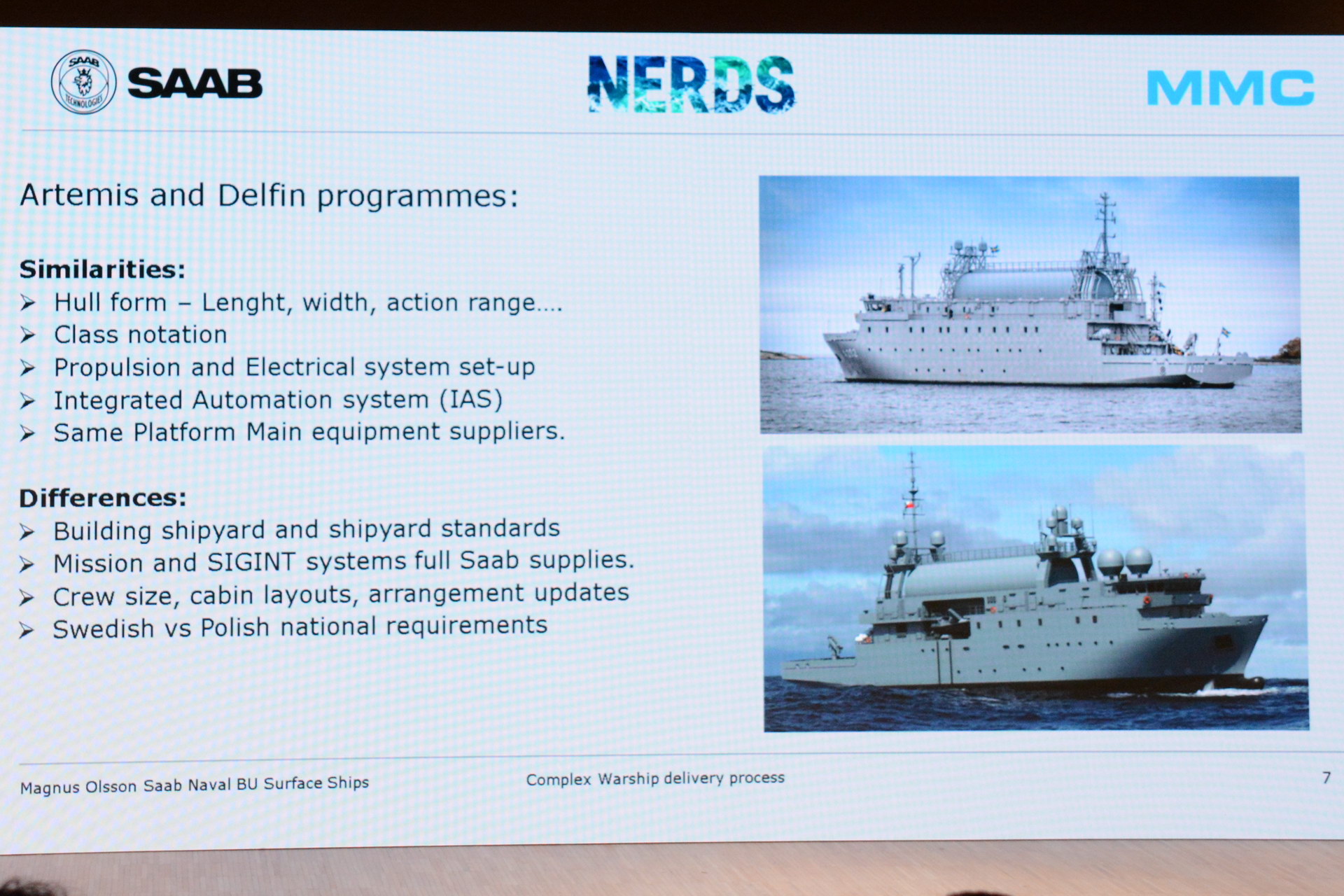 Comparison of the Similarities and Differences Between Signals Intelligence Vessels for Sweden and Poland
This shows that, despite general external similarity, vessels can differ from one another, and that even the use of the same design usually involves smaller or larger modifications resulting from local conditions.
The next part of the symposium discussed the early design stage of vessels, namely the pre-contract phase, during which requirements are defined, as well as the role of the concept design in achieving the result expected by the customer. Particular attention was paid to the need for early alignment between the customer and the prime contractor, which reduces the risk of introducing later changes to the design and, as a result, delays in program implementation.
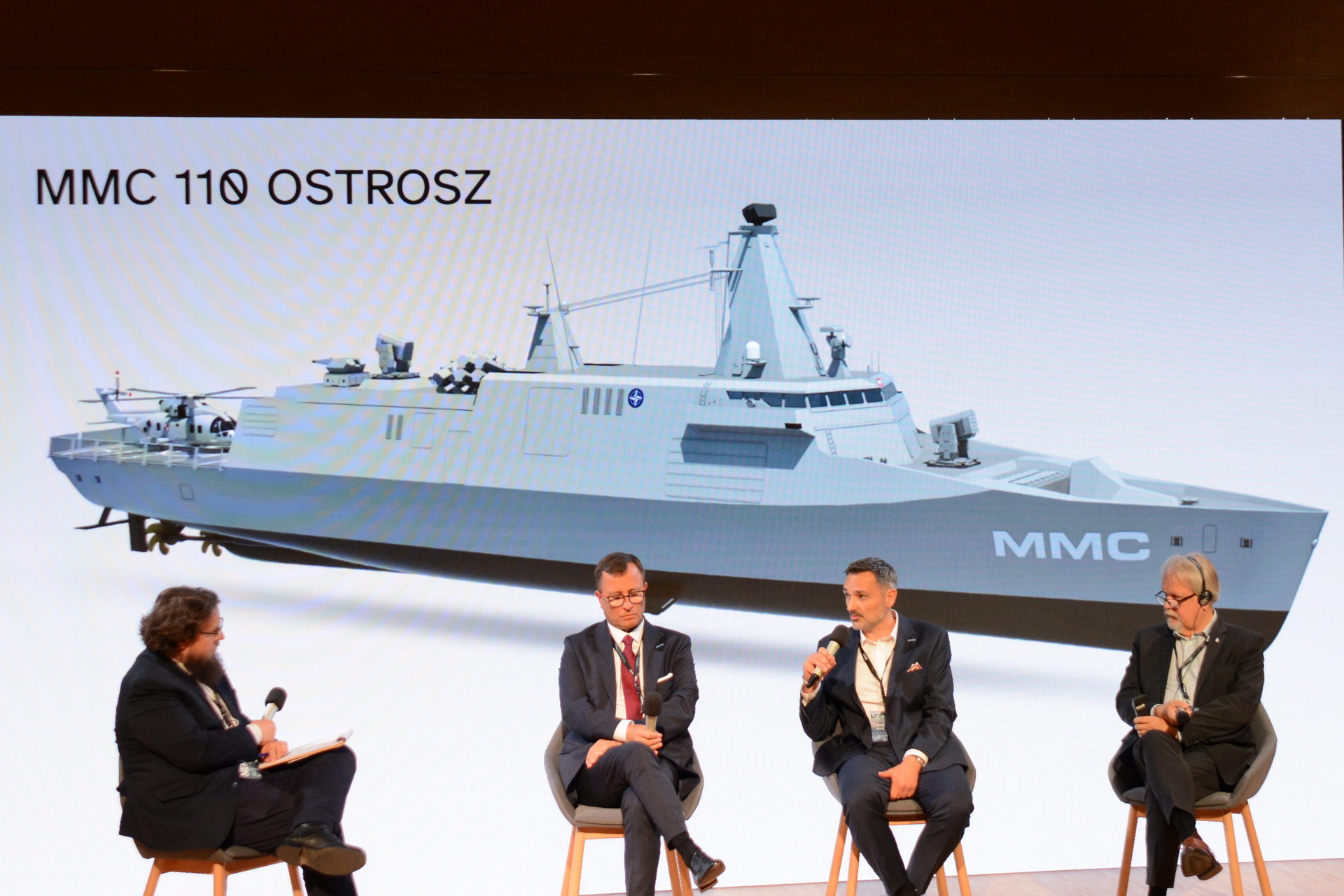
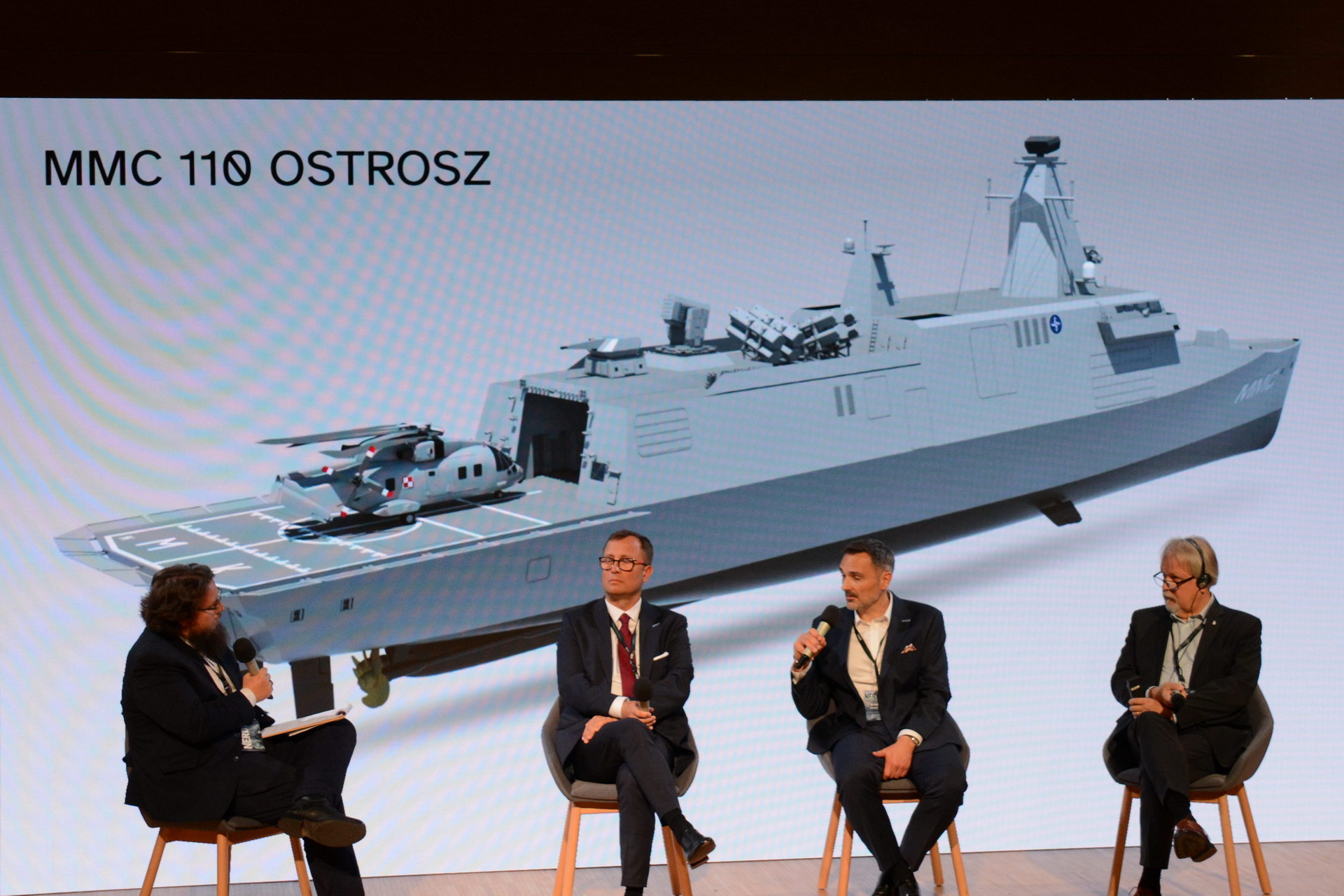 MMC 110 Ostrosz, with a name clearly referring to the recently disclosed future corvette construction program for the Polish Navy
Perhaps the most interesting panel was devoted to the changing nature of naval vessel design — not so much because of the subject matter itself, but because of the visualizations of concept designs by MMC presented during the session. These included vessels that could represent the company’s proposals for future Polish Navy shipbuilding programs. Participants were able to see MMC’s own vision of a corvette designated MMC 110 Ostrosz, with a name clearly referring to the future corvette construction program recently disclosed during Defence24 Days, under the codename Ostrosz. Drawings of the MMC 980 SBC Hydrograf hydrographic vessel were also shown; it could become the company’s response to the Polish Navy’s program to build two new hydrographic vessels under the codename Hydrograf. The fate of this program has been uncertain for some time, but there is now hope that the vessels could be ordered using funds from the SAFE loan instrument.
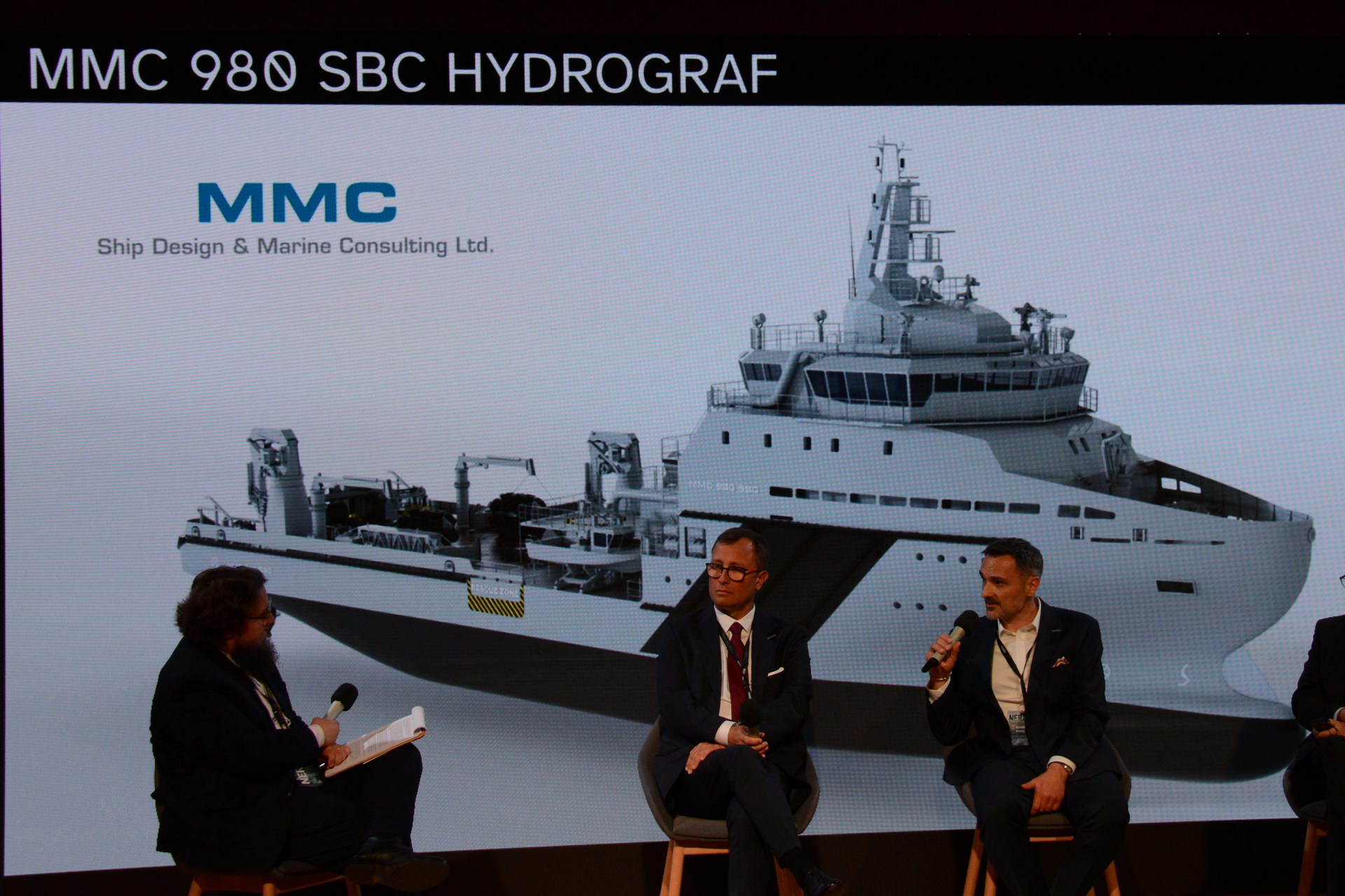
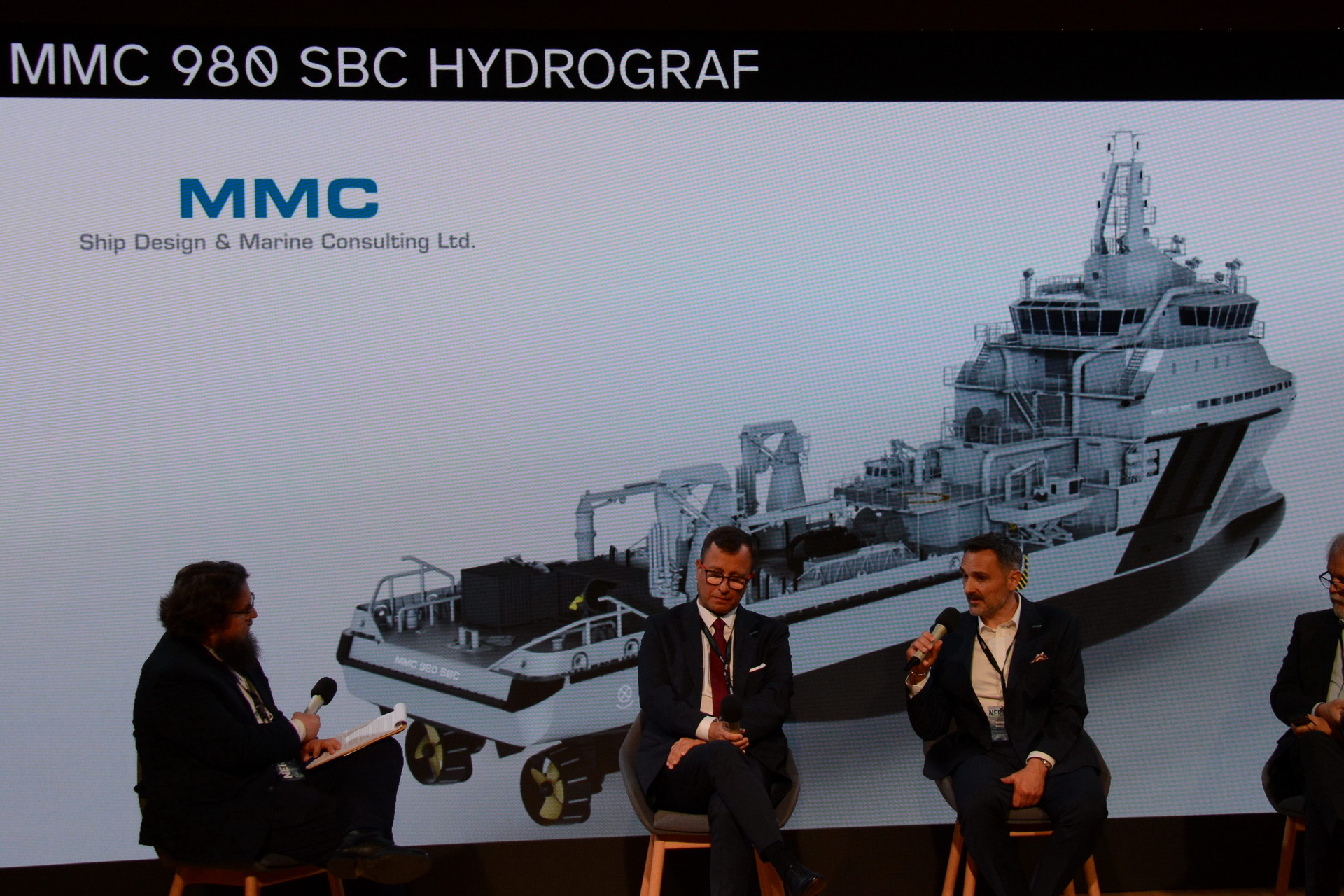 Visualizations of the MMC 980 SBC hydrographic vessel, which could become a response to the requirements of the Polish Navy’s program to build two new vessels of this class under the codename Hydrograf
Another visualization, showing a logistics support vessel designated MMC 116, could serve as a response to the requirements of the logistics support vessel construction program under the codename Bałtyk. Other concepts presented, such as the MMC 221L light frigate and the MMC 107 ORR signals intelligence vessel, were only loosely related to the current or even prospective plans of the Polish Navy, but nevertheless demonstrated the design office’s continued interest in carrying out contracts in the military market.
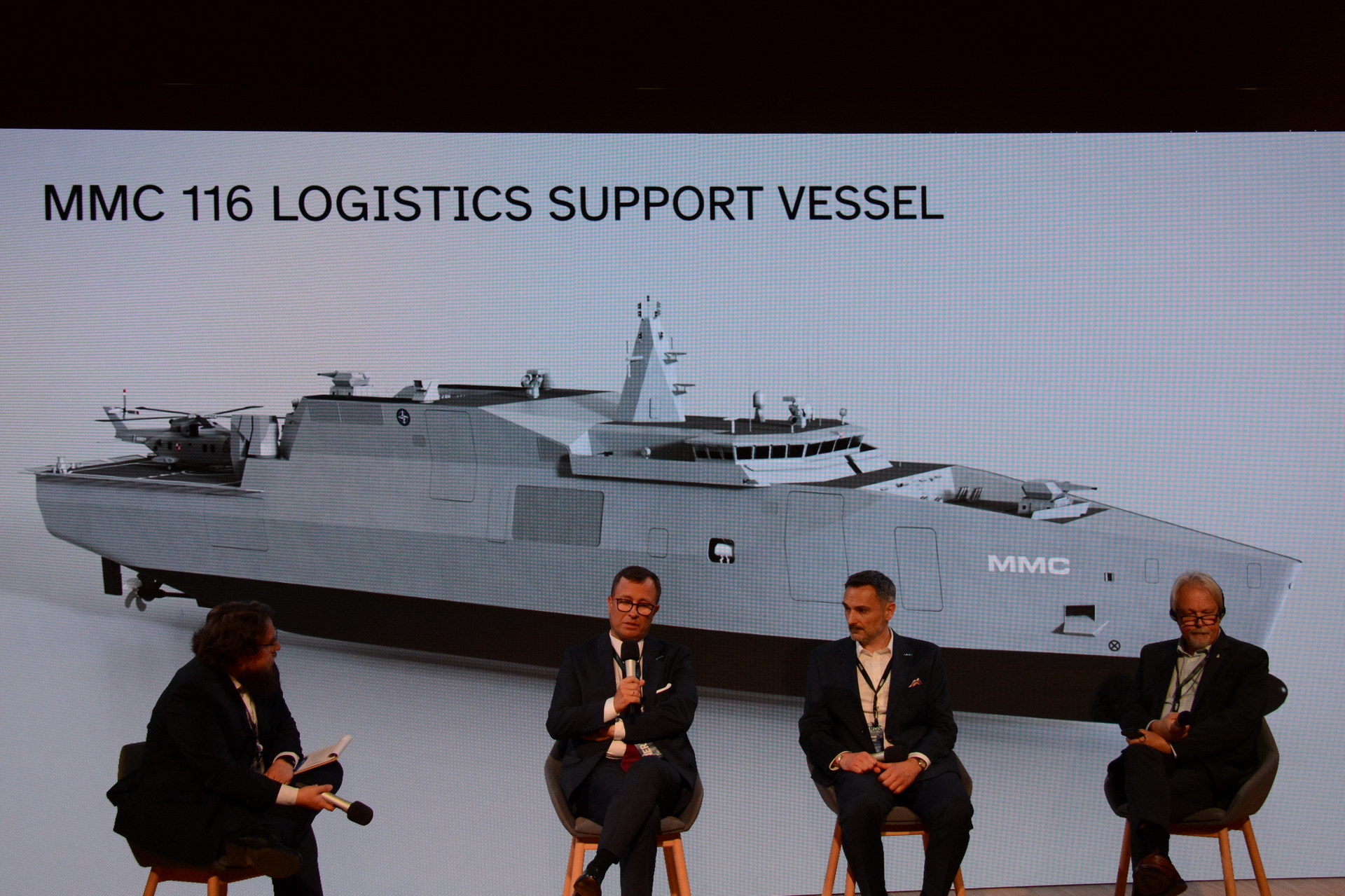 The MMC 116 logistics support vessel could serve as a response to the requirements of the program under the codename Bałtyk
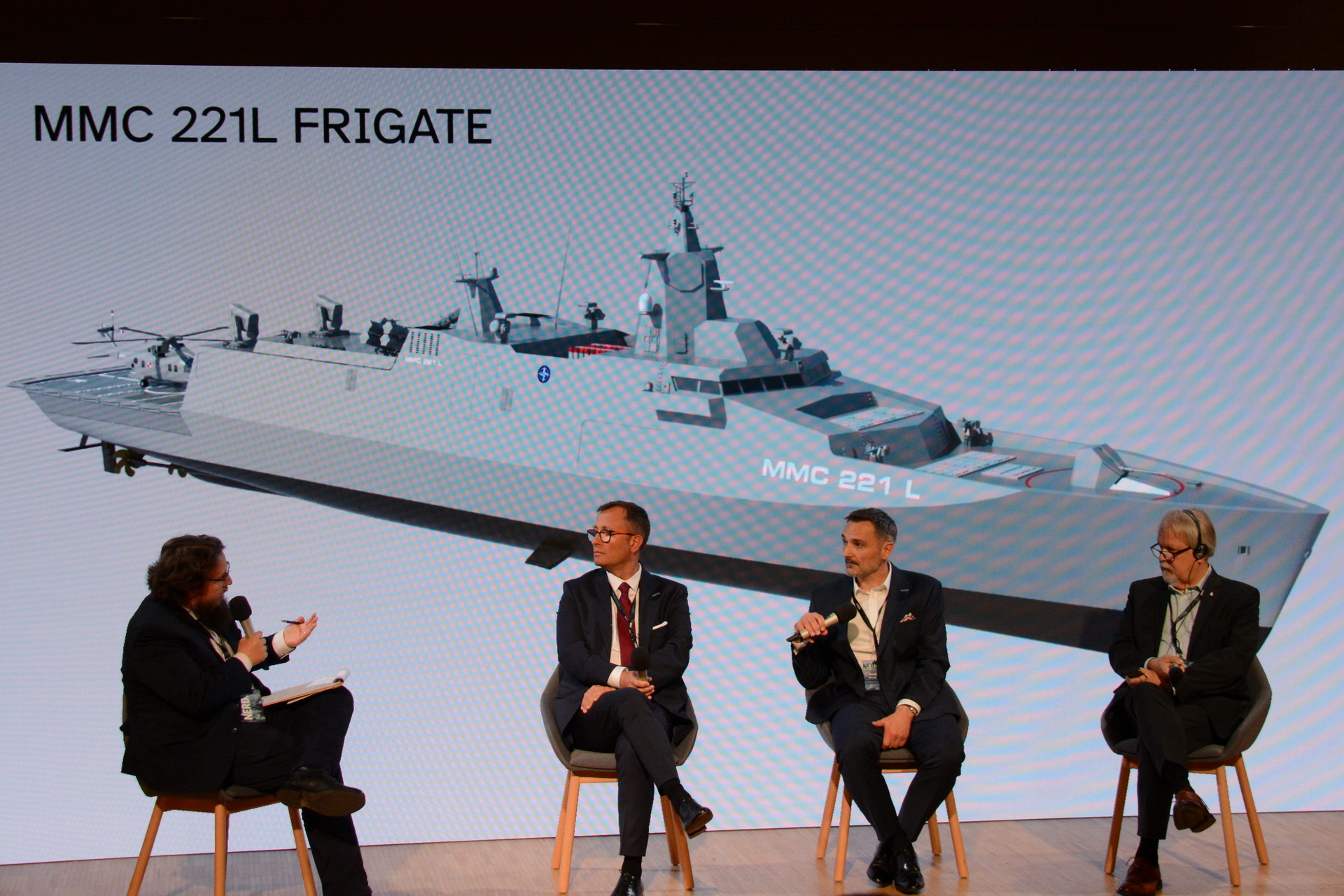 The MMC 221L light frigate is a concept unrelated to the current plans of the Polish Navy
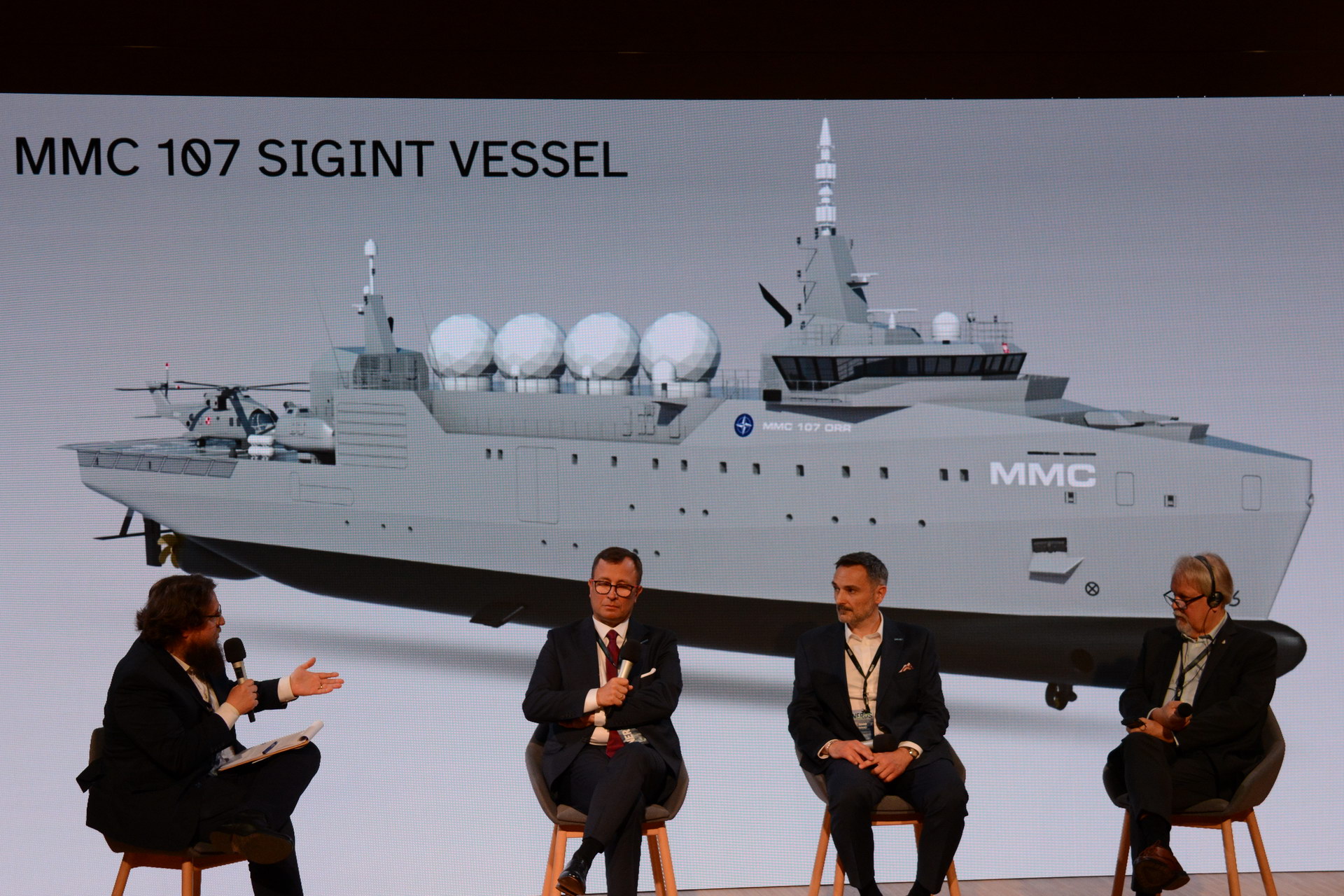 Similarly, the MMC 107 ORR signals intelligence vessel is a proposal that, in the context of the ongoing construction of two Delfin-class vessels, could become relevant only in around 50 years
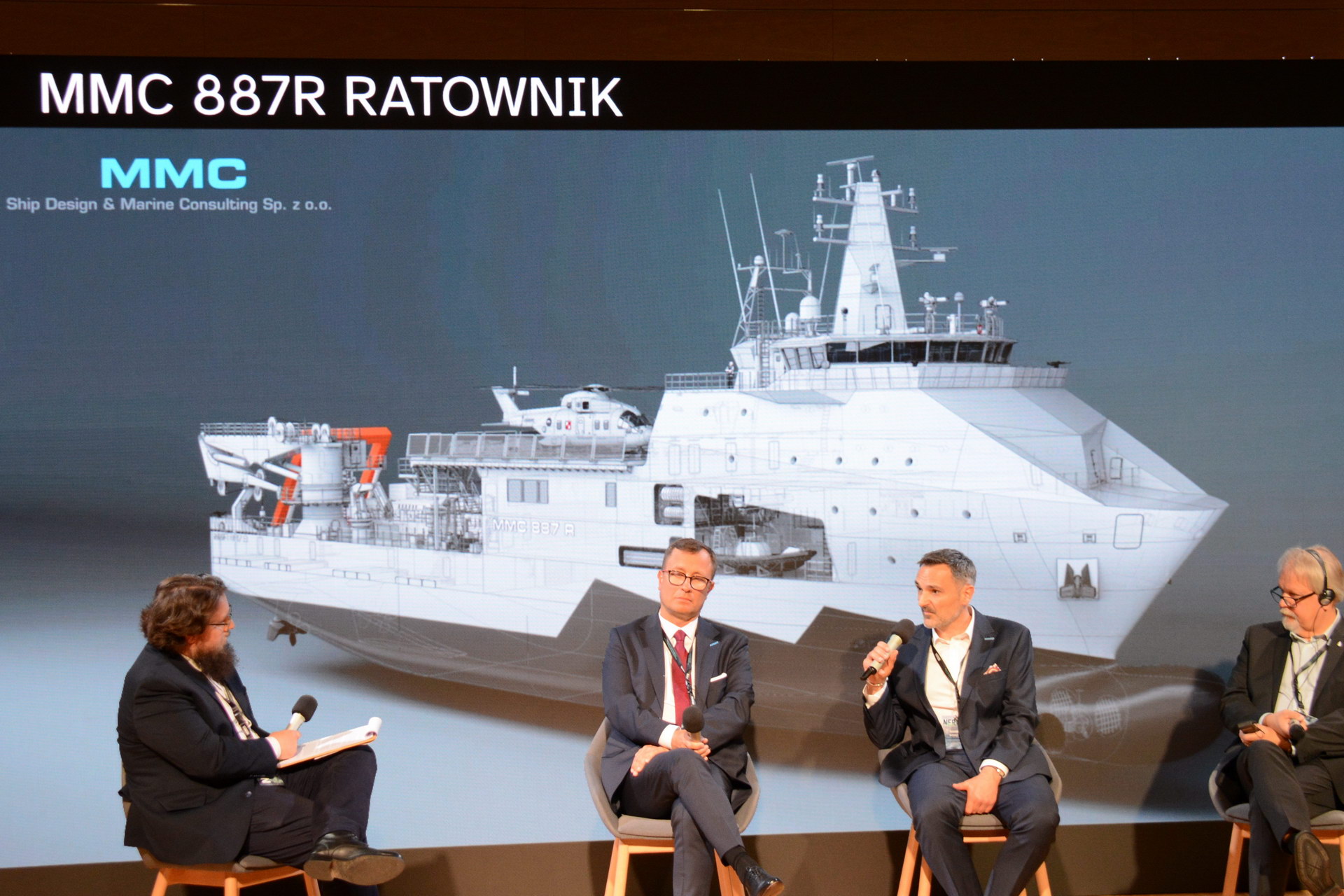 Among the visualizations of MMC designs was also the MMC 887R Ratownik, recalling that the original design of the vessel was developed by this company.
This was linked to an additional event that took place during the symposium. An agreement on strategic cooperation was signed between Saab Kockums AB and MMC Ship Design & Marine Consulting Ltd., demonstrating the companies’ intention to further strengthen their cooperation. In the near future, it is expected to result in the joint implementation of further naval programs. Unfortunately, representatives of both companies were unwilling to reveal even the slightest details of these projects. It is therefore unclear whether the closer partnership is aimed primarily at offers for the Polish Navy, or whether it could also involve Polish participation in the program to build four new frigates for Sweden. In the latter case, Saab, together with Babcock, is offering the Arrowhead 120 vessel, which, if selected, would require further design work, in which MMC could also take part.
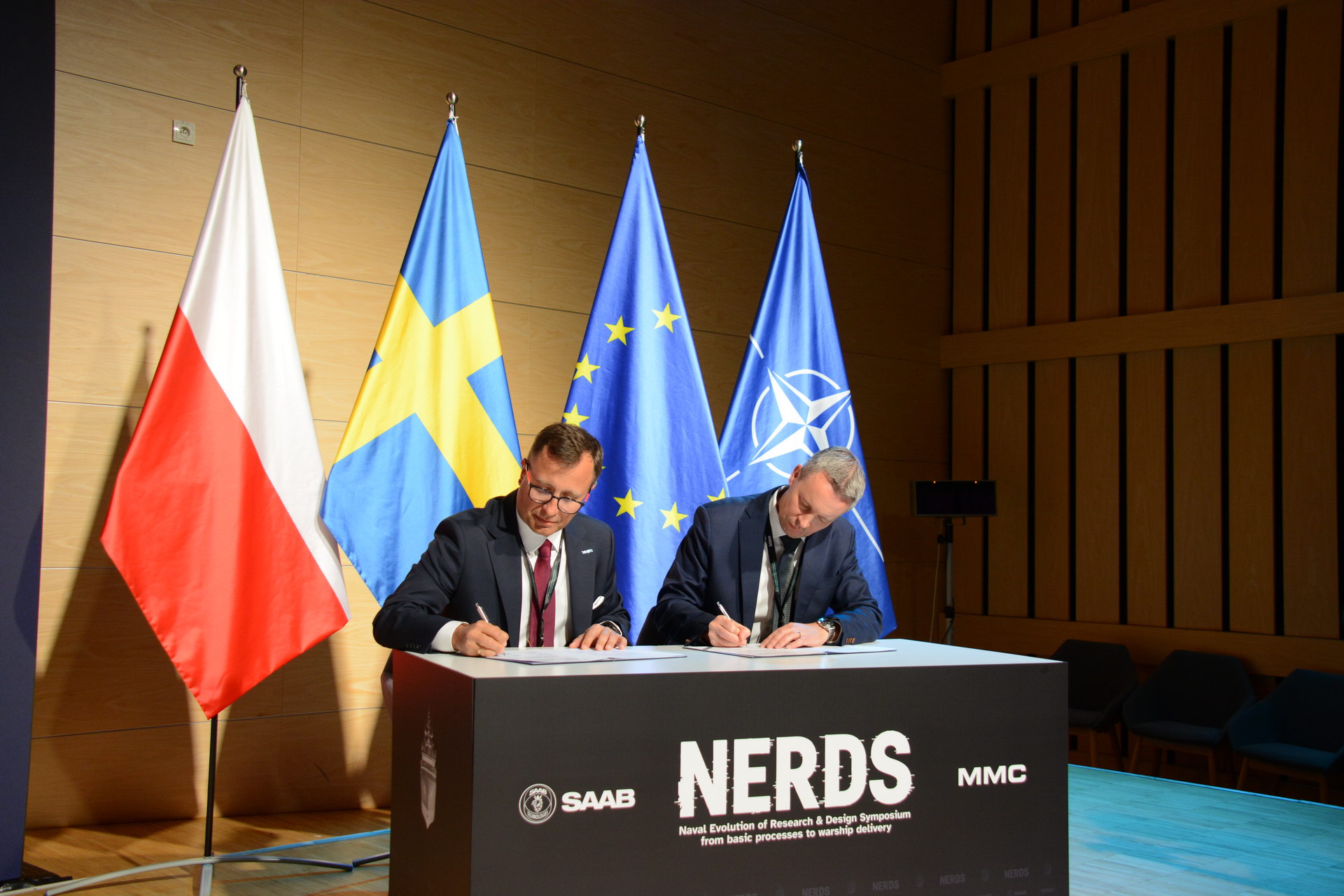 During the symposium, an agreement on strategic cooperation was signed between Saab Kockums AB and MMC Ship Design & Marine Consulting Ltd. In the near future, it is expected to result in the joint implementation of further naval programs.
As company representatives announced, everything will be revealed in due course.