




















On Tuesday, March 3, 2026, the German defense trade magazine Hartpunkt reported, citing several well-informed sources, that the Bundeswehr is planning to commission the production of approximately 500 MARS 3 (EuroPULS) multiple launch rocket systems under a framework agreement. About half would be intended for its own use, while the remainder could be ordered by interested allied countries under the same terms.
 Image: KNDS Deutschland
According to the sources, a corresponding proposal by the BAAINBw (Bundesamt für Ausrüstung, Informationstechnik und Nutzung der Bundeswehr) will be submitted by the Federal Ministry of Defence to the Budget Committee (Haushaltsausschuss) of the Bundestag in the second half of this year.
That is not all. The same sources indicate that framework agreements for the procurement of rocket ammunition are also planned and could be concluded as early as the first half of the year. The initial framework agreement is expected to cover effectors with ranges of up to 150 km, worth several billion euros, so that by 2030 the Bundeswehr could receive a first batch numbering in the tens of thousands. In subsequent years, deliveries would continue at a rate of several thousand missiles annually.
A further step would involve acquiring a larger number of long-range rockets with a range of 300 km, as well as loitering munitions of comparable range. There also appears to be a requirement for scatterable mine-laying munitions with ranges exceeding 100 km. Similarly, the purchase of additional variants of the precision-guided DM702 SMArt 155 (Suchzünder Munition für die Artillerie) ammunition is being considered. Representatives of the Bundeswehr have articulated such requirements in the past.
As Hartpunkt emphasizes, in the medium to long term, the acquisition of rockets or cruise missiles with a range of 500 km would likely be possible, although little is currently known. For example, MBDA Deutschland has been developing the JFS-M (Joint Fire Support Missile) cruise missile with such a range for five years. Other potential solutions already exist, such as the Saab RBS 15 and the Kongsberg Defence & Aerospace NSM (Naval Strike Missile), both of which have been mentioned several times as potential effectors for MARS 3. The former was even tested on May 21, 2025.
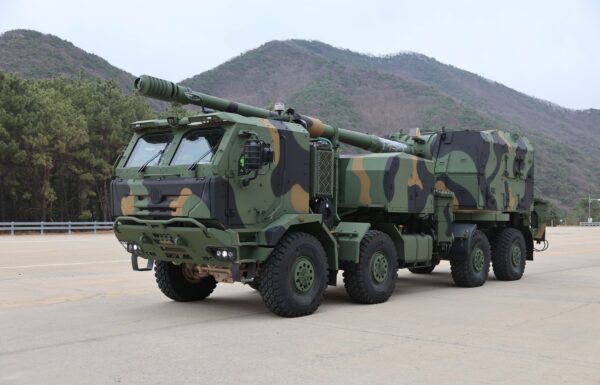
The prototype MARS 3 launcher, mounted on an Iveco Trakker 8×8 truck chassis, is the new designation for the EuroPULS launcher – the European variant of Israel’s PULS (Precise & Universal Launching System). It was developed under an agreement of December 2, 2022, between Elbit Systems and KNDS Deutschland (formerly Krauss-Maffei Wegmann), and was originally intended to be offered under the E-COLORSS (European COmmon LOng Range indirect Fire Support System) program as a successor to Europe’s M270 MLRS launchers.
Germany’s Federal Ministry of Defence ordered five EuroPULS launchers under a 57 million USD contract signed on February 5, 2025. The contract included the development of associated adaptations and the integration of German C4I-class equipment, such as command and fire control systems. EuroPULS is equipped with the European Fire Control System (EFCS), partially derived from the fire control system of the MARS II/MLRS-E launcher and incorporating components from the new 155 mm wheeled RCH 155 AGM howitzer.
According to earlier information, EuroPULS is to feature an open architecture and adaptable design, enabling integration of the Advanced Launcher module with a wide range of platforms. It is also expected to support the integration of munitions from other manufacturers, in line with Bundeswehr requirements – including the aforementioned effectors, anti-tank submunition-equipped rockets, and the RCM² (Remote Carrier Multidomain Multirole Effector) multi-role combat unmanned systems.
EuroPULS faced competition from the GMARS (Global Mobile Artillery Rocket System) launcher developed by Rheinmetall AG in cooperation with Lockheed Martin.