






















On Friday, 10 April 2026, the U.S. Navy’s Office of Naval Research (ONR) announced, via the SAM procurement platform, the launch of a solicitation under the FLASH (Flight Advancement of Structures for Hypersonics) research and development program for hypersonic technologies intended for warships. The program is formally described by ONR as an Innovative Naval Prototype (INP) focused on a surface-launched, tactical-range hypersonic strike capability.
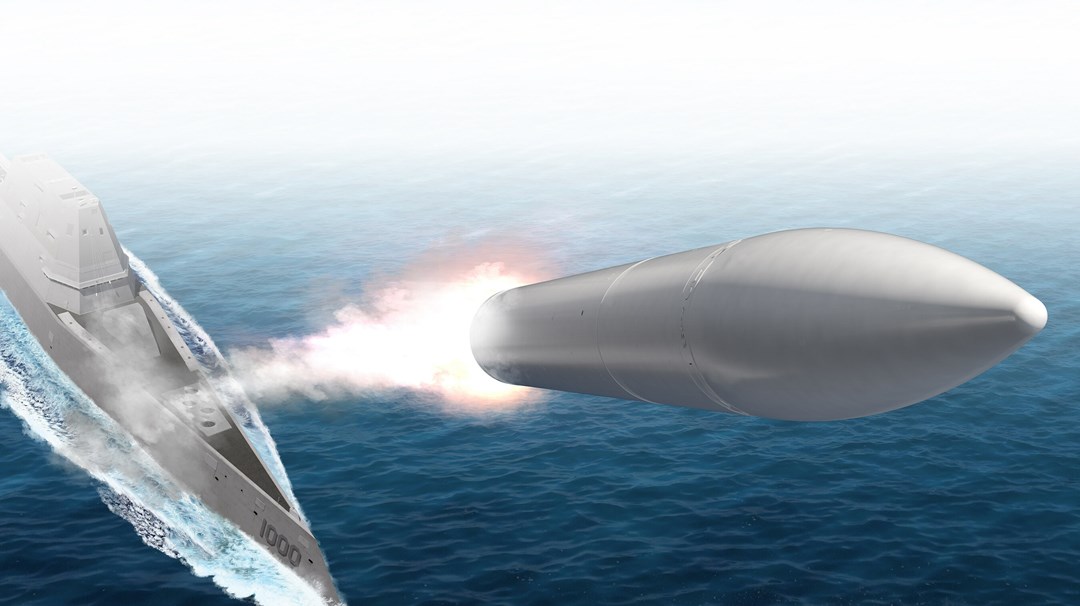 Illustration: Launch of a booster carrying a C-HGB hypersonic glide vehicle under the CPS program / Graphic: Lockheed Martin
According to the published solicitation, preliminary proposals must be submitted by 15 May, and full technical proposals by 17 August. Earlier, an Industry Day, a technical meeting between ONR and industry representatives, was scheduled for 4 May at the Bobby Junker Executive Conference Center in Arlington, Virginia. Contracts are to be awarded by 29 January 2027.
The goal of the FLASH program is to integrate advanced hypersonic vehicle technologies and demonstrate the practical feasibility of building a tactically ranged hypersonic strike system launched from surface warships.
Main objectives:
- design, build, and flight-test prototype hypersonic vehicles;
- validate vehicle structure, aerodynamics, thermal protection, controllability, and cost;
- assess compatibility with shipboard vertical launch systems: the Vertical Launch System (VLS) and the Virginia Payload Module (VPM), which from the outset imposes constraints on diameter, length, weight, and interfaces.
The program was selected by U.S. Navy leadership as an INP (Innovative Naval Prototype) in fiscal year 2026 on the basis of promising results from earlier research.
The program is intended to develop a relatively low-cost tactical hypersonic weapon system that would rely on advanced aerodynamics and control techniques to reduce dependence on expensive high-temperature-resistant materials, carry out subscale testing, and then proceed to full-scale flight demonstrations. This will make it possible to gather data on technology and manufacturing readiness (TRL/MRL), costs, scalability, and risk.
The FLASH program covers key technology areas such as hypersonic flight guidance, navigation, and control (GNC) systems, high-temperature structures and thermal protection systems (TPS) including composites, alloys, ablative materials, and the like – as well as multidisciplinary design and optimization (MDAO).
This is another hypersonic missile program being pursued by the U.S. Navy. At present, the main initiative is CPS (Conventional Prompt Strike), run jointly with the U.S. Army, although that weapon has a declared range of 2,775 km and a maximum speed of Mach 17.
Earlier, on 26 February 2024, ONR awarded startup Castelion Corp. a contract worth less than 3 million USD to study the integration of an unspecified air-launched weapon for striking surface targets. Meanwhile, on 25 February this year, the U.S. Naval Air Warfare Center Aircraft Division (NAWCAD) signed a contract worth nearly 50 million USD supporting efforts related to the launch of serial production of Blackbeard hypersonic missiles, which are also to be fielded by the U.S. Army.
Previously, the U.S. Navy had also shown interest in the HALO (Hypersonic Air-Launched Offensive Anti-Surface) hypersonic anti-ship missile, which was being developed by RTX and Lockheed Martin.
See also: