





















On Tuesday, 14 April 2026, the US Army Contracting Command (ACC) at Redstone Arsenal, Alabama, acting on behalf of the US Department of Defense, signed an indefinite-delivery contract with a maximum value of 617,164,135 USD with Dynetics Inc. (part of the Leidos group), including for additional units of the prototype IFPC Inc 2 (Indirect Fire Protection Capability Increment 2) air defense system.
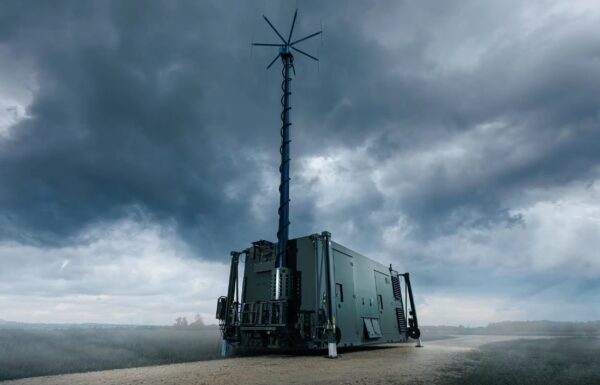
 Photo: Dynetics Inc.
The contract provides for the procurement, under the FY2026 NDAA defense budget, of IFPC Inc 2 systems, including Enduring Shield launcher systems, upgraded prototype launchers, universal missile magazines, soldier trainers, dimensional and weight training devices, contractor logistics support, spare parts, and engineering services. The place of performance and funding will be specified for each delivery order, and the expected completion date is 30 November 2029.
Although the Department of Defense announcement does not specify this, according to US Army FY2026 budget documents, the plan was to procure 62 system launchers, 432 AIM-9X Sidewinder missiles, and 72 magazines.
The previous contract for Dynetics in this matter was awarded on 30 July 2025 and was worth 264,594,352 USD; it covered 18 launchers.
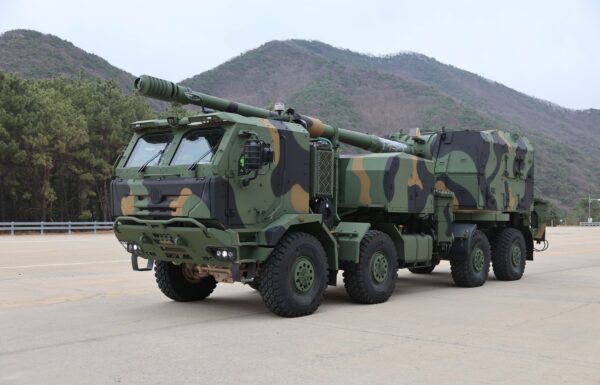
The IFPC Inc 2 system consists of the aforementioned Enduring Shield missile launcher, developed on the basis of the MML (Multi-Mission Launcher) previously tested by the US Army, and the standard AN/MPQ-64 Sentinel A3/A4 radar with an AESA active electronically scanned array antenna. It currently uses AIM-9X Sidewinder surface-to-air missiles, but recently Rafael was selected for the first phase of the competition for a second interceptor type under the codename SHIELD (Short & Intermediate Effectors for Layered Defense). Plans call for the fielding of up to 400 launchers (100 systems with 4 launchers each). A basic load consists of 18 missiles.
 Photo: Eight Army via X
The program encountered delays due to supply chain problems, which pushed delivery of the first prototype from September 2022 to December 2023, and then into 2024. In January 2024, operational assessment of the system began, and the US Army ordered 16 prototype launchers.
The purpose of the system is to counter a broad spectrum of aerial threats, such as unmanned aerial systems, cruise missiles (subsonic and supersonic), rockets, artillery ammunition, and mortar rounds. The system is intended to fill a gap in US medium-range air defense, particularly in the context of emerging threats, for example those highlighted by the war in Ukraine and now also observed in the Middle East.
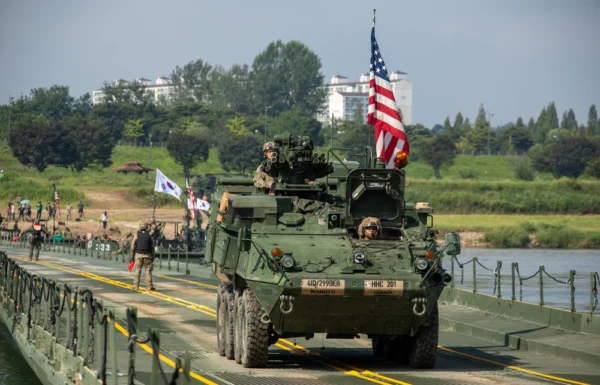
A prototype battery was deployed in March this year during the Freedom Shield 26 exercise in the Republic of Korea.